Ambiguity No More? Iran Strikes and China’s Test in the New Nuclear Age
The Iran-Israel war thrust China into a nuclear crossroads—testing its global leadership, challenging its strategic ambiguity, and redefining its regional role amid a collapsing nonproliferation regime.

This summer’s events in the Middle East have pushed the world closer to a perilous turning point in global nuclear diplomacy. The looming reimposition of United Nations “snapback” sanctions against Iran on October 25 underscores a deepening fracture in the global nonproliferation regime. For all major powers concerned with the spread of nuclear weapons, the stakes have risen. For China in particular—which has long tried to straddle the line between nonproliferation advocacy and strategic ambiguity, the implications may be extremely consequential.
Last month’s conflict between Israel, the United States, and Iran was especially revealing not just for the scale of the escalation, but the context in which it unfolded—amid the steady erosion of the rules-based international order, the unpredictability of U.S. foreign policy under the Trump administration, and the intensifying rivalry between Washington and Beijing. These dynamics are not mere backdrops; they are shaping, and being shaped by, China’s response to the Iran crisis.
China’s Nuclear Diplomacy: Between Principle and Pragmatism
Tracing the evolution of China’s approach to the Iranian nuclear program helps illuminate the significance of this moment. Over the past two decades, Beijing has sought to reconcile its formal support for the Nuclear Non-Proliferation Treaty (NPT) with a pragmatic interest in maintaining its access to Iranian oil, supporting overseas infrastructure development, and preserving its diplomatic maneuverability.
The 2015 Joint Comprehensive Plan of Action (JCPOA) marked a high water mark for Chinese diplomacy, modeling the country’s multilateral approach to resolving proliferation crises. The accord also opened the door to expanded Chinese energy and infrastructure investment in Iran. Yet this dual commitment—upholding non-proliferation on the one hand and defending the rights of states to peaceful nuclear technology on the other—has often placed Beijing at odds with Western powers, especially the United States, and complicated its role as a mediator on nuclear issues.
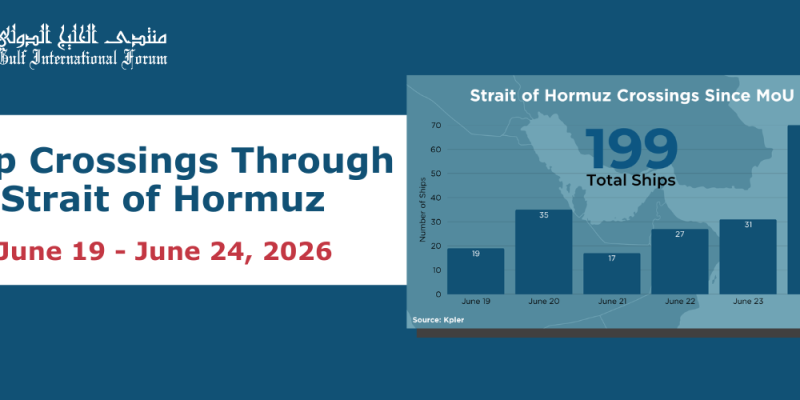
As China’s interests in the Middle East have deepened, its strategy has matured into a sophisticated form of hedging. Beyond its strategic partnership with Iran, successive Chinese leaders have cultivated strong ties with Saudi Arabia, the UAE, and Israel, seeking to avoid entanglement in regional rivalries and to maintain flexibility. This approach is guided by Beijing’s three core interests: energy security, economic expansion, and regional stability. The Strait of Hormuz, through which much of China’s oil flows, remains a critical vulnerability for China. Instability in the Gulf threatens not only energy supplies, but also the viability of China’s Belt and Road Initiative (BRI) investments throughout the wider Middle East.
However, China’s hedging strategy has proven poorly suited for the nuclear domain. Here, ambiguity is not a shield, but a liability that erodes Beijing’s credibility and invites escalation. Unlike trade or conventional security arrangements, nuclear diplomacy offers little room for diplomatic evasion. Inaction becomes a choice in itself, with escalating consequences.
For example, following the United States’ withdrawal from the JCPOA during Trump’s first term, China continued to support the agreement while quietly maintaining economic ties with Tehran through mechanisms designed to circumvent U.S. sanctions. As tensions escalated in 2024 and early 2025, China’s official rhetoric emphasized restraint and renewed negotiations, but failed to propose any new diplomatic initiative that could resolve the underlying dispute.
Then Israeli and American bombs started falling on Iran’s nuclear sites—and China was caught flat-footed.
Turning Point: The 2025 Strikes and IAEA Crisis
The so-called “12-day war” that culminated in U.S. military strikes against facilities at Natanz, Isfahan, and Fordow,marked a dramatic turning point in China’s balancing act. The most obvious shift has been in Beijing’s more assertive diplomatic posture. As Israel’s initial campaign got underway on June 13, China’s UN envoy, Fu Cong, condemned the attacks as violations of Iranian sovereignty and urged an immediate end to “risky military actions.” In parallel, Foreign Minister Wang Yi denounced the strikes as an “unacceptable” breach of international law and warned they set a “dangerous precedent.” In a separate exchange, Wang expressed support for Iran’s efforts to “safeguard national sovereignty, defend its legitimate rights and interests, and ensure the safety of its people”—a position later echoed by President Xi Jinping. Beijing has consistently framed Israeli actions as unjustified, while carefully avoiding criticism of Iran’s response. Chinese state media even emphasized that China was alone among major powers in openly endorsing Iran’s right to retaliate in self-defense.
More consequential than China’s rhetoric, however, has been the rupture of international non-proliferation institutions that has followed the war. In the wake of the U.S. bombings of Fordo, Natanz, and Isfahan, President Masoud Pezeshkian moved to implement a parliamentary law suspending cooperation with the IAEA, further limiting inspectors’ insights into Tehran’s nuclear program. Iranian lawmakers then set two conditions for restoring the country’s cooperation: guarantees for the safety of Iran’s nuclear infrastructure and personnel, and a recognition of what Tehran claims is its right under international law to enrich uranium for peaceful purposes. The IAEA, citing security concerns, subsequently withdrew its inspectors from Iran, severing the last thread of international oversight. Today, the international community is effectively blind to the state of Iran’s nuclear capabilities.
Two core unknowns now shape the nuclear landscape: will the IAEA regain access to verify the state of Iran’s key facilities, and if so, in what form? Without effective monitoring protocols in place, no agreement can credibly define a baseline for future inspections or limits on enriched uranium. Second, will Iran attempt to withdraw from the NPT, the legal bedrock of global arms control—and if so, what would the consequences be?
In the meantime, questions about the survival of Iran’s stockpile of highly enriched uranium also remain unanswered. In the United States, concerns have emerged from the Defense Intelligence Agency that the strikes may have only delayed—not “obliterated,” as President Trump initially claimed—Iran’s nuclear capabilities.
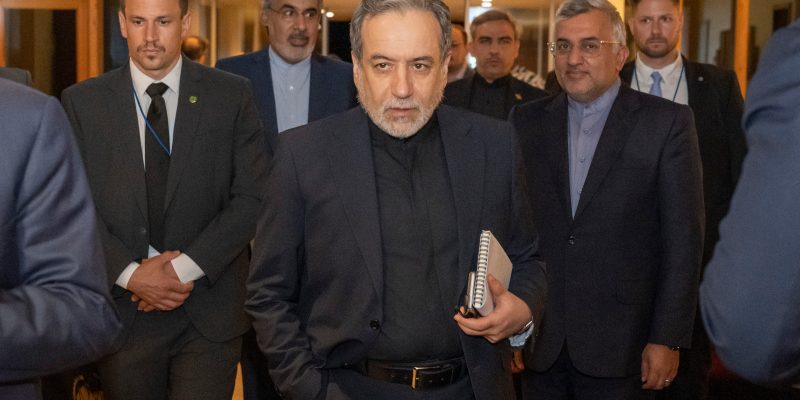
Meanwhile, Iranian officials have doubled down on the symbolism of the nuclear program as an assertion of the Islamic Republic’s sovereignty. Foreign Minister Abbas Araghchi told CBS News that Iran’s nuclear ambitions were a source of “national pride and glory,” and that the Iranian people “will not easily back down from enrichment.” Deputy Foreign Minister Majid Takht-Ravanchi affirmed Iran’s “right” to enrichment under the NPT in an NBC interview, while stating that Iran was “ready to engage…to talk about the scope, the level, the capacity” of its program with the United States.
In this context, Chinese Foreign Minister Wang Yi’s recent call to reach a “new international agreement” signals an effort to recenter nuclear diplomacy around the sovereign rights of states—which, it follows, Israel and the United States violated during their attacks on Iran. Yet no concrete proposal has surfaced, and Beijing appears unwilling to expend meaningful political capital to bring Iran back into compliance.
This may change, of course. If the situation becomes even less stable, some in Beijing may be tempted to expand security ties with Iran, gaining leverage to moderate Tehran’s behavior. But any such cooperation risks alienating the Gulf monarchies—which Beijing is also courting—and could provoke sharper U.S. retaliation against Tehran. If China were to pursue this path, any assistance Beijing might offer—drone technology, cyber tools, or air defense systems, for instance—would need to be limited, discreet, and structured to avoid exposure to U.S. sanctions.
China’s Strategic Dilemmas at the Nuclear Crossroads
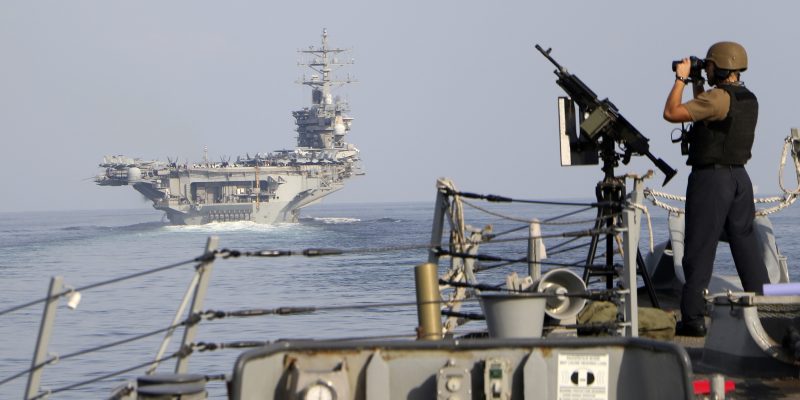
Fundamentally, the recent conflict has laid bare the vulnerability of China’s energy supply routes. Iranian threats to maritime traffic in the Strait of Hormuz have prompted Beijing to develop contingency plans to diversify its oil imports.However, Iran’s increasingly desperate regional position has also raised the question of whether China can afford to remain a bystander in Gulf security. A broader nuclear arms race, potentially involving Saudi Arabia or the UAE, could transform the region into a nuclear powder keg—with disastrous consequences for China if the region should return to violence. China could prevent nuclear escalation, and improve its own energy security, by playing a more active role in Gulf diplomacy—but this would require it to give up its long-cherished and financially profitable role of neutral trading partner for all sides.
Moreover, Beijing’s carefully cultivated image as a responsible power and champion of multilateralism is eroding. Its inability—or unwillingness—to influence Iran’s nuclear posture raises doubts about its ability to assert truly global leadership. Moreover, the gap between Chinese rhetoric and action on nuclear issues undermines China’s credibility as an NPT defender. Beijing’s strategic ambiguity, once seen as a diplomatic boon, now risks being interpreted by the wider international community as a tacit acceptance of nuclear proliferation by states friendly to China.
Beijing has often communicated its desire to lead a multipolar order rooted in an emphasis on national sovereignty and multilateral diplomacy. But the Iran crisis reveals the limits of China’s power projection and institutional influence in the order that currently exists. Without effective and costly tools to facilitate inspections, enforce compliance, or convene talks, Beijing risks being sidelined from the very frameworks it hopes to shape.
To escape the constraints of its current limited posture, China may find strategic advantage in partnering with the Gulf monarchies to stabilize the region’s nuclear trajectory and rebuild its own nonproliferation credentials. Saudi Arabia and the UAE—two key players with longstanding energy ties to Beijing—have both signaled interest in civilian nuclear technology, and in the case of Riyadh, even hinted at the possibility of pursuing enrichment should Iran move further outside the bounds of the NPT.
By working with these states on peaceful nuclear energy development, enhanced transparency, and regional safeguards, China could help to contain proliferation risks while elevating its diplomatic standing. This cooperation need not necessarily replicate U.S.-led approaches. Instead, Beijing could support new frameworks tailored to regional dynamics, such as a Gulf nuclear fuel bank, joint investment in IAEA-monitored civilian programs, or a regional forum for nonproliferation dialogue co-chaired with the Arab League.
Such efforts would serve several strategic goals simultaneously. They would bolster China’s image as a responsible global power, reduce the reputational costs of its ties to Iran, and hedge against the risk of a multipolar nuclear cascade. Just as importantly, they would allow China to reposition itself not merely as a critic of Western dominance, but as a “constructive co-architect” of a more inclusive, rules-based nuclear order—one responsive to the realities of a fragmenting international system.
A Defining Moment for China
With the UN snapback deadline looming, China faces a pivotal decision: it could support sanctions to preserve what remains of the NPT framework, or it could oppose the restrictions and signal its tacit support for Iran’s nuclear trajectory. Either course carries strategic costs, but inaction risks allowing a nuclear crisis to spiral beyond repair.
If China wishes to shape the next phase of the global nonproliferation regime—whether through strengthening the NPT, advancing new regional dialogues, or launching alternative inspection models—it must make a move. Its credibility as a great power increasingly depends on its willingness to co-develop new safeguards with partners like the Gulf states, whose own nuclear ambitions are rising in direct response to those of Iran.
Thus far, the 12-day war and China’s timid response have revealed the fragility of Beijing’s regional strategy and the inadequacy of its traditional diplomatic approach to address nuclear brinkmanship. The Iran crisis may not be of China’s making, but it is increasingly becoming one Chinese leaders cannot afford to ignore. A more proactive approach could both stabilize the Gulf and position Beijing as a more active architect of the global nuclear order. China’s next moves will not only affect the future of nuclear diplomacy, but will also serve to define its role in the emerging global order.
The views and opinions expressed in this article are those of the authors and do not necessarily reflect the views of Gulf International Forum.
Issue: Geopolitics
Country: Iran

Dr. John Calabrese teaches international relations at American University in Washington, DC. He is the book review editor of The Middle East Journal and a Non-Resident Senior Fellow at the Middle East Institute (MEI). He previously served as director of MEI’s Middle East-Asia Project (MAP). Follow him on X: @Dr_J_Calabrese and at LinkedIn: https://www.linkedin.com/in/john-calabrese-755274a/.

Beyond Hormuz: Why Balochistan Matters to Gulf Energy Security
October 21, 2026A conflict long treated as peripheral to Gulf security is becoming harder to ignore as the war with Iran puts pressure on the region’s maritime…
Should Syria and Qatar Join the Mecca Pact?
October 9, 2026Three years of cascading conflict have fundamentally transformed the Middle East’s security outlook. American weapons, military deployments, and security guarantees remain central to the region….

China’s Technology Development Push Meets Gulf Diversification
October 6, 2026China’s “new quality productive forces” (NQPF) are often understood as a domestic effort to revive growth, upgrade industry, and reduce dependence on Western technology. Yet…