Analyzing the Budding UAE-South Korea Defense Relationship
In a quest to develop new security relationships, Abu Dhabi and Seoul have found a seemingly perfect partnership.

In recent years, defense-military cooperation between the United Arab Emirates (UAE) and South Korea has witnessed unprecedented growth. The two nations have cultivated full-spectrum relations in the security domain, from expanded military drills to weapons procurement contracts and defense technology industrial partnerships.
“Brothers” in Training
On July 9, 2024, the U.S., South Korea, and the UAE initiated the first-ever joint trilateral exercise at the Korea Combat Training Center (KCTC). This high-tech training facility, nestled in the mountainous county of Inje near the border with North Korea, is renowned for its realistic ground drills, facilitated by advanced technologies. For instance, laser engagement systems and small GPS trackers enable troops to safely simulate real-world combat scenarios while providing live feeds on every soldier and weapon system involved.
The 11-day military drill saw a massive mobilization of troops and military hardware. South Korea contributed over 3,000 troops, while the U.S. joined with a battalion—about 1,000 soldiers. A UAE Armed Forces infantry company took part in the exercise for the Gulf state. The exercise saw around 200 pieces of combat equipment for land and air warfare operations deployed to the remote training area. These included some flagship defense products of South Korean military industry, such as the Hyundai Rotem’s K1E1 tanks, Daewoo Heavy Industries’ K200 infantry fighting vehicles, and Hanwha Defense’s K55 A1 155mm self-propelled howitzers.
It is noteworthy that the UAE and South Korea conducted a bilateral version of this military exercise at KCTC in August 2023. That 12-day training program saw a platoon of the UAE Armed Forces and a unit from the U.S. Army’s22nd Infantry Division engaging in military moves with South Korean counterparts, including two three-day, non-stop sessions of high-intensity attack and defense operations. Compared to the 2023 rendition, the UAE contributed many more troops to the 2024 exercise, reflecting both a qualitative and quantitative increase in military cooperation between the two nations.
Emirati-Korean military cooperation is not limited to training programs held in East Asia. Earlier this year, in mid-February, South Korea’s forward-deployed contingent of special forces stationed in the UAE, known as the Akh unit (“brother” in Arabic), successfully held its first joint drill of the year with the UAE Armed Forces. In a reflection of the security threats facing both Emirati and Korean strategic interests in the region, namely the severe uptick in Houthi attacks on international commercial and energy shipping lanes, the program revolved around ground-based and maritime anti-terrorism operations. Drill modules included simulations to enhance hostage rescue tactics, helicopter-borne sniper shooting capabilities, and close-quarters combat techniques.
The Akh unit, the cornerstone of South Korea’s security assistance to the UAE, was inaugurated in 2011 to provide military educational training to the UAE Armed Forces and organize joint exercises locally. Stationed at a military facility in Sweihan, a small town in the eastern region of Al Ain, the unit comprises a contingent of between 100 and 140 South Korean elite troops, who rotate regularly, usually every six to eight months. In early July, the last contingent of special forces departed South Korea for its forward deployment in the UAE.
Arms Sales Win Trust
Historically, the UAE has relied heavily on Western arms manufacturers to build its military arsenal. A mix of political considerations, such as the so-called “glitter factor” of Western-made weapon systems and the actual military requirements of Abu Dhabi’s military, have long guided the UAE’s armaments procurement policy. However, the introduction of more stringent export controls on arms sales by Western countries and the rapid emergence of more insidious threats to the UAE’s territorial security—primarily originating from aerial threats—have prompted the UAE to diversify its trade partners beyond the conventional suppliers of defense products.
With a competitive edge in the high-tech and digital sectors, an advanced military-industrial base, and growing ambitions to position itself as a powerful player in the global defense export market, South Korea represents a natural partner for the UAE to broaden its weapons arsenal. The Stockholm International Peace Research Institute’s database confirms that air defense systems and missile interceptors topped the UAE-South Korea defense trade relationship. At IDEX/NAVDEX 2021, a biannual defense exhibition held in Abu Dhabi, the UAE announced a deal USD $804 million for an undisclosed number of Hanwha Defense’s K-239 Chunmoo multiple launch rocket systems (MLRS) and missiles. A few months later, some K-239 Chunmoo rocket launchers reportedly entered service in the UAE Armed Forces, showcasing the speed with which both sides executed the contract.
For its attractive price and tactical effectiveness, the South Korean MLRS is widely recognized in military industry circles as a cost-effective alternative to top-notch Western-made equivalents, such as the U.S. M142 high mobility artillery rocket system (HIMARS). For instance, it is estimated that a single K-239 Chunmoo—comprising both the carrier and launcher—cost approximately $2.95 million in 2020, compared to the HIMARS’ price tag of $4.3 million. Although the Korean-made MLRS is primarily designed for ground-based offensive operations, the fact that it can launch different calibers of rockets and diverse variants of guided and unguided projectiles simultaneously makes it a versatile system capable of engaging a broad range of incoming airborne threats.
In January 2022, the UAE signed a preliminary deal with the South Korean aerospace and defense company LIG Nex1 to purchase an undisclosed number of Cheongung II medium-range surface-to-air missile (M-SAM) systems. The procurement contract, reportedly worth $3.5 billion, was announced after a meeting between UAE Prime Minister and Dubai Emir Sheikh Mohammed bin Rashid Al Maktoum and South Korean President Moon Jae-in during the latter’s three-day state visit to the Emirates. In mid-July 2024, the two parties finalized the purchase agreement, with reports indicating that the UAE had already received two M-SAM batteries.
The Cheongung II missile system is a state-of-the-art air defense solution specifically designed to neutralize middle-tier aerial threats up to an altitude of 15-20 km at a range of 40 km. Fitted with “hit-to-kill” technology, which uses kinetic energy to intercept and destroy incoming hostile targets, the Cheongung II provides a top-tier air defense solution to protect targets from aerial threats. The UAE’s purchase of the Korean Cheongung II system complements the country’s multi-layered air defense architecture, which already integrates U.S.-made THAAD and Patriot systems. Reports suggest that the UAE is also seeking to procure a maritime variant of Korea Aerospace Industries (KAI)’s KUH-1E Surion helicopter.
Developing Joint Defense Industry
Joint UAE-South Korea efforts in the defense industrial sector have also witnessed quantum leaps forward in past years.
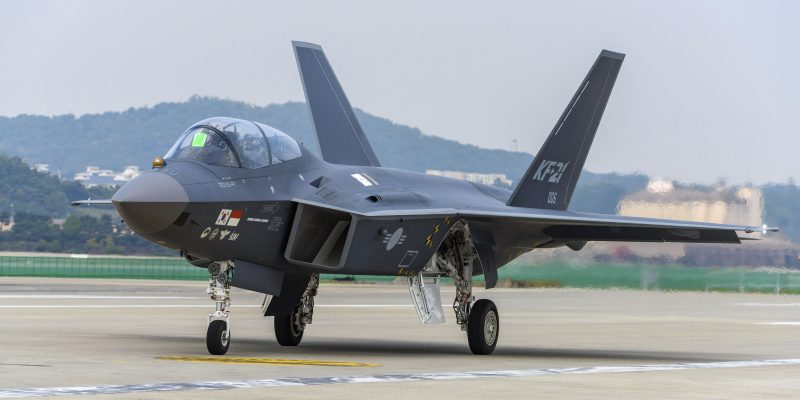
In January 2023, a delegation of top South Korean officials headed by President Yoon Suk Yeol made a historic official visit to the UAE. The trip led to 13 memoranda of understanding (MoUs) covering several areas of strategic cooperation, including two in the defense field. The Tawazun Council, the leading Emirati state authority for armaments procurement and defense R&D programs, and the Korean Defense Acquisition Program Administration (DAPA) Ministry, Seoul’s regulatory authority for weapons procurement programs, agreed to enhance cooperation in the defense industry sector. Tawazun and KAI launched a joint development program for a next-generation multi-mission cargo aircraft. In September 2023, reports also mentioned the UAE’s interest in joining the KAI KF-21 Boramae program—a joint South Korean-Indonesia initiative to develop a 4.5-generation fighter aircraft. However, with South Korea starting the initial manufacturing phase of the first KF-21 model and accepting Indonesia’s adjusted downward financial commitments, it is unlikely to see the UAE joining the bid for the next-generation jet program, at least in the near future.
UAE-South Korea defense industrial cooperation reached a new milestone in late May 2024 when the two countries signed a long-sought-after free trade agreement, officially known as the Comprehensive Economic Partnership Agreement (CEPA). The CEPA aims to spur joint business opportunities and commercial ties by cutting import duties on import-export exchanges and lowering barriers to investment, including in the defense industry sector.
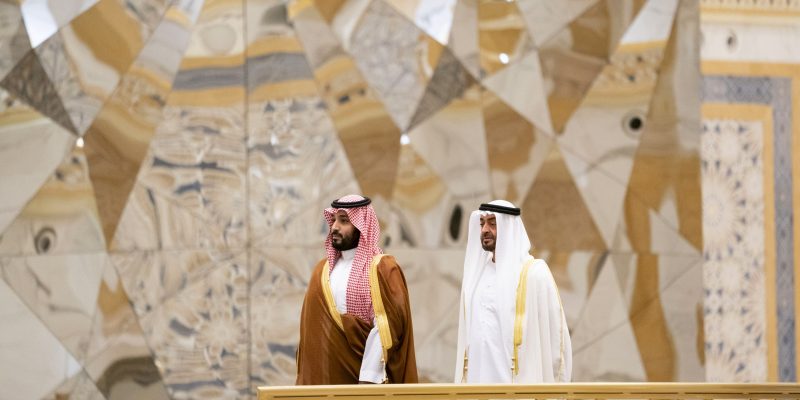
The CEPA signing ceremony coincided with UAE President Sheikh Mohammed bin Zayed Al Nahyan’s two-day state visit to Seoul in May 2024. The two sides issued a Joint Statement, which acknowledged the defense portfolio as one of the four key areas for deepening bilateral cooperation. More precisely, joint efforts in cybersecurity, defense technologies, and defense R&D were identified as top priorities in the bilateral relationship. During his diplomatic trip to Seoul, the UAE President also held extensive talks with top South Korean executives in the defense industries, such as Hanwha Group’s Vice Chairman Kim Dong-kwan and LIG Nex1’s Chairman Koo Bon-sang, underlying the defense industry’s centrality in the UAE’s relationship with South Korea.
Compared to U.S. and European weapon systems manufacturers, Seoul displays a more relaxed attitude towards technology transfer and localization—the willingness for South Korean firms to establish production lines in foreign countries. For instance, some Korean arms manufacturing companies have often set up factories in countries with which they have concluded multi-billion arms procurement contracts, such as Poland, Egypt, and Australia. From the UAE’s perspective, these factors, combined with the quality of Korean defense solutions, make Seoul an ideal partner for enhancing Abu Dhabi’s own defense industrial base.
The May 2024 Joint Statement also stressed the need to strengthen inter-institutional defense-focused engagements. The Joint Higher Military Committee (JHMC)—a consultative body that regularly brings together ministerial-level officials from the two states for consultations—was recognized as a powerful conduit to advance cooperation in the security sphere. Abu Dhabi and Seoul also agreed to intensify engagements through 2+2 consultations that include their respective Ministries of Foreign Affairs and Ministries of Defense to align on strategic areas of common national interests.
Diversification Divides
Although the UAE and South Korea have made significant strides to deepen their defense ties, they have also signaled a similar interest in staying clear of exclusive relationships while cultivating a well-diversified network of strategic partners.
For instance, in recent years the UAE has developed close security ties with China, one of South Korea’s regional adversaries. Abu Dhabi has procured Chinese-made weapons systems, such as Wing Loong family drones and Hongdu L-15A trainer aircraft. The Chinese People’s Liberation Army Navy’s warships make port calls to Abu Dhabi during IDEX/NAVDEX, and high-level meetings between Emirati and Chinese top military officers have become more and more frequent.
Most notably for cooperation between Abu Dhabi and Seoul, the UAE and China have also intensified on-the-ground military cooperation, with their Air Forces successfully conducting two iterations of the Falcon Shield exercise, a joint air warfare training program. Although the UAE is yet to include South Korean weapon systems in the Falcon Shield exercise, intensifying joint UAE-China military drills may provide Beijing access to Korean-made armaments. Concerns among Seoul’s political and military circles that critical South Korean military technology could end up in the hands of China or North Korea could derail UAE-ROK defense partnership
Of course, South Korea’s defense partnerships could cause trepidation in Abu Dhabi that its neighbors could leapfrog the UAE. As a nation aspiring to become a top weapons supplier globally, South Korea has sought to cultivate an extensive network of clients for its defense solutions and advanced technologies. To meet its ambitious goals, Seoul has sought lucrative overseas procurement contracts and industrial partnerships with many countries, including Saudi Arabia,—the largest Gulf monarchy and the UAE’s primary Arab competitor in the Middle East’s defense business. Saudi-Korean defense trade ties have significantly deepened over the past years, with Riyadh purchasing K-239 Chunmoo rocket launchers and Cheongung M-SAM II systems.
Beyond the arms trade agenda, defense-industrial cooperation has also grown dramatically. In February 2024, Saudi Arabia Military Industries (SAMI), a top Saudi defense company spearheading the country’s defense localization push, signed an MoU with the South Korean vehicle manufacturer Kia to bolster domestic manufacturing capabilities. In the same month, South Korea’s DAPA Ministry and the Saudi Defense Ministry inked an MoU to expand defense technology R&D and weapons systems co-production.
Like the UAE, Saudi Arabia is redoubling its efforts to build an indigenous military industry and looks to South Korea as a strategic partner. Deepening industrial cooperation between Seoul and Riyadh might fuel some uneasiness with the UAE, especially if ROK-KSA cooperation grants Saudi defense companies a critical technological edge over Emirati firms.
The recent boom in defense-military ties between the UAE and South Korea fits neatly into the Emirati push to diversify its security and business partnerships, as well as its weapons suppliers. As long as cooperation between Abu Dhabi and Seoul proves capable of yielding mutual tangible gains while providing them with sufficient leeway to pursue their national strategic interests, there is strong reason to believe that bilateral defense-military relations will continue to develop positively.
The views and opinions expressed in this article are those of the authors and do not necessarily reflect the views of Gulf International Forum.
Issue: Defense & Security
Country: UAE

Leonardo Jacopo Maria Mazzucco is a PhD candidate in Institutions and Policies at the Catholic University of Milan, Italy. His research interests revolve around the foreign policy and security affairs of the Gulf region. He tweets at @mazz_Leonardo.

Toward a New Order in MENA Regional Geopolitics
September 2, 2026This report is a byproduct of the workshop “Toward a New Order in MENA Regional Geopolitics: What’s Next for the Region’s Geopolitical Equilibrium?,” hosted in…
Yemen’s Emerging Role in the Red Sea
August 27, 2026On August 4, 2026, the Yemeni Coast Guard (YCG) rescued the 14-member crew of the Indian-flagged commercial vessel Faize Noore Oliya. Transiting the Red Sea…
The Iran War Is Rewriting Kuwait’s Defense Architecture
July 14, 2026Since the outbreak of the Iran war in February 2026, Kuwait has announced a series of major defense acquisitions, including a $1 billion contract for…