Can Trump and Tehran Come to Terms?
Trump’s renewed talks with Iran may lead to a landmark nuclear deal—balancing sanctions relief and Israeli pressure with the need to reduce regional tensions in a volatile new era.

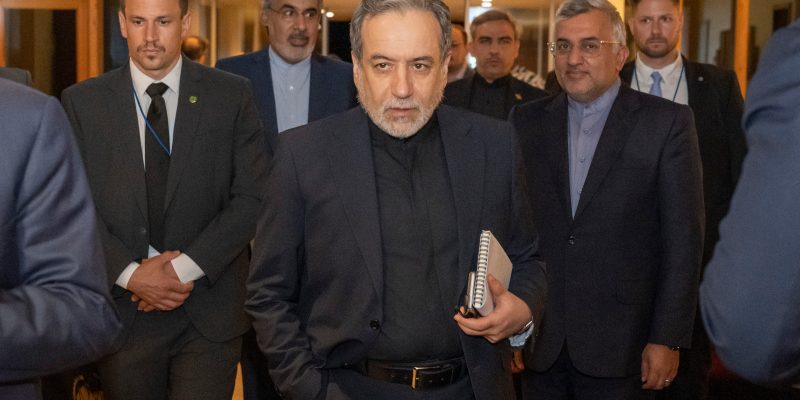
One of the hallmarks of foreign policy in Donald Trump’s second term has been the return of contentious relations with many of America’s traditional Western allies, combined with a willingness to talk with at least some of America’s traditional adversaries—including Iran. The United States recently claimed it had entered into “direct” talks with the Islamic Republic (for its part, Iran claimed they were “indirect” discussions). Regardless, talks between American and Iranian officials in Oman and at the Omani embassy in Rome have opened the door to the possibility of a new accord to replace the 2015 Joint Comprehensive Plan of Action, or JCPOA, from which Trump withdrew the United States in 2018. It is not clear, however, whether the United States and Iran will come to an agreement, or whether hopes for one will be dashed.
Setting the Stage
Several factors could lead to a new agreement over Iran’s nuclear program. The first major consideration is that Donald Trump now wants to reach such an agreement, unlike when he pulled out of the original JCPOA which had been negotiated during the Obama administration. The fact that President Obama had pushed for the JCPOA appeared to be reason enough for Trump to dismiss it as a “bad deal.” Trump, though, seems to have an implicit faith in his own ability to reach a “good deal” with the regime in Tehran. And while Republicans in Congress criticized the JCPOA, many of them would be reluctant to criticize any Trump-brokered agreement for fear of facing a primary opponent backed by the president.
Another factor is that Tehran is on the back foot after extremely effective Israeli attacks on Lebanese Hezbollah and Iran itself, the downfall of the Iranian-backed Assad regime in Syria, and the complete withdrawal of IRGC forces from Syria in 2024. After Israeli forces degraded Iran’s missile defense capabilities last year, Iran’s nuclear facilities are now more vulnerable to Israeli or U.S. attack than ever. Tehran, therefore, may now be more motivated to seek a nuclear agreement with the Trump administration that allows it to preserve some of its nuclear capabilities rather than risk their destruction.
Third, despite the Trump administration’s strong support for Israel, Trump made clear during Israeli Prime Minister Netanyahu’s April 2025 visit to the White House that the United States would not allow Israel to exercise a veto over American foreign policy in the Middle East. According to the New York Times, Trump “waved off” an Israeli plan to attack Iranian nuclear sites that would have required U.S. support. Netanyahu never hesitated to criticize Obama’s or Biden’s regional policies because these former presidents were neither willing nor able to impose costs on Israel. Given Trump’s often mercurial disposition toward America’s longstanding Western allies, however, Netanyahu cannot be certain that Trump would not treat him in a similar fashion. And while Republicans are now generally more supportive of Israel than Democrats, it is uncertain whether Israel can count on Republican legislators to side with Netanyahu over Trump, especially given the increasingly critical view of Israel among younger American conservatives.
Yet while these factors might make a renewed nuclear agreement seem more likely, obstacles remain. Tehran wants any agreement to include relief from America’s economic sanctions, as well as the preservation of what Tehran has termed its “non-negotiable” right to enrich uranium. If Trump is unwilling to accommodate Tehran on these demands, then a deal is highly unlikely.
Broader Implications
If the United States and Iran do come to an agreement on the nuclear issue, the resulting accord could set the stage for a more general détente between the two countries. As international relations theorist and Harvard professor Stephen Walt pointed out in his 1996 book Revolution and War, hostility between revolutionary regimes on the one hand and status quo powers on the other can abate when the former stops attempting to export revolution and the latter no longer threatens the former’s survival. A new agreement would not necessarily foretell a broader rapprochement, in which Tehran ends its support for Hezbollah, the Houthis, other Shi’a militias, and Hamas. But combined with sanctions relief, a nuclear deal could strengthen the hand of those inside the Iranian government who value domestic economic growth over support for “resistance forces” across the Arab world, whose activities do not contribute to Iran’s domestic economic development. A regime in Tehran more focused on improving the lives of its citizens would also improve Iran’s relations with the GCC states, who might see value in investing across the Gulf. Cross Gulf integration, which has long appeared to be unlikely, could begin to emerge.
Even if a U.S.-Iranian agreement on the nuclear issue does not result in a full reset in relations, it may push Iran to adopt foreign policies more aligned with U.S. interests. For example, many American presidents, including Trump, have sought to cooperate with Russia to prevent Iran from acquiring nuclear weapons. A U.S.-Iranian agreement on the nuclear issue could open the door to Washington drawing Tehran away from Moscow—specifically, through reducing or even ending Iranian support for Russia’s war effort against Ukraine.
Though successful Iranian-American negotiations could offer many benefits, failure could also have momentous consequences. Trump has already threatened to bomb Iran or implement secondary sanctions against any country that trades with the Islamic Republic if a nuclear agreement is not reached. But while an attack on Iranian nuclear facilities may set back Iran’s nuclear program temporarily, it might also risk convincing leaders in Tehran that nuclear weapons offer the only guarantee of survival. This could have a cascading effect with Türkiye, Saudi Arabia, the UAE, and Egypt also moving to build their own nuclear arsenals. The Middle East could become an even tenser region, brimming with atomic weapons.
Many factors, including unforeseen developments in the coming months, will decide the fate of a potential nuclear deal between the U.S. and Iran. Such an accord could have positive consequences for the Middle East, as well as the rest of the world, if it opened the door to a broader rapprochement between Iran on the one hand and its Middle Eastern neighbors, as well as the West on the other. Failure to reach an accord, though, would almost certainly worsen distrust and lead to greater regional instability.
The views and opinions expressed in this article are those of the authors and do not necessarily reflect the views of Gulf International Forum.
Issue: U.S. – Gulf Policy
Country: Iran

Mark N. Katz is a professor emeritus of government and politics at the George Mason University Schar School of Policy and Government, and a nonresident senior fellow at the Atlantic Council.

Trump’s War on Iran Runs Through Baghdad
October 8, 2026Seven months into the war with Iran, the Strait of Hormuz remains a major point of contention. Goldman Sachs estimates that Gulf oil flows have…

Toward a New Order in MENA Regional Geopolitics
September 2, 2026This report is a byproduct of the workshop “Toward a New Order in MENA Regional Geopolitics: What’s Next for the Region’s Geopolitical Equilibrium?,” hosted in…

The Geopolitics of the U.S.–Saudi Nuclear Deal
August 18, 2026In late July, the Trump administration announced a landmark civil nuclear cooperation agreement with Saudi Arabia. Signed in accordance with Section 123 of the Atomic…