Caught Between Giants: How the GCC States Can Navigate the U.S.-China Trade Dispute
Though the GCC states may escape the worst of the economic conflict between Washington and Beijing, its consequences could cause a downturn in the Gulf if not carefully managed.

The world’s two largest economies have turned tit-for-tat protectionism into a high-stakes showdown, unleashing tariffs as high as 145 percent and causing a cascade of retaliation that has reverberated from Wall Street to Shanghai. As global markets reel, the Gulf’s leaders—whose budgets and economic diversification strategies hinge on stable oil revenues and open markets—find themselves caught in the middle of a trade war that could test not only the price of crude, but the resilience of their economies and the adaptability of their development plans, as well.
The Trade War Escalates
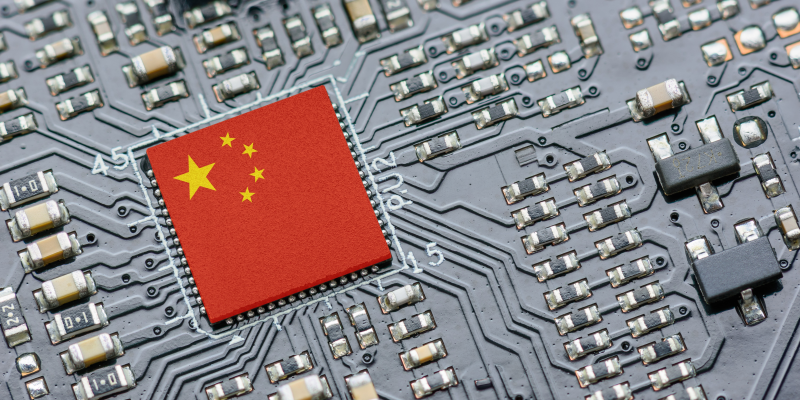
In January 2025, shortly after President Donald Trump returned to office, the United States and China tore down the last vestiges of détente in their bilateral commercial relationship. The Trump administration immediately announced a sweeping increase in import duties, raising tariffs on a broad spectrum of Chinese exports to rates as high as 145 percent—a move the White House justified as necessary to correct the United States’ nearly $300 billion trade deficit with China and counter “unfair practices” in Beijing’s industrial planning and subsidies. This escalation followed years of mounting tension over intellectual property theft, technology transfer, industrial subsidies, and the specter of direct conflict over Taiwan.
Within days of Trump’s April 2, or “Liberation Day,” tariffs, China retaliated with a blanket 34 percent tariff on American goods. After several rounds of tit-for-tat tariffs, Beijing raised some duties even higher and imposed stricter export controls on rare earth minerals crucial to high-tech industries. Taken together, these steps have underscored Beijing’s willingness to leverage its dominance in this sector, as China controls over 70 percent of the global supply.
Indeed, what began as Trump’s targeted campaign against steel and aluminum imports has morphed into a full-blown economic confrontation, shattering assumptions about the certainty of global trade. The White House apparently assumed that the steep tariffs would force China back to the negotiating table and trigger a renegotiation of the lapsed Phase One deal. However, over the past decade, Beijing has taken steps to cushion its economy from external trade shocks, and is seemingly determined to weather Washington’s tariffs. In the wake of the April 2 tariffs, China abandoned its previous restraint and launched a full-spectrum governmental counteroffensive. This marked a stark departure from months of Chinese diplomatic efforts to open senior-level dialogue with Washington and uphold what state media has called “win-win” economic and trade relations.
From the first skirmishes over aluminum tariffs in 2018 to the tit-for-tat escalation in 2025, the trade war has upended markets and prompted Beijing to file formal complaints at the World Trade Organization (WTO). In February, Washington sought authorization to impose additional sanctions on Chinese digital technology firms accused of stealing U.S. intellectual property. Beijing responded by demanding the removal of all recent U.S. tariffs before it would consider negotiation. Meanwhile, Washington added dozens of Chinese entities to the Department of Commerce’s Entity List, including more than 50 for their alleged involvement in developing advanced AI, supercomputers and high-performance AI chips for the Chinese government.
Global equity markets stumbled with each new announcement. In March, the MSCI World Index fell nearly 5 percent in a single session, and major American technology firms saw market capitalizations shrink by tens of billions of dollars after the largest tranche of U.S. duties took effect. Oil markets are equally volatile, with the price of oil dropping by nearly 20 percent since April 2. The International Energy Agency (IEA) downgraded its demand forecast for 2025, attributing the revision in part to the projected slowdown in Chinese manufacturing and American imports. Analysts at Goldman Sachs warned that a prolonged trade war could shave up to 0.5 percent off global GDP growth, with emerging markets particularly vulnerable. While the recent announcement of a 90-day pause in tariffs has buoyed markets, the future of international commerce remains uncertain.
The Trade War’s Impact on Gulf Economies
The Gulf Cooperation Council (GCC) states, as some of the world’s largest energy exporters, have watched these developments with acute interest and, likely, growing anxiety. On paper, their direct exposure to U.S. and Chinese tariffs is limited. As a bloc, the six-member GCC collectively exports less than 4 percent of its goods to the United States, and nearly all of that consists of oil and gas—products the United States explicitly exempted from its latest round of tariffs.
Yet, two anomalies stand out. Oman and Bahrain each benefit from bilateral free-trade agreements with Washington that previously granted zero-duty access on a broad roster of goods. Under the new United States’ global 10 percent baseline tariff regime, those preferences are nullified. For other GCC economies, most manufactured exports like aluminum components, petrochemical derivatives, and specialized machinery will incur the standard 25 percent Section 232 tariff, deterring U.S. importers from sourcing these products.
The Gulf’s exposure is not limited to direct trade. Global capital flows have also shifted, with foreign direct investment (FDI) into the region declining by 8 percent in 2024 as investors grow wary of trade-related volatility. Many non-oil sectors in the Gulf, such as manufacturing, logistics, and technology, are heavily reliant on imported machinery, equipment, and intermediate goods from the United States, China, and Europe. Tariffs and retaliatory measures raise the cost of these imports, squeeze profit margins, and delay or derail investment in new industrial capacity. Gulf manufacturers that source raw materials or components from the United States will see their costs rise, as the 25 percent baseline tariff and the elimination of prior country-specific carve-outs make American inputs more expensive.
The Gulf’s petrochemical industry has also been directly affected by the trade war. As America and China impose tariffs on each other’s chemicals and plastics, Chinese buyers have shifted to Saudi Arabia, Qatar, and the UAE for feedstocks like liquified petroleum gas (LPG) and ethane. However, this shift has also caused turmoil in Asian markets; U.S. goods no longer being sent to China have been rerouted across Asia, providing new competition in markets where the GCC states have long been the dominant suppliers.
Furthermore, the Gulf’s heavy reliance on imports exposes it to inflationary pressures. If tariffs cause the U.S. dollar to appreciate, Gulf currencies, which are pegged to the dollar, will also strengthen, making non-oil exports more expensive and imports cheaper. Conversely, if the dollar weakens, the cost of imports could rise, fueling inflation and increasing the cost of living for the region’s citizens. This dual risk complicates economic management and could dampen consumer demand in non-oil sectors.
The real stress test for the dollar-dependent Gulf states could come from sustained U.S. monetary tightening. Tariff-driven inflation in the U.S. might prevent the Fed Reserve from cutting rates, or even push it to raise them, with the resulting higher borrowing costs rippling through the Gulf, choking off credit demand and undermining the GCC states’ economic diversification strategies.
Second-Order Effects
Despite these challenges, opportunities may still present themselves. As global supply chains are rerouted, the Gulf’s well-developed logistics infrastructure could allow it to evolve into an alternative gateway for international trade, attracting new investment and boosting sectors like shipping, warehousing, and air cargo. Yet this potential is tempered by the risk that a prolonged downturn in global trade volumes could marginalize the Gulf’s role as a logistics hub, especially if overall demand for container transport and air freight declines.
The rerouting of global trade flows may also make the Gulf a target for surplus goods originally destined for the U.S. For example, Chinese manufacturers, unable to access the U.S. market at competitive rates, may increase their exports to the Gulf, intensifying price competition for local producers of steel, aluminum, machinery, and other manufactured goods. This pattern might also subject Gulf countries to greater scrutiny and pressure from the United States.
For example, although Canada currently accounts for half of U.S. aluminum imports, Gulf producers such as Bahrain’s Alba—the world’s largest smelter outside China—and the UAE’s Emirates Global Aluminum are poised to fill the gap. Backed by abundant, low-cost energy, Gulf smelters can maintain a competitive, albeit narrower edge under the new tariff regime, sustaining their export volumes to the U.S. and even expanding into new markets.
These supply-chain and market dynamics overlay the indirect consequences of softer demand on oil revenues. The IEA’s Oil Market Report for April 2025 called for near-zero global demand growth, and OPEC reduced its forecast for non-OPEC demand gains by nearly a million barrels per day. Brent crude oil traded in the mid-$60s in early April, down from the high-$70s/low-$80s in January—a decline on the order of 14–20 percent, translating into a multibillion-dollar shortfall for Gulf producers. Financial markets in the Gulf reflected the broader climate of uncertainty; the MSCI GCC Index fell in tandem with global peers, while currency dynamics—driven by dollar strength—has threatened to stoke local inflation by hiking the price of imports.
Moreover, the specter of oil-price volatility looms large. A prolonged global downturn could push crude into the $50-60 per barrel range, exacerbating budget deficits that could force GCC states to tap their sovereign wealth funds. Proposals to diversify reserve assets by shifting a portion of holdings away from U.S. Treasuries and into Asian fixed-income markets reflects a recognition that reliance on a single country’s financial system may be untenable.
Beyond its immediate ramifications for global growth, the U.S.-China trade clash is reshaping the broader trade environment. Global supply chains are fragmenting due to “de-risking” in both Washington and Beijing. Many countries must now hedge between the two giants. China in particular is accelerating its own initiatives, like the Asian Infrastructure Investment Bank (AIIB), Regional Comprehensive Economic Partnership (RCEP), and BRICS Plus, which aim to create trade corridors insulated from U.S. leverage. For its part, the United States has signaled its willingness to act unilaterally, smashing long-held norms and WTO rules alike. Indeed, during recent WTO deliberations, multiple countries have joined China in warning that the U.S. tariffs violate established rules and could harm both developed and developing economies. This fracturing of trust in the multilateral system holds one major lesson for the Gulf states: stable access to Western markets under WTO disciplines is no longer guaranteed.
A New Reality
As 2025 progresses, Gulf capitals are realizing that the U.S.-China trade war represents not a passing dispute, but a structural transformation of the global economic order. For decades, GCC states prospered under an open, rules-based system sustained by U.S. leadership and robust Chinese demand. That paradigm is now fracturing, replaced by heightened volatility, shifting alliances, and unpredictable policies.
In response, Gulf governments have begun charting a new course that blends economic diversification, regional integration, and multi-vector diplomacy. Their success will hinge on the ability to coordinate fiscal and regulatory reforms, attract a broader array of foreign investment, and maintain strategic equilibrium between Washington and Beijing. The region’s metamorphosis from passive oil exporters into dynamic hubs of trade, finance, and technology will define the next chapter of its modern history.
Yet, even as Gulf states marshal their strengths—geographic advantage, deep financial reserves, and diplomatic agility among them—they must recognize the gravity of the situation. While diplomatic breakthroughs in Washington and Beijing may temporarily improve the trade situation between the two countries, with positive external effects for the Gulf states, such talks are no panacea. The U.S. and China remain locked in a cycle of competition that neither side wishes to abandon. In theory, the two capitals could still negotiate a trade agreement that forestalls additional tariffs. Trump’s high-profile visit to the Gulf could also yield carve-outs that shield key partners. But neither scenario is guaranteed, and Gulf economies must brace for an enduring climate of risk, market volatility, and policy uncertainty, even if tentative accords emerge.
In this era of heightened great-power competition, the Gulf’s capacity to shield itself from the worst of the economic headwinds while continuing its economic transformation will determine its long-term security and prosperity. By remaining proactive, diversified, and diplomatically nimble, the GCC can not only weather the storm, but also seize the opportunities that a reconfigured global trade landscape presents.
The views and opinions expressed in this article are those of the authors and do not necessarily reflect the views of Gulf International Forum.
Issue: Economy & Innovation, Geopolitics
Country: GCC

Dr. John Calabrese teaches international relations at American University in Washington, DC. He is the book review editor of The Middle East Journal and a Non-Resident Senior Fellow at the Middle East Institute (MEI). He previously served as director of MEI’s Middle East-Asia Project (MAP). Follow him on X: @Dr_J_Calabrese and at LinkedIn: https://www.linkedin.com/in/john-calabrese-755274a/.
Saudi Arabia’s E-Commerce Boom: Why Traditional Small Businesses Risk Falling Behind
November 5, 2026Saudi Arabia’s digital marketplace is expanding rapidly. By the third quarter of 2026, the kingdom had 52,259 active e-commerce commercial registrations, up 25 percent from…
The Middle East’s Corridor Boom Meets Reality
July 22, 2026In recent years, particularly since the outbreak of the recent conflicts in Gaza and Iran, the Middle East has seen a resurgence of connectivity projects….
Iraq’s Fiscal Shock and the New Government’s Bargain
July 20, 2026The disruptions to shipping through the Strait of Hormuz have left Iraq facing more than an immediate export shock. Transport has remained constrained, insurance and…