Critical Mineral Diplomacy: The Significance of the U.S.–Saudi Mining Pact
Washington and Riyadh have found a slick, shared solution to their parochial economic concerns.

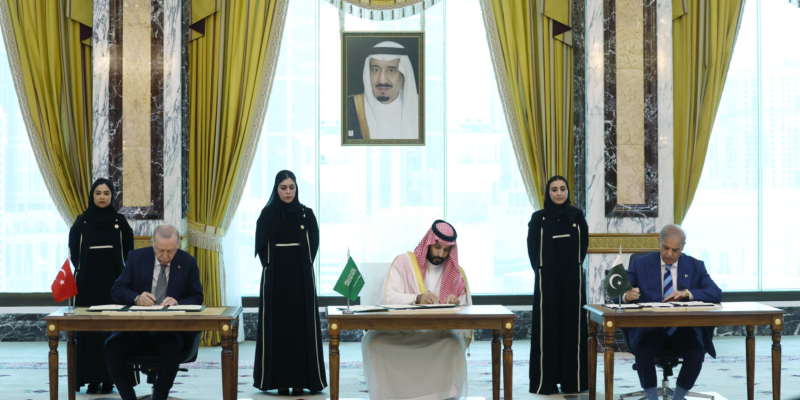
The recent Memorandum of Cooperation (MOC) signed between the United States and Saudi Arabia on mining and mineral resources marks a significant shift in the geopolitics of global supply chains. Reached on May 13, 2025, during President Donald Trump’s visit to Riyadh, the agreement establishes a framework for joint exploration and processing, as well as the integration of critical mineral supply chains essential for advanced manufacturing, defense technologies, and renewable energy systems. By aligning Saudi Arabia’s $2.5 trillion in mineral wealth with U.S. technological capabilities and strategic diversification goals, this partnership promises to accelerate the economic transformation goals heralded by Saudi Vision 2030 while directly challenging China’s dominance in global critical mineral markets.
Through an injection of $170 billion in governmental and private investment, Saudi Arabia’s Vision 2030 seeks to grow the Saudi mining industry’s from $17 billion in 2022 to $75 billion by 2030. The National Industrial Development and Logistics Program (NIDLP), which supports Vision 2030 and lies at the heart of this strategy, aims to create 13 mining-related industrial cities by 2026, boost mineral processing capacity for aluminum and phosphates by 400 percent, and establish the Kingdom as a global center for rare earth processing by 2027. Ma’aden, the Kingdom’s leading state-owned mining company, is spearheading this initiative and intends to spend $32 billion on mining projects by 2030. To secure access to battery-grade materials and strengthen Saudi Arabia’s position in the global supply chain for critical minerals, Ma’aden’s strategic arm, Manara Minerals, a joint venture with the Saudi Public Investment Fund (PIF), has already purchased a 10 percent stake in Vale Base Metals, which controls $26 billion in copper-nickel assets across the globe.
A Win-Win Agreement
The U.S.–Saudi MOC outlines a three-pronged approach to critical mineral supply chain integration. First, U.S. geophysical services companies will use cutting-edge technologies like hyperspectral satellite imaging and AI-driven seismic analytics to explore and assess mineral-rich areas like the Nuqra Quadrangle and Wadi Sawawin. Second, the agreement will facilitate innovation and knowledge transfer in mineral processing, allowing U.S. businesses to export systems like solvent-extraction electrowinning (SX-EW) for copper refining and in-situ leaching (ISL) for rare earth extraction. The first of its type in the Kingdom, MP Materials’ proposed $1.2 billion rare earth separation facility near Ras Al-Khair, represents a noteworthy milestone toward integrating these technologies into the Saudi mining sector. Third, the MOC includes a $500 million collaborative training program with U.S. universities and organizations like Virginia Tech and the Colorado School of Mines to train 25,000 Saudi experts in mining automation, processing, and sustainability.
Of course, the recent deal does not only benefit Saudi Arabia’s economic diversification goals. The MOC’s primary, though unwritten, aim is to improve mineral security and address systemic vulnerabilities in global mineral supply chains dominated by China. Currently, Beijing controls 85 percent of rare earth processing, 70 percent of cobalt refinement, and 60 percent of lithium-ion battery manufacture worldwide. Through measures like the MOC, the United States hopes to take advantage of Saudi Arabia’s much lower energy prices (3¢/kilowatt-hour, or kWh, compared to China’s 8¢/kWh), which are crucial for energy-intensive mineral separation. Additionally, the deal gives the United States access to Saudi phosphate reserves, which account for 7 percent of the world’s supply. This will strengthen food security by increasing domestic fertilizer production and lowering American reliance on phosphate imports from adversaries like Russia.
Geopolitical Impact
Saudi-U.S. collaboration on mining and vital minerals could drastically alter global geopolitics as states scramble to secure supplies of vital resources like lithium and rare earths. In a world increasingly powered by renewable energy sources, the MOC marks a significant shift for Saudi Arabia as it seeks to shed its reliance on oil and become a key player in the global energy revolution. Outside of the Middle East, Saudi-U.S. partnership could check China’s continued expansion into mineral-rich areas of Africa, Asia, and Latin America by bolstering Western-led associations like the Mineral Security Partnership, which includes U.S. allies in Europe and Asia, as well as India, and supports the establishment of more reliable alternative supply chains for critical commodities.
In addition to its obvious economic advantages, the MOC strengthens the geopolitical partnership between the United States and Saudi Arabia at a time when resource nationalism and protectionist policies are on the rise. The agreement reflects the ambition of both partners to create robust, diversified supply chains that sideline China, combining the U.S.’s pursuit of supply chain security with Saudi Arabia’s Vision 2030 diversification aspirations. More than an economic partnership, the MOC offers a model for other countries to emulate when securing their supplies of critical minerals and rare earths. The MOC’s long-term success will depend on continued innovation on both sides, policy alignment among political leaders, and a shared willingness to negotiate amid a quickly changing global marketplace for the resources of the future.
The views and opinions expressed in this article are those of the authors and do not necessarily reflect the views of Gulf International Forum.
Issue: Economy & Innovation, Geopolitics, U.S. – Gulf Policy
Country: KSA

Dr. Umud Shokri is an accomplished energy strategist and senior foreign policy advisor with over two decades of experience. With a Ph.D. in International Relations, he specializes in global energy dynamics, climate change, clean energy technologies, energy security, and geopolitics. Currently a Senior Visiting Fellow at George Mason University, Dr. Shokri has significantly influenced policy and strategy development across the energy sector, including authoring “US Energy Diplomacy in the Caspian Sea Basin.” His work spans from analyzing oil and gas market trends to advising on sustainable energy policies, collaborating with government entities, academic institutions, and industry stakeholders to address global energy challenges. In his role as a Black Sea State Department Title VIII Fellow, Dr. Shokri focuses on Azerbaijan’s energy transition and preparations for COP29, exploring the country’s shift towards renewable energy and its socio-economic and geopolitical impacts. His commitment to environmental sustainability is reflected in his advocacy for aligning with ESG frameworks and guiding entities towards real-world greenhouse gas emission reductions. Through his research and engagement with policymakers, Dr. Shokri contributes valuable insights to the discourse on energy transition and climate action at both regional and global levels.
Saudi Arabia’s E-Commerce Boom: Why Traditional Small Businesses Risk Falling Behind
November 5, 2026Saudi Arabia’s digital marketplace is expanding rapidly. By the third quarter of 2026, the kingdom had 52,259 active e-commerce commercial registrations, up 25 percent from…
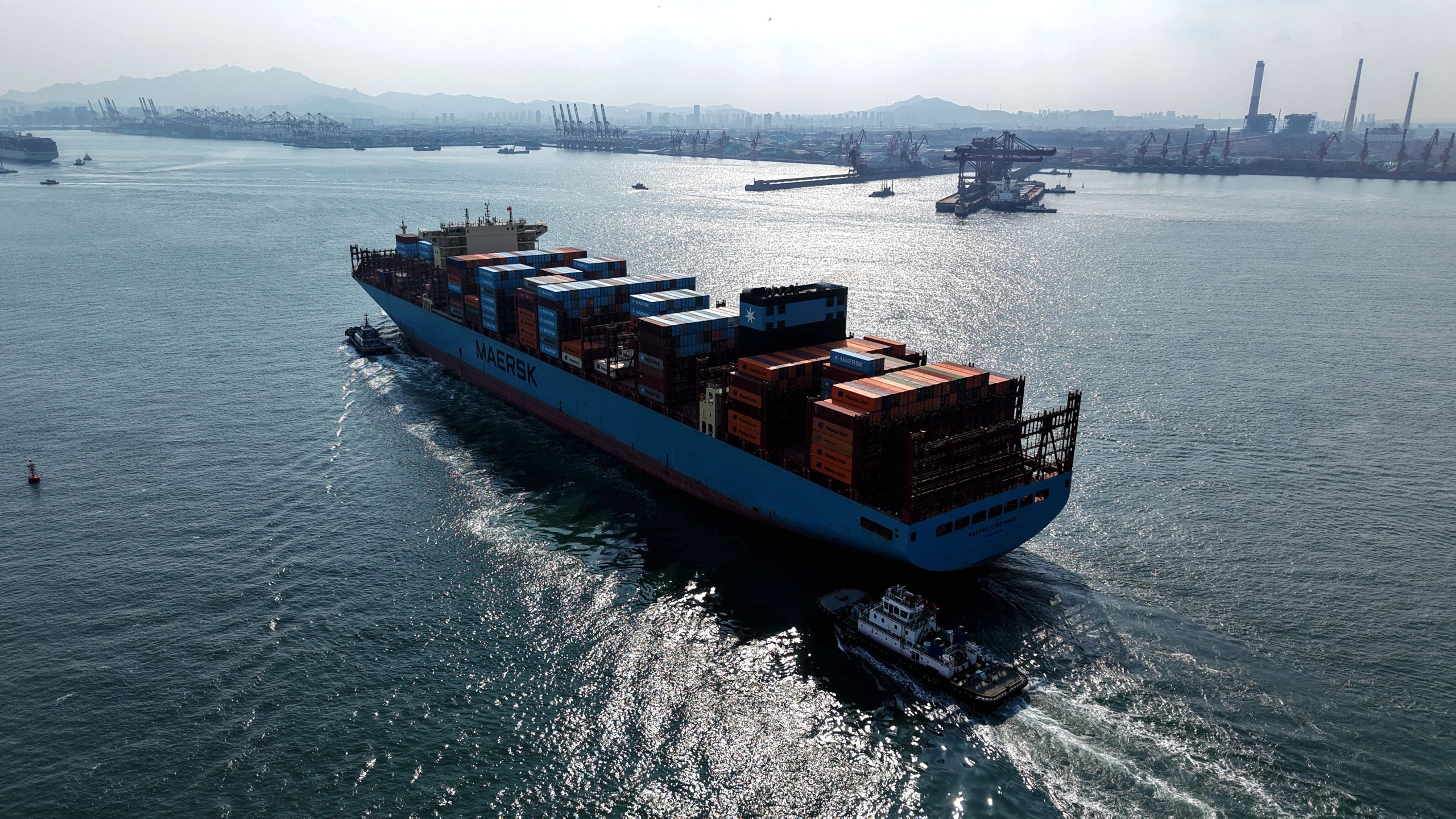
The Middle East’s Corridor Boom Meets Reality
July 22, 2026In recent years, particularly since the outbreak of the recent conflicts in Gaza and Iran, the Middle East has seen a resurgence of connectivity projects….
Iraq’s Fiscal Shock and the New Government’s Bargain
July 20, 2026The disruptions to shipping through the Strait of Hormuz have left Iraq facing more than an immediate export shock. Transport has remained constrained, insurance and…