


Deals, Diplomacy, and Ratings: Trump’s Gulf Tour and the Battle for Hearts at Home
Trump’s regional visit aims to shore up longtime partnerships and chart a unified course on issues such as Israeli normalization and Iran.

President Donald Trump’s decision to select Saudi Arabia, Qatar, and the United Arab Emirates as the destinations for his first foreign trip in a second presidential term is both symbolically loaded and strategically calculated. It signals a renewed commitment to reinforcing ties with key Gulf allies—relationships that were strained during the Biden administration. Yet this bold diplomatic overture abroad stands in stark contrast to the political headwinds Trump faces at home.
Recent opinion polls reveal a notable decline in his domestic support, raising critical questions about whether renewed engagement with Arab Gulf states could help him regain political momentum. Could a highly publicized visit to a region deeply intertwined with U.S. strategic interests serve as a springboard for revitalizing his image and boosting his popularity? After all, the Gulf States are playing key roles in regional and international diplomatic initiatives, such as Qatar mediating alongside the U.S. in Gaza, Saudi Arabia hosting U.S.-Russia talks, the UAE arranging multiple prisoner swaps between Ukraine and Russia, and Oman facilitating various rounds of dialogue involving the U.S., Iran, Saudi Arabia, and Houthi representatives in Yemen.
Trump’s focus on the Gulf is not new. In 2017, he made Saudi Arabia the first stop of his presidency, a move that set the stage for consequential regional shifts—including the Gulf crisis and a more confrontational stance toward Iran. However, the current political landscape presents far greater challenges. Trump is now contending with serious legal battles, heightened partisan polarization, and mounting international criticism over his stances on immigration, climate change, and multilateral institutions. These pressures are clearly mirrored in declining approval ratings, even in his Republican base.
Against this backdrop, Trump appears to be turning once again to foreign policy—particularly toward the Gulf—as a stage for reclaiming his leadership image. A visit to the region could highlight his enduring personal ties and strategic vision, positioning him as a dealmaker capable of delivering economic gains and safeguarding U.S. interests in energy, investment, and security.
Restoring Alliances and Promoting Investment
Trump’s planned Gulf tour highlights a clear strategic objective: reaffirming and strengthening American influence among longstanding partners and allies. Saudi Arabia, as a central pillar in America’s Middle Eastern strategy, has consistently facilitated core American geopolitical, economic, and security interests. Trump’s return to Riyadh—also the site of his first foreign visit during his first term, in May 2017—reinforces Washington’s enduring commitment to the Kingdom as a primary strategic partner.
One primary focus of Trump’s Gulf visit is the signing of expansive investment agreements and substantial military contracts. Saudi Arabia is expected to commit over $1 trillion in investments into the U.S. economy, including significant defense agreements involving major American defense contractors, such as Lockheed Martin and Boeing. Not to be outdone, the UAE has outlined an investment commitment of around $1.4 trillion in the United States over the next decade, underscoring the strategic economic interdependence between America and the Gulf states. At the same time, the trip could help President Trump bolster his declining approval ratings by showcasing his ability to attract foreign investment, create jobs, and raise wages through major investment pledges from the GCC states.
However, the tariffs imposed on trade between the GCC states and Washington could significantly impact Gulf economies, which rely heavily on hydrocarbon revenues to fund their investments. These tariffs, and the broader trade wars they ignited, are likely to slow global economic growth—reducing demand for oil and gas, driving down prices, and cutting into the revenues of GCC states. In turn, this could undermine their ability to follow through on the pledged $2 trillion in investments in the U.S. economy.
Fighting Adversary Influence
Trump’s diplomatic efforts during this visit are also intended to counter Chinese and Russian influence in the Middle East. Growing economic ties between Gulf nations and America’s peer competitors have raised concerns in Washington about the potential erosion of American geopolitical clout in a critical region. By reinforcing America’s pivotal role in regional affairs, the Trump administration seeks to mitigate these strategic threats and reassert American primacy in the Gulf.
The Trump administration also faces a complex security challenge from Iran, primarily concerning the Islamic Republic’s nuclear aspirations and regional influence. Current negotiations with Tehran regarding its nuclear program are intricate, compounded by strong pressure from key regional partners, particularly Israel, that advocate for a more aggressive American stance. Despite the collapse of Iranian proxies in Syria and Lebanon since September 2024, the administration’s early actions suggest that the United States will respond more forcefully to contain Iran’s regional proxies in Yemen and Iraq.
At the same time, Washington continues to engage actively in diplomatic efforts to mediate ongoing tensions and conflicts, mostly with the help of GCC states, notably the nuclear talks with Iran mediated by Oman, the resumed fighting in Gaza mediated by Qatar and Egypt, and the Russia-Ukraine war where Gulf states have played a role in prisoners swap between Kiev and Moscow. Early discussions facilitated by Saudi Arabia in the early days of Trump’s second administration saw U.S. and Russian officials discuss a resolution to the war in Ukraine, demonstrating the administration’s diplomatic ambitions. Although Qatar has largely avoided Trump’s attention in the opening days of his second term, it has also played a quiet but pivotal role in negotiating the release of Israeli hostages held by Hamas and advancing efforts toward an Israeli-Palestinian settlement.
Promoting Peace and Ensuring Energy Security
An integral part of Trump’s regional policy remains the promotion of normalization between Israel and Gulf states—particularly Saudi Arabia, Qatar, Kuwait, and Oman, which Biden and Trump administrations are trying to include in the Abraham Accords. However, all Gulf states continue to emphasize that the establishment of a Palestinian state and a peace agreement between the Israelis and Palestinian are prerequisites for signing any normalization deal with Tel Aviv.
However, failing to reach a deal with Iran could pose significant risks to the broader strategic and economic ambitions tied to Trump’s Gulf visit. The threat of regional conflict would jeopardize the Gulf monarchies’ substantial investment commitments—valued at nearly $2 trillion over the next decade—in the United States. As the adage goes, “capital is a coward;” sustained uncertainty or the outbreak of conflict would likely deter investors and jeopardize these transformative economic initiatives.
Moreover, a notable discrepancy within the Trump administration itself complicates the situation. While some senior officials advocate for a diplomatic containment strategy with regard to Iran, hawkish voices in the United States increasingly view military confrontation as the only viable path to counter Tehran’s malign regional activities. This internal division could further undermine efforts to stabilize the region and maintain the confidence necessary to sustain both economic and strategic partnerships.
Finally, though the Trump administration has emphasized the need to maintain stable and secure energy supplies, it has not signalled an intention to repeal the extensive list of sanctions that America has levied on global oil producers such as Iran, Venezuela, and Russia. During his visit, President Trump may urge Saudi Arabia, the UAE, and Kuwait to increase oil production to offset supply losses from sanctioned producers—a move that could reignite tensions between Riyadh and Moscow, the key players in the OPEC+ alliance. The last time such a dispute unfolded in 2020, it triggered an oil price war that inflicted heavy losses on U.S. producers and briefly drove oil prices into negative territory. The Gulf states, particularly Saudi Arabia, are critical to the energy security of the United States. Therefore, because ensuring uninterrupted energy supplies remains a central objective of Trump’s diplomatic and strategic engagements within the Gulf region, the Gulf states themselves hold a significant amount of leverage in shaping U.S. regional policies in line with their interests.
Trump’s upcoming visit to the Gulf marks a significant chapter in reshaping America’s strategic approach to Middle East policy. By strengthening traditional U.S. partnerships through strategic economic accords, defense agreements, and diplomatic initiatives, the second Trump administration aims to bolster U.S. leadership and influence in the region. Amid a dynamically shifting geopolitical landscape, this tour could serve as a defining moment in reinforcing America’s longstanding strategic presence and reaffirming its commitment to address emerging regional threats.
The views and opinions expressed in this article are those of the authors and do not necessarily reflect the views of Gulf International Forum.
Issue: U.S. – Gulf Policy
Country:
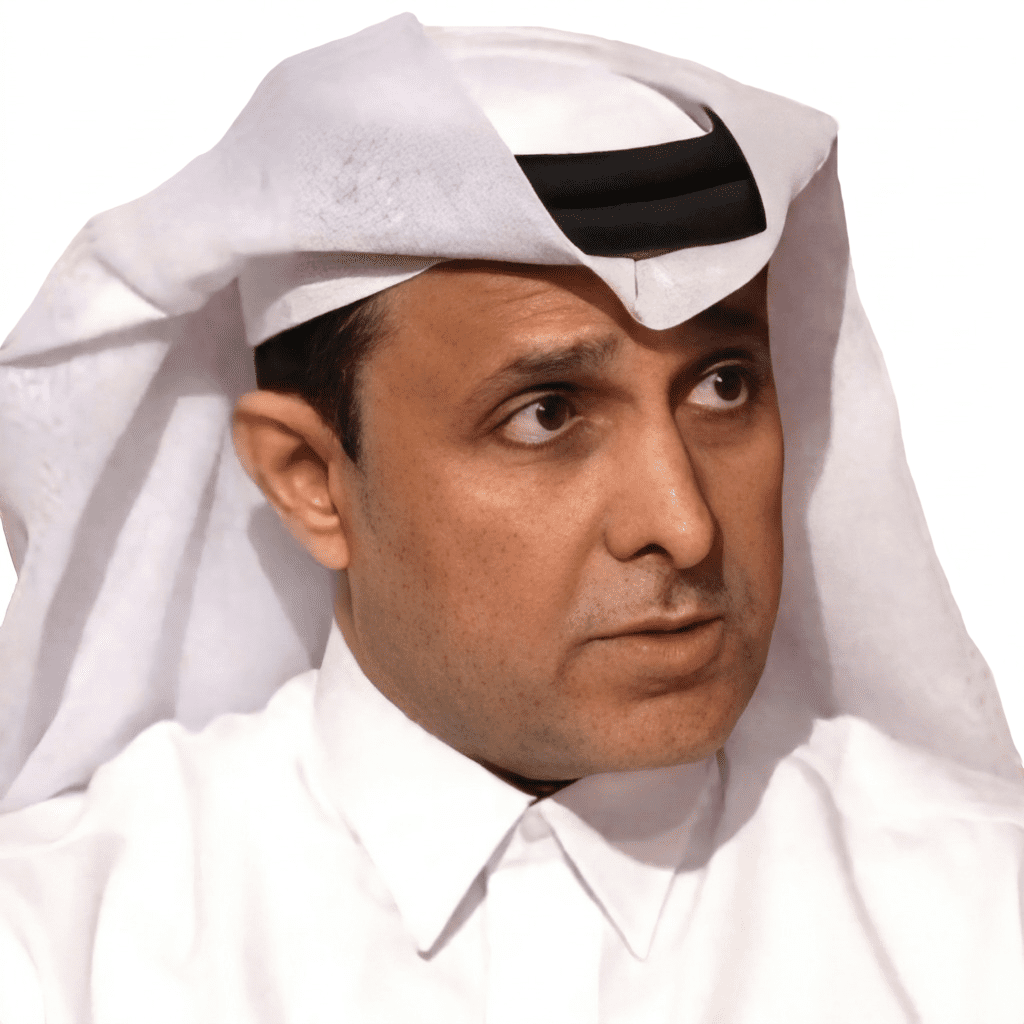
Dr. Khalid Al-Jaber is the Executive Director of the Middle East Council on Global Affairs. He is a distinguished scholar and practitioner specializing in political communication and Middle East and North Africa (MENA) affairs. Al Jaber has held prominent leadership positions, including Director of Al-Sharq Studies & Research Center and Editor-in-Chief of The Peninsula, Qatar’s leading English-language daily newspaper. He also served as an Assistant Professor of Political Communication in the Gulf Studies Program at Qatar University, where he made significant contributions to the academic and policy discourse on regional and international issues. Al-Jaber’s research focuses on the Gulf and MENA region, with expertise spanning political science, public diplomacy, international communications, and international relations. He is the author and editor of several books and numerous scholarly articles. He holds a Ph.D. from the University of Leicester, a Master’s degree from the University of West Florida, and postgraduate diplomas from Fordham University, Stanford University, and Georgetown University.

Dr. Kristian Coates Ulrichsen is a Baker Institute fellow for the Middle East and Non-Resident Senior Fellow at Gulf International Forum. Working across the disciplines of political science, international relations and international political economy, his research examines the changing position of Persian Gulf states in the global order, as well as the emergence of longer-term, nonmilitary challenges to regional security. Previously, he worked as senior Gulf analyst at the Gulf Center for Strategic Studies between 2006 and 2008 and as co-director of the Kuwait Program on Development, Governance and Globalization in the Gulf States at the London School of Economics (LSE) from 2008 until 2013.

The Midterms Might Change Washington’s Gulf Debate, But Not the Relationship
October 27, 2026The ongoing U.S.–Iran war comes at a pivotal moment for U.S. foreign policy. With the increasingly unpopular and drawn-out conflict taking place amid the campaign…

Saudi Arabia’s F-35 Deal Is Taking Shape
October 16, 2026Less than a year after U.S. President Donald Trump publicly backed the sale of F-35 fighter jets to Saudi Arabia, the kingdom’s long-running effort to…

Trump’s War on Iran Runs Through Baghdad
October 8, 2026Seven months into the war with Iran, the Strait of Hormuz remains a major point of contention. Goldman Sachs estimates that Gulf oil flows have…