


Drill, Baby, Drill: U.S. Energy Independence vs. OPEC+ Oil Dominance
Since his first campaign and throughout his presidency, Trump has championed the idea of American energy independence, vowing to free the U.S. from reliance on foreign oil and secure its position as the world’s leading producer. His “Drill, Baby, Drill” approach emphasized fossil fuel expansion, deregulation, and a rollback of environmental policies to drive domestic energy production. His administration declared a national energy emergency to expedite fossil fuel development, withdrew the U.S. from the Paris Agreement to prioritize domestic oil sector growth over climate commitments, and imposed tariffs on energy imports to protect domestic industries while promoting American energy exports.
While Trump’s current policies might pose challenges to the GCC’s traditional energy dominance, they also forced Gulf producers to adopt more flexible and independent strategies. This period laid the groundwork for ongoing shifts in global energy politics, with the Gulf states playing an increasingly diversified and strategic role in shaping the future of energy markets. As Trump returns to office, his renewed commitment to energy dominance raises pressing questions about how his administration’s policies will align—or clash—with the interests of OPEC+ and GCC states in a rapidly evolving energy landscape.
- What are the stated energy policies of the second Trump administration? How could it work or clash with OPEC+ or the GCC states national energy policies?
- The 2020 Saudi-Russia oil price war and the subsequent U.S.-brokered OPEC+ deal exposed significant fractures in global oil alliances. What lessons did Gulf states learn from this period, and how has it influenced their current approach to energy diplomacy?
- Some in the Gulf saw Trump’s energy policies as a challenge to their traditional market dominance, while others viewed them as a catalyst for greater diversification. How did GCC states adapt their long-term energy strategies in response to these shifts, and mainly Trump’s return to office?
Featured Speakers: Dr. Naji Abi-Aad, Rachel Ziemba, Dr. Justin Dargin, and Dr. Harold York.
Speakers Bios:
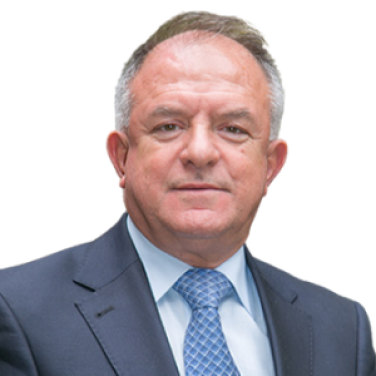 Dr. Naji Abi-Aad (moderator)
COO of Petroleb
Dr. Naji Abi-Aad was appointed COO of Petroleb, an oil company based in Beirut and active in petroleum exploration offshore in the East Mediterranean, in September 2012. In addition, he manages the newly-established Institute for Energy Economics at the American University of Beirut (AUB). Prior to his move to Lebanon, Dr Abi-Aad served for one year as Senior Advisor to the CEO of Qatar Petroleum International (QPI), after spending six years as Research Advisor for Qatar Petroleum and its Board of Directors, and as Media and Research Strategist in the Office of HE Qatar’s Deputy Premier, Minister of Energy & Industry. Between 1999 and 2005, Dr Abi-Aad was managing director of Econergy, a Beirut-based research centere which carried out studies on the economic and energy developments in the East Mediterranean and the Gulf. He was also engaged between 1988 and 2003 as Senior Advisor for the Middle East within the French-based Observatoire Méditerranéen de l’Energie (OME). Dr Abi-Aad studied at the American University of Beirut before being awarded a Ph.D. degree in Energy Economics from Grenoble University in France. During his 30 years of experience, he has been involved in extensive consultations, conferences and research studies, particularly on oil and gas in the Middle East. He has authored over 80 reports and studies on Middle East energy issues as well as a book on the security of petroleum supply from the region.
 Rachel Ziemba
Founder, Ziemba Insights; Senior Non-Resident Fellow, Gulf International Forum
Ms. Rachel Ziemba is a Senior Non-Resident Fellow. She is the founder of Ziemba Insights, a macroeconomics and policy due-diligence advisory firm. Additionally, Ms. Ziemba is an Adjunct Fellow at the Center for a New American Security, and an Adjunct Lecturer at NYU, Center for Global Affairs. Ms. Ziemba is also a Senior Advisor at Horizon Engage. Her research topics include coercive economic policies such as sanctions, economic resilience and the role of state-owned investors including sovereign wealth funds.

Dr. Justin Dargin
Senior Visiting Fellow, the Middle East Council on Global Affairs
Dr. Justin Dargin is a Senior Visiting Fellow at the Middle East Council on Global Affairs, specializing in the intersection of Middle East energy markets, geopolitics, and climate change.
Previously, he served as a senior MENA energy and climate scholar at the University of Oxford, where his research focused on developing macroeconomic decarbonization pathways for energy-rich Arab states. Prior to that, he was a MENA Fulbright Scholar and a fellow at Harvard University’s Kennedy School, where he pioneered the first policy frameworks for Gulf carbon market development.
Dr. Dargin has advised energy companies, governments, and multilateral organizations on energy investment strategies, climate diplomacy, and decarbonization efforts. His earlier roles include Legal Advisor to OPEC and Research Fellow at the Oxford Institute for Energy Studies.
His work has earned several international awards, including the Harvard Arab Alumni Association Prize, the St. Gallen Symposium Wings of Excellence Award, and the UN Sustainable Endowment’s Building a Clean Energy Future Award. He also founded an award-winning NGO focused on expanding access to clean energy and sustainable development in the Global South.
Dr. Dargin has authored numerous articles, book chapters, and several books. His forthcoming publication, The Gulf’s Climate Reckoning: Decarbonization, Development, and the Future of the Petro-States (Cambridge University Press, 2025), examines the region’s evolving climate and energy landscape.
His analysis has been featured in Time Magazine, The Financial Times, Al Jazeera, The New York Times, and other global media outlets. He holds a Ph.D. from the University of Oxford and earned his law degree magna cum laude from Georgetown University Law Center.
 Dr. Harold York
Nonresident Fellow in Energy and Global Oil in the Center for Energy Studies, Rice University’s Baker Institute for Public Policy
Dr. Harold York is the nonresident fellow in energy and global oil in the Center for Energy Studies at Rice University’s Baker Institute for Public Policy. He has over 30 years of experience working on strategic issues that shape the energy and mining industries.
Before the Baker Institute, Dr. York was the Head of Commodity Strategy for Petroleum at BHP. He is also the Chief Energy Strategist at Turner Mason & Company, an energy consulting and advisory firm focused on the crude oil, refining, midstream and biofuels industries. He has additional industry experience with ExxonMobil and management consulting with McKinsey & Company, Charles River Associates, and Wood Mackenzie. Skip holds a PhD in Economics from the University of Virginia and an undergraduate degree in Economics from the University of Wyoming. He did post-graduate work at IIASA (International Institute of Applied Systems Analysis) in Vienna, Austria.