Forging Defense Partnership: Turkey’s Role in Saudi Arabia’s Arms Industry Expansion
Saudi Arabia’s partnership with Turkey to develop a local Saudi arms industry is a sound strategic choice—and a useful opportunity for economic diversification and development.

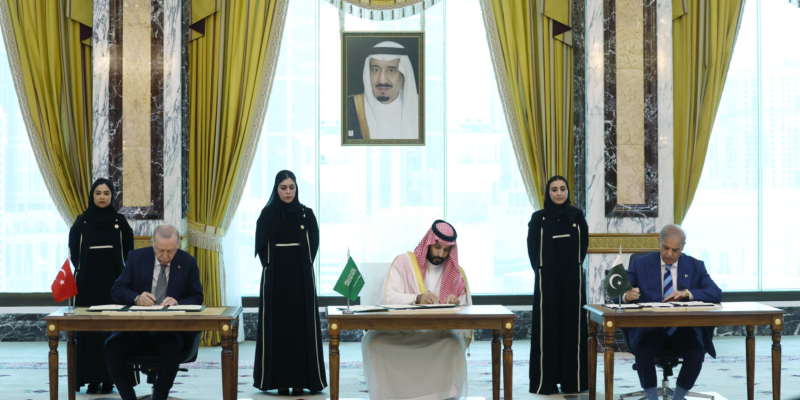
On July 2, Saudi Defense Minister Prince Khalid bin Salman Al Saud visited Turkey to meet his counterpart, Yashar Guler, as a part of thawing relations between Saudi Arabia and Turkey. According to local media, “the two ministers discussed additional ways of boosting Turkish-Saudi defense cooperation and joint efforts to tackle regional threats.” Prince Khalid’s visit came amid worsening geopolitical turmoil in the Middle East, in light of the ongoing war on Gaza and the threat of Iranian retaliation against Israel for the assassination of Hamas leader Ismail Haniyeh in Tehran—developments that risk to lead the region into an all-out war.
In preparation for such a conflict, several regional states—including Saudi Arabia, the United Arab Emirates, Israel, Iran, and Egypt—have increased their purchases of military equipment. On the other hand, Turkey has largely relied on its local defense sector. In recent years, Ankara has steadily decreased its dependence on foreign arms exports by boosting local production of armed drones, missile systems, armored vehicles, and air defense systems. Doing so has both strengthened Turkey’s economy and its national security and turned Ankara into a regional military hub. Given Turkey’s success in this area, many Arab countries, including Saudi Arabia, “have expressed a willingness to learn from Turkish experience in developing their own local arms industries.”
In this vein, the Saudi defense minister’s visit to Turkey should come as little surprise within the framework of the kingdom’s ambitious “Vision 2030” economic plan. Vision 2030 seeks to reduce Saudi Arabia’s reliance on exporting fossil fuels by diversifying the economy. A crucial part of economic diversification is greater military self-sufficiency: Riyadh is the fifth largest military spender in the world, and it could both strengthen itself militarily and stabilize its budget through plans to develop indigenous manufacturing of weapons. Given the size and importance of Saudi Arabia in international arms markets, this move could reshape the global defense industry landscape.
Securing a Reliable Arms Supply
Although Saudi Arabia’s vast economic resources have enabled it to acquire modern defense technology in large quantities, it has also encountered obstacles for the local defense industry sector, which has so far been limited to assembling and repairing foreign-made weapons and equipment. However, Riyadh has labeled the localization of arms production as one of the pillars of its economic reform process. The potential of Saudi Arabia’s indigenous arms industry to significantly enhance the country’s future defense capabilities is a source of hope and optimism for Vision 2030 economic planners.
In this vein, before the recent defense chiefs’ meeting in Ankara, Saudi Arabian Military Industries (SAMI) signed three memorandums of understanding (MOUs) with Turkish defense companies, such as Baykar Company and ASELSAN, to develop Riyadh’s manufacturing capabilities and facilitate drone production on Saudi soil. Under new agreements, Turkey will transfer its indigenous defense technology to Saudi Arabia, improving defense ties between the two nations. Notably, the agreement with ASELSAN focuses on transferring and producing advanced defense electronics technologies in Saudi Arabia in a bid to bolster the local defense industry.
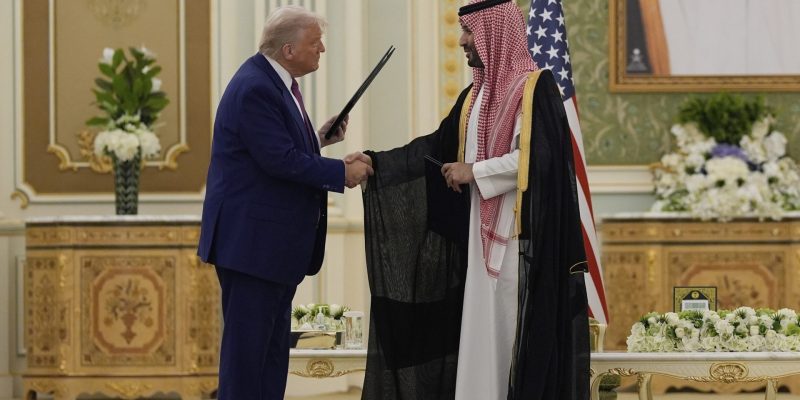
The successful implementation of the SAMI deals and other new agreements will enable Saudi Arabia to reduce the risk associated with purchasing arms from other countries, which depends to a large degree on the state of diplomatic relations. For example, despite a long-term strategic alliance, the US halted the sale of precision-guided munitions and other weapons to Saudi Arabia in 2022 in order to pressure Riyadh to end its war against the Houthi movement in neighboring Yemen. After a brief crisis in diplomatic relations, Washington lifted an arms embargo to deliver a $750 million shipment of bombs to Saudi Arabia in August 2024, but the experience was eye-opening for defense experts in Riyadh and highlighted the country’s need to control its own production.
Undoubtedly, the Saudi-Turkish defense partnership has gained a new impetus in light of this incident, with Riyadh showing a keen interest in learning from Turkey’s success in building and promoting combat drones like the Bayraktar-TB2 and the Akinchi. As modern war tactics and tools shift rapidly, the acquisition and further manufacturing of combat drones in local military facilities could significantly enhance Saudi Arabia’s security in a highly volatile region, bringing a sense of optimism for the future of the region’s security. Turkey’s export of drones to Azerbaijan during the Second Karabakh War in 2020, and to Ukraine following Russia’s invasion in 2022, significantly boosted its reputation as an emerging drone power on the global stage, thanks to their effective use against military targets.
A Message to Washington
Partnering with Turkey for weapons production and foreign investment also has clear geopolitical benefits. Riyadh’s deepening ties with Ankara could remind the White House that the kingdom has alternative supply options. However, as a member of NATO, Turkey’s alignment with the West is secure, and Saudi-Turkish military cooperation is of relatively little concern to the United States. The kingdom’s simultaneous military partnership with China, by contrast, is far more provocative for Washington, and has raised significant alarm bells among U.S. defense planners. This nuance explains why Saudi Arabia has not disclosed details of all major military contracts with China since 2022.
Saudi Arabia will continue its efforts to diversify military procurement away from major Western powers like the United States, Germany, France, and the United Kingdom. Instead, it will invest in foreign companies willing to commit to local manufacturing and technology transfer to localize the arms industry. In this context, Prince Khaled’s visit to Ankara and the new MoUs seem like a rational choice and a security-conscious attempt to address Western dominance in the local defense market. Nonetheless, Saudi Arabia will likely step up military cooperation with alternative powers like Turkey and China—but will unquestionably remain within certain boundaries, so as to preserve the core strategic alliance with the United States and other major powers.
The views and opinions expressed in this article are those of the authors and do not necessarily reflect the views of Gulf International Forum.
Issue: Defense & Security
Country: KSA

Fuad Shahbazov is an independent policy analyst specializing in regional security, energy diplomacy, and defense affairs across Eurasia and the Middle East. He holds an MA in Political Science from Vytautas Magnus University, a Professional Master’s degree in Terrorism and Religious Extremism from the University of Bergamo, and an MSc in Defense and Diplomacy from Durham University. He shares insights on Twitter at @fuadshahbazov.

Toward a New Order in MENA Regional Geopolitics
September 2, 2026This report is a byproduct of the workshop “Toward a New Order in MENA Regional Geopolitics: What’s Next for the Region’s Geopolitical Equilibrium?,” hosted in…
Yemen’s Emerging Role in the Red Sea
August 27, 2026On August 4, 2026, the Yemeni Coast Guard (YCG) rescued the 14-member crew of the Indian-flagged commercial vessel Faize Noore Oliya. Transiting the Red Sea…
The Iran War Is Rewriting Kuwait’s Defense Architecture
July 14, 2026Since the outbreak of the Iran war in February 2026, Kuwait has announced a series of major defense acquisitions, including a $1 billion contract for…