From Concerns to Collaboration: Turkey, Iraq, Kuwait and the Development Road Initiative
Leveraging its strong diplomatic relations and history of mediation, Turkey has the potential to positively influence Kuwait-Iraq competition over the Development Road project while balancing regional and economic interests.

Turkey’s diplomatic skill and mediation have been central to its relationship with Kuwait, particularly during the Gulf crises and regional instability. As Ankara mends ties with key Gulf states, its bond with Kuwait becomes crucial, supported by shared interests and a history of overcoming regional challenges. This sets the stage for Turkey’s critical role in the Development Road project and improving Kuwait-Iraq relations.
“Turkey and Kuwait have demonstrated a true example of solidarity during each other’s most challenging moments” said Turkish Ambassador to Kuwait, Tuba Nur Sönmez, during Kuwaiti Emir Sheikh Mishal al-Ahmad Al-Jaber Al-Sabah’s landmark visit to Turkey on Tuesday. The trajectory of Turkish-Kuwaiti relations supports the ambassador’s remarks. When Turkey’s relations with some of the Gulf Cooperation Council (GCC) members reached their nadir due to their divergence over regional issues and the 2017 Gulf crisis between Qatar and the GCC neighbors, Kuwait was stuck on the sidelines. The conclusion of the Gulf crisis, which paved the way for Turkey’s reconciliation with Saudi Arabia and the UAE, provoked a sigh of relief from Kuwait and opened the door for the Gulf country to foster closer relations with Ankara without pressure from its fellow GCC members.
Historical Baggage in Relations
As Ankara mended ties with the GCC states, Kuwait served as a significant source of support for Turkish outreach to the region. Kuwait has a long history of international mediation. Most recently it played a crucial role in negotiating a resolution to the Gulf crises of 2014 and 2017, between Qatar and its GCC neighbors. Thanks to this tradition of mediation, Kuwait has earned a reputation as the “dean of Arab diplomacy.” After suffering years of icy relations with the Gulf states, Turkey benefited tremendously from Kuwait’s backing when Ankara decided it wanted to turn the page.
Likewise, Turkey’s past actions within the Middle East have left a positive imprint in the minds of Kuwaiti policymakers and citizens. Ankara cast aside its longstanding policy of non-interference in Middle Eastern issues during the 1990-91 Iraqi invasion of Kuwait, when it took the decision to allow American troops to use Turkish bases to strike Iraq, deployed troops to its border with Iraq, and became the first country to comply with the economic sanctions that the UN imposed on Iraq. The Turkish president, Turgut Özal, also shut off the two pipelines used to transport Iraqi oil through Turkey to the Mediterranean—cutting off a vital revenue source for the Iraqi regime. Turkey’s decisive action came at a time when other regional states hesitated to close their own pipelines and proved an important example for other countries to follow. Indeed, Turkey’s initiative banked significant goodwill with the Kuwaiti leadership, which has returned the favor. Drawing from this positive historical foundation, as Kuwait has done amidst Turkish-Gulf tensions, could Turkey seize the opportunity to mediate the contentious relationship between Kuwait and its neighbor, Iraq?
A Diplomatic Flurry
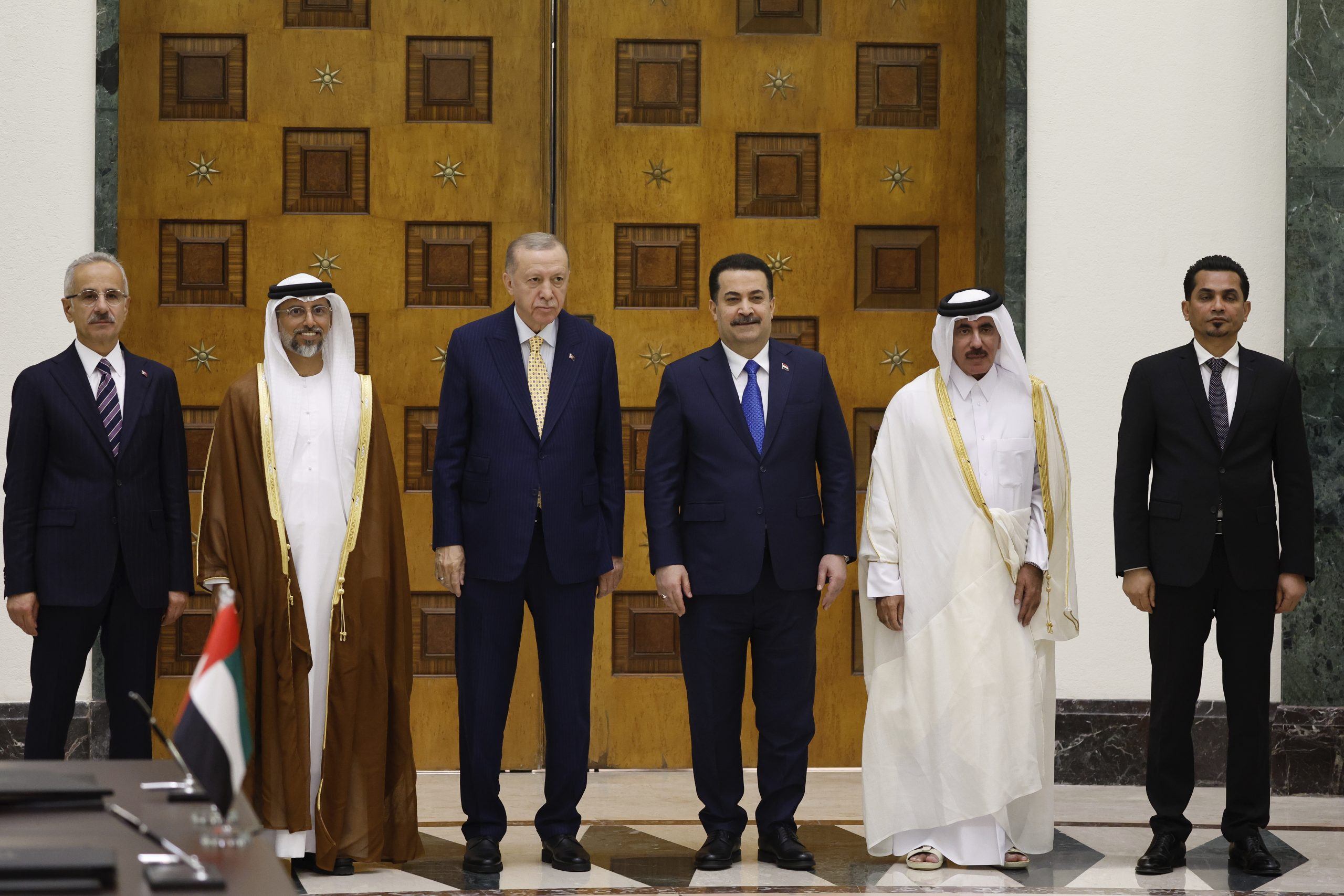
In late April, Turkish President Recep Tayyip Erdogan made his country’s first presidential visit to Iraq in 13 years, where he met with Iraqi stakeholders and his counterpart Abdul Latif Rashid. During this historic event, the countries signed a total of 26 agreements and memoranda of understanding (MOUs). The keynote achievement of Erdogan’s outreach was the announcement of a four-way preliminary agreement for joint collaboration on a “Development Road” between Iraq, Turkey, Qatar and the United Arab Emirates (UAE). Turkey played a significant role in bringing UAE and Qatar, two major financial backers of the project, to the table.
The Kuwaiti Emir came to Turkey just two weeks after Erdoğan concluded his tour of Iraq. It marked Emir Mishal’s first state visit to a country outside the Arab world since he ascended the throne in December, and the leaders signed six deals and MOUs on a number of issues. Policymakers on both sides regard Turkish-Kuwaiti relations as a role model for other regional actors to follow, given the countries’ contributions to security and stability. Despite facing structural constraints, the ties between Turkey and Kuwait have remained remarkably consistent.
Some observers may point to President Erdogan’s back-to-back meetings with the Iraqi and Kuwaiti governments as evidence that Ankara plans to reduce tension between the two states, which have butted heads over a number of issues, including maritime navigation, in recent months. But such important state visits are planned weeks in advance, and there is no evidence to connect Turkey’s recent diplomatic activity to such aims. Nevertheless, it surely provided an opportunity for Kuwait to discuss the implications of the Development Road initiative, which run counter to its interests.
Development Road: A Zero-Sum Game?
Kuwait and Iraq have taken diplomatic and political steps toward improving relations, but sticking points remain. While the Development Road could improve Iraq’s relations with Turkey and prove beneficial to the Gulf states that finance it, the project could also complicate the existing economic and political disputes between Kuwait and Iraq.
The ambitious, nearly 800-mile integrated road and railway network, would run from Iraq’s Grand Al-Faw Port on the northern tip of the Gulf—incidentally, just adjacent to Kuwait’s Mubarak Port—to the Turkish border in the north of the country. If completed, the Development Road will connect the Gulf Arab states through Iraq to Turkey and Europe—sidestepping Kuwaiti territory entirely. The Kuwaiti Parliament has raised its concerns regarding the project, viewing Kuwait’s exclusion as an aim to isolate the country. MPs also urged the government to establish a committee to investigate the reasons behind the delays in the completion of the Mubarak port, which is locked in a crucial competition with Al-Faw. The Development Road’s announcement also sparked debate on Kuwaiti social media about the dangers posed to the Kuwaiti commercial interests. With Kuwaiti policymakers and the public squarely against the deal, the country has increasingly come to see the project as a zero-sum game. However, one Kuwaiti analyst and policymaker accurately argued that “Turkey would benefit more by bolstering Kuwait’s negotiating position with Iraq and exerting pressure on all stakeholders regarding projects like the Development Road… ensuring Kuwait’s inclusion as an integral part and stop along the way.” The decision of whether Ankara will pressure Baghdad to include Kuwait in the regional infrastructure push depends on the perceived benefits and the power dynamics among the three countries.
Potential Turkish Role?
Every state has its own perception of threats and its preferred outcomes on major issues, but Iraqi and Kuwaiti visions for the region differ more often than they align. Diplomacy would be the most effective tool to bridge political, ideological, or economic differences, but negotiations only function when the two sides can find common ground. Indeed, Kuwait and Iraq have the opportunity to foster a united front against shared challenges, such as economic and climate. However, this demands a cautious optimism that is currently lacking in both countries, as well as a general recognition of the need to transcend deep-seated historical traumas and border issues. The border between Iraq and Kuwait is not merely a geographical separation; it represents a complex interplay of history, memories, war, embargoes, international interventions, and most importantly, economic ties. The outstanding issues between the two neighbors will not be resolved overnight, but any step taken toward reconciliation would be a big step indeed.
So, what can Turkey do to shape events in a positive way? The raft of agreements inked in April heralds a new chapter in Turkish-Iraqi relations. For its part, Kuwait is striving to uphold the positive trajectory of relations with Turkey established by previous emirs. Armed with warm relations and a strong diplomatic corps, Turkey could play a significant role in shaping the course of Kuwaiti-Iraqi relations—perhaps, more so than any other regional actor. Mediation stands the best chance of success when differences of interests may be bridged by a trusted third party. As in the past, Turkey will likely seize this opportunity to resolve regional tensions in a way that dovetails with its national interests.
The views and opinions expressed in this article are those of the authors and do not necessarily reflect the views of Gulf International Forum.
Issue: Geopolitics
Country: Iraq, Kuwait

Dr. Sinem Cengiz is a researcher at Qatar University’s Gulf Studies Center and a non-resident fellow at Gulf International Forum. She is a regular columnist for Arab News newspaper and a member of the Women in Foreign Policy (DPK) Initiative. She is the author of the book Turkish-Saudi relations: Cooperation and Competition in the Middle East and co-editor of the book The Making of Contemporary Kuwait: Identity, Politics, and Its Survival Strategy. In her research, she focuses on the international relations of the Gulf and Turkey’s relations with the GCC states. Cengiz was born and raised in Kuwait and is currently based in Doha. She tweets at @SinemCngz

Beyond Hormuz: Why Balochistan Matters to Gulf Energy Security
October 21, 2026A conflict long treated as peripheral to Gulf security is becoming harder to ignore as the war with Iran puts pressure on the region’s maritime…
Should Syria and Qatar Join the Mecca Pact?
October 9, 2026Three years of cascading conflict have fundamentally transformed the Middle East’s security outlook. American weapons, military deployments, and security guarantees remain central to the region….

China’s Technology Development Push Meets Gulf Diversification
October 6, 2026China’s “new quality productive forces” (NQPF) are often understood as a domestic effort to revive growth, upgrade industry, and reduce dependence on Western technology. Yet…