From Parliamentary Deadlock to Dissolution: Consequences for Kuwait’s Economy
Beset by economic malaise and political gridlock, Kuwaiti government faces a series of decisions that could define the country’s future.

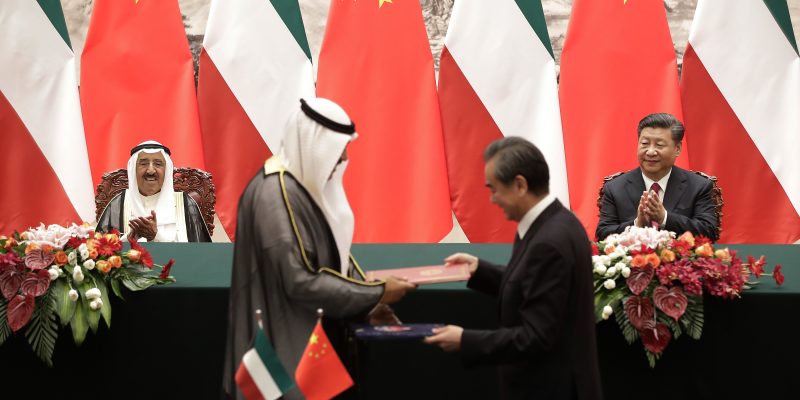
Kuwait’s political economy and foreign relations have long centered on oil exports, providing aid, close relations with the United States after the 1990-91 Gulf War, and international mediation as a function of its experience of war and a relatively small state in a complex and unstable region. The Kuwaiti political system, a constitutional emirate ruled by the Sabah family and an elected parliament, is unique for a region dominated by authoritarian regimes that eschew such checks and balances. Nevertheless, Kuwait is not immune from domestic tensions that test the limits of power sharing. On May 10, 2024, just over a month after the most recent parliamentary elections, Emir Sheikh Mishaal al-Ahmed dissolved the legislature, arguing that the parliament had unduly criticized members of cabinet, including some in the royal family, and expressed unacceptable disapproval of appointed members of cabinet. The emir argued that the parliament had exceeded its authority and was impeding economic progress.
This is not the first time the emir has dissolved parliament. The precedent was set in 1976 by Emir Sheikh Sabah al-Salim al-Sabah, who cited a lack of cooperation between the legislative and executive branches and “unjust attacks” on ministers by MPs. A decade later, Sheikh Jaber al-Ahmed al-Sabah dissolved parliament on the basis that PMs had exploited the constitution for personal gain while hindering cooperation between the legislative and executive branches of government.
The Kuwaiti Economy
With a population of just over 5 million, the country has a high GDP per capita ($56,386 in 2023, in line with highly developed countries like Canada and Sweden), good access to public health services, and low public debt. It also has one of the largest Sovereign Wealth Funds in the world, the Kuwait Investment Authority (KIA), which managed $769 billion in assets in 2022. However, Kuwait remains a rentier economy that struggles to innovate amid strong incentives to rely. Non-oil GDP grew to just 4 percent in 2022, reflecting an economy that has been slow to adapt to rapidly changing regional and global economic conditions and opportunities. Its small population and large SWF have allowed the government to cushion society for an extended period, further disincentivizing much-needed reform.
The government has now recognized the necessity of change. Kuwait’s GDP is set to decline in 2024 by 1.4 percent, and the country only attracted $3.4 billion of foreign investment from 2015 to 2020. Top-down economic initiatives like New Kuwait 2035 promise to diversify the country’s economy away from fossil fuels, incorporating expansion of the private sector, infrastructure upgrades, and public-private partnerships.
One need only look to Kuwait’s neighbors as reason to adapt its current model. During Emir Sheikh Meshal’s first foreign trip to Saudi Arabia in January 2024, it must have been clear that the Kingdom has undergone transformational economic and social change in recent years. Much of this progress has been enabled by the fact that Crown Prince Mohammed bin Salman (MBS) has centralized decision-making power—a clear contrast with the checks and balances of the Kuwait parliament, and the deadlock that accompanies its oversight of the emir.
Saudi Arabia’s economy is increasingly diversifying under its own strategic plan: Saudi Vision 2030. GDP contribution from oil reached just under 24 percent in 2021. With a population of over 36 million and a per-capita income lower than Kuwait at $30,400, many educated young Saudis are keen to find good quality jobs. The Kingdom has pushed ahead with a range of socioeconomic initiatives, including megaprojects such as Neom City and the resort destination of Al Ula, wind and solar energy ventures, and a host of entertainment, sports, and tourism schemes. Its main SWFs, the Public Investment Fund (PIF) valued at $320 billion in 2019, and the SAMA Foreign Holdings, valued at $505 billion, are comparable with the KIA in terms of total assets under management. However, the Saudi state uses the PIF strategically to invest in companies which are likely to add value to the Kingdom’s economic credentials beyond a simple dividend.
It would be in Kuwait’s interest to work more closely with Saudi Arabia on expanding its economy in a similar capacity. Such collaboration might come to fruition with the June 2024 appointment of, Sheikh Sabah Khalid Al Sabah was appointed Crown Prince of Kuwait. His experiences serving as the Kingdom as Kuwait’s Foreign Minister from 2011-2019, and as Ambassador to Saudi Arabia from 1995 to 1998, could be useful in advancing bilateral cooperation, especially joint projects, through understanding the Saudi system as well as through leveraging personal connections from this time. The two countries already manage to avoid confrontation and promote profit sharing in the “Divided Zone.”. However, Kuwait must seek ever-closer collaboration with its larger neighbor if it wishes to reverse its economic stagnation.
The UAE is even more advanced in its economic diversification with, just over 15 percent of its GDP coming from oil. As a regional airport, trade and tourism hub, the UAE already benefits from high foreign investment figures, which reached $30.6 billion in 2023. Furthermore, rather than waiting for free trade deals negotiated with the Gulf Cooperation Council (GCC), the UAE is working with major commercial actors across the globe to secure Comprehensive Economic Partnership Agreements (CEPAs) with states such as India (2022), Israel (2023), Indonesia and Turkey (2023). Many other deals are under negotiation, all aimed at enhancing the UAE’s economy as well as its soft and hard power capabilities.
Kuwait is moving towards labor force nationalization and other milestones as part of Vision 2035, but these efforts will take time to bear fruit. Perhaps more concerningly, they require consensus between the Kuwaiti legislature and Sheikh Mishaal. Even low hanging fruit, such as the privatization of Kuwait Airways, has faced delays, as have other opportunities such as curtailing a ballooning public wage bill and the gradual phasing out of energy subsidies.
An Intractable Institutional Conflict
Within this context, one would not be remiss to suggest that the dissolution of the Kuwaiti parliament was inevitable. The baked-in structural tensions between a the monarchy and a majority opposition in parliament, as well as the increasingly pressing concerns of MP overreach and relative economic malaise, have produced a constitutional crisis. Whilst Kuwait remains a beacon for regional mediation which is valuable in managing diverse contemporary threats to regional stability, there is a growing recognition that the clock is ticking on Vision 2035.
Kuwait may lack the urgency of other Gulf Cooperation Council states with less oil, such as Oman, but it is still necessary for the state to implement a range of measures that will sustain the economy during the transition toward a post-oil economy. The war in Ukraine has helped sustain high oil prices, and Kuwait’s neighbors have drawn attention to various economic paths available to the country. A central issue will be whether Kuwait chooses to help drive GCC free trade agreements or opt instead for bilateral deals like the UAE’s CEPAs. Given the state of play, including lack of consensus within the GCC on free trade deals and Kuwait’s already late maneuvering on the rollout of economic diversification projects, a unilateral scenario similar to the UAE and Saudi Arabia could be expected but at a more gradual pace and lower level of activity.
Should Sheikh Mishaal be able to seize the moment on the economy and drive through privatizations, projects, and investments without parliamentary oversight, he may be able to simultaneously justify the delay for new parliamentary elections and address some of the core concerns of opposition MPs and the electorate. If economic revival follows, this period of tenuous executive-legislative relations in Kuwait may lead to a healthier governance model in the future.
The views and opinions expressed in this article are those of the authors and do not necessarily reflect the views of Gulf International Forum.
Issue: Politics & Governance
Country: Kuwait

Robert Mason is Robert Mason is Associate Professor at the Anwar Gargash Diplomatic Academy (AGDA), the views expressed in his articles do not represent those of AGDA. He is a non-resident fellow at the Arab Gulf States Institute in Washington and non-resident fellow at the Gulf Research Center. Previously, he was a fellow with the Sectarianism, Proxies and De-sectarianisation project at Lancaster University and an associate professor and director of the Middle East Studies Center at the American University in Cairo. He was also a visiting scholar in the Department of Near Eastern Studies at Princeton University, a visiting research fellow at the University of Oxford, and a visiting research fellow at the King Faisal Center for Research and Islamic Studies in Riyadh. He specializes in Gulf politics and the international relations of the Middle East.
Why Iran Never Knows When to Stop
July 27, 2026At first glance, Iran’s negotiating difficulties appear to stem from disagreements between pragmatists seeking sanctions relief and hardliners determined to resist compromise. Yet that explanation…
Iraq’s Corruption Crackdown
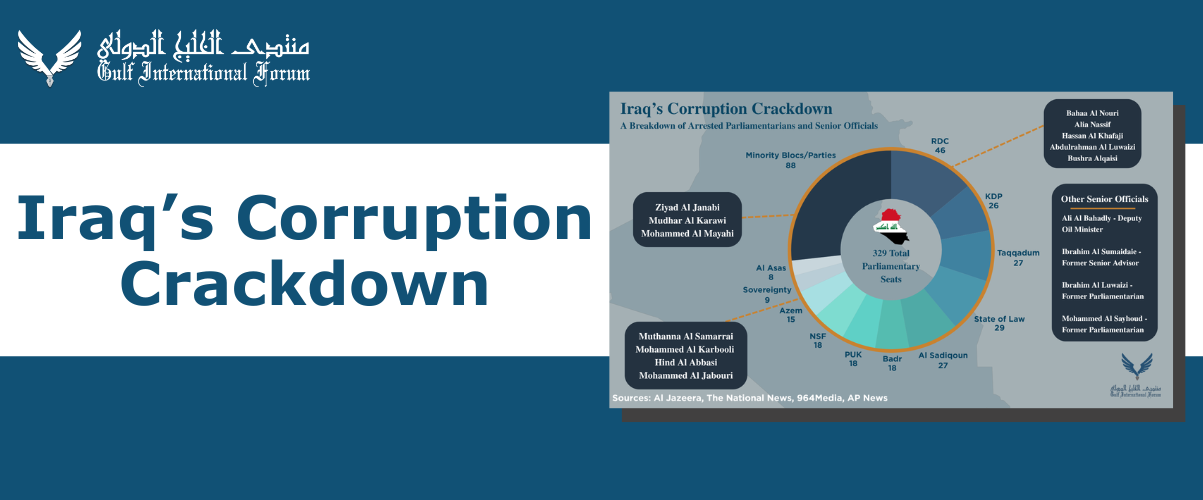
July 22, 2026*A breakdown of arrested parliamentarians and senior officials as of June 28, 2026.
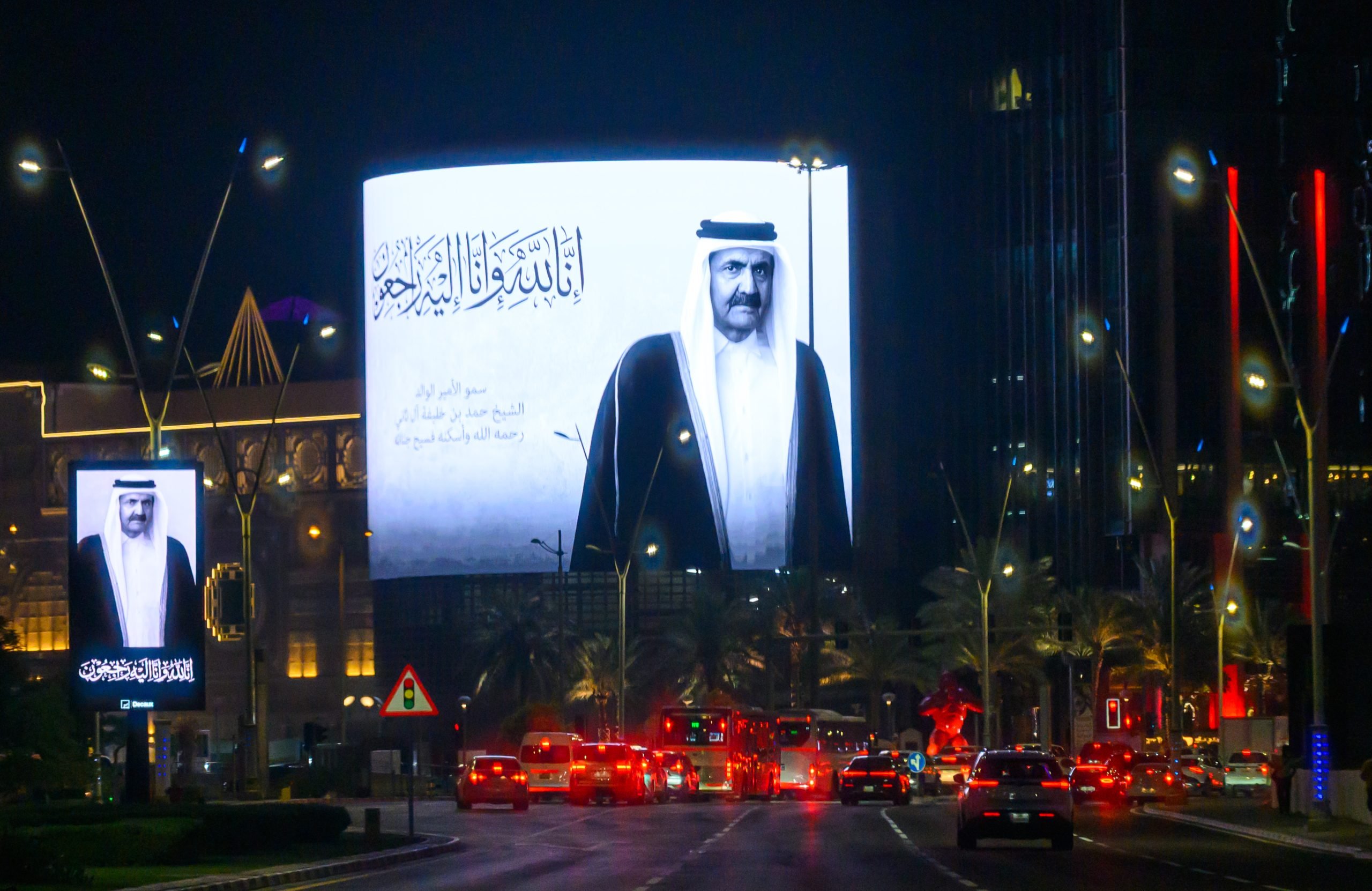
Sheikh Hamad and the Making of Modern Qatar
July 15, 2026There is a question that haunts every small state: how does a nation survive and stay relevant in a region built for giants? For most…