Gas, Power, and Sovereignty: KRG’s High-Stakes Energy Deals and Baghdad’s Pushback
Baghdad views Erbil’s bold gas deals with U.S. firms as challenging its national authority, exposing deep constitutional fractures and testing whether energy autonomy or federal control will define Iraq’s future political and economic order.

A recent spike in tensions between the Kurdistan Regional Government (KRG) and Iraq’s federal government threatens to further destabilize the country at a time of growing regional volatility. This latest round of discord reflects both long-standing disputes and a high-stakes new development.
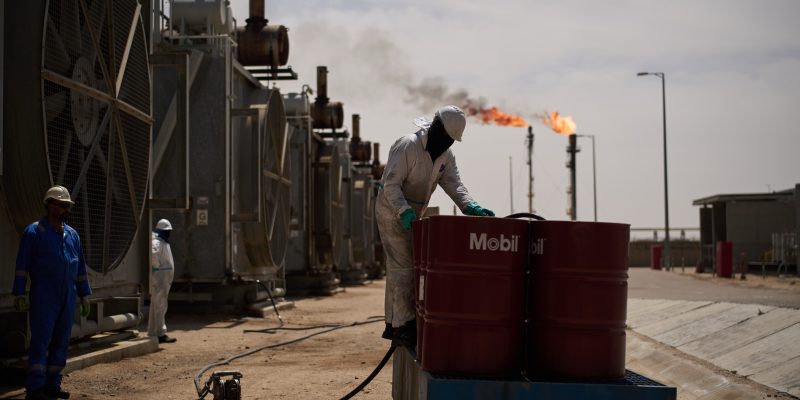
The immediate trigger came after KRG Prime Minister Masrour Barzani signed a series of natural gas contracts on May 19 with U.S. energy firms HKN Energy and WesternZagros, valued at up to $110 billion over the lifetime of two major gas fields in the Kurdistan Region. The deals received the outspoken backing of senior figures in the Trump administration, including Secretary of State Marco Rubio and Energy Secretary Chris Wright.
Baghdad swiftly condemned the move. The federal Ministry of Oil declared the agreements “null and void” and halted the disbursement of the KRG’s share of Iraq’s May budget, claiming that the Kurdish government had failed to deliver its oil and non-oil revenues to the central government. It also filed a lawsuit against the American companies that made the deal with the KRG. Baghdad’s decision to halt the KRG budget caused roughly 1.2 million KRG civil servants, pensioners, and welfare recipients to miss out on their expected payments. The timing—just days before the Eid al-Adha holiday—amplified public frustration across Kurdistan, with the KRG describing Baghdad’s move as “collective punishment” and “starvation.” However, this sequence is not without precedent. Baghdad has used the budget and salary card against the Kurdistan Region often since 2014, partly to enforce its will on the KRG, but also to delegitimize the KRG locally by deepening the rift between Kurdish leaders and its population through economic uncertainty.
A Constitutional Clash
Baghdad’s argument in this dispute is underpinned by a 2022 ruling by the Iraqi Federal Supreme Court (FSC), which invalidated the KRG’s 2007 oil and gas law and declared that only the federal government had the authority to sign contracts with international oil companies (IOCs) and oversee energy exports.
Kurdish officials have pushed back, contesting that the new contracts were amendments to existing ones, not entirely new agreements. Additionally, earlier this year, Baghdad in practice accepted previous KRG deals when the Baghdad Court of Cassation confirmed the legality of KRG oil contracts prior to 2022 against a federal Ministry of Oil lawsuit. The 2023-2025 budget law passed by the federal Parliament has also allocated compensation fees to the IOCs for producing oil in Kurdistan, meaning it fundamentally recognizes the legitimacy of the KRG’s energy deals. KRG PM Barzani has arguedthat the IOC deals aligned with Iraq’s broader vision of achieving energy self-sufficiency, especially given the country’s acute reliance on natural gas imports from Iran. Due to Iran’s persistent electricity shortages, those exports have droppedto less than half of the agreed 45 million cubic meters per day—worsening Iraq’s national energy crisis.
For Baghdad, however, the issue represents more than a policy disagreement; it is fundamentally a matter of the federal government’s sovereignty over Kurdistan. Nonetheless, legal experts retained by the KRG have cited specific provisions—particularly Articles 110 and 112 of the Iraq Constitution—which assign post-2005 oil production rights to regional governments like the KRG. They have also criticized the FSC’s 2022 ruling for lacking sound legal reasoning and drawing faulty conclusions as a result.
Energy autonomy has long been at the core of broader disputes between Baghdad and Erbil. Kurdish leaders view economic independence as essential to avoiding renewed subjugation by Baghdad—a fear rooted in decades of violence and marginalization. The 1980s genocide, chemical weapons attacks, and systemic political and cultural suppression throughout the history of the Iraqi state have all shaped Kurdish attitudes toward Baghdad. In this context, Kurdish insistence on control over natural resources is not only economic, but existential. Baghdad, by contrast, sees such autonomy drives as a direct challenge to its national authority and continuing quest to assert control over the entire Iraqi territory.
This deeper context underscores recent calls from prominent Iraqi leaders to revisit the structural basis of relations between Baghdad and Erbil. Former Prime Minister Mustafa al-Kadhimi, in a June 1 interview with the Iraqi Al-Sumaria TV, floated a confederal model, akin to the UK-Scotland relationship, under which the KRG would gain full economic autonomy while collaborating with Baghdad on defense and foreign policy. Former President Barham Salih also proposedconfederalism as the way forward in a 2023 op-ed for the pan-Arab daily Al-Sharq Al-Awsat. Both arguments reflect a growing recognition that the status quo—marked by constant legal, political, and fiscal battles—is unsustainable.
An Audacious Gamble
It is crucial to underscore the U.S. element in the current dispute. PM Barzani’s decision to pursue energy deals with American firms was designed to dovetail with the Trump administration’s commerce-driven approach to foreign policy. By deepening ties with American companies, the KRG hopes to shield itself from Baghdad’s multifaceted pressure campaign, which has escalated since the 2017 Kurdish independence referendum. For Erbil, the alignment of the Trump administration’s economic interests and Kurdish aspirations for greater economic independence presented a rare strategic opening, through which Baghdad’s economic and legal authority would be counterbalanced by Washington’s diplomatic and economic muscle.
Whether this strategy will bear fruit remains unclear, but the KRG’s move marked a bold attempt to recalibrate Iraq’s energy politics and assert its agency in a landscape that has lately come to be dominated by federal control. Although Trump administration officials have publicly praised the gas deals, it is uncertain whether Washington is applying meaningful pressure on Baghdad behind the scenes to accept them. The U.S. holds significant leverage as Iraq’s oil revenues flow through the Federal Reserve Bank of New York. The Trump administration has urged both parties to resolve the dispute but has so far stopped short of signaling firm consequences for Baghdad’s decision to cut off payments to the KRG.
In the short term, the outcome of this standoff may depend on whether Baghdad softens its stance or doubles down. In the long term, however, the current crisis reinforces a key takeaway: without a new, mutually accepted framework for managing Iraq’s federal structure, episodes like this will continue to destabilize the country. For now, KRG’s strategic move to build energy partnerships with the United States is as much about political survival as economic development. The struggle remains unsettled. And whether that move pays off may depend not only on Baghdad, but also on Washington.
The views and opinions expressed in this article are those of the authors and do not necessarily reflect the views of Gulf International Forum.
Issue: U.S. – Gulf Policy
Country: Iraq

Dr. Mohammed A. Salih is a Non-Resident Senior Fellow in the Foreign Policy Research Institute’s National Security Program. He holds a Ph.D. from the University of Pennsylvania and has two decades of experiences writing on Iraqi, Kurdish, and regional affairs in various capacities as a journalist, analyst and scholar. He is available on X @MohammedASalih

Toward a New Order in MENA Regional Geopolitics
September 2, 2026This report is a byproduct of the workshop “Toward a New Order in MENA Regional Geopolitics: What’s Next for the Region’s Geopolitical Equilibrium?,” hosted in…

The Geopolitics of the U.S.–Saudi Nuclear Deal
August 18, 2026In late July, the Trump administration announced a landmark civil nuclear cooperation agreement with Saudi Arabia. Signed in accordance with Section 123 of the Atomic…
Turkey’s F-35 Return and Saudi Arabia’s Fighter Ambitions
August 7, 2026Turkey’s renewed push to rejoin the F-35 Joint Strike Fighter program, from which it was expelled in 2019 over its acquisition of Russian S-400 air…