In the Gulf States, All Deserve Equal Rights
A dangerous change in the principle of human rights in Kuwait in particular and the Gulf region in general—the idea that human rights are not for everyone, and can be exclusive to particular groups within society, even though laws clearly state that all people in Kuwait are equal in front of the law despite their differing backgrounds.

There is a general agreement among the nations of the world that “human rights” are universal and protected by laws that mirror shared values around the world. Everyone is equal in his or her rights and obligations under the law, and no one should be discriminated against because of their nationality, place of residence, gender, race, religion, language, or any other division. Every country in the United Nations has, at least in theory, agreed to these principles. These standards, values, principles, that nearly all states have agreed to commit to and protect have turned into international agreements that protect citizens around the world. However, the pandemic has created additional challenges to these principles, mainly in the GCC states.
Recent global indicators have classified the human rights status in the GCC countries as decreasing; surprisingly, however, Kuwait is facing increased criticism on issues related to the equal treatment of citizens and foreign expatriate workers. This is worrying because Kuwait had the first constitution of all the Gulf countries, and Kuwaiti law states that individual liberties are a guarantee and integral right of everyone, citizens and non-citizens alike. Kuwait has often been described as the most tolerant state in the GCC, but now it is facing the same challenges as the rest.
The Pandemic Exacerbated Violations Against Expatriates
The Kuwaiti constitution clearly specifies that individuals’ rights of expression are protected by national law and by international treaties. Recently, however, many incidents took place that could be viewed as restricting human rights and individual liberties. For instance, in recent months, two incidents of expatriates’ deportation occurred, raising red flags about the equal treatment in Kuwait between citizens and the expatriate community. An expatriate worker in Kuwait was deported because he criticized the weather on social media, using language which some considered unacceptable.
Importantly, the expatriate in question did not break any Kuwaiti law. However, the decision was made to deport him, albeit without any real legal justification. Immediately after this, another expat was deported because he was close to a protest for citizens protesting the government’s management of the COVID-19 vaccine rollout. The expatriate was interviewed by local media, and his comments criticized the procedures by the government which led to his arrest and deportation.
In these two separate instances, two expatriates in Kuwait lost their careers and their livelihoods because they gave an opinion about a topic that, while a hot-button issue in Kuwait, was indisputably not a security issue, where more stringent restrictions on speech apply. In neither case was any law within Kuwait broken; the only thing that the two did wrong was to engage in legally protected speech. These are only two stories that we have heard about, while in all likelihood there are many that have not been brought to our attention. But more importantly, it is an indication of the current deteriorating status of civil liberties in the Gulf.
Legal Equality is Not a Members-Only Club
One fact that has caused consternation among human-rights groups has been that the government’s actions in these two cases were backed by a number of Kuwaiti citizens, even while many of the labor rights activists criticized it for breaking the basic principles of equality and freedom of expression. This particular theme explains a dangerous change in the principle of human rights in Kuwait in particular and the Gulf region in general—the idea that human rights are not for everyone, and can be exclusive to particular groups within society, even though laws clearly state that all people in Kuwait are equal in front of the law despite their differing backgrounds. These incidents are yet another indication that the state, as well as certain parts of Gulf society, consider human rights an exclusive club for citizens only.
We should also remember here the negative influence of the Trump administration, which turned a blind eye to human rights issues in the Arab world. Moreover, Trump’s open bigotry toward immigrants and Muslims, culminating in his campaign pledge to ban Muslims from entering the United States, gave encouragement to bigots in the Gulf to practice their discrimination against expatriates and other disfranchised groups within society.
However, after the arrival of the Biden administration to power and President Biden’s clear statement of prioritizing human rights in the United States and around the world in his domestic and foreign policy, a continuation of these practices will certainly bring more criticism to the way that Kuwaitis manage these situations. It will put authorities under pressure from the Americans, and this might help to make those civil society members who work on improving human rights issues more hopeful for support from Washington in the years ahead.
The change and pressure are not coming from the United States alone. Instead, it is becoming an international trend since the onset of COVID-19, largely because the vaccination has created a greater environment for discrimination based on nationality and economic capabilities between and within countries. Therefore, for the good of Kuwait and the Gulf, discriminatory practices in the region need to stop, and the Gulf governments must guarantee equal treatment for all during the pandemic. To do this will lead to increased diplomatic gains—but more importantly, it will help the Gulf nations live up to their aspirations and higher moral principles.
Dr. Abdul Hadi Nasser Al-Ajmi has held many academic and research positions since 2004. He is Assistant Dean for Academic Affairs and Graduate Studies in the College of Arts, Kuwait University, as well as the Head of History Department and the Deanship of Consulting, Training, and Development.
The views and opinions expressed in this article are those of the authors and do not necessarily reflect the views of Gulf International Forum.
Issue: Politics & Governance
Country: GCC

Dr. Abdul Hadi Nasser Al-Ajmi has held many academic and research positions since 2004. He is Assistant Dean for Academic Affairs and Graduate Studies in the College of Arts, Kuwait University, as well as the Head of History Department and the Deanship of Consulting, Training, and Development. Dr. Al-Ajmi is also the Secretary-General of the Kuwaiti Historical Society and member of the Board of Trustees of Dar Al-Athar Al-Islamiyyah, and recently assumed the presidency of the Association of History and Antiquities of the Gulf Cooperation Council countries. Dr. Al-Ajmi’s research interests are in Islamic history, the concept of political and legal systems and their relations with societies. Dr. Al-Ajmi has published more than 30 researches, books, and other publications in English and Arabic in Kuwait, the U.S., Saudi Arabia, Germany, U.K., Egypt, Greece, and other countries. Dr. Al-Ajmi holds Masters of Middle East Studies from the University of Chicago and PhD in Islamic History from Durham University.
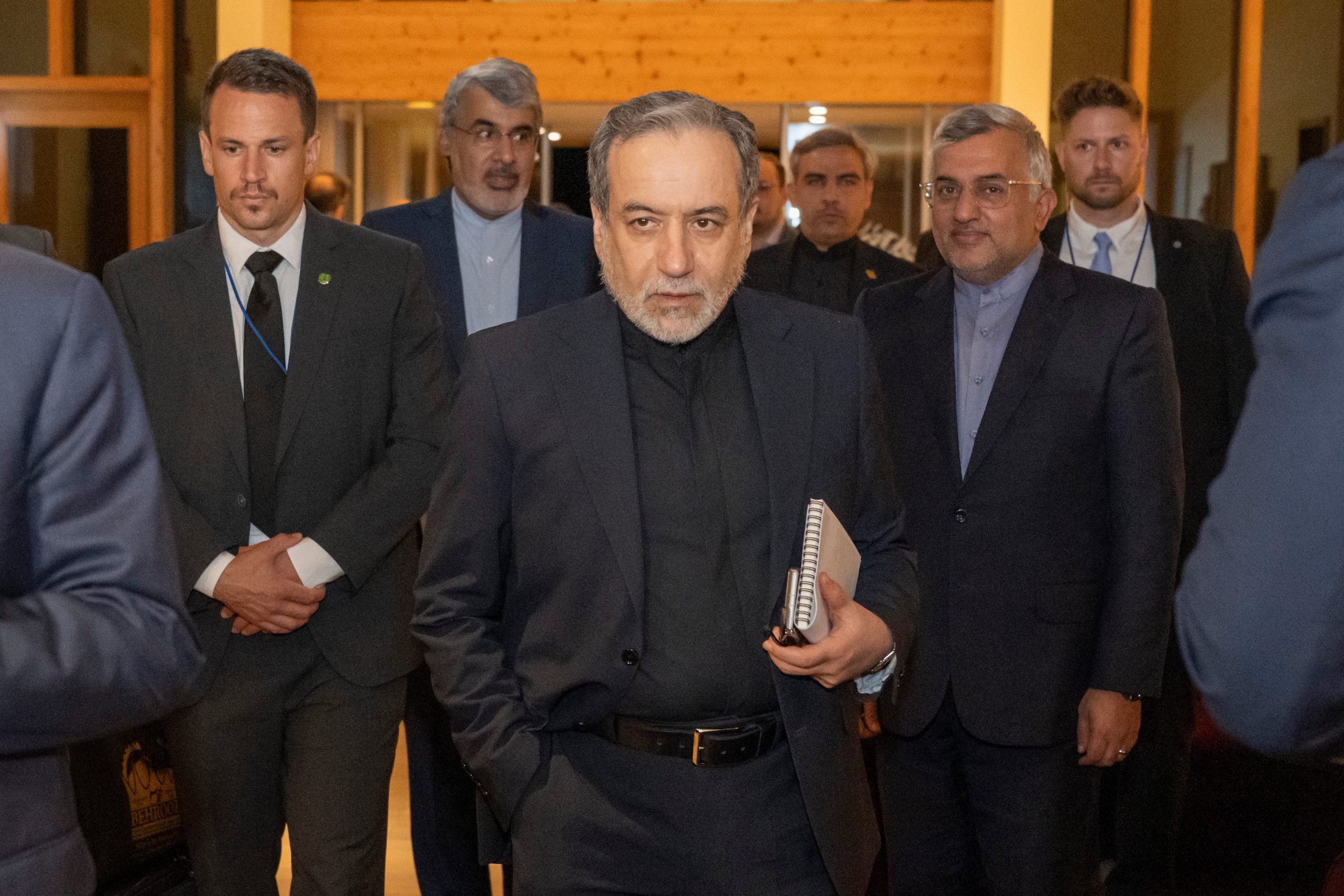
Why Iran Never Knows When to Stop
July 27, 2026At first glance, Iran’s negotiating difficulties appear to stem from disagreements between pragmatists seeking sanctions relief and hardliners determined to resist compromise. Yet that explanation…
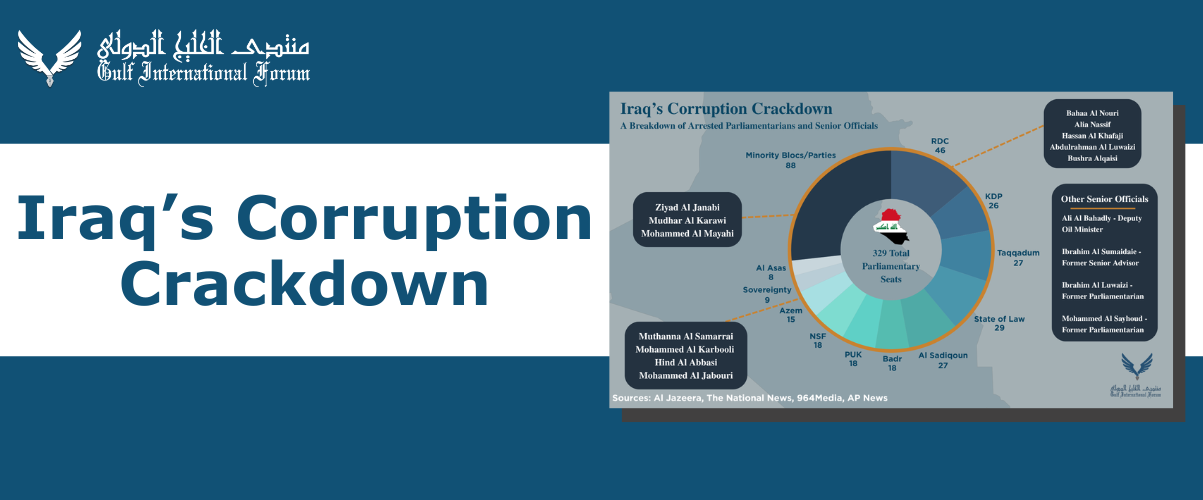
Iraq’s Corruption Crackdown
July 22, 2026*A breakdown of arrested parliamentarians and senior officials as of June 28, 2026.

Sheikh Hamad and the Making of Modern Qatar
July 15, 2026There is a question that haunts every small state: how does a nation survive and stay relevant in a region built for giants? For most…