Iran’s Crypto-Fueled War Economy
The decentralized nature of cryptocurrency makes it an ideal vehicle for sanctions evasion and an increasingly vital pillar of Iran’s wartime economy.

As the risk of renewed U.S.-Iran conflict rises, Tehran has moved quickly to adapt to wartime realities while attempting to limit the impact on border security, domestic stability, and the broader economy. Despite obvious constraints, the Islamic Republic has had a measure of success in maintaining control at home while circumventing U.S. pressure in the Strait of Hormuz through shadow tankers and ship-to-ship transfers to sustain oil exports. This has reignited Western debates over whether sanctions and military actions are enough to curb Tehran’s economic capabilities.
These debates have increasingly focused on Iran’s rapidly expanding cryptocurrency economy, which is closely tied to the Islamic Revolutionary Guard Corps (IRGC). Reports indicate that even amid ongoing U.S.-Israeli airstrikes targeting major Iranian cities and infrastructure, the country’s largest digital asset platform, Nobitex, continues to operate. It serves both as a retail gateway for ordinary Iranians seeking access to foreign currency and as a crucial pillar of Iran’s financial architecture, enabling cross-border value transfers beyond traditional banking channels. Although Iran has refrained from legally or officially adopting cryptocurrency, it has increasingly supported the industry, albeit in a controlled manner, as a potential revenue source and sanctions-busting apparatus.
An Economic Lifeline
Despite decades of sanctions, cryptocurrency’s role in Iran’s state strategy extends well beyond mere evasion. According to 2025 estimates, the Iranian crypto ecosystem reached over $7.78 billion in value despite high levels of domestic instability and external military pressure.
Since early 2026, the Trump administration has imposed unprecedented economic pressure on Iran in an effort to push the regime toward insolvency, including the seizure of nearly $500 million in Iranian cryptocurrency assets. Yet Nobitex remains one of the most consequential crypto exchanges amid the ongoing war in the Gulf. Shortly before the outbreak of hostilities in January 2026, the United States sanctioned two cryptocurrency platforms, including Binance, for allegedly facilitating roughly $1 billion in transactions into virtual wallets linked to the IRGC and pro-Iranian proxy groups. Over the past decade, the IRGC has steadily expanded its control over crypto mining operations, driving out competitors and using digital assets to evade sanctions.
Cryptocurrency networks have also enhanced Iran’s military, technological, and economic collaboration with Russia and China. Moscow actively uses cryptocurrency through exchanges such as Garantex to finance the purchase of low-cost military drones and components to be used against Ukraine. Tehran and Beijing have already established a dollar-free oil trade mechanism through a settlement-exchange loop between Chinese and Iranian banks. As a result, the entire oil-finance system now operates within a dollar-free zone, reinforcing both countries’ strategic push to reduce reliance on U.S.-dominated financial channels.
Founded in 2018 by two brothers from Iran’s powerful Kharrazi clan, which is linked to Supreme Leader Mojtaba Khamenei, Nobitex has processed transactions ranging from tens to hundreds of millions of dollars linked to sanctioned groups, including Iran’s central bank and the IRGC. Over time, Iran built a sophisticated cryptocurrency exchange network capable of funding its proxy networks across the region while circumventing international sanctions. Under current wartime circumstances, the IRGC’s rising influence over the economy has become even more pronounced, with the organization accounting for more than 50 percent of on-chain activity during the fourth quarter. This ascendancy has enabled the organization to monopolize cryptocurrency exchange activities while simultaneously expanding its control over other governmental institutions. This trend has not occurred in a vacuum; rather, it mirrors the IRGC’s expanding control over Iran’s broader economy and political institutions. In 2024, the volume of funds received by IRGC-associated addresses on-chain reached over $2 billion, spiking to more than $3 billion in 2025.
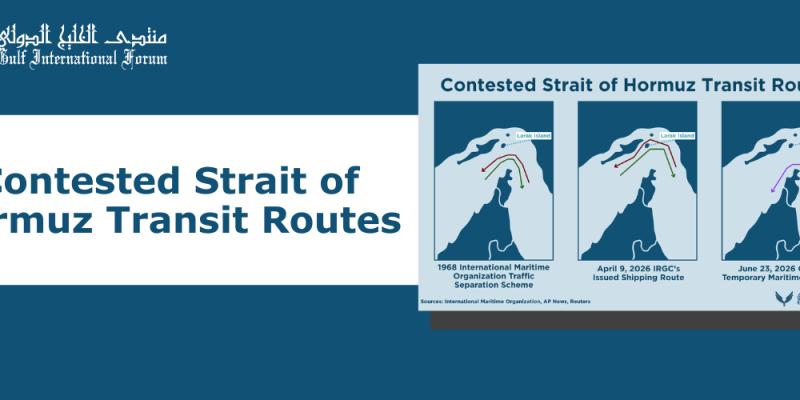
The IRGC’s growing reliance on cryptocurrency is hardly surprising given Western efforts to constrict Tehran’s remaining economic channels. Amid Iran’s blockade of the Strait of Hormuz, Tehran reportedly began demanding oil tankers pay transit tolls in cryptocurrency. Reports suggest the regime has already received several such payments, underscoring its determination to use digital assets rather than conventional financial systems to sustain revenue flows.
The Hormuz Blockade Can’t Touch Iran’s Crypto Wallets
Tehran’s continued blockade of the Strait of Hormuz and attacks on commercial shipping demonstrate the limitations of U.S.-imposed pressure campaigns in constraining Iran economically. At this stage, one of Washington’s few remaining options is to intensify efforts to identify and target cryptocurrency wallets affiliated with Iran and its proxy groups. On April 29, for example, the United States sanctioned a network of Iran-linked crypto wallets, freezing $344 million in digital assets.
Amid a devastating war and mounting regional spillover risks, Nobitex has emerged as both Tehran’s bridge to global crypto markets and a central node in a parallel financial system used to move funds beyond the reach of Western sanctions. Iran’s embrace of cryptocurrency for money transfer and shipment fees reflects its broader effort to reduce dependence on the U.S. dollar and instead pursue the Chinese yuan. In this context, cryptocurrency offers Tehran a flexible mechanism for receiving payments, storing funds in highly secure cold storage systems, and deploying them when necessary.
Despite extensive bombardment of its military and civilian infrastructure, the Islamic Republic has remained resilient, relying not only on the Hormuz blockade for leverage, but increasingly on cryptocurrency to withstand Western pressure. In doing so, Tehran has transformed digital assets into a central pillar of its wartime economy.
The views and opinions expressed in this article are those of the authors and do not necessarily reflect the views of Gulf International Forum.
Issue: Economy & Innovation
Country: Iran

Fuad Shahbazov is an independent policy analyst specializing in regional security, energy diplomacy, and defense affairs across Eurasia and the Middle East. He holds an MA in Political Science from Vytautas Magnus University, a Professional Master’s degree in Terrorism and Religious Extremism from the University of Bergamo, and an MSc in Defense and Diplomacy from Durham University. He shares insights on Twitter at @fuadshahbazov.
The Middle East’s Corridor Boom Meets Reality
July 22, 2026In recent years, particularly since the outbreak of the recent conflicts in Gaza and Iran, the Middle East has seen a resurgence of connectivity projects….
Iraq’s Fiscal Shock and the New Government’s Bargain
July 20, 2026The disruptions to shipping through the Strait of Hormuz have left Iraq facing more than an immediate export shock. Transport has remained constrained, insurance and…