Saudi Arabia’s E-Commerce Boom: Why Traditional Small Businesses Risk Falling Behind
As Saudi Arabia’s e-commerce sector expands, traditional small businesses face the challenge of turning digital adoption into sustainable growth while navigating rising competition, operational costs, and emerging technologies.

Saudi Arabia’s digital marketplace is expanding rapidly. By the third quarter of 2026, the kingdom had 52,259 active e-commerce commercial registrations, up 25 percent from a year earlier. Yet a registered business and an online storefront reveal little about whether a merchant can attract customers, fulfill orders efficiently, or earn a sustainable return.
The distinction matters for traditional small and medium-sized enterprises (SMEs). Many have spent years developing supplier networks, local reputations, and customer relationships, but online competition rewards additional capabilities: discoverability, transparent pricing, delivery efficiency, and the ability to interpret data. The question is no longer simply whether Saudi businesses can go online, but whether established smaller firms can compete effectively once they do.
From Market Access to Competitive Advantage
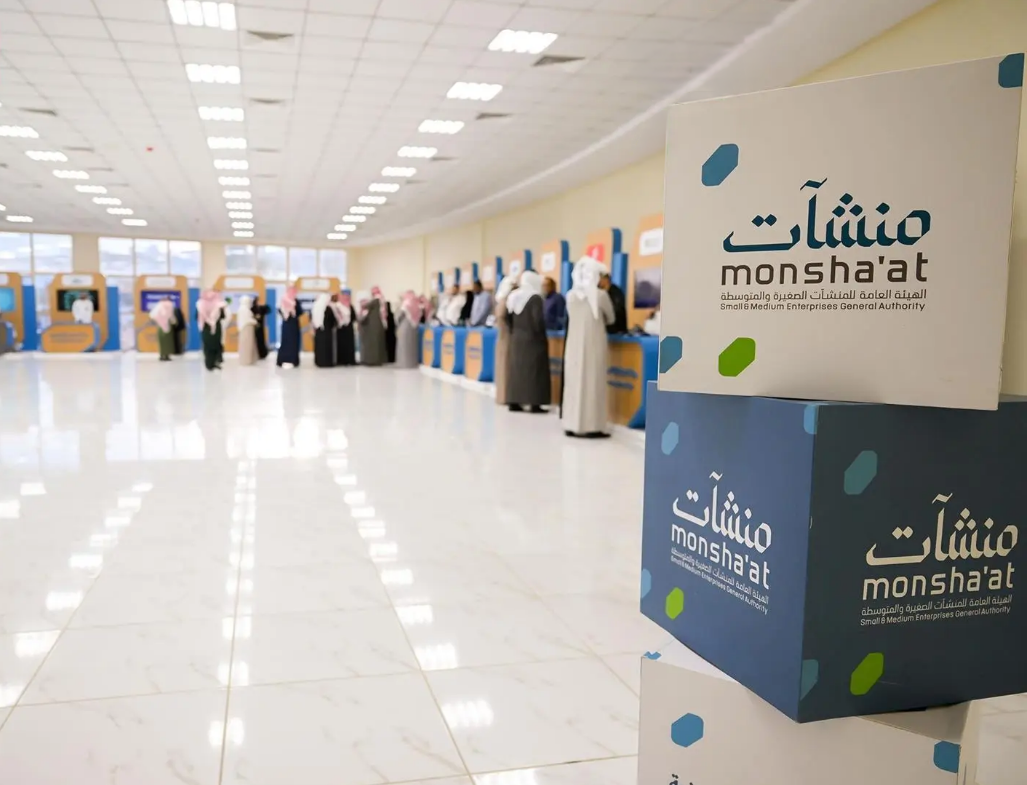
Saudi Arabia has removed important obstacles to digital commerce. The Saudi Central Bank reports that electronic payments accounted for 85 percent of retail payments in 2025, compared with 79 percent in 2024. The country’s SME authority, Monsha’at, already supports the transition from traditional commerce through e-commerce services covering digital payments, marketing tools, and online platforms. These measures make online transactions more practical for customers and merchants alike.
But access should not be confused with participation. The General Authority for Statistics’ 2024 survey found that 98 percent of Saudi establishments had internet access, while 29 percent used the internet to sell or display goods and services. These figures cover establishments across sectors, including those for which online selling may be inappropriate; they do not prove that the remaining businesses are technologically unprepared. They do show why connectivity alone is a poor measure of commercial digitalization.
Additionally, online selling does not suit every firm equally. A supplier handling hundreds of highly customized office products faces a different challenge from a retailer selling standardized goods. Digitizing product information, quotations, inventories, and fulfillment can demand skills and resources that smaller operators lack. Some businesses may benefit more from digitizing procurement or customer management before establishing a full online shop.
Furthermore, traditional firms often have established relationships with customers who trust their products and services. Longstanding buyers often prefer familiar suppliers because of reliable service and established payment terms. The danger arises when those relationships become the only competitive advantage while potential customers increasingly compare alternatives online.
The Hidden Economics of an Online Sale
Digital marketing can extend a firm’s reach far beyond its historical network, but that reach has a price. Search optimization requires ongoing work, while advertising requires upfront spending with no guarantee of a return. A business that counts orders but ignores acquisition costs, payment fees, and delivery expenses may mistake sales growth for financial progress.
The experience of Samar Al-Zaman Establishment, a Jeddah-based distributor where the author serves as operations director, illustrates some of these challenges. The firm still supplies office stationery but has shifted most of its activity toward bottled water after years of relying on brochures, phone inquiries, and corporate procurement contacts. The business launched an online water storefront in July 2026, began focused SEO work in August, and introduced paid search advertising later that month. Its analytics recorded roughly 1,000 visitors in the first month, including access to smaller household customers it had struggled to reach offline. Yet delivering five or ten cartons to distant neighborhoods sometimes made individual orders commercially unattractive.
The lesson is not that e-commerce failed; it is that digital demand and profitable demand are different. Delivery charges, fuel, driver compensation, product costs, and order size determine contribution margins. A low-priced product may sell frequently while providing too little margin to finance expensive last-mile fulfillment. Pricing rules and delivery zones must therefore evolve alongside customer acquisition.
Online price transparency adds another complication. In a preliminary October 2026 comparison published by that same business, Samar Water examined 39 listed bottled-water prices across three Saudi online retailers, comparing the cost per liter rather than simply the carton price. The small sample cannot establish national price levels or trends, but it illustrates why standardized comparisons are essential for both buyers and sellers. More visibility can intensify price competition while raising the value of careful cost analysis.
Cash flow also shapes which digital business models are viable. Traditional corporate supply may bring larger contracts but also involve lengthy approval and payment cycles; direct-to-consumer orders may settle faster yet be smaller and more delivery-intensive. Recurring customers can improve predictability, but expressions of interest in subscriptions are not guaranteed repeat revenue. SMEs must evaluate these tradeoffs rather than assume that every new digital channel is inherently superior.
AI and the Next Competitive Divide
Artificial intelligence (AI) could make these capabilities less expensive to acquire. Saudi Arabia’s official establishment survey reported AI-technology use by roughly 28 percent of establishments in 2024, including 25 percent in wholesale and retail trade. That measure covers AI broadly, not just generative chatbots, but suggests that useful applications remain unevenly distributed across business activities.
For a resource-constrained SME, generative AI can assist with drafting product information, researching customer questions, comparing offers, and analyzing marketing results. These uses may lower the expertise required to begin experimenting online. Search behavior may also become more fragmented: the same Jeddah distributor reports that its analytics attributed roughly five to six daily website visits to ChatGPT three months after its online launch. However, this is an early observation from a single business, not evidence of a nationwide consumer shift or proof of sales attributable to AI.
AI can nevertheless widen the divide it promises to narrow. A firm able to verify outputs, measure campaigns, and protect customer information may use these tools more effectively; firms that rely on automated recommendations without checking costs or accuracy risk making poor business decisions. AI does not solve an uneconomical delivery route, a weak margin, or a poorly managed cash cycle. Digital literacy increasingly means knowing when not to automate.
Making Digital Adoption Pay
Saudi Arabia does not need to start from zero. Existing initiatives such as Monsha’at’s e-commerce programs already provide entry points for traditional businesses. The next priority should be training and advisory support focused on outcomes: customer acquisition costs, contribution margins, cash-flow management, retention, and the responsible use of AI. Success should be assessed through business sustainability, not simply the number of storefronts launched.
For owners, the practical approach is selective rather than all-or-nothing: choose suitable products, test small acquisition campaigns, calculate fulfillment costs before promising delivery, and protect the personal relationships that already generate repeat business. For policymakers and support providers, intensive advisory programs may cost more than introductory digital courses, but could prevent costly trial and error. Support should also recognize that some firms will benefit more from partial digitization than from retail e-commerce.
Traditional Saudi SMEs are not destined to be left behind. Many possess valuable local knowledge and customer trust. However, competing in an increasingly digital marketplace will require them to pair these strengths with economic discipline and adaptable skills.
The views and opinions expressed in this article are those of the authors and do not necessarily reflect the views of Gulf International Forum.
Issue: Economy & Innovation
Country: KSA

Saleh Alquayti is the Director of Operations at Samar Al-Zaman Trading Establishment in Jeddah, Saudi Arabia. With over two decades of experience spanning financial research, business operations, and wholesale distribution, his interests include Saudi Arabia’s SME sector, digital transformation, e-commerce, and the evolving role of technology in traditional businesses.

The Middle East’s Corridor Boom Meets Reality
July 22, 2026In recent years, particularly since the outbreak of the recent conflicts in Gaza and Iran, the Middle East has seen a resurgence of connectivity projects….

Iraq’s Fiscal Shock and the New Government’s Bargain
July 20, 2026The disruptions to shipping through the Strait of Hormuz have left Iraq facing more than an immediate export shock. Transport has remained constrained, insurance and…