Saudi Arabia’s Shrewd Embrace of Ahmed Al Sharaa
Saudi Arabia’s embrace of Syria’s interim President Al Sharaa reshapes regional alliances and could position Riyadh as the key player in Syria’s future.

Upon the fall of the Assad regime, the general consensus among the Western foreign policy establishment was that the new Syria would swiftly fall under the influence of Türkiye and Qatar. Indeed, given Qatar’s unwavering anti-Assad positions since the beginning of the revolution in 2011 and Türkiye’s clandestine role in assisting Hay’at Tahrir al-Sham (HTS) in its overthrow of Assad, it seemed reasonable to believe that Syria’s newly anointed president, Ahmed Al Sharaa, would quickly fall in line with the Qatari-Turkish axis.
Al Sharaa seems to have had other plans in mind. In his actions since becoming Syria’s transitional leader, the former militant commander has prioritized Damascus’ relationship with Saudi Arabia, engaging with Saudi media and political figures and choosing Riyadh as the destination for his first foreign visit. This embrace, following years of HTS’ relative isolation from Saudi Arabia, may seem strange to some observers. Yet Al Sharaa has made his goals as Syria’s new leader clear—and it is equally clear that Saudi Arabia, more than any other player in the Gulf region, is well-positioned to help him achieve his main goals of economic revitalization, regional reintegration, and Western acceptance.
Road to Damascus
With the sheer volume of sanctions imposed on Syria given the Assad regime’s war crimes, as well as the terrorist designations imposed on HTS’ leadership due to its origins as an al-Qaeda offshoot, Al Sharaa seemed to recognize the need to show the West, namely the United States, that he had genuinely changed his outlook and was committed to being the transitional leader of an inclusive Syria that would not threaten Western interests. Washington received Al Sharaa’s initial overtures with cautious optimism and small steps—such as removing the $10 million bounty from his head—but made it clear that in order to ensure more enduring relief, Al Sharaa would need to demonstrate his cooperation in actions as well as words.
With this in mind, Al Sharaa appears to have decided that the best way to secure the West’s goodwill was through a closer relationship with Saudi Arabia, America’s primary Arab ally in the region. After all, who better to help convey Al Sharaa’s message of change than Saudi Crown Prince Mohammad Bin Salman (MBS), who transformed the Kingdom over the past decade through economic investment and gradual liberalization—and, moreover, has the strongest ties among any of the GCC states with U.S. President Donald Trump?
In late December, Al Sharaa sat down with the Saudi pan-Arab news channel Al Arabiya for his first television interview as Syria’s leader. Al Sharaa’s choice of venue did not go unnoticed on the Syrian street and around the region. In the interview, the new president echoed MBS’s view that the region should focus on economic cooperation and investment over armed conflicts, praised Saudi Arabia’s crucial role regionally and globally, and made a point to reminisce about his childhood in Riyadh and his wish to walk its streets again.
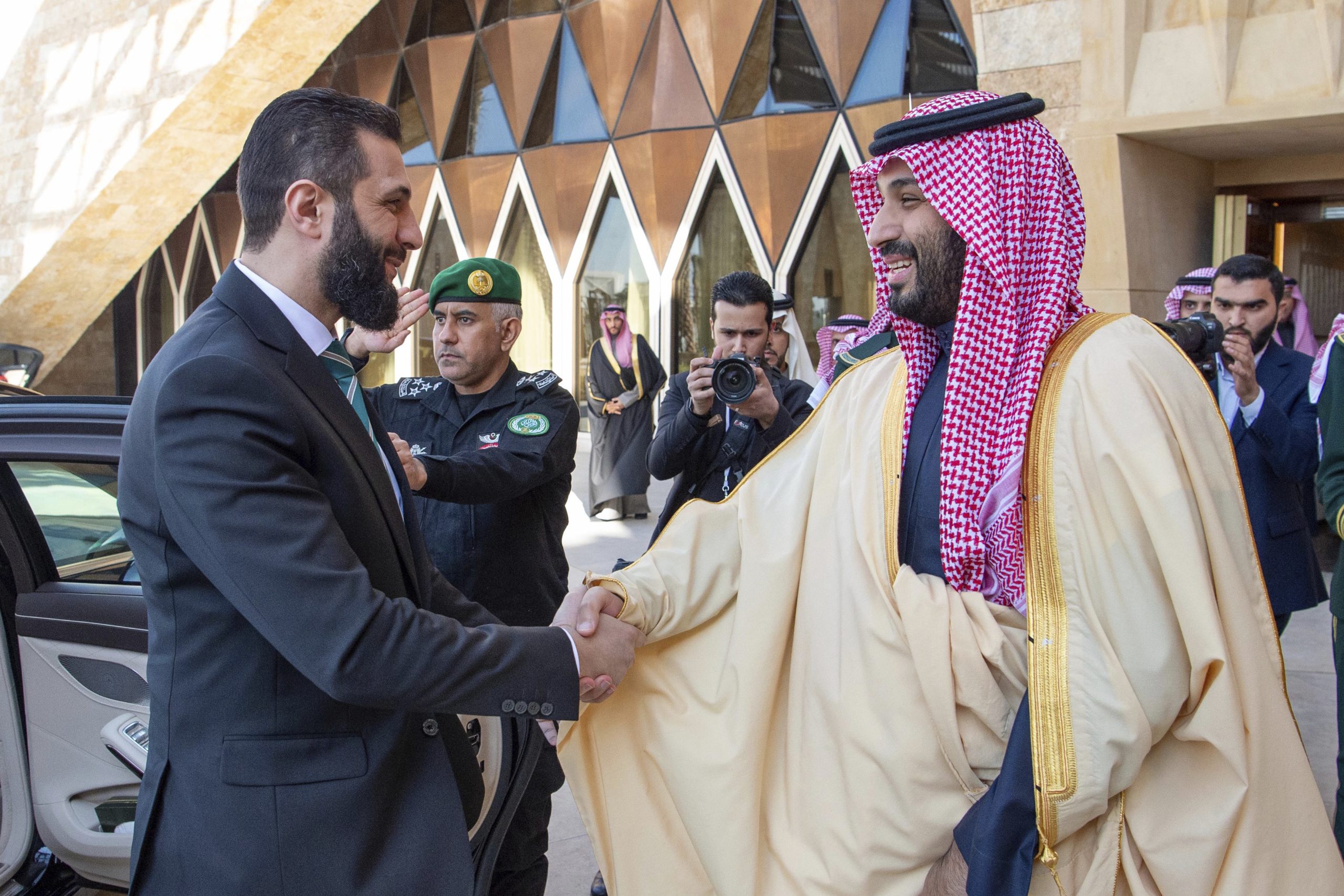
This interview set off a flurry of activity around the region—particularly within Saudi Arabia, which swiftly latched onto the opportunity to influence developments in the new Syria. Riyadh hosted Syria’s new transitional foreign and defense ministers in early January and later hosted a summit of Syrian, Arab, and Western officials. Shortly thereafter, Saudi planes full of aid and doctors began landing in Damascus. Syria’s new Foreign Minister, Asaad al-Shaibani, praised Saudi Arabia’s Vision 2030 at Davos, noting his country hopes to emulate the Kingdom’s economic model, echoing comments made by Syrian Interior Minister Ali Kada. A few days later, Saudi Foreign Minister Prince Faisal bin Farhan visited Damascus, announcing that the Kingdom was in talks with its allies in Europe and the United States to lift economic sanctions on Syria. This whirlwind of diplomatic activity culminated with Al Sharaa’s wish coming true, as his first foreign visit as Syria’s new President was to Riyadh to meet with Saudi Arabia’s Crown Prince. Saudi Arabia also bestowed the honor of allowing Al Sharaa and his wife to enter the Kaaba, an honor reserved to special guests of the Kingdom, during his performance of an Umrah (lesser pilgrimage) in Mecca.
Regional Reshuffling
On the Saudi side, this opening gambit of the new Syrian administration is a smart one for the Kingdom’s own interests. MBS has made clear his desire for more calm in the region, allowing him to focus Saudi Arabia’s resources on his domestic reform agenda and economic diversification campaign rather than regional problems. The fall of the Assad regime has benefited Riyadh in a second crucial way: it has meant the near-total destruction of Assad’s captagon trafficking ring, which had impacted Saudi Arabia more than any other country in the region. Ensuring Syria’s stability to prevent a vacuum that allows for the continuation of the drug trade is a core Saudi national interest.
Additionally, Saudi Arabia’s embrace of Al Sharaa has regional ramifications beyond Riyadh’s domestic interests. In particular, despite MBS’ interests in keeping Saudi Arabia focused on domestic issues, Syria might nonetheless turn into a field for regional competition between GCC states and Türkiye. Saudi Arabia wants to position itself as a political counterweight to an increasingly bold Türkiye. Although Ankara also stands to benefit from potential Saudi investment in Syria, and both countries immensely need a stable Syria, MBS and Turkish President Recep Tayyip Erdoğan will continue to be wary of another in their attempts to be seen as the leader of the Islamic world.
Riyadh might also be wary of the United Arab Emirates (UAE), given its public embrace and promotion of Bashar Al Assad over the past few years—a fact that Al Sharaa is unlikely to have forgotten, even if he may have temporarily put it aside for expediency. The sudden change in Damascus has unquestionably left Abu Dhabi playing catch-up in its relations with the new government. Likewise, Iran, which supported the Assad regime to the hilt, appears to be left out in the cold—with disastrous implications for the so-called “Axis of Resistance” and Iran’s efforts to project power in the region.
On the other hand, Riyadh might also be worried about Qatar’s influence in Syria, as Doha was the only player in the GCC that constantly backed the Syrian opposition and rejected initiating any communication with the Assad regime. However, the events following Assad’s fall make it clear that Saudi Arabia and Türkiye will be Damascus’ two most significant partners, with the other GCC states playing a secondary role.
The nascent Saudi-Syrian strategic partnership is more than just diplomatic optics and niceties. Fundamentally, it serves each side’s core political and economic interests. Al Sharaa, as the transitional leader of a devastated and internationally isolated Syria, needs legitimacy, financial backing, and international acceptance. Saudi Arabia offers him the ultimate gateway to all of these goals. With Riyadh’s backing, the new government in Damascus can secure both regional and global recognition and economic investment that could help stabilize its ravaged economy.
Al Sharaa—still tainted by his history as an al-Qaeda militant and a former prisoner of the United States in Iraq—can likewise show himself as a more palatable figure in the West. For MBS, embracing Syria’s new leadership gives Saudi Arabia a unique opportunity to shape the country’s reconstruction and political trajectory, ensuring that Syria remains free from the exclusive influence of Türkiye. It also reinforces Riyadh’s role as a key power broker in the Levant, which can be seen via its reemergence in the Lebanese context. Simultaneously, and perhaps most importantly, an active hand in Syria’s reconstruction and governance allows Saudi Arabia to curb Iran’s regional ambitions, with positive implications for the stability of the Middle East.
Syria’s present and future are being written today. If the Kingdom succeeds in using its geopolitical might to alleviate the sanctions placed on Syria today, it will find a receptive environment among Syrians who are eager to return to the Arab fold and no longer be a transit stop for Iranian weapons to the Levant—and ground zero for the drug trade in the Middle East. Moreover, Al Sharaa’s public courting of Saudi Arabia should launch an “influence race” of regional powers wanting to better their relations with Damascus and assist in its reconstruction and regional reintegration. Türkiye, Qatar, Saudi Arabia, and even the UAE will be keen to see a stable Syria given the state of affairs in the region, and Damascus should stand to reap the benefits of economic investment if it can stabilize the country’s security situation and oversee a peaceful transitional political process.
The opinions expressed by the author are solely his own and do not represent the views or positions of his professional affiliations or employment.
The views and opinions expressed in this article are those of the authors and do not necessarily reflect the views of Gulf International Forum.
Issue: Geopolitics
Country: KSA
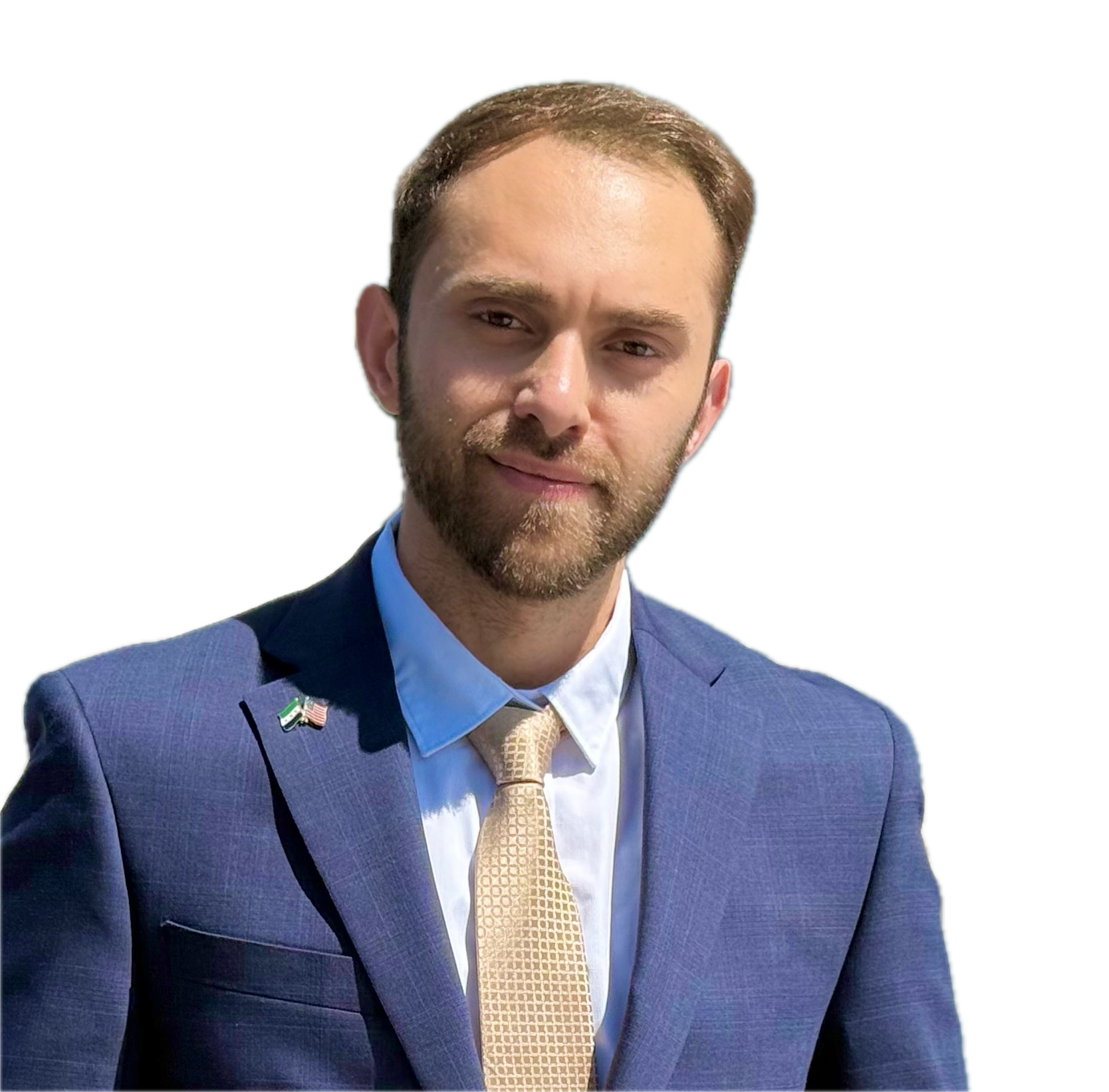
Ameer Alsamman is a foreign policy professional based in Washington, D.C., and the founder of SyriaSpeaks, an initiative focused on advancing political awareness and civic engagement among Syrians through the lens of transitional justice in a post-Assad future. His professional experience spans both public and private sectors across the United States, United Kingdom, United Arab Emirates, Syria, and Lebanon. Ameer holds a Master’s degree in International Law from SOAS, University of London, and a Bachelor’s degree in International Affairs and Political Science from the Lebanese American University.

China’s Technology Development Push Meets Gulf Diversification
October 6, 2026China’s “new quality productive forces” (NQPF) are often understood as a domestic effort to revive growth, upgrade industry, and reduce dependence on Western technology. Yet…

Riyadh Shifts Toward Minilateralism as Regional Threats Mount
September 9, 2026Saudi Arabia’s signing of the Mecca Joint Defense Agreement with Türkiye and Pakistan on August 7 marks a crucial development in the evolution of the…

Toward a New Order in MENA Regional Geopolitics
September 2, 2026This report is a byproduct of the workshop “Toward a New Order in MENA Regional Geopolitics: What’s Next for the Region’s Geopolitical Equilibrium?,” hosted in…