Saudi Aramco’s U.S. Investments: A Win-Win Template for Bilateral Energy Engagement
As Saudi Arabia has grappled with its Vision 2030 reform plan and its transition away from fossil fuels, one international partner of choice in the energy sector has emerged: the United States

In recent years, many countries in the Middle East region have concluded that their continued economic dependence on hydrocarbon resources will prove an obstacle to economic growth in the long term, as global crises continue to drive massive fluctuations in energy prices. Oil and gas reserves, of course, are not renewable, and most Gulf leaders have publicly stated that hydrocarbons should be used to foster sustainable growth and benefit future generations. Saudi Arabia, which also seeks to reduce its dependence on oil revenues, has used those revenues to invest extensively in non-oil fields, in line with the “Vision 2030” economic plan. To this end, Saudi Arabia has created special economic and tourism zones to earn money from various sources.
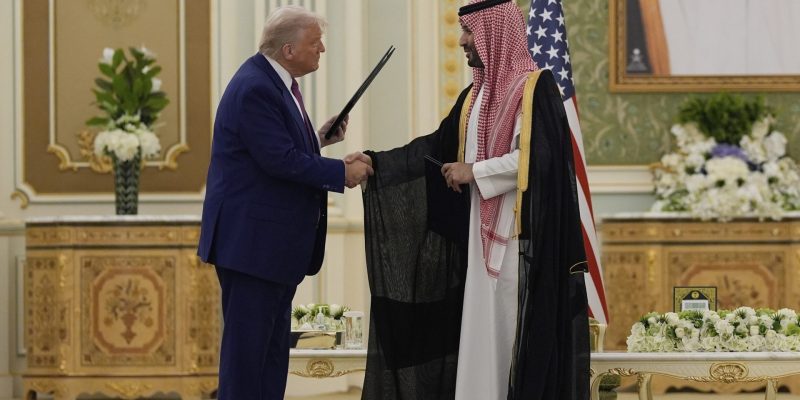
During President Joe Biden’s visit to Jeddah in July 2022, the United States and Saudi Arabia signed several important cooperation agreements. Energy played a key role in the negotiations. During his meeting with Saudi King Salman bin Abdulaziz and Crown Prince Mohammad bin Salman, president Biden finalized several bilateral agreements that he claimed would serve the interests of the American people and lead to a more integrated, stable, and prosperous Middle East region.
Investment Continues, Despite Diplomatic Headwinds
It is clear that clean energy cooperation between Saudi Arabia and the United States will have a litany of benefits for both sides. The financial resources of Saudi Arabia, combined with the technological advantages provided by American companies, can accelerate the process of energy transition in both countries. Through the Partnership Framework for Clean Energy Development, Washington and Riyadh will lay out areas of cooperation in which they may take climate action and meet their clean energy goals.
Bilateral contacts that advance these goals occur at multiple levels. Each year, the United States and Saudi Arabia Bilateral Energy Dialogue facilitates cooperation between the U.S. Department of Energy’s (DOE) Office of International Affairs and the Saudi Ministry of Energy, Industry, and Mineral Resources (MEIM). The yearly gathering sees representatives tackle issues of mutual interest and outline areas for further cooperation. The Bilateral Energy Dialogue creates an arena for information exchange on energy future and development plans, including in the fields of nuclear power and electricity. It also gives an opportunity to discuss collaborative R&D in the energy sector.
The sixth Future Investment Initiative (FII) meeting in November 2022 saw the development of a sustainability fund that would facilitate technological growth in the field of energy transition. With $1.5 billion at its disposal, the FII fund—organized and funded by Saudi Arabia’s Public Investment Fund (PIF)—is one of the world’s largest sustainability funds. Although relations between the United States and Saudi Arabia have deteriorated over the last two years due to the increase in oil prices—one that Saudi leaders have repeatedly refused to address by increasing oil production, as Washington has urged—energy security has always played an important role in the relations between the two countries. To coordinate with the dynamics of the global energy market and energy transition, Aramco has invested in several refinery projects in major energy-consuming countries, including the United States.
Following the termination of the Motiva Enterprises partnership with Royal Dutch Shell in May 2017, Saudi’s national oil giant Aramco has fully owned the Port Arthur oil refinery in Texas, the largest single oil refinery in North America. Port Arthur’s annual output exceeds 600,000 barrels per day (bpd), and its total capacity could theoretically reach 636,500 bpd. In addition to providing energy security, Saudi Aramco’s investment in American energy infrastructure has also provided for part of the technical and technological needs of Saudi Arabia. Considering America’s burgeoning potential in LNG production, Aramco can meet its percentage share of LNG required by Saudi Arabia through investment in American LNG facilities.
Upon taking full ownership of the Port Arthur facility, Saudi Aramco planned to invest up to $30 billion in the facility. An initial $12 billion was assigned to develop the plant’s refining capacity. The company also announced its intent to invest an additional $18 billion by 2023. Saudi Aramco is expanding its U.S.-based operations, recently acquiring Motiva Enterprises LLC’s trading branch. In May 2019, Sempra LNG and Aramco Services Company, subsidiaries of Sempra Energy and Saudi Aramco, signed a non-binding deal presupposing the completion of a 20-year deal for LNG sale and purchase. This SPA agreement would see 5 million tons of LNG leave Phase 1 of the Port Arthur LNG plant each year. The heads of agreement (HOA) also covered the negotiation of a 25 percent investment in Phase 1 of Port Arthur LNG. At the time of the signing, Saudi Aramco CEO Amin Nasser described the agreement as significant progress on Aramco’s path to becoming a global leader in the LNG market. Aramco’s forecasts indicate that LNG demand will grow by 4% per year, surpassing 500 million metric tons a year by 2035.
Concerning Climate
Saudi Aramco has also signed a memorandum of understanding (MoU) with major global energy investor EIG. The MoU sets out plans for the two companies to collaborate on energy projects that will mutually benefit their sustainability goals. Potential areas for collaboration and investment include alternative fuel sources, hydrogen and natural gas, energy transportation and storage, and carbon capture. The partnership between Saudi Aramco and EIG was formed with the understanding that climate change poses an existential threat to the world and holds tremendous consequences for human economies and societies in the years ahead.
The past centuries have shown a direct relationship between energy consumption—overwhelmingly fossil fuels—and economic growth. Over time, the energy efficiency of economic productive processes has naturally increased due to market pressures toward more effective uses of limited resources. However, due to the rapid economic development across the world and the increase in the level of social welfare, the consumption of fossil fuels has also increased exponentially, in absolute terms. Growing carbon dioxide emissions will only intensify global warming and bring about significant environmental destruction in the medium and long term. As the world transitions away from the use of fossil fuels and toward renewable energy, maintaining energy security while transitioning to renewables will be the focus of future cooperation between Saudi Arabia and the United States. Consequently, Saudi Aramco’s investment in American energy infrastructure can be expected to increase in the next decade.
As a new energy superpower, the United States requires ever-greater investment in its energy sector. Of course, America has the necessary financial resources to invest in its own energy projects, but the investments of other countries can accelerate its growth. Despite tension between the governments of the United States and Saudi Arabia, Saudi Aramco’s increased investment into the American energy structure—and the helpful presence of American companies in Saudi Arabia’s energy transition and decarbonization projects—can help to ease tensions in the future, as well as increase the volume of trade between Washington and Riyadh. Aramco’s investment in American energy projects will be a win-win for both countries, and can easily become a model for future American cooperation with other Gulf countries.
The views and opinions expressed in this article are those of the authors and do not necessarily reflect the views of Gulf International Forum.
Issue: Energy & Environment, U.S. – Gulf Policy
Country: KSA

Dr. Umud Shokri is an accomplished energy strategist and senior foreign policy advisor with over two decades of experience. With a Ph.D. in International Relations, he specializes in global energy dynamics, climate change, clean energy technologies, energy security, and geopolitics. Currently a Senior Visiting Fellow at George Mason University, Dr. Shokri has significantly influenced policy and strategy development across the energy sector, including authoring “US Energy Diplomacy in the Caspian Sea Basin.” His work spans from analyzing oil and gas market trends to advising on sustainable energy policies, collaborating with government entities, academic institutions, and industry stakeholders to address global energy challenges. In his role as a Black Sea State Department Title VIII Fellow, Dr. Shokri focuses on Azerbaijan’s energy transition and preparations for COP29, exploring the country’s shift towards renewable energy and its socio-economic and geopolitical impacts. His commitment to environmental sustainability is reflected in his advocacy for aligning with ESG frameworks and guiding entities towards real-world greenhouse gas emission reductions. Through his research and engagement with policymakers, Dr. Shokri contributes valuable insights to the discourse on energy transition and climate action at both regional and global levels.

Pipe Dreams and Pecking Orders: Who Gets Priority When Gulf Bypass Routes Are Tested?
September 17, 2026In June, Kuwait Petroleum Corporation CEO Sheikh Nawaf Al-Sabah told an Atlantic Council audience that Kuwait was in discussions with Saudi Arabia and the UAE…
Cartel at Dusk: OPEC’s Future After the Iran War
July 28, 2026Something more consequential than another oil market disruption is underway. The Iran war has exposed and accelerated an institutional weakness within OPEC that had been…
Saudi Arabia Needs an Overland Route to Global Energy Markets
July 2, 2026For years, Saudi Arabia has recognized the vulnerability created by its dependence on the Strait of Hormuz. To reduce risks from Iranian disruptions, the kingdom…