Strategic Abstention: The ‘Axis of Resistance’ Deliberate Inaction in the Gaza War
Despite the expectations of some allies and the broader Arab world, the ‘Axis of Resistance,’ particularly Iran and its proxies like Hezbollah, have strategically chosen not to get involved in the recent Gaza war, focusing instead on indirect benefits and avoiding direct conflict.

Amid the escalating Gaza war, a striking absence marks the regional conflict landscape: the non-involvement of the ‘Axis of Resistance,’ including Iran and its proxies. Nearly six weeks into the war, these forces have consistently communicated their decision to remain on the sidelines. This inaction comes into sharp focus against the backdrop of Iran’s strategy to leverage non-state actors like Hezbollah and Hamas in its proxy warfare. While Hezbollah’s leader, Hassan Nasrallah, clarified their stance in a much-anticipated speech a month into the conflict, the impact of this abstention is profound. Israel, grappling with internal divisions and security vulnerabilities heightened by Hamas’s attacks, finds itself in a precarious position not seen in decades. This situation stems from both the far-right Israeli policies and Iran’s concerted efforts to fortify groups like Hezbollah and Hamas, aiming to undermine its adversaries. Despite Hamas’s inability to secure territory in southern Israel, their assaults have instilled widespread panic, exposing deep fissures in the Israeli society and igniting debates over the nation’s security resilience.
Fracture in the “Axis of Resistance”
In addition to provoking a violent reaction from Israel, Hamas’ leaders believed that the group’s rampage in southern Israel would invite Hezbollah to launch similar raids, effectively opening a two-front war against Tel Aviv and unleashing chaos within the Jewish state. However, as evidenced by Nasrallah’s November 3 “long speech,” Hezbollah appeared to be hesitant to directly clash with Israel. Rather, the Lebanese political and militant organization has conducted limited operations along the Israel-Lebanon border that employ loitering munitions and mortars—not escalatory forces such as ground troops. As such, Hezbollah’s weak commitment to a partner in the “Axis of Resistance” was met with widespread condemnation from Hamas and angered population across the Arab world that expected Hezbollah to increase the pressure on Israel. For example, in an interview with Hamas senior official Musa Abu Marzouk, he said “We expected a lot from (Lebanese) Hezbollah and our brothers in the West Bank, but we are dismayed by the shameful position of our brothers in the Palestinian Authority,” a clear indication of the organization’s disappointment to the “Axis of Resistance” reaction.
After Nasrallah’s speech, a notable development occurred as per the press report dated November 15. Supreme Leader Ali Khamenei of the Islamic Republic of Iran, in a meeting in Tehran with Senior Hamas Leader Ismail Haniyeh, stated that Iran would not participate in the war. This decision stems from Hamas’s initiation of the October 7 attack without prior consultation with Tehran. This marks a noticeable pivot in Tehran’s stance towards Hamas, potentially leading to a rift between the group and its Iranian supporters.
Though light on promises to wage war on Lebanon’s southern neighbor, Nasrallah’s speech nevertheless contained useful indicators of Hezbollah’s unfolding strategy toward the conflict in Gaza. First and foremost, Nasrallah sought to strike a cautious tone, distancing his organization from the October 7 attacks and signaling that Hezbollah would not play the role of a full-scale belligerent in the conflict. Contrary to some reports that have warned of Hezbollah’s “outstanding conventional warfare capabilities”, Nasrallah’s careful and cautious speech revealed his forces’ limitations. Despite the speech’s relatively de-escalatory nature, it should be noted that Israeli leaders are expected to operate with one eye on its northern border, wary of a “potential military operation” that would severely complicate Israel’s security environment.
Iran Benefits from Regional Chaos
Hezbollah’s current strategy seems clear: it wants to reap the benefits of the Hamas-Israel war without jeopardizing the strength of its military forces. Considering the scale of escalation that opening of a new front would provoke, this is likely the main part of Iran’s “united front” strategy designed and executed by the Islamic Revolutionary Guards Corps. However, Iran surely understands that even the combined strength of its regional proxy forces, namely Hezbollah and Yemen-based Houthi rebels, would ultimately fail to defeat Israel in a conventional war campaign, due to a sparse arsenal of weapons and limited human and technical resources. Hence, opening a second front would drag Lebanon into an undesired and likely lengthy war it could not sustain, leaving Hezbollah’s regional power projection capabilities either neutered or obliterated entirely. Considering Hezbollah’s weak hand, Hassan Nasrallah’s advocacy of restraint should come as a little surprise.
Notwithstanding, Hezbollah and Hamas’s main patron, Iran, has gained much from the conflict, which has exposed Israel’s vulnerability and sparked a crisis that has focused the world’s attention squarely on the 18 square mile Gaza strip. Tehran has also successfully avenged years of Israeli operations within Iran and confirmed its status as a regional power player. Indeed, perceptions matter significantly to the Islamic Republic, if it wants to effectively deter Israel and its Western allies. As such, Tehran’s position and its strong support for proxy forces suggest that the current Israel-Hamas war still has the possibility to go beyond the traditional theater of military operations, steadily turning into a broader regional conflict.
Iran has mobilized its militias in case the war approaches its borders, reviving the Islamic regime’s popular “resistance narrative,” protecting leadership while enhancing Iran’s appeal throughout the wider Muslim world. This is a tried and tested strategy in Tehran. Since its inception in 1979, the Islamic Republic has made enormous efforts to broaden the ideological and literal battleground beyond its territorial borders and create defensive lines far from home. Therefore, Iran will likely push its regional proxy forces, including Hezbollah, to step into the fray while it remains on the sidelines—avoiding direct conflict with Israel or the United States.
Although Israel has launched the third phase of its military operation in Gaza, the most recent escalation of its offensive will not trigger Hezbollah to join the conflict. Nasrallah clearly outlined Hezbollah’s red line—an Israeli invasion of southern Lebanon—which is unlikely even under the most severe circumstances. Thus, Nasrallah’s speech will likely be sufficient to prevent a major regional escalation, to the chagrin of Hamas’ most militant supporters.
The views and opinions expressed in this article are those of the authors and do not necessarily reflect the views of Gulf International Forum.
Issue: Defense & Security, Geopolitics
Country: Iran

Fuad Shahbazov is an independent policy analyst specializing in regional security, energy diplomacy, and defense affairs across Eurasia and the Middle East. He holds an MA in Political Science from Vytautas Magnus University, a Professional Master’s degree in Terrorism and Religious Extremism from the University of Bergamo, and an MSc in Defense and Diplomacy from Durham University. He shares insights on Twitter at @fuadshahbazov.
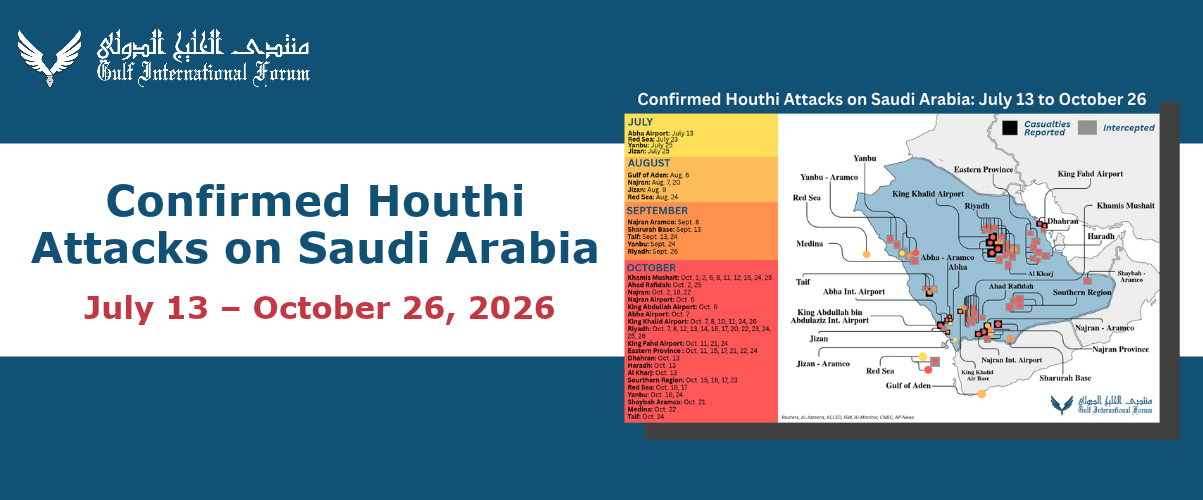
Confirmed Houthi Attacks on Saudi Arabia: July 13 to October 26
October 28, 2026
Toward a New Order in MENA Regional Geopolitics
September 2, 2026This report is a byproduct of the workshop “Toward a New Order in MENA Regional Geopolitics: What’s Next for the Region’s Geopolitical Equilibrium?,” hosted in…
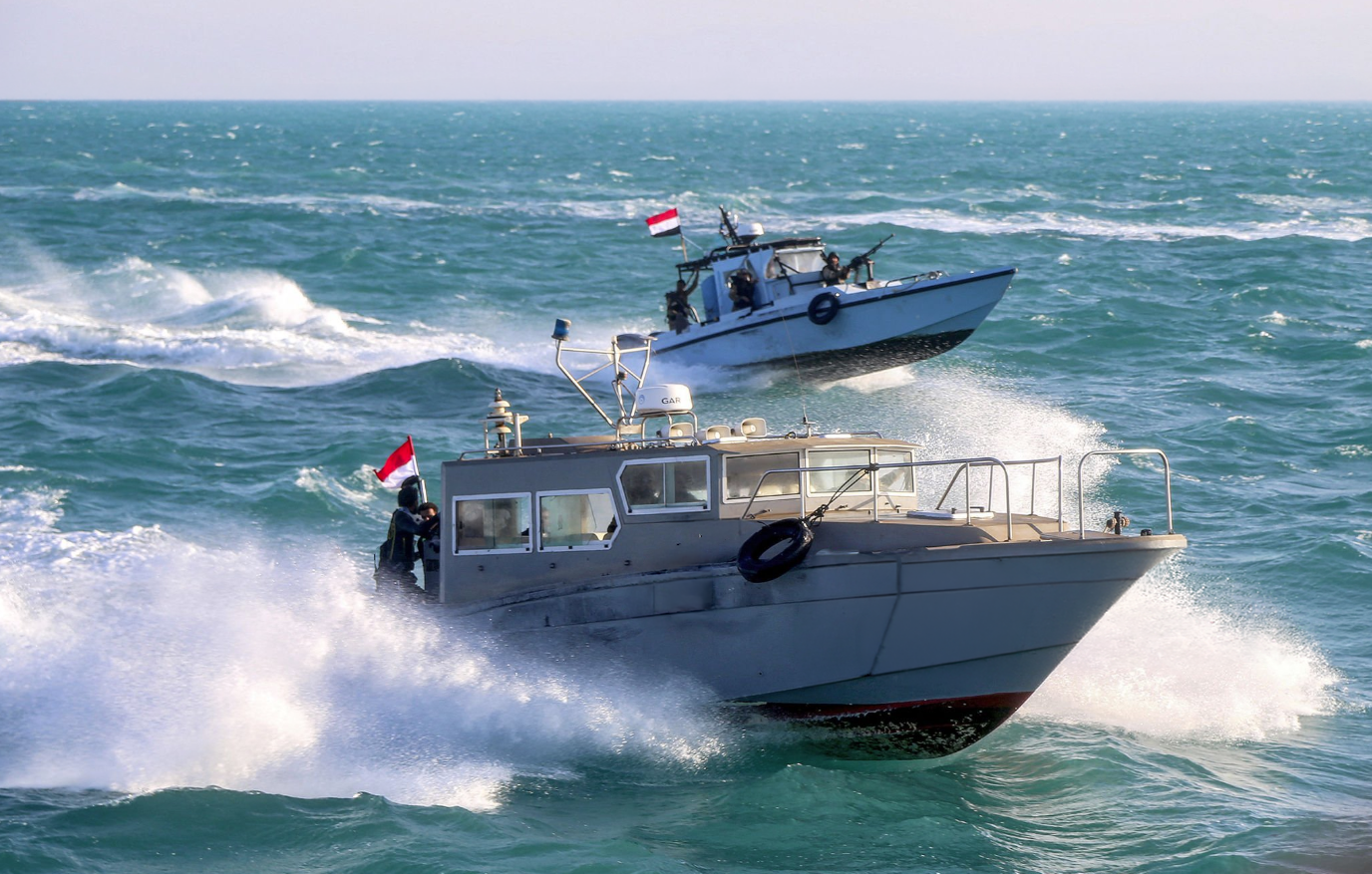
Yemen’s Emerging Role in the Red Sea
August 27, 2026On August 4, 2026, the Yemeni Coast Guard (YCG) rescued the 14-member crew of the Indian-flagged commercial vessel Faize Noore Oliya. Transiting the Red Sea…