The Burden of “Victory”: Iran’s Postwar Reckoning
Iran will claim “victory” after its recent settlement with the United States, but the existential questions it faced at the start of the war have only grown.

The United States and Iran have announced an agreement to end hostilities and begin a new round of negotiations. According to public statements by the mediators, the Memorandum of Understanding (MoU) will be formally signed in Switzerland on Friday. However, U.S. Vice President JD Vance has stated that the essential terms have already been accepted by both sides and that the deal has been signed electronically.
Veteran observers of Iran will find the moment oddly familiar. Near the end of the 1979 hostage crisis, President Jimmy Carter successfully negotiated the hostages’ release, but Tehran delayed their freedom until Ronald Reagan took office. The message was unmistakable: Iran would accept its agreement with the United States, but it would deny Carter the appearance of victory.
Nearly half a century later, the same dynamic is visible. Iran wants an end to the fighting, but it is equally determined to demonstrate that it was not coerced into accepting American terms and that it retains the ability to shape the political narrative. Symbolism matters in Tehran. This time, they did not give Trump an 80th birthday present.
The Winners (and Loser) of the Deal
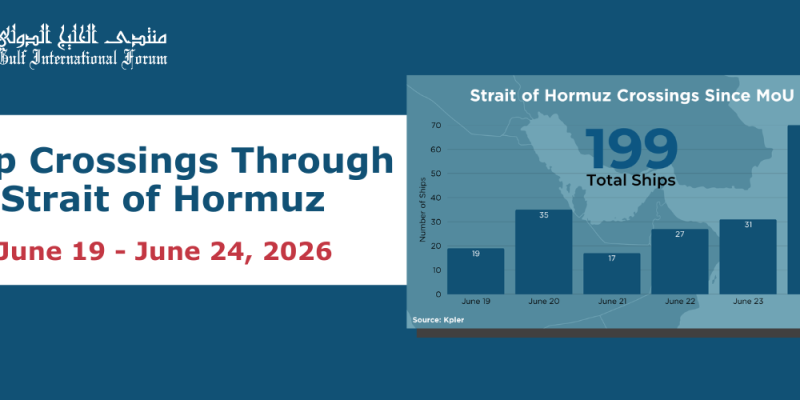
The MoU’s broad framework is not surprising. According to information from U.S., Iranian, and Pakistani officials, the United States and Iran will begin dismantling their respective maritime blockades and reopening the Strait of Hormuz as soon as the agreement is signed on Friday. The ceasefire also extends to Lebanon, where the parties have committed to ending military operations. A senior U.S. official did, however, say that Israeli withdrawal from Lebanon is not a condition of the deal. The two sides would then enter a 60-day process devoted to resolving outstanding nuclear issues, sanctions relief, and the disposition of frozen Iranian assets.
Viewed objectively, these terms resemble less a peace treaty than a cease-fire subject to the conclusion of implementing agreements. Each side receives enough to justify ending the confrontation while postponing the most difficult questions for future negotiations. Washington can claim that military pressure brought Iran back to the table. Tehran can assert that it survived an American–Israeli campaign without surrendering its core positions.
The logic behind the agreement is straightforward. Both sides eventually found themselves in a Mexican standoff, in which retreat was the only feasible option. Neither could realistically expect to emerge unscathed if the shooting resumed. The risks of escalation had become increasingly unpredictable for both sides, while the benefits of continued confrontation steadily diminished. Both Washington and Tehran ultimately resorted to the oldest diplomatic trick in the book: declare victory and go home.
There is, however, a clear loser from the agreement: Netanyahu. None of the objectives Prime Minister Benjamin Netanyahu promised to the Israeli public have been achieved. Iran has not renounced uranium enrichment. Although somewhat degraded, Iran’s missile and drone forces remain in place. Its regional allies, though weakened, are still fighting. In Tehran, the Islamic Republic remains firmly entrenched in power, despite Washington’s and Tel Aviv’s best efforts.
The ceasefire’s extension to Lebanon underscores this point. Hezbollah survives as a political and military reality. The “new Middle East” that Netanyahu promised would emerge from the war never arrived. Instead, Israel finds itself confronting many of the same strategic realities that existed before the conflict.
That price has not been limited to military expenditures or diplomatic friction. The brutality of the Gaza campaign, followed by the expansion of military operations elsewhere in the region, has inflicted severe damage on Israel’s international standing. Much of the goodwill Israel accumulated over decades has been squandered in less than three years. Across Europe, the Global South, and increasingly even among traditionally sympathetic audiences in North America, Israel now faces levels of criticism and isolation that would have been difficult to imagine before October 2023. Governments that once offered reflexive support now find themselves under growing domestic pressure to break with Israel. Universities, churches, civil society organizations, and even portions of the Jewish diaspora have become increasingly critical of Israeli policies.
Whatever military successes Netanyahu can claim, they stand beside an unavoidable reality: he failed to deliver the strategic transformation he promised while presiding over the most dramatic deterioration in Israel’s international reputation in its history. The political consequences of that failure will not disappear when the shooting stops.
A Misadventure for Trump
The American side faces its own uncomfortable questions. President Donald Trump entered office promising to avoid new Middle Eastern wars and to end those already underway. Yet his administration ultimately became involved in a confrontation that, despite military successes, concluded at the negotiating table rather than with Iran’s surrender. There is a certain irony in that the final outcome could resemble a return to the provisions of the Joint Comprehensive Plan of Action, the agreement Trump abandoned in 2018 in his effort to dismantle President Barack Obama’s legacy.
Trump’s domestic and international standing has taken a serious hit. The war brought economic turmoil and inflation in the buildup to the November midterm elections. The American military has consumed enormous quantities of expensive and slow-to-replace munitions badly needed in Ukraine and the Pacific. His enemies will argue that he lost the war.
Survival Is Not Legitimacy
For purposes of understanding Tehran’s next moves, however, what matters is not whether Iran won the war, but that Iran believes it did, with some justification. From Tehran’s perspective, the Islamic Republic survived a conflict that its adversaries openly hoped would topple the regime. The leadership remains in power. It did not give up its right to enrich uranium. Its missile forces survive. Hezbollah survives. Crucially, it negotiates with the United States as an equal. Under such circumstances, it would be surprising if Iranian leaders did not declare victory.
The conventional Western assumption is that this perception of victory will produce a more aggressive and uncompromising Iran. A younger, more nationalistic, and more militarized leadership is expected to emerge from the conflict determined to accelerate its pursuit of regional influence and nuclear capability.
That conclusion is possible. It could also miss the mark. As the 2025–2026 protests in Iran showed, the Islamic Republic is reviled within Iran; most Iranians dislike it, resent it, or openly oppose it. Still, the Iranian people had no intention of being bombed into supporting regime change by Israel or the United States. Opposition to one’s government is not the same thing as support for a foreign intervention.
Outside powers repeatedly make the mistake of assuming that hostility toward a regime translates into support for foreign intervention to overthrow it. History shows that this is rarely the case. Faced with external attack, societies will rally around the nation even while continuing to despise those who govern it. Even Iran’s post-1979 history demonstrates this trend; Saddam Hussein’s invasion of Iran in 1980 provided a vital boost for the faltering Islamic Republic, as Iranians previously opposed to Khomeini’s regime came to its defense.
The Harder Battle Ahead
The distinction between regime survival and popular legitimacy is critical because the new Iranian leadership has inherited not a triumphant state but a badly damaged one. Four months after a conflict intended to weaken Iran and constrain its nuclear ambitions, the Islamic Republic remains in power. Yet survival on the battlefield will prove easier than survival in government. The post-Khamenei generation has inherited a country trapped under the crushing weight of sanctions, economic stagnation, capital flight, demographic pressures, infrastructure damage, and profound public dissatisfaction.
The regime still possesses the instruments of coercion. It controls the security services, intelligence apparatus, and the military forces necessary to suppress dissent. But coercion does not confer legitimacy. Fear can silence opposition; it cannot generate consent. Those realities did not disappear because the country survived a war.
Nor will further repression solve Iran’s economic problems. The leadership’s need for sanctions relief, foreign investment, restored trade, and access to frozen assets is existential, not a luxury. Without tangible improvements in living standards, public frustration will deepen regardless of whatever nationalist sentiment the conflict generated.
Governments can kill thousands and imprison tens of thousands. They cannot imprison an entire society. Iran experienced waves of protests in 2009, and almost annually since 2017 until early 2026. There is no reason to expect that the most recent round will be the last. A state that governs against its people rather than with them may survive for years, even decades, but it rarely resolves the underlying causes of instability.
Ultimately, the greatest threat to the Islamic Republic does not come from American bombers, Israeli intelligence operations, or foreign sanctions. It comes from the widening gap between a ruling military/clerical elite determined to preserve power and a population increasingly unwilling to grant it legitimacy.
The negotiations of recent weeks demonstrate that Tehran’s new leadership is willing to make concessions when regime survival is at stake. The real question facing Iran is not whether it can build a bomb, but whether it can rebuild a social contract with a population that largely rejects it. That is a far more existential challenge than the nuclear file.
The views and opinions expressed in this article are those of the authors and do not necessarily reflect the views of Gulf International Forum.
Issue: U.S. – Gulf Policy
Country: Iran

Ambassador Patrick Theros is a Strategic Adviser for Gulf International Forum. Previously he held positions as Political Advisor to the Commander in Chief, Central Command; Deputy Chief of Mission and Political officer in Amman; Charge D’affaires and Deputy Chief of Mission in Abu Dhabi; Economic Counselor in Damascus; and U.S. Ambassador to the State of Qatar. In a career spanning almost 36 years, he also has served in diplomatic positions in Beirut, Managua, Dharan and Abu Dhabi, as well as in the Department of State. During that period, he earned four Superior Honor Awards. After retirement Ambassador Theros served as President of the U.S. Qatar Business Council in 2000-2017.

Saudi Arabia’s F-35 Deal Is Taking Shape
October 16, 2026Less than a year after U.S. President Donald Trump publicly backed the sale of F-35 fighter jets to Saudi Arabia, the kingdom’s long-running effort to…

Trump’s War on Iran Runs Through Baghdad
October 8, 2026Seven months into the war with Iran, the Strait of Hormuz remains a major point of contention. Goldman Sachs estimates that Gulf oil flows have…

Toward a New Order in MENA Regional Geopolitics
September 2, 2026This report is a byproduct of the workshop “Toward a New Order in MENA Regional Geopolitics: What’s Next for the Region’s Geopolitical Equilibrium?,” hosted in…