The GCC Under Attack: Expert Perspectives

Following the U.S. and Israeli strikes on Iran and the subsequent Iranian retaliation across the Gulf, Gulf International Forum’s experts assess the implications for GCC security, regional stability, and global economic markets. They examine how Gulf states are responding militarily and diplomatically, as well as the conflict’s potential effects on energy markets, trade, and the region’s longer-term stability.
Saudi Arabia Between Restraint and Deterrence – Dr. Aziz Alghashian
Global Economy at Risk – Rachel Ziemba
Energy Markets on Edge – Dr. Gawdat Bahgat
Turkey's Regional Stakes – Dr. Sinem Cengiz
Kuwait’s Strategic Balancing Act – Dr. Abdulhadi Al-Ajmi
Qatar’s Measured Response – Dr. Ali Bakir
Bahrain’s Domestic Fault Lines – Mahdi Ghuloom

Saudi Arabia Between Restraint and Deterrence
Dr. Aziz Alghashian, Senior Non-Resident Fellow, Gulf International Forum
Saudi Arabia, like the other GCC states, is furious—and rightfully so. The Saudi ruling elite have invested significant diplomatic capital in recent years in pursuing rapprochement with Iran, only to find themselves targeted despite Riyadh’s efforts to prevent a broader war with Tehran. This episode signals a shift in Iran-Gulf relations in the near term, with greater emphasis on military buildup.
Despite the frustration, Riyadh has demonstrated restraint. Saudi Arabia, like its GCC neighbors, has far more to lose from regional escalation than Iran. Retaliation by the Saudis could plunge the region into further instability and benefit regional spoilers, further entrenching conflict and leaving Riyadh and the GCC to bear the costs.
The question is how long this posture can be maintained. The statements issued by the Kingdom’s foreign ministry after the Iranian strikes, as well as the readout after Iran’s ambassador was summoned to the Saudi foreign ministry, made clear that Saudi Arabia will not stand idly by.
Therefore, any transition from strategic patience and restraint to offensive measures will likely be predicated on two factors. The first is the duration of the war. If strikes happen at a steady pace as the war unfolds, this may be sufficient reason for Saudi Arabia to impose deterrence through more assertive measures. Second, if the intensity of Iranian strikes increases, this would further pressure the Saudi ruling elite to respond in order to reestablish deterrence.
For now, Saudi leadership appears to be adopting this posture to limit the conflict from widening. By avoiding further escalation, the Saudis are working to prevent themselves or other GCC states from being placed in harm’s way. This restraint reflects Riyadh’s immediate responsibility, though it likely will have limits.

Global Economy at Risk
Rachel Ziemba, Senior Non-Resident Fellow, Gulf International Forum
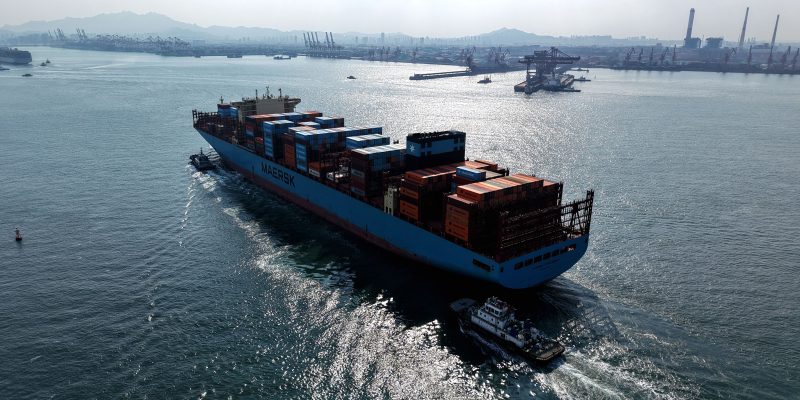
The recent strikes by the United States, Israel, and Iran have sent shockwaves through the region. The main global economic channels affected by the attacks are energy and shipping markets. Insurance and shipping costs are already rising. Disruptions to seaborne and air freight are spreading beyond the region, which could affect global oil, gas, and product markets, as well as the flow of capital goods, food, and other products. A prolonged stoppage or heightened tensions could boost oil prices and inflation, especially for energy-importing countries. The severity of these impacts, however, will depend on the duration and intensity of the conflict. While a lengthy closure still seems unlikely given the economic pressures, some disruptions will persist.
Regionally, a rise in oil prices from a supply shock could undermine the financial benefits for Gulf producers by creating market volatility. Other oil producers, including Russia, could benefit as China and potentially India seek alternate supplies. China, now less reliant on oil for growth than in its past, could draw on its strategic reserves to offset shortfalls. In the United States, price spikes could allow market-sensitive producers to hedge, improving their financial positions.
Within the GCC, government spending on military and security could increase, potentially delaying capital expenditures. Recurrent or prolonged blockages of key sea lanes could also undercut local liquidity, and make it harder for companies to raise money or sell assets, highlighting the broader economic risks of regional instability.

Energy Markets on Edge
Dr. Gawdat Bahgat, Senior Non-Resident Fellow, Gulf International Forum
Geopolitics has always played a key role in shaping energy policies. In the ongoing U.S.–Israel war against Iran, Tehran holds at least two important cards. First, its share of global oil production is roughly 4.5 percent, with most of its exports going to China. Iran is also a major gas producer, though most of its gas is consumed domestically, with limited exports to Turkey and Iraq. The global oil market is currently well-supplied and could likely absorb a suspension of Iranian exports. Second, Iran has the military capabilities to disrupt the flow of oil and gas supplies from the Strait of Hormuz. Insurance companies have already raised their coverage premiums in response to rising regional risks.
In the short term, oil and gas prices are likely to rise moderately. On March 1, the OPEC+ group raised production by 206,000 barrels a day to mitigate the impact of the conflict. Meanwhile, Israel has suspended gas production from Karish and Leviathan fields, which will significantly reduce its exports to Jordan and Egypt.
In the long term, however, there are many uncertainties, particularly after Iran’s attacks on oil and gas facilities on March 2. The risks could increase further if Tehran decides to disrupt shipping through the Strait of Hormuz. At the same time, both Washington and Tel Aviv have made it clear that their objective is a regime change in Tehran. The recent experience of regime change in Iraq, Afghanistan and Libya demonstrates that outcomes can be very destabilizing. Political instability in Iran is certain to spill over into the GCC states and the broader Middle East.
Ultimately, the immediate impact will be a moderate price rise and supply disruption. Over the long term, however, outcomes will depend heavily on the trajectory of the war and the durability of the Iranian regime. As history has shown, the outcomes of wars often diverge from their original objectives.

Turkey's Regional Stakes
Dr. Sinem Cengiz, Non-Resident Fellow, Gulf International Forum
Having another unstable neighbor at its doorstep is a nightmare scenario for Turkey. For this reason, Ankara’s position has been clear from the very beginning: it opposes the war and has used all available diplomatic channels to avoid it. Turkish officials have been weighing both the short- and long-term costs of the conflict.
The response from Turkish President Recep Tayyip Erdogan was explicit, condemning the U.S.–Israeli attacks against Iran while stating that Iran’s attacks on Gulf states were equally unacceptable. Turkey also proposed mediation, with Erdogan holding phone calls with both President Donald Trump and President Masoud Pezeshkian. Turkey supported Iran’s right to self-defense in June 2025 and reiterated that position again. At the same time, it made clear that its airspace would not be used for attacks on Iran, emphasizing that this was not a war involving NATO but rather a conflict driven by the United States and Israel.
Although ties between Turkey and Iran are often tense due to differences on regional issues, the two countries have historically managed their relations pragmatically—compartmentalizing differences and avoiding direct confrontation. As a result, despite Turkey’s NATO membership, Tehran generally views Ankara as a regional power rather than simply an extension of U.S. policy.
The current uncertainty surrounding the regime risks pushing Iran into prolonged instability without a carefully managed political process. For Turkey, the consequences would be significant. Instability in Iran could trigger new refugee flows into neighboring countries, and Turkey has already shouldered the political and economic burden of large-scale refugee movements from Syria and Iraq. In a scenario of prolonged chaos, armed groups could also exploit border areas across Turkey, Iraq, and Syria to expand the war. There are also economic considerations, as extended instability would disrupt regional trade and energy routes. For Ankara, the stakes extend far beyond routine risk management, with instability having direct implications for Turkey’s borders, economy, and regional security.

Kuwait’s Strategic Balancing Act
Dr. Abdulhadi Al-Ajmi, Former Member of the Kuwait Parliament
Kuwait has approached the Iranian attacks with a measured strategy, prioritizing both national security and regional stability. Given Iranian aggression in the region and the risk of escalation in the Gulf, the Kuwaiti government has emphasized alignment with dominant Western powers, particularly the U.S.-led security framework. While this system carries operational burdens and has faced criticism, it remains the most effective avenue for deterrence and stability under current conditions.
At the regional level, Kuwait relies on its Gulf partners for security and diplomatic support, with Saudi Arabia in particular serving as a steadfast ally at pivotal moments. This dual reliance on international alliances and regional support provides Kuwait flexibility in navigating a highly volatile environment.
The situation remains fluid, with the full scope of threats and impacts still emerging. Yet the central reality is clear: by virtue of its geography, Kuwait will continue to face the challenge of managing a delicate balance between deterrence and sovereignty, and between international alliances and domestic stability. With a history of navigating complex power balances, Kuwait now faces another test, highlighting the enduring challenge of maintaining security amid great-power conflict.

Qatar’s Measured Response
Dr. Ali Bakir, Research Assistant Professor of International Affairs, Security, and Defense, Qatar University
Qatar’s response to the Iranian attacks appears measured, multifaceted, and consistent with its longstanding foreign policy of balancing resilience with diplomatic pragmatism. This time, various ministries coordinated swiftly and effectively compared to previous situations. Qatar issued an emergency alert to citizens via mobile phones, laptops, and other electronic devices through the National Emergency Alert System, urging residents to remain at home or in safe locations away from sensitive facilities and areas. The airspace was closed, and the national carrier suspended flights, while students and major sectors transitioned to online systems.
In the military domain, by March 1, Qatar’s defenses intercepted 63 missiles and 11 drones, minimizing the impact on Al Udeid Air Base, where two missiles struck, causing fires. Debris-related incidents resulted in 16 injuries and material damage, but no fatalities were reported. This response highlights Doha’s improved readiness compared to previous instances, though it also exposes vulnerabilities to saturation or more advanced threats. Notably, one video captured three air defense system missiles failing to intercept an Iranian missile.
Diplomatically, Qatar’s Ministry of Foreign Affairs summoned the Iranian ambassador to Doha and issued a strong condemnation, labeling the strikes a flagrant violation of its sovereignty and a threat to regional stability. Doha reaffirmed its right to respond in accordance with international law, prioritizing de-escalation and urging Iran toward dialogue and cooperation, in line with Qatar’s longstanding role as a mediator.
Qatar joined Saudi Arabia, the UAE, Kuwait, Bahrain, and Jordan in a unified condemnation, signaling potential joint responses if necessary, while still favoring diplomacy. Additionally, Qatar, along with other GCC countries, expressed support for Oman following Iranian targeting. However, beyond these statements, no concrete collective military or defense action was taken by the GCC countries. While Qatar demonstrated rationality and competence in managing the situation, its restraint may invite further Iranian aggression without broader international pressure. This crisis also illustrates how GCC countries, including Qatar, can be drawn into a regional conflict instigated by the United States and Israel, despite their efforts to diffuse tensions. Moreover, the developments around the Strait of Hormuz should serve as a critical alert for Doha, highlighting the need for long-term adaptive measures to safeguard economic stability.

Bahrain’s Domestic Fault Lines
Mahdi Ghuloom, Junior Fellow for Geopolitics, The Observer Research Foundation Middle East
As with the other Gulf States, Bahrain’s reaction to the Iranian attacks has been primarily defensive. Bahrain was the target of Iran’s first retaliation after the U.S.-Israeli killing of senior Iranian leaders, including Supreme Leader Ali Khamanei, with the U.S. naval facility in Juffair coming under attack. Since then, nearby areas have been evacuated and sirens have regularly sounded across the country as Iran expanded its targets to include the airport. Debris has struck several residential buildings and a hotel, ultimately leading to at least four injuries. While the rate of attacks against Bahrain appears lower than Qatar and the UAE based on interception statements, the visibility of their impact reflects Bahrain’s smaller geography, denser population, and weaker civil defense capacity.
Public anxiety has also risen over the economic effects of a prolonged conflict, with Bahrain reassuring the public about the availability of strategic food reserves. A more structurally significant risk is that the conflict could reignite sectarian polarization within society, with some individuals already arrested for expressing support for Iranian reaction. Sectarian loyalties linked to Iran remain a significant security concern for Bahrain, particularly 15 years after such divisions became most visible during the Arab Spring.
Meanwhile, as Bahrain fulfills its commitments in intelligence sharing and air defense coordination with the wider GCC, it will likely wait for broader GCC alignment before considering any form of military confrontation with Iran. Calls with regional and international partners have been extensive, but Bahrain’s more significant role at this stage may lie in serving as the region’s voice in the UN Security Council, where its non-permanent representative recently issued a statement.
The views and opinions expressed in this analysis are those of the authors and do not necessarily reflect the views of Gulf International Forum.
Issue: Defense & Security, Geopolitics
Country: GCC

Toward a New Order in MENA Regional Geopolitics
September 2, 2026This report is a byproduct of the workshop “Toward a New Order in MENA Regional Geopolitics: What’s Next for the Region’s Geopolitical Equilibrium?,” hosted in…
Yemen’s Emerging Role in the Red Sea
August 27, 2026On August 4, 2026, the Yemeni Coast Guard (YCG) rescued the 14-member crew of the Indian-flagged commercial vessel Faize Noore Oliya. Transiting the Red Sea…
The Iran War Is Rewriting Kuwait’s Defense Architecture
July 14, 2026Since the outbreak of the Iran war in February 2026, Kuwait has announced a series of major defense acquisitions, including a $1 billion contract for…