The GCC’s Dilemma: Bound by Washington, Exposed by Iran
As U.S.–Israel strikes draw Iran into a spiral of retaliation, the Gulf states find themselves bound to Washington while exposed to Tehran’s strategy of economic and military coercion.

For decades, one core objective of the Gulf states’ security doctrine was to prevent direct entanglement in a U.S.–Iran war. Billions spent on advanced weaponry, painstaking alliance cultivation, high-wire diplomacy, and deliberate strategic hedging were all aimed at keeping the flames of war away from Gulf soil. That doctrine is no longer tenable. For the first time since 1979, all six members of the Gulf Cooperation Council (GCC) have been implicated within a single escalation cycle.
The U.S./Israel–Iran war has shattered the Gulf’s long-standing strategy of insulation, leaving GCC states bound to Washington while simultaneously exposed to Iran’s cost imposition strategy in a conflict they did not choose but can no longer avoid.
In late February 2026, Iran launched coordinated missile and drone attacks across the Gulf. The United Arab Emirates (UAE) was struck directly, with missiles and drones targeting areas near Abu Dhabi and Dubai, resulting in civilian casualties and forcing nationwide air defense activation. Qatar, Kuwait, Bahrain, and Saudi Arabia all reported interceptions, explosions, or emergency alerts as projectiles crossed their airspace or approached strategic sites. U.S. military installations hosted on GCC soil, including facilities in Qatar and Bahrain, were explicitly targeted or placed under threat.
These strikes have also prompted unprecedented market reactions, most notably the UAE’s decision to halt trading on its major stock exchanges for two days. Tehran’s drone strikes on energy facilities in Ras Laffan and Mesaieed Industrial City prompted QatarEnergy to halt liquefied natural gas (LNG) production, disrupting exports and sending gas and oil prices higher as markets reacted to instability around the Strait of Hormuz.
A War for Political Transformation
Washington’s strategic objective is inseparable from the consequences now unfolding in the Gulf. If U.S. policy were limited to restoring deterrence, escalation would likely remain contained. But recent rhetoric suggests ambitions beyond a punitive strike to change Iran’s political order, turning the conflict into a war of survival for the regime. Invoking regime change is not about decapitation; it is about sustained coercive exhaustion designed to erode state capacity over time. The approach centers on sustained military pressure, targeted eliminations, psychological attrition, and the systematic erosion of state capacity. An invasion does not appear imminent, but the United States and Israel seem to be seeking surrender through cumulative destabilization. For President Trump, a deal involving denuclearization and the removal of ballistic missiles would effectively amount to surrender.
On the other hand, Israel’s preferred end-state may be even more consequential: reducing Iran to chronic vulnerability, subject to repeated strikes without credible retaliation. This outcome would likely emerge if Iran did not have ballistic missile capabilities. In that framing, the objective is not political transformation but durable dominance. For Gulf states now absorbing missile debris and activating air defenses, these distinctions are not abstract. They must brace themselves not only for the current conflict but also for an altered regional order with different security calculations. The exposure is real.
Cost Imposition as Strategy
Tehran understands it cannot win a conventional war against the United States or Israel. Its strategy is therefore not oriented toward decisive victory but toward cost imposition. Recent attacks illustrate this doctrine clearly. By striking one of the world’s most globally integrated commercial hubs, the UAE, Iran signaled that Gulf prosperity itself is leverage.
This is why Iran is continuing to target critical infrastructure, civilian areas, and airports across the six GCC states. By attacking oil and gas facilities while escalating around the Strait of Hormuz (through which roughly one-fifth of globally traded oil passes), Tehran reminded the international community that geography remains its most potent strategic asset. Victory for Iran is thus redefined as survival under pressure with deterrence intact. Strategic fatigue, not battlefield triumph, becomes the objective. That fatigue, however, is transmitted throughout the GCC states.
Wealth as a Lever of Coercion
The Gulf’s economic centrality, long its greatest strategic asset, has now become a lever of coercion that Tehran can exploit through the disruption of energy exports, trade flows, and financial markets. When Iran-linked strikes hit Saudi Arabia’s Abqaiq oil processing facility in 2019, oil prices surged nearly 15 percent in a single day, the largest intraday spike in decades. If the current escalation continues, it will produce similar or even more drastic tremors.
Tanker traffic in the Strait of Hormuz fell sharply following missile launches and maritime threats. Gulf equity markets experienced volatility. Energy infrastructure entered precautionary shutdowns. Dubai’s financial ecosystem, Abu Dhabi’s sovereign wealth flows, and Saudi Arabia’s Vision 2030 megaprojects all depend on predictability and investor confidence. In a hyper-globalized region, perception alone can trigger capital flight.
No Safe Distance from Washington
The GCC states’ priority early on in the conflict was clear: to preserve unity, raise the cost of attacks, contain escalation, and avoid tipping into full-scale regional war. As Iranian missiles and drones began striking beyond U.S. bases and into GCC territory, Saudi Arabia, Qatar, and the UAE concluded that deterrence must be established. They have publicly warned Tehran that further aggression will be met with forceful responses to defend their sovereignty and security. Whether intentional or not, such language places them squarely alongside Washington’s posture.
In practice, GCC states have already demonstrated that they are firmly aligned with U.S. strategy through concrete operational coordination, even though Washington’s actions placed the Gulf directly in the crosshairs of retaliation. Whatever private reservations the Gulf states may have, the reality is stark: a war initiated in Washington has reshaped their security environment, narrowed their room for maneuver, and left them with little choice but to stand alongside the United States. The GCC states are not simply aligned with Washington; in strategic terms, they are bound to it, trapped in a conflict they did not choose.
The views and opinions expressed in this article are those of the authors and do not necessarily reflect the views of Gulf International Forum.
Issue: Defense & Security, Geopolitics, U.S. – Gulf Policy
Country: GCC

Dr. Dania Thafer is the Executive Director of Gulf International Forum, an institute based in Washington, D.C. that provides analysis on political, economic, social, and security issues for the six Gulf Cooperation Council (GCC) countries, Iran, Iraq and Yemen. She is also a Professorial Lecturer at the School of Foreign Service’s Center for Contemporary Arab Studies at Georgetown University. Her expertise is on the Gulf region’s security, U.S.-Gulf relations, and the political economy of the GCC states.
Dr. Thafer has been widely published and consults regularly on matters concerning the GCC and the Middle East. Dr. Thafer has a new book titled “Creative Insecurity: Institutional Inertia and Youth Potential in the GCC” published by Oxford University Press and Hurst Co. (2023). Additionally, she has co-authored two edited books “The Arms Trade, Military Services and the Security Market in the Gulf States: Trends and Implications” and “The Dilemma of Security and Defense in the Gulf Region.” Her commentary has appeared in international media outlets, including: The New York Times, Financial Times, BBC World, Washington Post, Forbes, Al Jazeera and others. Additionally, she is regularly consulted by governmental, non-governmental, corporations and research institutions globally.
Previously, she was responsible for building relationships with foreign dignitaries from the Middle East at the National Defense University’s Near East South Asia Center for Strategic Studies in Washington, DC. Dr. Thafer has a master’s degree in political science from New York University, and Ph.D. in Political Science, specialized in the Political Economy and International Relations from American University in Washington, DC.

Toward a New Order in MENA Regional Geopolitics
September 2, 2026This report is a byproduct of the workshop “Toward a New Order in MENA Regional Geopolitics: What’s Next for the Region’s Geopolitical Equilibrium?,” hosted in…
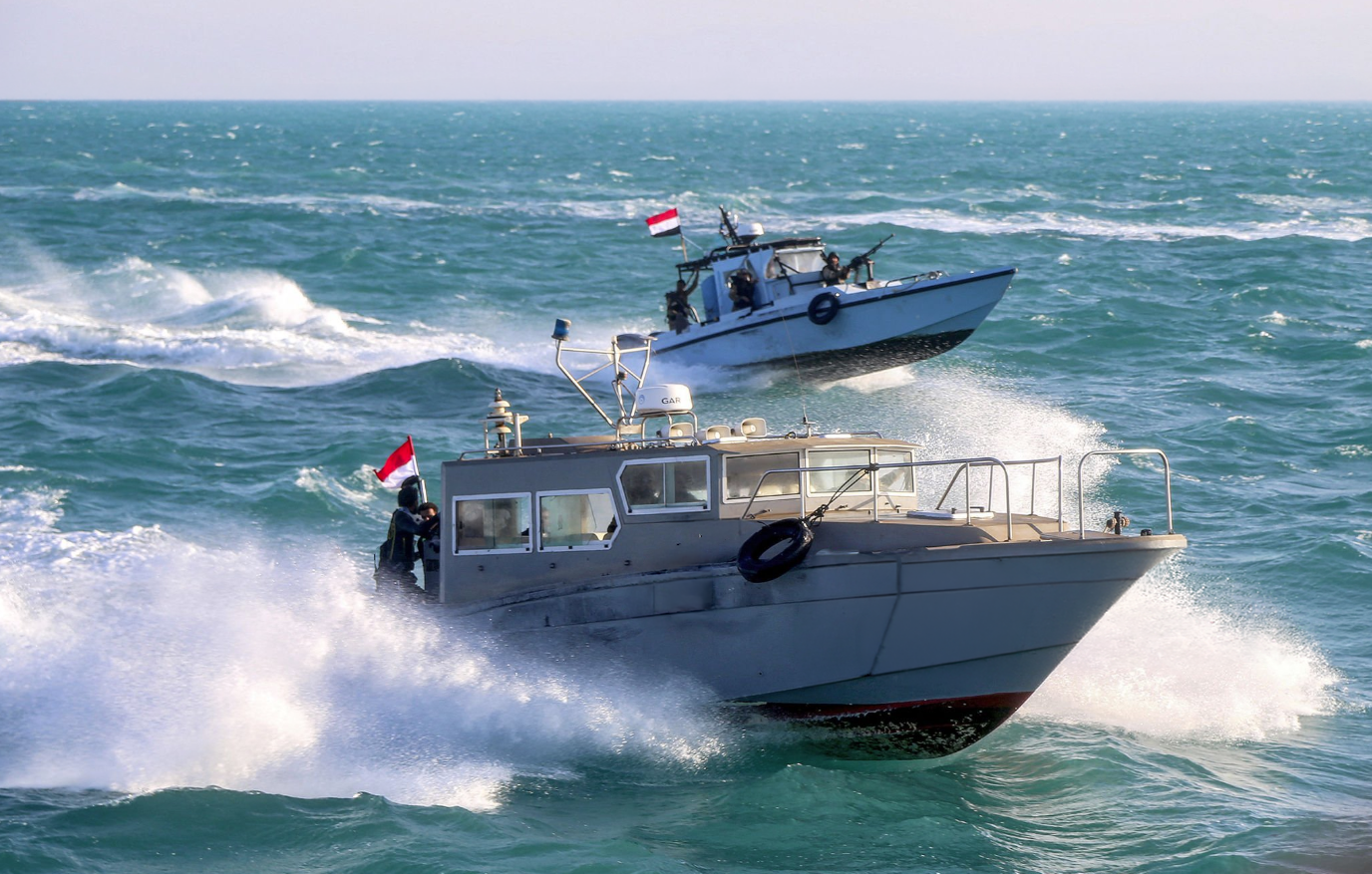
Yemen’s Emerging Role in the Red Sea
August 27, 2026On August 4, 2026, the Yemeni Coast Guard (YCG) rescued the 14-member crew of the Indian-flagged commercial vessel Faize Noore Oliya. Transiting the Red Sea…
The Iran War Is Rewriting Kuwait’s Defense Architecture
July 14, 2026Since the outbreak of the Iran war in February 2026, Kuwait has announced a series of major defense acquisitions, including a $1 billion contract for…