The Gulf States’ Carbon Capture and Storage Ambitions
The GCC states have invested heavily in carbon capture and storage systems to lower their atmospheric emissions and take advantage of the high demand for these services in the years to come.

The states of the Gulf Cooperation Council (GCC), long among the world’s greatest oil producers, are going through a subtle but significant transition—one that has the potential to change energy and climate policies around the world. Far from opposing decarbonization, the region’s hydrocarbon heavyweights, most notably Saudi Arabia and the United Arab Emirates, are positioning themselves to lead the green energy transition, signaling their embrace of sustainability through large expenditures in carbon capture and storage (CCS) technologies and ambitious renewable energy projects. This determination to lead, rather than passively accept, the global renewable energy transition is reflected in initiatives like the GCC states’ various national economic diversification regimes, net-zero commitments, and large investments in green infrastructure.
Embracing CCS Technologies
As the GCC transitions away from its historical reliance on hydrocarbon exports toward a more sustainable economic model, the region’s energy environment is undergoing a significant transformation. The Gulf’s leadership in developing CCS systems, which are regarded as essential tools for controlling carbon emissions, is at the heart of this change. Though pivoting away from fossil fuels is expensive, the GCC economies are expected to grow at an average rate of 3.5 percent in 2025 and 4.2 percent in 2026, outpacing both the global average and many advanced nations, according to the International Monetary Fund. Flush with cash, the Gulf states have both the financial resources and strategic motivation to invest in clean technology and diversify their energy base beyond oil and gas.
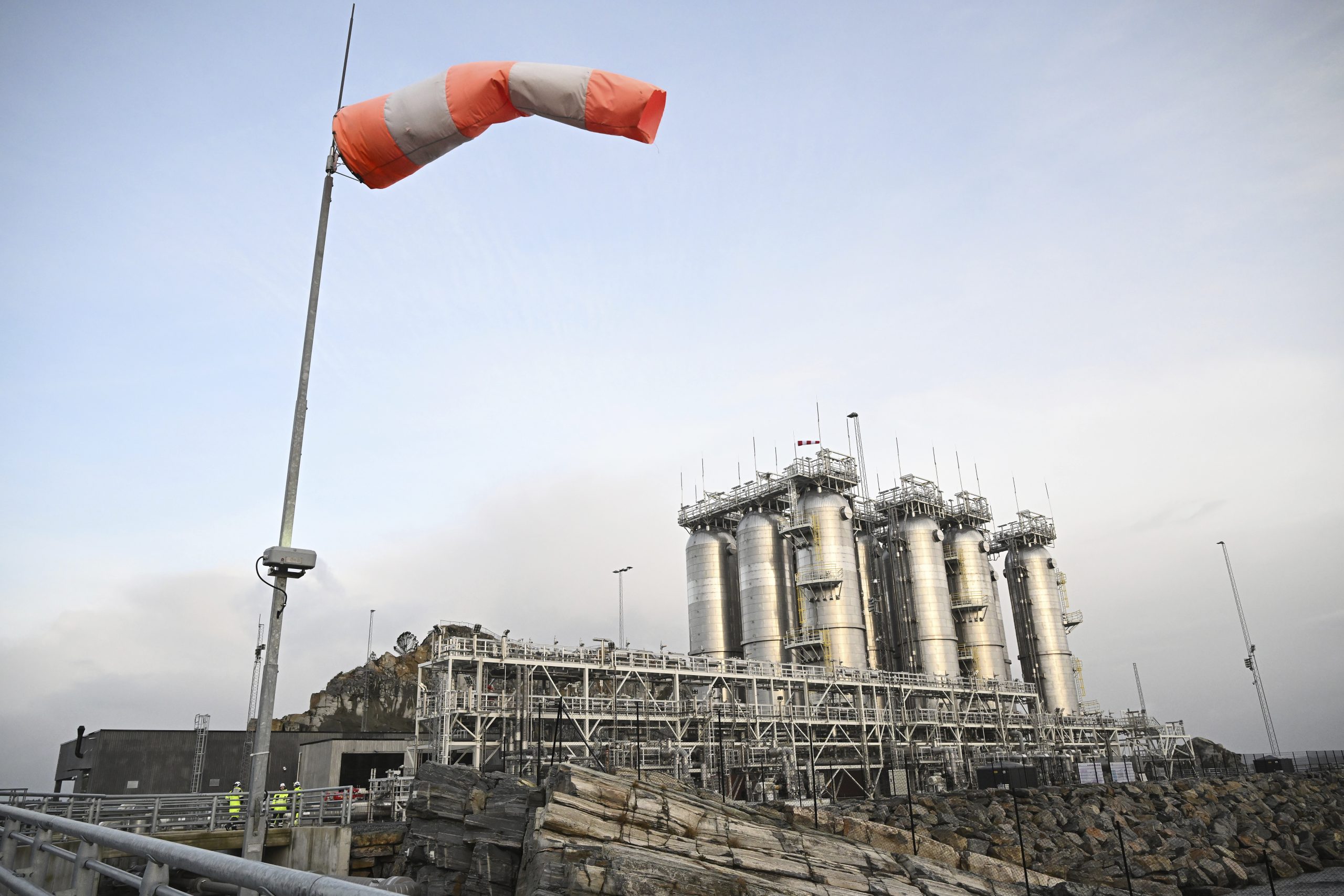
Indeed, the GCC has been an early adopter of CCS technologies. These states have a shared capture capacity of 3.7 million tons of CO₂ per year (MtCO₂/year), accounting for around 8 percent of global CCS capacity. Three important projects serve as the foundation for these capabilities; the Ras Laffan Facility in Qatar has been in service since 2019 and can capture 2.1 MtCO₂/year. The Uthmaniyah CO₂-EOR Project in Saudi Arabia has been in operation since 2015, with an annual capacity of 0.8 MtCO₂, and is used to extract and dehydrate CO₂ from a natural gas liquids recovery plant in the Ghawar oil field. The Al Reyadah Facility in the UAE, has been in operation since 2016, and captures up to 0.8 MtCO₂ annually for use in ADNOC’s enhanced oil recovery (EOR) operations. The Al Reyadah project is particularly notable because it is the world’s first commercial CCS project for the iron and steel industry. In addition to CCS facilities across the region, the GCC is promoting carbon capture and utilization (CCU) projects in Saudi Arabia, Kuwait, and Qatar. CCU initiatives seek to harness captured carbon for a variety of industrial processes, such as the manufacturing of urea, methanol, and food and beverage items.
The region’s dual strategy maximizes the financial return on carbon capture investments while developing local and regional expertise. Indeed, the GCC states have established themselves at the forefront of the global carbon management industry by investing early, gaining operational expertise, and scaling projects faster than other actors. The carbon capture market is anticipated to expand significantly as climate change worsens, and countries will continue to seek ways to reduce greenhouse gases in the atmosphere.
The GCC’s supremacy in the world’s oil and gas markets has long been supported by its central geographic location astride the land and sea routes that connect Europe and the Asia-Pacific. The factors that helped the GCC states dominate hydrocarbons in the past can bolster their position in the global green energy trade today. The region’s established transportation infrastructure, including ports, shipping lanes, and pipelines, can be modified to export new sources of energy, such as hydrogen and ammonia, as the world’s energy needs change.
In addition to its physical infrastructure, the GCC enjoys strong commercial relationships with both East and West, putting it in a position to quickly adapt to changing patterns in energy consumption and meet global demand. Furthermore, the GCC’s past connections with importers of hydrocarbons and innovators in clean energy provide a platform for international investment and information-sharing, particularly on the technologies that power the carbon capture industry.
Challenges in Scaling Carbon Capture
Notwithstanding its early leadership on carbon capture efforts, the GCC will still confront a number of related obstacles to the full realization of CCS technology. Wider climate-driven deployment is constrained by the majority of CCS plants’ continued reliance on enhanced oil recovery, which involves injecting captured carbon dioxide into oil fields to extract more oil. The environmental benefits of CCS are obviously undermined by the GCC states’ reliance on EOR, as carbon capture leads to greater oil production, consumption, and higher overall carbon emissions.
In the absence of robust incentives—such as carbon pricing or specific subsidies like the United States’ 45Q tax credit—high capture costs will continue to impede growth, particularly for low-purity CO₂ streams. Moreover, despite the advantageous geological circumstances the Gulf finds itself in, it is extremely expensive to create and certify storage locations for captured CO2. The complexity of the challenge is increased when integrating CCS into disparate industrial sectors. For these efforts, engineers must combat pipeline material degradation and guarantee long-term storage safety. The broader adoption of CCS is also slowed by weak emissions legislation, disjointed regional plans, and the lack of a uniform carbon pricing mechanism both within the GCC and globally. The EU’s Carbon Border Adjustment Mechanism (CBAM)—essentially a carbon tax on imported goods—is one example of an attempt to encourage producers to cut carbon emissions, though the Gulf states have not yet shown a willingness to pass similar regulations. Finally, the general public across the Gulf continues to have doubts about the efficacy and safety of CCS technologies, raising a further obstacle to their widespread implementation.
Despite these challenges, the GCC is well-positioned to capitalize on the environmental and economic opportunities afforded by carbon capture and storage. Leveraging its hydrocarbon expertise and low labor and land costs, the Gulf could substantially lower CCS costs by 2050. Expanding CCS capacity would also boost the production of blue hydrogen and other carbon-neutral fuels, strengthening the GCC’s position as a key player in the global clean energy trade. Of course, fully unlocking the potential of CCS and CCU technologies will require targeted policies, including the creation of carbon markets and financial incentives to encourage companies to move away from EOR. By proactively addressing these areas, the GCC can reinforce its leadership in carbon management and secure a pivotal role in the global energy and climate change transformation.
Other hydrocarbon-dependent regions dealing with comparable issues could learn a great deal from the GCC’s energy transition model. Rather than turning to drastic structural changes, the GCC offers a more reasonable, gradual path to carbon neutrality. The region’s significant investments in clean technology and carbon management will not only generate new value streams, but will also enable the Gulf states to export CCS systems and technologies to the rest of the globe.
It is too soon to know, of course, whether the GCC’s balanced approach will prove successful. Carbon capture efforts will take a decade to bear fruit, and require a strong policy commitment, effective project implementation, and flexible solutions that adjust to changing global market and policy dynamics to achieve the ideal balance of emissions reductions and economic resilience. If the bloc’s investments pay off, the GCC will show the world that even the most hydrocarbon-dependent nations can manage the energy transition without compromising growth.
The views and opinions expressed in this article are those of the authors and do not necessarily reflect the views of Gulf International Forum.
Issue: Economy & Innovation, Energy & Environment
Country: GCC, KSA, UAE

Dr. Umud Shokri is an accomplished energy strategist and senior foreign policy advisor with over two decades of experience. With a Ph.D. in International Relations, he specializes in global energy dynamics, climate change, clean energy technologies, energy security, and geopolitics. Currently a Senior Visiting Fellow at George Mason University, Dr. Shokri has significantly influenced policy and strategy development across the energy sector, including authoring “US Energy Diplomacy in the Caspian Sea Basin.” His work spans from analyzing oil and gas market trends to advising on sustainable energy policies, collaborating with government entities, academic institutions, and industry stakeholders to address global energy challenges. In his role as a Black Sea State Department Title VIII Fellow, Dr. Shokri focuses on Azerbaijan’s energy transition and preparations for COP29, exploring the country’s shift towards renewable energy and its socio-economic and geopolitical impacts. His commitment to environmental sustainability is reflected in his advocacy for aligning with ESG frameworks and guiding entities towards real-world greenhouse gas emission reductions. Through his research and engagement with policymakers, Dr. Shokri contributes valuable insights to the discourse on energy transition and climate action at both regional and global levels.
Saudi Arabia’s E-Commerce Boom: Why Traditional Small Businesses Risk Falling Behind
November 5, 2026Saudi Arabia’s digital marketplace is expanding rapidly. By the third quarter of 2026, the kingdom had 52,259 active e-commerce commercial registrations, up 25 percent from…
The Middle East’s Corridor Boom Meets Reality
July 22, 2026In recent years, particularly since the outbreak of the recent conflicts in Gaza and Iran, the Middle East has seen a resurgence of connectivity projects….
Iraq’s Fiscal Shock and the New Government’s Bargain
July 20, 2026The disruptions to shipping through the Strait of Hormuz have left Iraq facing more than an immediate export shock. Transport has remained constrained, insurance and…