The Houthis and Israel Achieve Nothing from their Tit-for-Tat Strikes
Locked in a stalemate, Israel and the Houthis exchange strikes that achieve little beyond exacerbating civilian suffering.

Israel and the Yemen-based and Iranian-backed Houthi Movement (Ansar Allah) continue to exchange blows, even as the former’s brutal military campaign in Gaza enters a ceasefire phase. The strikes, which often hit civilian targets in both countries, reflect one of the numerous spillover effects of Gaza’s conflict—effects that can and should be tempered at all costs amid particularly concerning humanitarian metrics in Yemen. Judging from experience, neither side’s military campaigns will garner an absolute victory and will only prolong the suffering of innocent civilians.
Mutual Escalation
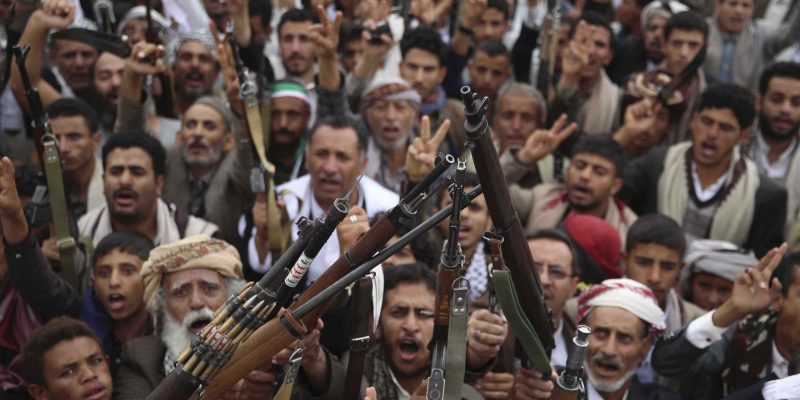
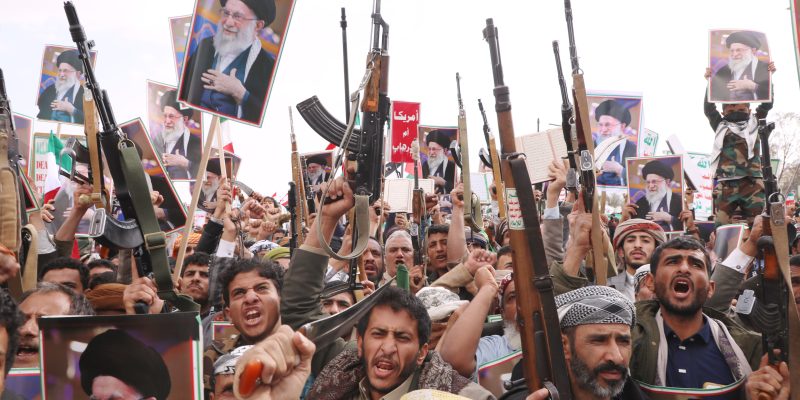
The Houthis have consistently launched attacks on Israel since Tel Aviv began its military operations in October 2023 following Hamas’ brutal attack within Israel’s borders. The Houthis’ actions against Israel have bolstered their standing among supporters in the country’s long-running civil war, as anti-Israel rhetoric resonates with many and acts as a welcome distraction from the economic and humanitarian catastrophes facing Yemenis on a day-to-day basis.
The Houthis have targeted Israeli airports and residential areas, albeit with minimal success. These attacks include hits on both the Ben Gurion and Ramon Airports, as well as a high-rise in Tel Aviv, killing one civilian. While some strikes have landed in open areas, Israel has managed to intercept the majority of attacks before they reached its territory. Still, the group has gradually increased the sophistication of its attacks, with the recent use of cluster munitions constituting the most significant escalation to date.
Meanwhile, Tel Aviv has gradually ramped up the scale of its strikes. After initially avoiding a retaliatory response, Israel began targeting the Houthis in July 2024 following a short-lived U.S. military operation that targeted radar sites and other military infrastructure in Houthi-controlled territory. Following Trump’s surprise ceasefire with the Houthis on May 7, Israel escalated its military operations. Tel Aviv has repeatedly targeted the Port of Hudaydah, claiming the Houthis use it to smuggle Iranian weaponry and other technology used in attacks on Israeli territory. Yet Hudaydah is Yemen’s largest port and remains crucial for humanitarian operations, facilitating supplies for a population that is widely food insecure.
Israeli Defense Minister Israel Katz has openly admitted that his government is imposing a blockade on Yemen. Tel Aviv has also targeted power plants, international airports, media outlets, and residential areas. It killed all but one of the Houthi-led government’s ministers in a recent strike on August 30. In another strike, Israel killed upwards of 31 journalists on September 10—the worst single assault on journalists since 2009, according to the Committee to Protect Journalists.
Rather than deter, both Israel and the Houthis have increased human suffering on both sides of the conflict. In Israel, Houthi strikes , while Israeli strikes on Yemen have killed and wounded at least 414 people. Tel Aviv’s campaign in Yemen has been disastrous for the country—part and parcel to Israel’s long-running strategy of collective punishment as a form of pressure and deterrence against its enemies.
Challenges to Deterrence and Reconstruction
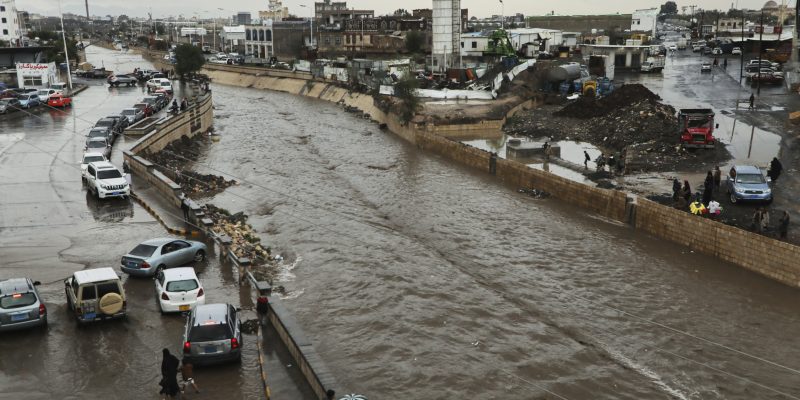
Yemen has been unable to rebuild amid the lull in fighting since a 2022 truce, albeit for sporadic, miscellaneous development projects. Long the poorest country in the Middle East, what little Yemenis did have going into the Houthi-Israeli conflict is now being decimated under Israel’s persistent and expanding aerial campaign amidst constant Houthi provocations. And yet, the odds of a successful campaign to fully deter or remove the Houthis seems unlikely, given the need for boots on the ground and Yemen’s difficult terrain.
Israel’s geographic distance from Yemen will only complicate its efforts to succeed where previous actors have failed. Its small size and limited standing army only worsen its odds, especially as war weariness takes a toll—a dynamic the Houthis are likely to exploit over time. Tel Aviv cannot hope for the same outcome in Yemen, a country severely fractured across multiple front lines and factions, where most of the impoverished population lives under tight-fisted Houthi control they cannot overthrow, even if they want to do so. Israel’s leaders likely understand these dynamics, opting to respond to Houthi attacks as a means of deterrence and to further weaken Iranian proxies in the region.
From Stalemate to Ceasefire—Yet Change Remains Unclear
Over two years, this tit-for-tat approach has culminated in the situation today: a stalemate with no clear endgame on the part of Israel, which has fallen into a Houthi quagmire. Washington and Riyadh recognized this exact dynamic, but Tel Aviv appears less likely to accept reality under its current leadership. Indeed, for its ultranationalist government, leaders like Prime Minister Benjamin Netanyahu—facing three corruption trials and slumping popularity—benefit from a continuation of perpetual war, keeping his fragile, pro-war governing coalition intact and, subsequently, him in power and out of jail.
While that context spells poorly for the Israel-Houthi conflict, there is a chance that the escalating strikes could reach a ceiling. Israel cannot commit to any ground invasion in Yemen and would not seriously attempt one, leaving it stuck with its current approach. The Houthis, facing technological and capacity constraints that limit the scale and frequency of its attacks on Israel or Red Sea shipping, likely cannot escalate much further. While not deterred, both actors may find a level of conflict that they can sustain, with Israel continuing to expand its intelligence reach in the country in support of the decapitation strategy it has relied on for decades.
Meanwhile, innocent civilians on both sides remain trapped in the middle of another Middle East conflict. World leaders would be wise to recognize the only solution to this constant fighting is working on a permanent solution to the Palestinian question, especially following the acts of genocide against Palestinians in Gaza over the past two years. As the Houthis have previously honored their pledge to end attacks on Israel and Red Sea shipping amid two ceasefires, the latest breakthrough in ceasefire talks brokered by President Trump may force an end to the Houthi’s strikes against Israel and international maritime trade, though lasting peace seems unlikely.
The views and opinions expressed in this article are those of the authors and do not necessarily reflect the views of Gulf International Forum.
Issue: Defense & Security
Country: Yemen

Alexander Langlois is Senior Editor of DAWN’s Democracy in Exile journal and a foreign policy analyst focused on the Middle East and North Africa.
Confirmed Houthi Attacks on Saudi Arabia: July 13 to October 26
October 28, 2026
Toward a New Order in MENA Regional Geopolitics
September 2, 2026This report is a byproduct of the workshop “Toward a New Order in MENA Regional Geopolitics: What’s Next for the Region’s Geopolitical Equilibrium?,” hosted in…
Yemen’s Emerging Role in the Red Sea
August 27, 2026On August 4, 2026, the Yemeni Coast Guard (YCG) rescued the 14-member crew of the Indian-flagged commercial vessel Faize Noore Oliya. Transiting the Red Sea…