The Islamic Republic Doesn’t Need to Win, Just Survive
By turning the war into a test of endurance, Tehran’s strategy of attrition is forcing Washington to confront the risks of both escalation and premature departure from the conflict.

The United States may win on the battlefield in Iran and still lose the war. Washington now faces a familiar strategic dilemma: ending the war prematurely risks handing Tehran a political victory, while further escalation could drag the United States into a prolonged war that Iran has spent decades preparing to fight. Unless the Iranian regime is compelled to concede on major topics of difference with the United States, both paths ultimately work to Tehran’s advantage.
This paradox reflects the core logic of Iran’s war strategy. The Islamic Republic understands that it cannot defeat the United States militarily. Instead, its objective is both simpler and more strategic: survive the war long enough to claim victory. Iran is already shifting the conflict into a war of attrition, a prolonged struggle it has long prepared for. Tehran’s strategy is to widen the conflict, disrupt global energy markets, and raise the cost of war high enough that Washington eventually chooses de-escalation over decisive victory. In doing so, Iran seeks to transform the conflict into a test of endurance that forces Washington to blink first.
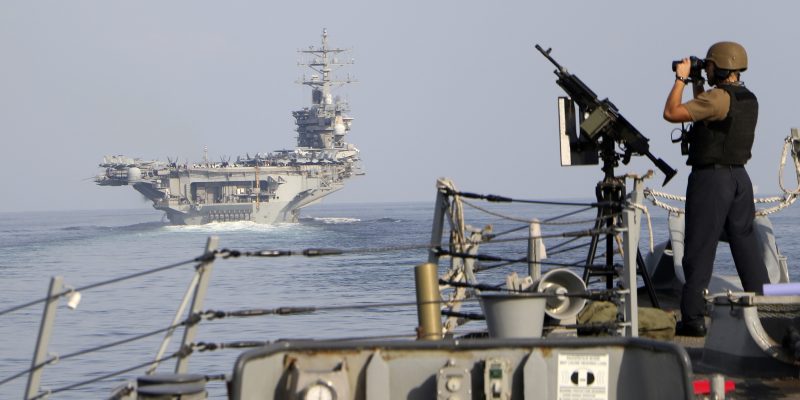
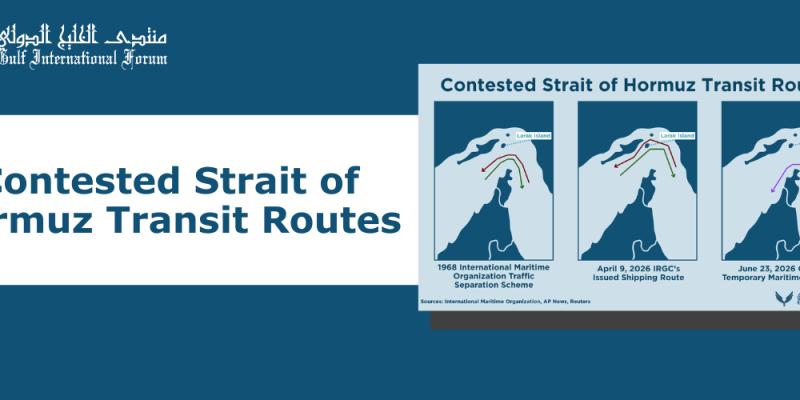
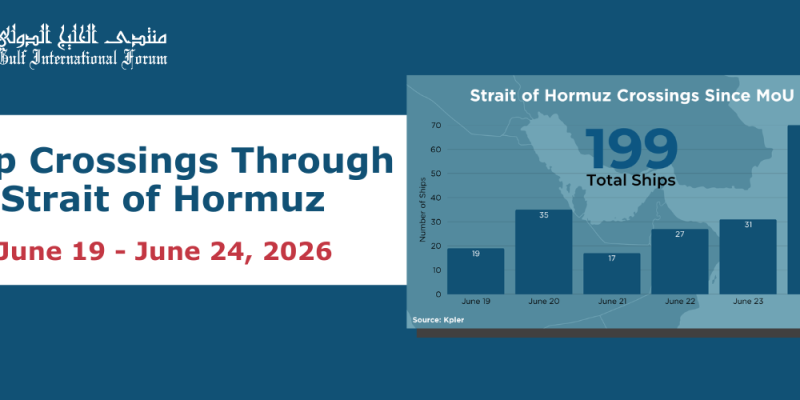
The regime’s most powerful leverage lies in geography. By threatening shipping in the Strait of Hormuz, the chokepoint through which roughly one-fifth of the world’s oil supply passes, Iran is transforming the regional war into a global economic crisis. Recent disruptions in the Strait have already rattled energy markets and prompted governments worldwide to consider emergency responses. This is not accidental escalation; it is a deliberate strategy. Iran cannot match American firepower, but it does not need to. Every drone launched, every tanker delayed, and every spike in oil prices pushes the war from the battlefield into the political arena, where public pressure, economic instability, and allied hesitation begin to shape Washington’s decisions. That strategy leaves the United States with two possible endgames, and neither is favorable for President Donald Trump’s administration.
An Early Departure Scenario
The first scenario is a premature end to the war. If Washington halts military operations without extracting major concessions from Tehran, the Islamic Republic will almost certainly declare victory. For a regime that has defined its identity through resistance to the United States for more than four decades, survival alone would be presented as a historic triumph. That narrative would resonate well beyond Iran’s borders. Tehran could claim it confronted the world’s most powerful military and endured, reinforcing the credibility of its resistance strategy while strengthening the legitimacy of its security apparatus.
The political consequences could be profound. Iran’s leadership would frame the war as the moment it forced a superpower to retreat, not by defeating Washington militarily but by outlasting its political will. For the first time since the 1979 revolution, the Islamic Republic could plausibly present itself as having prevailed in direct confrontation with the United States.
Such an outcome could also undermine confidence among U.S. partners in the Middle East. Gulf states that sought to avoid escalation have nonetheless found themselves exposed, with energy sites, civilian infrastructure, and U.S. bases on their territory falling victim to Iranian retaliation. If the war ends without clearly weakening Tehran’s ability to project power, the Gulf states may begin to question whether Washington is willing to bear the costs required to confront Iran decisively. While such uncertainty will not lead the region to abandon their security relationships with the United States, it could accelerate a pattern of strategic hedging in the Gulf, including deeper defense coordination with other regional and global partners.
A War of Attrition Scenario
The second scenario is escalation into a prolonged war. If Washington expands the conflict, particularly through a large-scale ground intervention, Iran’s strategy of attrition becomes more effective. Tehran cannot defeat American forces directly, but it has spent decades preparing to draw stronger adversaries into long, costly wars. Iran’s military doctrine is built around asymmetric warfare: drones, missiles, proxy networks, maritime disruption, and guerrilla tactics designed to exhaust technologically superior opponents. The goal is not decisive victory but strategic exhaustion. In such a conflict, time becomes Tehran’s most valuable weapon. As the war drags on, pressure builds on global energy markets, regional governments, and Western political systems. The Iranian leadership understands that democracies struggle to sustain open-ended wars without clear objectives and decisive victories.
Yet this strategy contains a crucial vulnerability. Despite the Islamic Republic’s rhetoric of martyrdom, the regime’s current leaders are primarily motivated by self-preservation. They are political and military elites who control vast economic networks, security institutions, and patronage systems tied to the survival of the regime itself. From the commanders of the Islamic Revolutionary Guard Corps to the clerical establishment overseeing the state, Iran’s ruling class has enormous political and financial stakes in preserving the system they control. Their objective is not sacrifice, but survival.
This creates a fundamental tension. The regime is willing to escalate and impose global costs to pressure Washington into ending the war. But if Iran’s leadership concludes that the United States will not de-escalate, despite rising oil prices, regional instability, and international pressure, their calculus could shift. At that point, the regime’s elites may face a stark choice: continue a war that threatens their survival, or accept terms to preserve what remains of their power.
In that sense, the war’s outcome will not be decided by military capability alone, but by political endurance. Iran is betting that the United States will ultimately prioritize stability over escalation as the global costs of the conflict rise, and Washington must decide whether it is willing to sustain those costs long enough to challenge that assumption. For asymmetric adversaries like Iran, survival can be as consequential as victory. If Washington ends the war prematurely, Tehran will claim victory; if the United States escalates without a clearly defined political objective, it risks becoming ensnared in the very war of attrition Iran has long prepared to fight. The uncomfortable truth for Washington is that only one outcome avoids both traps: the collapse of the Iranian regime before survival can be considered a strategic victory.
The views and opinions expressed in this article are those of the authors and do not necessarily reflect the views of Gulf International Forum.
Issue: U.S. – Gulf Policy
Country: Iran

Shukriya Bradost is a Middle East security analyst, writer, lawyer, and media commentator specializing in non-state actors, Iran affairs, and regional geopolitics. She appears regularly in global media, including BBC, Fox News, France 24, Al Jazeera, Deutsche Welle, and Voice of America. Her work focuses on Middle East security and is published by leading think tanks and policy outlets.

Toward a New Order in MENA Regional Geopolitics
September 2, 2026This report is a byproduct of the workshop “Toward a New Order in MENA Regional Geopolitics: What’s Next for the Region’s Geopolitical Equilibrium?,” hosted in…

The Geopolitics of the U.S.–Saudi Nuclear Deal
August 18, 2026In late July, the Trump administration announced a landmark civil nuclear cooperation agreement with Saudi Arabia. Signed in accordance with Section 123 of the Atomic…
Turkey’s F-35 Return and Saudi Arabia’s Fighter Ambitions
August 7, 2026Turkey’s renewed push to rejoin the F-35 Joint Strike Fighter program, from which it was expelled in 2019 over its acquisition of Russian S-400 air…