The Midterms Might Change Washington’s Gulf Debate, But Not the Relationship
Widespread opposition to the U.S. war with Iran has allowed progressive candidates within the Democratic Party to gain momentum in the 2026 midterm cycle, but major changes to U.S.–Gulf policy are unlikely to come before the 2028 presidential election.

The ongoing U.S.–Iran war comes at a pivotal moment for U.S. foreign policy. With the increasingly unpopular and drawn-out conflict taking place amid the campaign season of significant midterm elections, the issue of U.S. foreign policy toward the Gulf has been thrust to the forefront of national debates. This heightened domestic scrutiny over American foreign policy toward the region has raised questions about Washington’s role in the Gulf, as candidates across the country have called not only for the immediate end to the war in Iran, but also for a broader recalibration of America’s strategy toward the region.
While the 2026 midterm elections could strengthen a growing movement for congressional scrutiny over U.S. military engagement in the Middle East, they will not, by themselves, overhaul the longstanding U.S.–Gulf security partnership. However, increased political uncertainty may encourage Gulf states to accelerate the diversification of their defense and economic relationships. At the same time, Gulf states may seek to broaden cooperation with Washington in areas beyond security.
The Gulf’s Moment in U.S. Politics
The unique attention on U.S. foreign policy in this midterm cycle is both a part of broader trends in American politics and a reflection of the singular moment of the war with Iran. U.S. foreign policy, particularly American support for Israel, became a prominent campaign issue throughout the 2024 presidential election, and it played a role in determining the outcome of elections in swing states such as Michigan. The U.S.–Israel relationship remains central to current policy debates about Washington’s role in the Middle East, but Iran’s ability to leverage the Strait of Hormuz to disrupt the global economy has also brought Gulf policy to the forefront of national debates. As Americans bear the economic brunt of the war and watch as service members are killed, many have begun questioning the viability of the “Defense First” approach towards the Gulf.
Amid growing dissatisfaction, a rising movement of progressives within the Democratic Party has gained momentum this midterm cycle by proposing alternatives to long-standing policies toward the Middle East that have become increasingly unpopular. While U.S. policy towards Israel remains the focal point of progressive criticism, many progressives have also called for both an immediate end to the war with Iran and an end to U.S. interventions in the Middle East more broadly. One such candidate, James Talarico of Texas, has maintained that Washington can pursue its interests in Iran without sending service members to “die in another forever war.” Others have criticized the constant flow of arms to both Israel and Gulf partners, such as Michigan Senate candidate Abdul El-Sayed who has called for the end of “unilateral” military support for Saudi Arabia, Egypt, and Israel.
While far from all Democratic candidates in the primaries are progressives, the momentum behind this movement is certainly noteworthy. In this regard, the midterms may serve as an indication of the future trajectory of the Democratic Party and an indication of Democratic policies toward the region going forward.
The Scope for Policy Change
Despite the rise of the progressive movement calling for greater restraint in U.S. defense engagement in the Gulf, the question remains as to what policies could actually change immediately following the midterm elections. The answer lies not just in the results of the midterm elections, but also in the institutional powers and constraints of Congress and the executive branch.
Democratic control of Congress would serve as an important determinant of how much influence the progressive movement could exert on U.S. foreign policy going forward. Democrats currently need a net gain of three seats in the House and four seats in the Senate to secure majorities. Such a swing is certainly no guarantee, especially given the historic underperformance of progressives in national elections, but widespread dissatisfaction with President Donald Trump’s administration has given Democrats optimism for the upcoming elections. A Democratic majority would provide Congress greater leverage in its ongoing attempts to challenge the Trump administration on military action, overseas deployments, and arms transfers. In particular, Congress could use its powers to place greater short-term limits on any further U.S. military operations against Iran.
The scope of broader policy changes, however, would remain constrained by executive authority. The executive branch remains the primary architect of American foreign policy, including the administration of Foreign Military Sales (FMS). While Congress does have a formal role in reviewing major arms sales and can block or modify them through legislation, the executive branch retains substantial discretion over the entire process. Indeed, Congress has never successfully blocked a proposed arms sale through the required joint resolution of disapproval under the Arms Export Control Act.
A Democrat-controlled Congress could therefore increase scrutiny of U.S.–Gulf defense cooperation without fundamentally altering it. A significant reduction in arms transfers or alterations to other elements of the relationship would likely require cooperation from a Democratic presidential administration willing to use its own executive powers to pursue such changes. As a result, the midterms should not be viewed as a decisive referendum on the future of U.S. Middle East policy. However, the results could indicate whether growing calls for restraint are gaining significant political support that could lead to new constraints on U.S. policy in the long term
Gulf Responses
While the midterm elections will not alter U.S. engagement in the Gulf, political uncertainty in Washington could accelerate Gulf efforts to diversify their security relations. At the start of the war, commentators questioned whether Gulf states would reconsider their security partnerships with the United States. Throughout the war, Gulf states’ association with Washington became a hindrance to their peace and stability rather than a source of strategic deterrence, as Iran targeted civilian sites and U.S. military installations with missiles and drones. Yet rather than signalling an imminent break with the United States in defense coordination, Gulf states are hedging their security relations while maintaining ties with Washington.
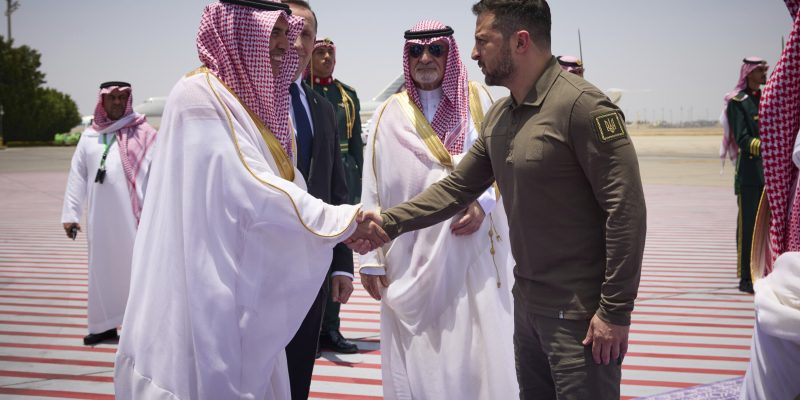
Gulf states had already begun expanding their defense relations in recent years. South Korea and Brazil have emerged as defense partners, while Ukraine signed landmark 10-year defense agreements with three Gulf states to provide its advanced air defense systems. Furthermore, Saudi Arabia’s signing of the Mecca Agreement with Pakistan and Turkiye represents a regional defense mechanism that complements existing security arrangements. Such diversification provides Gulf states with greater resilience against potential future disruptions to U.S. defense engagement in the region. At the same time, the continued importance of America’s regional security umbrella and the reality that no other state can match U.S. defensive technology mean that such alternative partnerships will not replace Washington in the near future.
Despite political uncertainty leading up to the midterms, opportunities remain to expand U.S.–Gulf relations beyond security. Artificial intelligence (AI), advanced technology, energy, and water security could become increasingly important areas for cooperation. The United States has already granted the UAE expanded access to AI chips, while the UAE and Qatar have signed the Pax Silica Declaration, a U.S.-led initiative to secure supply chains for critical minerals, semiconductors, and AI infrastructure. These developments deepen the Gulf’s position as a key node in the global AI ecosystem. Nuclear energy could provide another avenue for cooperation, one that has already been explored by the Trump administration, while American expertise in low-energy desalination could help address the Gulf’s growing water security and climate-resilience challenges.
Expanded commercial cooperation that grows the Gulf’s industrial base may also come with defense benefits. A developed industrial base would allow the Gulf to begin shifting certain aspects of arms sourcing from foreign procurements to local defense-industrial production. Gulf states would not only reap the economic rewards of sovereign industrial development but could also strengthen their capacity to meet a greater share of their own defense requirements in an environment where the United States may begin to scrutinize foreign arms sales and military aid transfers more closely.
As November approaches, the U.S.–Iran war will likely remain a major issue in the election cycle. Whether Democrats gain control of the House, Senate, or both will shape the congressional debate over the Trump administration’s approach to Iran and the broader Middle East. For Gulf states weighing their security options, the results could ultimately offer a critical indication of how U.S. policy toward the region could evolve in the years to come.
The views and opinions expressed in this article are those of the authors and do not necessarily reflect the views of Gulf International Forum.
Issue: U.S. – Gulf Policy
Country: GCC

Will Castanier is a Master’s student at Georgetown University Walsh School of Foreign Service, pursuing a M.A. in Arab Studies. He is also a Research Assistant at Gulf International Forum and a recent graduate of Michigan State University’s James Madison College, where he earned a B.A. in International Relations and Arabic with a minor in Muslim Studies. His senior thesis examined Saudi Arabia’s divergent policies in Syria and Yemen, analyzing the kingdom’s strategic decision-making process. Will previously worked as an intern at the Michigan Senate and United States Central Command.

Saudi Arabia’s F-35 Deal Is Taking Shape
October 16, 2026Less than a year after U.S. President Donald Trump publicly backed the sale of F-35 fighter jets to Saudi Arabia, the kingdom’s long-running effort to…

Trump’s War on Iran Runs Through Baghdad
October 8, 2026Seven months into the war with Iran, the Strait of Hormuz remains a major point of contention. Goldman Sachs estimates that Gulf oil flows have…

Toward a New Order in MENA Regional Geopolitics
September 2, 2026This report is a byproduct of the workshop “Toward a New Order in MENA Regional Geopolitics: What’s Next for the Region’s Geopolitical Equilibrium?,” hosted in…