The Political Economy of Khor Mor: Militia Power, Baghdad’s Calculus, and Energy Sovereignty
The strike on Iraqi Kurdistan’s Khor Mor gas field illustrates a troubling trend in Iraqi politics: the ability and inclination of pro-Iranian militia groups to use the country’s oil and gas infrastructure as a hostage in negotiations.

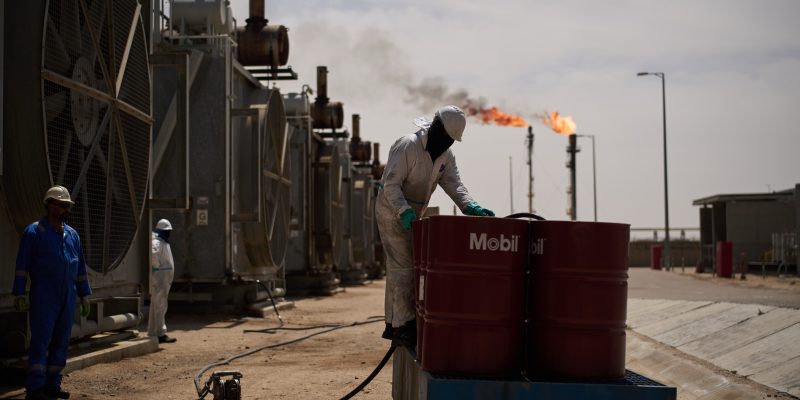
On November 26, a strike most likely delivered by an Iranian-made drone hit the Khor Mor gas field in the Kurdistan Region of Iraq (KRI). Gas flows feeding the region’s power grid collapsed, electricity generation fell by nearly 80 percent, and large parts of the KRI went dark. The shockwave disrupted electricity supplies in Salahaddin, Kirkuk, and Ninewa, and even affected Baghdad due to lost gas feedstock. The attack also destroyed Khor Mor’s newly completed liquefied petroleum gas facility, a state-of-the-art installation with 65,000 barrels of strategic storage, causing severe losses and sharply degrading processing capacity.
By the weekend, the Kurdistan Regional Government (KRG) announced that operations were being restored. Yet the recovery unfolded amid political maneuvering in Baghdad. According to Al-Monitor, Prime Minister (PM) Mohammed Shia al-Sudani initially ordered gas flows halted pending investigation. While Dana Gas refuted the claim, the episode was widely read as political signaling toward Tehran as al-Sudani seeks support for a second term following the 2025 elections.
The implications of the attack extend far beyond the temporary disruption. It exposed structural fractures in Iraq’s energy governance, the rising strategic weight of the Kurdistan Region’s gas assets, and the political economy shaping control over the country’s most valuable infrastructure.
From an Underutilized Field to a Critical Power Source
When Dana Gas and Crescent Petroleum began developing Khor Mor in 2007, the field was an underutilized resource with uncertain prospects. The field’s initial output hovered around 300 million cubic feet of gas per day. Over the past five years, however, incremental debottlenecking and the KM250 expansion transformed it into the backbone of the Kurdistan Region’s energy system. By October 2025, production reached roughly 750 million standard cubic feet per day (MMSCFD), supplying baseload electricity to Erbil, Sulaymaniyah, Halabja, and Duhok, while surplus gas helped stabilize the federal grid in Salahaddin, Kirkuk, and Ninewa. Today, Khor Mor delivers more than 80 percent of the KRI’s electricity and an estimated 40 to 45 percent of Iraq’s domestic gas consumption.
Pearl Petroleum—a consortium of Dana Gas and Crescent Petroleum—is moving forward with another expansion phase aimed at positioning the field as a regional gas hub with future export potential. This situates the KRI within the evolving eastern Mediterranean and Gulf-linked gas landscape, where diversification and cross-border supply dynamics increasingly shape geopolitical alignments. The impacts of a disruption to Khor Mor are therefore not a problem for Iraqi Kurdistan alone; they directly threaten Iraq’s most viable pathway for reducing dependence on Iranian gas and alleviating nationwide shortages.
The United States has been central to this transformation. Through the U.S. International Development Finance Corporation, Washington extended a $250 million loan as part of a $1.1 billion financing package that also included the Bank of Sharjah and a major bond issuance. American engineering firms, including Exterran (later Enerflex), designed key processing units and oversaw major construction phases. U.S. involvement embedded Khor Mor within a Western-oriented infrastructure network, elevating its geopolitical significance and making attacks on the field a direct signal to U.S. commercial and policy stakeholders.
Domestically, expanded gas production reshaped the KRI’s energy landscape. It enabled PM Masrour Barzani’s Runaki Project, aimed at securing uninterrupted electricity across the region. By November 2025, most cities had reliable 24/7 power grids—a stark contrast to the chronic shortages fueling public anger elsewhere in Iraq. The November strike reversed these gains for several days, reducing supply to about five hours per day and causing losses estimated at more than $7.4 million daily.
For Baghdad, the timing was critical. PM al-Sudani has pledged to end Iraq’s dependence on Iranian gas by 2027, with Khor Mor central to that strategy. However, his political trajectory also depends on maintaining support from pro-Iranian factions, limiting his ability to confront their actions. For Erbil, the field underpins energy autonomy and long-term export ambitions. The attack underscores why the KRG continues to request integrated air defense capabilities: without them, even the most advanced installations remain vulnerable to precision strikes by hybrid armed actors.
The November attack is therefore a direct challenge to the emerging architecture of energy sovereignty in both the KRI and federal Iraq. It shows how quickly gains in reliability, diversification, and investor confidence can be undone by regional interference and the mobilization of armed proxies. Iraq’s institutional fragility amplifies these dynamics, allowing ruling elites to instrumentalize strategic assets within the country’s political marketplace.
Drone Warfare and the Militia–State Bargain in Iraq
The strike on Khor Mor fits into a broader political economy in which Iran, Iraqi governments, and militia networks use coercive disruptions to shape political outcomes while maintaining plausible deniability. This dynamic was also seen during the 12-Day War in June 2025, when suicide drones destroyed radar systems at the Camp Taji and Imam Ali bases in Iraq—reportedly in retaliation for Baghdad’s failure to detect or prevent Israeli attacks that passed through Iraqi airspace. The arrest of an Iraqi commentator who celebrated the attacks for aiding foreign adversaries underscored how embedded these networks have become.
Since mid-2022, Khor Mor has been struck at least eleven times, often during moments of high-stakes negotiation. The deadliest incident occurred in April 2024, when a Shahed-101 drone killed four workers and removed nearly 2,500 MW from the grid. The strikes on the field are anything but random; they consistently align with periods of budget disputes, oil and gas negotiations, and heightened tension between Baghdad and Erbil. In July 2025, drones hit seven oilfields during revenue-sharing talks. The November attack followed national elections, coincided with sharper U.S. warnings about Iran-aligned factions, and came days before the opening of the new U.S. Consulate in Erbil. Regionally, it followed Israel’s killing of Hezbollah commander Haithem Tabatabie, a trigger for escalation cycles that routinely spill into Iraq.
These patterns are rooted in Iraq’s hybrid security order. The Popular Mobilization Forces (PMF) operate as a state institution with more than 238,000 personnel and a multibillion-dollar budget, yet key factions retain autonomous armed capacity and pledge allegiance to Iran’s Supreme Leader. Parallel militia-linked conglomerates dominate logistics, customs, construction, and border crossings. This dual structure creates a political economy in which militias function as state actors when benefits flow, and as coercive instruments when leverage is needed.
It is within this environment of controlled fragility that Baghdad’s political elite also operate. Militias do not function outside governing authority at all times. In certain high-stakes moments, their coercive actions complement elite interests, serving as an informal extension of state power. During periods of intense negotiation, elements of the elite benefit from the ambiguity and intimidation that militia operations create. Iraq’s institutional fragility becomes an asset to be managed, allowing political actors to deploy coercion indirectly, signal strength, and shape bargaining outcomes while avoiding formal accountability.
Khor Mor lies precisely at the intersection of these incentives. It is a strategic asset for the KRG, a flagship project for American and Gulf investors, a pillar of Baghdad’s diversification strategy, and a site in disputed territory. It symbolizes Kurdish energy aspirations and represents Iraq’s most credible pathway for reducing dependence on Iranian gas. Targeting it allows militias to pressure Erbil, constrain Western influence, and amplify Iran’s regional leverage, while also enabling political actors in Baghdad to shape government formation from a position of coercive advantage.
Government responses have reinforced these incentives. The strikes are condemned, but Baghdad has essentially no power to stop them. PM al-Sudani has argued that pro-Iranian militias cannot be disarmed while the U.S.-led coalition remains, even as his government expands their institutional role and increases their annual budget. The costs are substantial. Repeated strikes also strengthen arguments in boardrooms from Abu Dhabi to Washington that Iraq cannot guarantee infrastructure security. This raises risk premiums for companies doing business in Iraq, slows investment, and redirects capital toward more predictable markets elsewhere in the Middle East.
Strategically, the impact is severe. Iraq’s plan to end gas flaring and reduce Iranian imports by 2027 relies on the very infrastructure being targeted, while Iran-aligned groups hold an informal veto over diversification. By striking Khor Mor, militia actors insert themselves directly into the political economy of Iraq’s most strategic gas asset, using violence as a calibrated instrument of kinetic diplomacy to shape outcomes at both national and regional levels.
Breaking the Cycle: From Militia Leverage to State Authority
Iraq cannot secure its energy future while leaving strategic assets like Khor Mor in a zone of political ambiguity. Previous investigations have yielded no consequences, reinforcing perceptions that key infrastructure is exposed to deniable coercion. A transparent process that attributes responsibility and imposes penalties would signal a shift toward real state authority. Baghdad also holds fiscal tools capable of reshaping incentives. Some of the most powerful pro-Iranian factions within the PMF rely on state budgets, contracts, and customs revenue. Conditioning these benefits on non-interference would convert fiscal authority into meaningful leverage. A structured security compact for Khor Mor, supported by U.S. integrated air defense, intelligence sharing, and binding technical guarantees, would raise the cost of further strikes and align Iraq with global best practices for protecting high-value gas corridors.
Ultimately, Iraq must decouple national energy governance from regional proxy competition. As long as Iraqi core infrastructure serves as an arena for regional signaling or domestic bargaining, foreign investors will remain hesitant, and diversification will stall. Each strike on Khor Mor or other energy facilities erodes Iraq’s path toward energy sovereignty and weakens its ability to attract capital. Successive governments have relied on militias as buffers and bargaining tools, insisting that Iraq needs more time to consolidate authority. The latest attack shows that time is no longer neutral. With every delay, the cost of reform rises and the space for effective state authority narrows.
The views and opinions expressed in this article are those of the authors and do not necessarily reflect the views of Gulf International Forum.
Issue: Politics & Governance
Country: Iraq

Dr. Shahla Al Kli is Counterpart International’s Lead Representative in Iraq. Al Kli is also a non-resident scholar at the Middle East Institute. Prior to that, she served as Research Analysis and Knowledge Mobilization Director at Proximity International, the Middle East Deputy Regional Director at Mercy Corps, a Principal Development Specialist at DAI Global, an advisor to the Speaker of the Iraqi Parliament, a senior advisor to the Speaker of the Kurdistan Parliament, a former Country Director for Counterpart’s Iraq programs, and an auditor at the Central Bank of Iraq. She is a long-term development practitioner in the Middle East with expertise in politics, governance, security, state building, and fragile states. Her doctoral dissertation about governance and decentralization in Iraq at the Fletcher School of Law and Diplomacy at Tufts University was awarded the Peter Ackerman Award for outstanding scholarly work.
Why Iran Never Knows When to Stop
July 27, 2026At first glance, Iran’s negotiating difficulties appear to stem from disagreements between pragmatists seeking sanctions relief and hardliners determined to resist compromise. Yet that explanation…
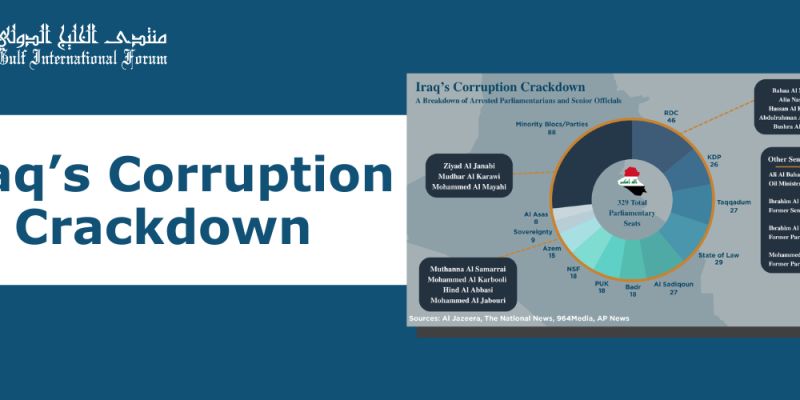
Iraq’s Corruption Crackdown
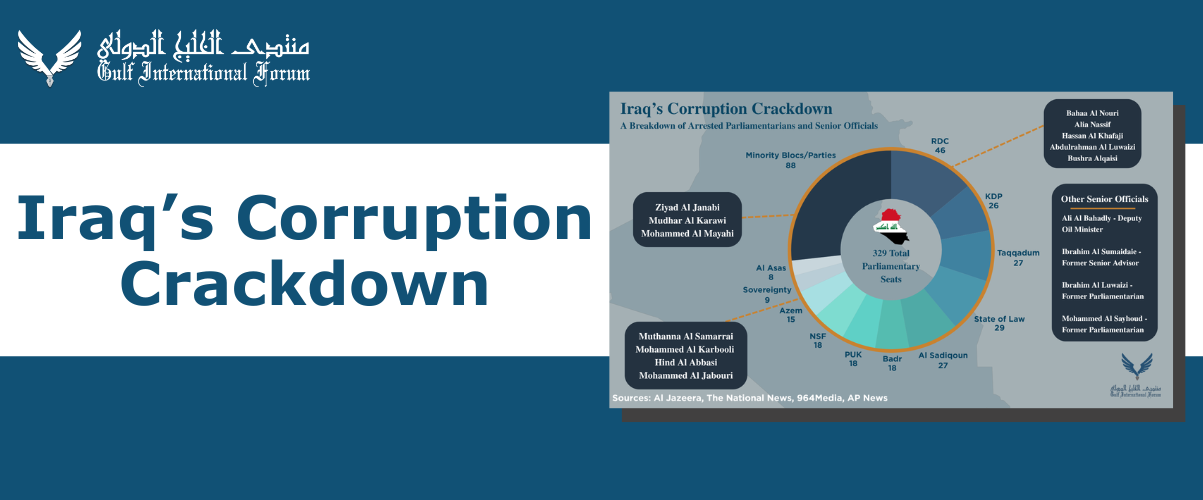
July 22, 2026*A breakdown of arrested parliamentarians and senior officials as of June 28, 2026.
Sheikh Hamad and the Making of Modern Qatar
July 15, 2026There is a question that haunts every small state: how does a nation survive and stay relevant in a region built for giants? For most…