The Trap of U.S.–Iran Negotiations: Iraq’s Strategic Role
As Iran’s regional influence wanes, Iraq emerges not just as its last proxy stronghold, but as a pressure point that could redefine Tehran’s leverage.

The current negotiations between the United States and Iran are unfolding under fundamentally different regional conditions than those of the 2010s. Their significance lies less in the diplomatic process itself than in the shifting balance of power between the two parties. Iran is no longer negotiating from a position of expansion, but from contraction. As its regional network weakens and its traditional proxy channels erode, Iraq has emerged as Tehran’s last remaining strategic card.
For years, Iran relied on negotiations with Washington as a deliberate delaying tactic. Engagement rarely altered Tehran’s core behavior. Instead, it allowed the regime to manage pressure while continuing to advance its long-term strategic objectives. The JCPOA nuclear agreement under the Obama administration is a clear example. While it was promoted internationally as a diplomatic breakthrough, it also bought Iran valuable time and financial resources to stabilize the regime internally, deepen its regional footprint, and push its nuclear program closer to the threshold without provoking direct confrontation. That strategy was effective when Iran’s regional project was expanding, but that is no longer the case today.
Recent diplomatic efforts between Washington and Tehran, including indirect contacts often facilitated through regional intermediaries such as Oman, reflect the urgency of avoiding escalation while both sides reassess their strategic leverage. At the same time, the talks underscore the persistent mistrust shaping U.S.–Iran relations even as regional tensions intensify. Oman’s longstanding role as a quiet mediator underscores the fragility of the process; diplomacy continues, but against a backdrop of military signaling and shifting regional alliances that limit Tehran’s room for maneuver. In this evolving context, the Iraqi arena increasingly intersects with the broader negotiation dynamic not as a formal agenda item, but as a strategic variable influencing both sides’ calculations.
Tehran’s Decimated Crescent
Iran’s proxy network across the Middle East is no longer intact. In Syria, the landscape has fundamentally changed. Syria under President Ahmad al-Sharaa is not the same as Syria under Bashar al-Assad. What once functioned as a central corridor for Iranian influence has given way to a different political and security reality, one that is extremely hostile to Tehran. These changes have effectively fractured the continuity of the so-called Shi’a Crescent, disrupting the geographic and strategic link Iran relied on to project power from Tehran to Beirut.
The consequences of this rupture are visible across the region. In Lebanon, Hezbollah—once Iran’s strongest proxy—faces unprecedented political isolation, economic pressure, and military constraints, sharply reducing its value as a forward deterrent. Further south, the Houthis, while still capable of limited disruption, have been weakened by sustained regional and international countermeasures. Taken together, these developments signal a clear shift: Iran’s regional pillars are fragmenting rather than advancing, leaving Iraq as the last arena where Tehran can still project influence with meaningful strategic depth.
Iraq’s Strategic Significance
As of now, Iraq is not part of the negotiations and is not on the agenda. That is precisely why it matters. As Iran’s regional assets erode, Iraq has become the final arena through which Tehran can still project power, threaten U.S. interests, pressure regional states, and maintain the appearance of strategic depth. Iraq functions not as a bargaining chip within the negotiations, but as the last card Iran can play outside them.
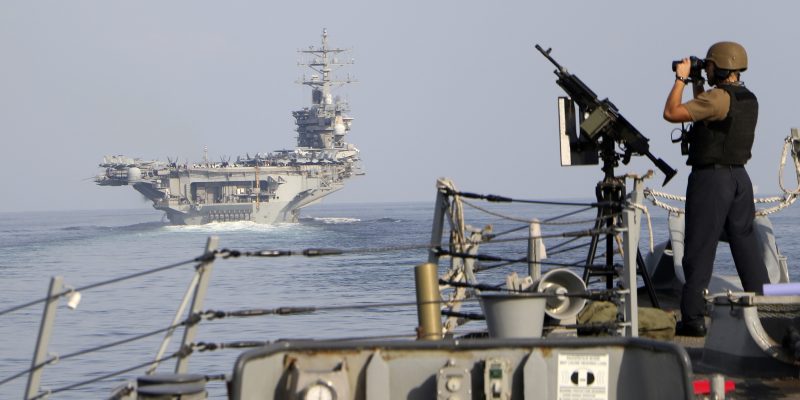
The military buildup before and during the negotiations is not preparation for a full-scale war; it is calculated pressure, designed to narrow Iran’s options while keeping escalation under control. The central question, therefore, is no longer whether Iran is stalling negotiations. It is whether Tehran can still afford to stall when its last strategic card is increasingly exposed.
Planned negotiations under Turkish and GCC states sponsorship, held prior to the current rounds and involving broad regional participation but excluding Iraq, reinforce this logic. Iraq’s absence is not a diplomatic oversight. It reflects a shift in how Washington and its partners now view the Iraqi arena: not as firmly held Iranian territory, but as a space whose status is increasingly contested. If negotiations fail and tensions escalate, Iraq will become the primary arena where Iran’s leverage is tested and possibly neutralized.
Paths for Iran
At this stage, two strategic paths emerge. In the first, Iran opts for a tactical compromise. If the leadership, particularly the Supreme Leader, can secure regime survival for the next decade, Tehran may accept limited concessions: transferring portions of its 60 percent enriched uranium, placing constraints on its ballistic missile program, and reducing overt interference in selected regional states. These steps would not fully constitute a strategic retreat. Rather, they would be designed to limit losses while preserving Iran’s ability to operate through Iraq as its final proxy stronghold.
The second path is failure. If negotiations collapse, Iran’s deterrence would be tested at its weakest moment. Iranian officials have repeatedly threatened to target U.S. interests across the region, but the regional environment has changed. States that once hesitated are now more aligned, more coordinated, and less willing to tolerate endless escalation. Any Iranian attack on U.S. interests in the region will be met with a retaliatory response threatening the regime’s stability. In such a scenario, Iraq would no longer function as a shield for Iran but as a pressure point through which Tehran could be further weakened. This is precisely where the recent U.S. policy shift toward Iraq becomes decisive.
Turning Leverage into Liability
Against this backdrop of heightened risk and shifting deterrence dynamics, Washington has begun to recalibrate its own approach to Iraq, treating it less as a peripheral theater and more as a central arena of regional strategy. Washington’s decision to remove Mark Savaya from his role as U.S. Special Envoy for Iraq and transfer the Iraq portfolio to Tom Barrack, the U.S. Ambassador to Turkey and Special Envoy for Syria, is not a routine bureaucratic move. It signals a deeper strategic recognition that Iraq is not just Iran’s last card but also its greatest vulnerability.
Barrack is widely recognized for effectively implementing President Trump’s vision and policy. During his tenure as U.S. ambassador to Turkey, he demonstrated a unique ability to manage complex alliances and navigate sensitive regional files. His involvement in ending Washington’s alliance with the Kurdish Syrian Democratic Forces (SDF) underscored U.S. willingness to make difficult strategic adjustments as regional conditions shift.
By assigning Iraq to Barrack, the United States is likely sending a clear message: Iraq will no longer be managed as a technical or secondary issue. It has become central to Washington’s approach toward Iran. The logic is straightforward. As Iran loses influence in Syria, Lebanon, and Yemen, its reliance on Iraq increases. The more Iran depends on Iraq as its final proxy arena, the more exposed it becomes. What once functioned as leverage can be transformed into liability; politically, economically, and strategically. In this sense, negotiations with Iran are not about Iraq as a bargaining chip. They are about whether the United States can strip Iran of its last remaining card, or use it to constrain Tehran’s regional posture.
What appears on the surface as renewed diplomacy may therefore conceal a closing strategy. Iran is negotiating while its options narrow, its alliances weaken, and its last proxy arena comes under increasing pressure. The reassignment of the Iraq file suggests that Washington is not preparing for endless talks, but for a phase in which Iran is forced to negotiate without meaningful leverage. One reality is becoming increasingly difficult to deny: Iraq is no longer Iran’s strategic safety net. It has become the pressure point through which Tehran can be constrained and potentially cornered. The coming weeks will reveal whether Iran recognizes this shift in time, or whether its final card has already been turned against it.
The views and opinions expressed in this article are those of the authors and do not necessarily reflect the views of Gulf International Forum.
Issue: Geopolitics, U.S. – Gulf Policy
Country: Iran, Iraq

Hiba Abdulwahhab is an Iraqi researcher and analyst focused on Iraq’s governance, armed factions, Iranian influence in the region, and questions of Iraqi national identity, alongside broader themes in Middle East politics and security. She has collaborated with the Gulf International Forum, the Wilson Center’s Middle East Program, and the Washington Center for Human Rights. She holds a master’s degree in public and international Affairs from Virginia Tech and another in Arabic Language and Linguistics from PennWest University, as well as a bachelor’s degree in law from Baghdad University.

Riyadh Shifts Toward Minilateralism as Regional Threats Mount
September 9, 2026Saudi Arabia’s signing of the Mecca Joint Defense Agreement with Türkiye and Pakistan on August 7 marks a crucial development in the evolution of the…

Toward a New Order in MENA Regional Geopolitics
September 2, 2026This report is a byproduct of the workshop “Toward a New Order in MENA Regional Geopolitics: What’s Next for the Region’s Geopolitical Equilibrium?,” hosted in…
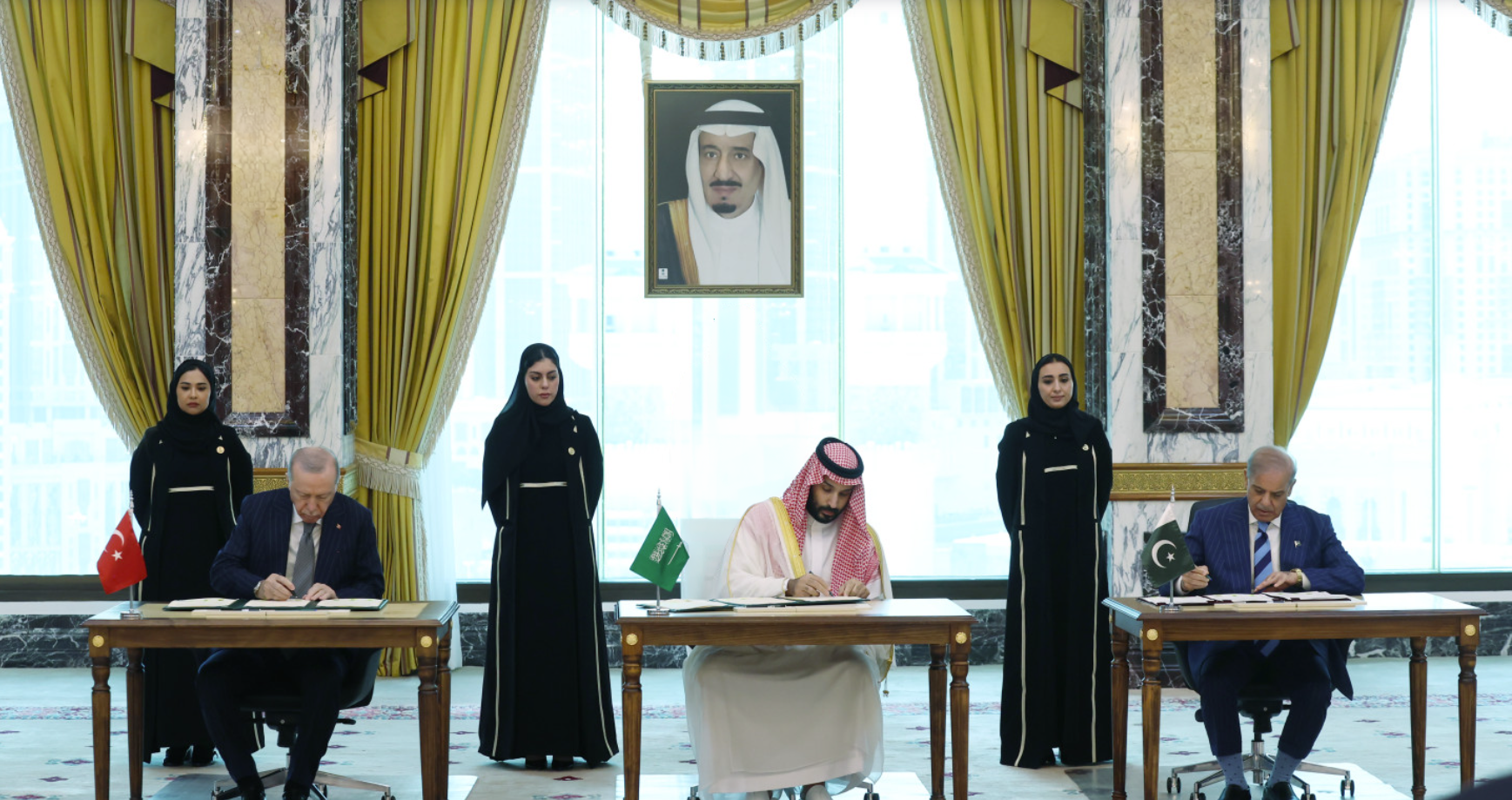
The Mecca Agreement: Seeds of a New Regional Security Architecture
August 20, 2026The Middle East is entering a new phase in the evolution of its security order, as conflict and instability continue to reshape the region. At…