The UAE and Qatar Pivot to Unmanned Systems to Bolster Maritime Security
For Abu Dhabi and Doha, uncrewed platforms offer an edge on the battlefield and a convenient solution to long-standing manpower shortfalls.

Autonomous systems are transforming the character of naval warfare. In the Black Sea, Ukrainian uncrewed surface vessels (USVs) have demonstrated remarkable combat effectiveness against Russian manned air and naval platforms. Meanwhile, in the Red Sea, the Houthis have repeatedly deployed kamikaze drones to target both merchant shipping and naval vessels. The most dramatic victim in the Middle East was the M/V Tutor, which sank six days after it was struck by a Houthi USV in June 2024. From precision strikes to persistent threat projection, uncrewed systems are no longer a novelty—they are a permanent feature of the maritime battlespace.
The fast-paced proliferation of naval hybrid threats has heightened awareness in both the United Arab Emirates (UAE) and Qatar of the need to counter asymmetric challenges on, above, and below the sea. This growing recognition has catalyzed notable shifts in military procurement strategies and naval doctrine, as both Abu Dhabi and Doha increasingly strive to incorporate unmanned systems into their day-to-day maritime operations.
Leveling the Playing Field
The protection of offshore marine infrastructure and resources is vital to the long-term geoeconomic ambitions of the UAE and Qatar. However, as adversary capabilities grow increasingly sophisticated, these strategic assets have become more difficult to defend. Facing manpower constraints and a volatile maritime security environment, the UAE and Qatar have come to view USVs as a strategic asset to offset these structural limitations, enhance national security, and ensure the safety of their servicemembers.
Designed to operate in challenging sea conditions, over wide areas, and on extended deployments, unmanned solutions greatly improve intelligence, surveillance, reconnaissance (ISR) and rapid-response capabilities. First, they enhance maritime domain awareness (MDA)—the capacity to track and understand any event or activity that could impact the security of the marine environment. Second, if armed, they can provide an additional layer of defenses that can operate further afield than traditional naval forces, without the need for resupply.
Drawing from its rapidly growing military-industrial base, the UAE is actively pursuing the domestic development of indigenous unmanned systems. To overcome limitations related to human capital and technological expertise, it has forged industrial partnerships with major international defense firms. Conversely, Qatar has primarily outsourced the procurement of its unmanned platforms, placing greater emphasis on developing capabilities in sensor integration and personnel training. Nevertheless, both Gulf nations have strategically leveraged local defense exhibitions as key platforms to showcase indigenous capabilities, attract foreign investment, and deepen defense partnerships.
The UAE’s Strategy: Building an Indigenous Defense Industry
Naval drone prototypes took center stage among the UAE-made products exhibited at IDEX – NAVDEX 2023, highlighting the advancements of Emirati defense companies in autonomous technology and next-generation maritime capabilities. The Abu Dhabi-aligned Al Fattan naval firm presented the 10-M USV, a rapid-response craft designed for low-tier security applications, including ISR and harbor protection. Configurable for manned or unmanned deployment, the 10-M is also expected to feature in-house software with an Arabic language interface tailored to regional end-users.
Another relevant product was the Hydra USV, a 3D-printed surface platform developed by Al Seer Marine. The Hydra is designed to leverage the advantages of electric propulsion—specifically, extended endurance at low speeds and a reduced acoustic signature—to deliver high-performance capabilities in long-duration surveillance missions. Though this technology is still experimental at scale, the integration of 3D printing into drone manufacturing promises to reshape the defense industry by reducing production time and costs, enabling rapid prototyping, and improving design flexibility.
However, the star of the show was the 170M-Detector USV prototype, a platform designed for mine countermeasures and anti-submarine warfare. Most importantly, the 170M-Detector was the first product of the partnership between Abu Dhabi Ship Building (ADSB), an EDGE subsidiary specializing in shipbuilding, and Israel Aerospace Industries (IAI) to co-develop autonomous systems, AI-enabled defense technologies, and robotics applications.
This February, at IDEX – NAVDEX 2025, this momentum continued, with further advances in unmanned surface systems and deeper integration of cross-border and inter-industry collaborations. One standout example of the burgeoning international profile of the Emirati defense industry was the unveiling of the DV10, a 10.2-meter high-speed offshore platform presented by French shipbuilder CMN Naval. Featuring a full carbon-fiber structure, an operational range of 200 nautical miles, and a top speed of 90 knots (103.5 MPH), the DV10 combines a low radar profile and stealth-optimized design, making it an ideal platform for coastal infrastructure protection, anti-smuggling, and drone swarm interception. The platform’s mast incorporates an interchangeable modular system to support various weapon configurations, enhancing its operational flexibility. Although CMN Naval led the project, the DV10 reflects growing Emirati involvement in advanced defense programs. ADSB provided engineering support for the project, and the UAE’s Technology Innovation Institute (TII) and SteerAI assisted with the integration of the DV10’s autonomous systems. Notably, SteerAI, which receives support from the Abu Dhabi Advanced Technology Research Council, also collaborates with Milrem Robotics, an EDGE entity specializing in unmanned ground systems—a partnership that underscores emergent cooperation within the UAE’s defense ecosystem.
Another notable development was the signing of an MoU between Al Seer Marine and the Singaporean firm ST Engineering to advance cooperation in USV manufacturing. The agreement aims to leverage ST Engineering’s extensive portfolio of digital technologies to support the Emirati company’s USV product line. This includes the newly unveiled Typhon USV concept, a multi-role platform designed for coastal security operations.
At the exposition, ADSB showed off its 170M-Detector integrated with autonomous MCM systems developed by the French defense company Exail—likely the fruits of a procurement deal signed between the UAE Navy and Exail in November 2024. Leveraging LIDAR technology, Exail’s solution offers advanced capabilities for the remote detection, identification, and disposal of underwater mines. Furthermore, the two companies, in partnership with TII, announced a joint initiative to co-develop a new version of the Inspector 125 USV, Exail’s flagship mine-hunting solution. According to the joint initiative’s division of labor, ADSB will focus on the platform’s engineering, TII on its navigation autonomy system, and Exail on the towed sonar system.
At the Tawazun booth, Abu Dhabi-based robotics company Arzanah showcased two uncrewed underwater vehicle (UUV) designs: the Al Kasir and the Ghawwas. The Al Kasir, a 3-meter UUV with a 50-hour endurance, is equipped with AI-enabled autonomous navigation, advanced sensors, and communications systems. It is primarily designed for ISR missions and is currently undergoing sea trials, while R&D continues. In contrast, the Ghawwas represents a more advanced platform. Still under construction, the 11-meter prototype is expected to feature dual propulsion (propeller and pump-jet), torpedo launch tubes, magnetic anomaly detection, and AI-empowered situational awareness, making it a flexible system suited for both combat operations and deep-sea exploration.
While locally developed unmanned systems are primarily tailored to meet the security requirements of the UAE, a growing number of Emirati defense products are also designed with global demand and international markets in mind. This export-oriented approach reflects the UAE’s ambition to manufacture high-value defense technologies not only for domestic use, but also for international clients. A notable example of this strategy is the partnership between the UAE-based company Milanion and the Indonesian defense firm Republikorp, which will result in the delivery of an initial batch of five 20-meter USVs for the Indonesian Navy. This collaboration illustrates growing market confidence in UAE-made autonomous solutions and hints at Abu Dhabi’s willingness to work with a diverse array of partners to develop and sell its defense articles.
Qatar’s Strategy: Co-Development and Defense Cooperation
Although its defense industrial footprint and localization ambitions are more modest than those of its larger eastern neighbor, Qatar has also pursued the development of unmanned capabilities. Given the limited capacity of its military-industrial base, Doha has chosen to make targeted investments in niche, high-impact areas—particularly sensor integration, command-and-control systems, and the training of specialized personnel—while relying on international partnerships for platform acquisition and technological support.
At DIMDEX 2024, a biennial defense technology exhibition and Doha’s answer to IDEX – NAVDEX, the Qatari shipbuilder Performance Marine and the American company L3Harris exhibited a full-scale model of the Suhail, an 11.8-meter uncrewed interceptor. Specializing in engine integration and vessel modification for small- to mid-size civilian and military boats, Performance Marine supplied the craft, while L3Harris provided the autonomous system components and a Kongsberg-made remote weapons system (RWS).
Six months later, at Milipol Qatar 2024 (Doha’s second most prominent defense show), Qatar’s Interior Ministry signed a deal to purchase an undisclosed number of Turkish ULAQ 11 USVs for the Qatari Coast Guard—the first-ever export of this platform. Developed by ULAQ Global, a joint venture between the Turkish companies Ares Shipyard and Meteksan, the 11-meter unmanned craft is equipped with a 12.7 mm RWS, radar, and encrypted communication systems. With a top speed of 35 knots and a 400-km operational range, the ULAQ 11 can conduct ISR, naval escort, and critical infrastructure protection missions including firefighting and search-and-rescue. Optional configurations allow for the integration of laser-guided missile launchers and lightweight torpedoes, extending the ULAQ 11’s utility to anti-surface and anti-submarine warfare.
While the Suhail and ULAQ 11 acquisitions demonstrate Doha’s pursuit of surface autonomous platforms, Qatar seems to have adopted a more cautious approach toward UUVs, showcasing a stronger preference for acquiring manned systems. In 2020, Qatar’s Barzan Holdings and the Italian shipbuilder Fincantieri signed a comprehensive MoU covering defense procurement and industrial cooperation, including the potential supply of submarines for the Qatari Emiri Naval Forces (QENF). The Italian company M23 is reportedly designing and building two midget submarines for the QENF. While technical details remain shrouded in secrecy, these submarines are believed to be around 23 meters long, capable of diving to 200 meters, and reaching up to 12 knots. Despite their compact size, these subs are expected to carry heavy armament systems, including two torpedo tubes. Estimated to have a house capacity of twelve people (6 crew plus 6), these mini-subs offer potent capabilities for special operations, littoral surveillance, and fleet-level anti-submarine warfare exercises.
A week earlier, Italian shipbuilder Fincantieri and Barzan signed a landmark deal to bolster Qatar’s anti-drone radar network. At its core is the Omega360, a software-defined radar system that uses high Doppler resolution and AI algorithms to detect and track aerial and surface targets in complex electromagnetic environments, surpassing the limitations of conventional optical systems. The agreement includes delivering 40 units, localizing production through a joint venture, and establishing a Qatar-based Center of Excellence for assembly and maintenance. With initial deliveries expected by late 2026, the Omega360 is set to significantly enhance Qatar’s short-range surveillance and counter-drone capabilities.
These technological acquisitions form part of a broader effort by Qatar to build an integrated and responsive maritime security architecture. For instance, at DIMDEX 2022, the QENF and Leonardo DRS signed an agreement to develop a Naval Operations Center (NOC) aimed at achieving maritime domain awareness across Qatar’s territorial waters and Exclusive Economic Zone. By integrating a wide network of air and maritime sensors, the NOC enables real-time command and control, and the coordination of maritime security operations.
As Qatar continues to expand and modernize its naval infrastructure, investing in well-trained and technically proficient personnel has become just as critical as acquiring advanced platforms. At Milipol 2024, Fincantieri and BQ Solutions, a Qatari defense consultancy firm, inked an MoU to co-develop advanced education and training programs to enhance the operational, technical, and logistics capabilities of QENF personnel.
No Silver Bullets
Despite the immense sums that the UAE and Qatar have paid to develop unmanned platforms, most of the Gulf’s UUVs remain in early development. Many are still undergoing sea trials and are not yet ready for full operational deployment. A number of technological and environmental challenges constrain the development of naval uncrewed systems and must be overcome. On the engineering front, limitations persist in refining underwater navigation without GPS, acoustic communication, sensor performance in complex maritime conditions, and the endurance of onboard batteries. AI reliability also remains a critical bottleneck for long-duration missions.
Simultaneously, the harsh operational theater of the Gulf presents additional stressors. High salinity, saltwater corrosion, elevated water temperatures, and extreme weather events can all undermine system performance and durability. These factors necessitate robust engineering solutions and rigorous testing before unmanned platforms can be fully integrated into routine naval operations.
The UAE has made perhaps more significant progress than Qatar toward integrating its USVs into its armed forces, showcasing select platforms during national military exercises, such as Union Fortress, and in joint operations with the United States. While promising, however, unmanned systems are not standalone solutions to regional states’ security concerns. To be effective, these platforms must be integrated into broader naval doctrine, operate in coordination with manned platforms, and remain under the supervision of highly trained personnel. This reality underscores the importance of investing in human capital alongside cutting-edge technologies.
Ultimately, both Qatar and the UAE have made notable strides in integrating autonomous solutions in their counter-hybrid strategies. The UAE has also sought to strengthen local defense-industrial capacity to manufacture naval drones, often through strategic business partnerships with foreign firms to address immediate technological gaps. However, over the long run, Abu Dhabi will probably aim to reduce dependence on external suppliers and position itself as a competitive player in the global defense market of autonomous defense technologies.
Qatar, by contrast, has prioritized the procurement of proven systems to quickly fill critical capability gaps and build operational experience while minimizing industrial lead time. Simultaneously, Doha has invested in sensor fusion technologies, command-and-control infrastructure, and human capital development programs to enhance the effectiveness of its growing unmanned fleet. Looking ahead, Qatar’s unmanned systems strategy is likely to continue to follow these trends.
For now, the UAE and Qatar represent complementary models of Gulf military modernization; one is driven by broad-based industrial development, the other by strategic acquisitions and focused technological investment, but each shaping maritime security and influencing the evolving role of unmanned systems in regional naval doctrine.
The views and opinions expressed in this article are those of the authors and do not necessarily reflect the views of Gulf International Forum.
Issue: Defense & Security, Geopolitics
Country: Qatar, UAE

Leonardo Jacopo Maria Mazzucco is a PhD candidate in Institutions and Policies at the Catholic University of Milan, Italy. His research interests revolve around the foreign policy and security affairs of the Gulf region. He tweets at @mazz_Leonardo.
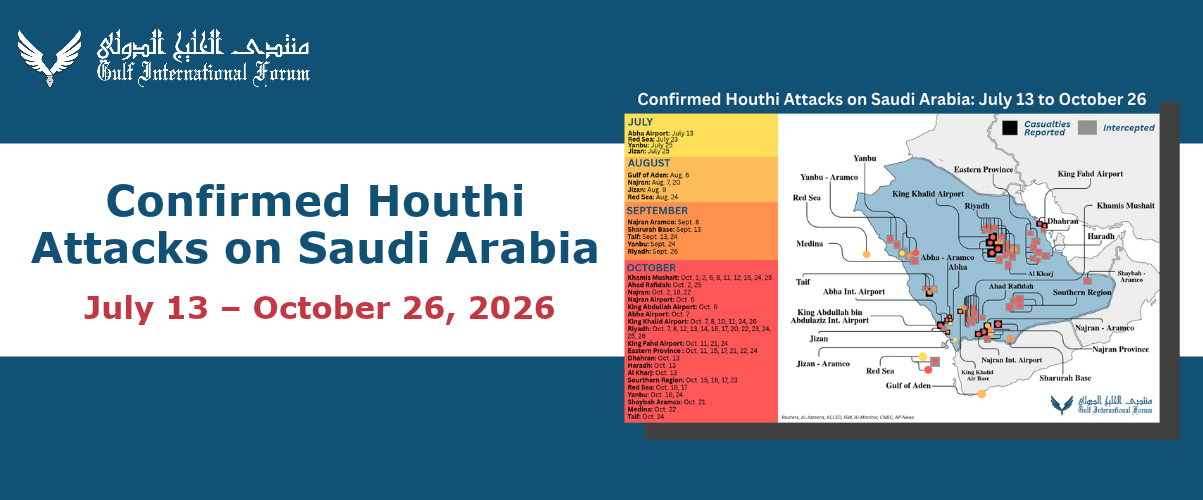
Confirmed Houthi Attacks on Saudi Arabia: July 13 to October 26
October 28, 2026
Toward a New Order in MENA Regional Geopolitics
September 2, 2026This report is a byproduct of the workshop “Toward a New Order in MENA Regional Geopolitics: What’s Next for the Region’s Geopolitical Equilibrium?,” hosted in…
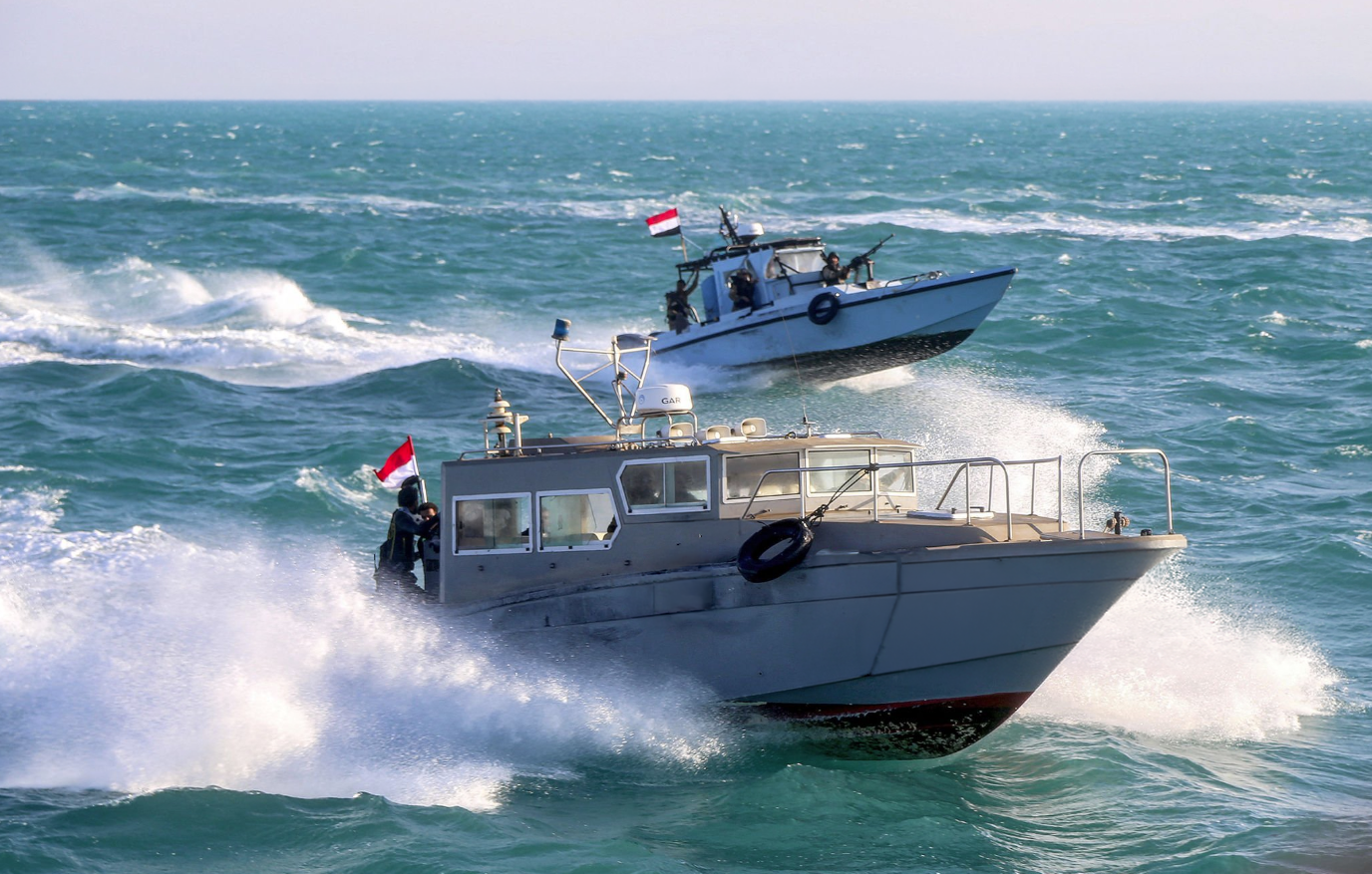
Yemen’s Emerging Role in the Red Sea
August 27, 2026On August 4, 2026, the Yemeni Coast Guard (YCG) rescued the 14-member crew of the Indian-flagged commercial vessel Faize Noore Oliya. Transiting the Red Sea…