The War in the Gulf and the Reconfiguration of Regional Security
The war is exposing deep divisions in the Gulf while simultaneously accelerating the push toward greater regional coordination.

The U.S.–Israeli war with Iran is not only reshaping regional dynamics but also forcing a re-evaluation of the region’s political and institutional order. More consequential than its immediate geopolitical and economic effects is how Gulf states are recalibrating their own security and cooperation frameworks. The conflict has produced a dual dynamic: deepening short-term divisions between deterrence- and diplomacy-oriented camps, while accelerating a longer-term shift toward greater regional institutionalization amid declining reliance on external security guarantees.
Triggered on February 28 by “Operation Epic Fury,” the ongoing conflict has exposed divisions in the Gulf Cooperation Council (GCC) while amplifying calls for a more cohesive regional framework. Despite reported damage to Iran’s capabilities, escalation persists, with retaliatory attacks on Gulf civilian and energy infrastructure widening regional instability.
A Structural Shock to Gulf Security Doctrine
For decades, Gulf states pursued calibrated hedging, balancing deterrence with dialogue, as reflected in initiatives such as the 2023 Saudi–Iran rapprochement and Qatar’s sustained engagement with Iran. The war has disrupted this model. Gulf neutrality has not been sufficient to prevent Iranian retaliation, including missile and drone strikes previously demonstrated in attacks on Gulf infrastructure such as the 2019 Abqaiq strikes. These attacks have underscored the vulnerability of critical assets while heightening risks to maritime security in the Strait of Hormuz and the Gulf of Oman.
Gulf states hosting U.S. installations, including Al Udeid Air Base in Qatar and naval facilities in Bahrain, are viewed by the Iranian regime as structurally embedded in the conflict. Tehran’s perspective was showcasing that even states prioritizing diplomacy remain vulnerable to their aggression. The result is pushing Gulf security doctrine away from avoidance toward risk management under conditions of persistent exposure.
Deterrence versus Diplomacy
Prior to the war, Gulf states urged the United States to avoid military action against Iran, warning of severe regional consequences. Even after the outbreak of conflict, the GCC continued to call for de-escalation. However, Iran’s targeting of the Gulf states under the pretext of striking “U.S. interests” has compelled the GCC states to reassess their diplomatic posture toward a regime now projecting sustained missile threats across the region.
The war’s continued escalation has sharpened a longstanding Gulf divide. Saudi Arabia and the United Arab Emirates (UAE) have increasingly emphasized deterrence, drawing on past confrontations with Iran and its proxies, including Houthi missile attacks, prioritizing strengthened defense capabilities and credible response signaling. In contrast, Qatar and Oman prioritize diplomacy. Oman facilitates U.S.–Iran backchannels, while Qatar acts as a regional mediator. Both countries emphasize dialogue to contain spillover, even as Saudi and Emirati officials signal potential stronger defensive coordination as a result of continued Iranian threats.
Despite their differences, convergence is emerging in threat perception. The expansion of missile ranges, cyber capabilities, and maritime disruptions means that no Gulf state is immune from escalation. This creates a shared strategic reality: while approaches differ, vulnerability is collective.
Converging Pressures of Israeli and Iranian Ambitions
While external security guarantees face limits, a deeper vulnerability lies in clashing regional ambitions. U.S. military presence has long underpinned Gulf deterrence, but the limited response to the 2019 Abqaiq attacks has since cast doubt on the reliability of that commitment. The current conflict deepens this dilemma: hosting U.S. assets offers protection but also increases exposure to retaliation, prompting reassessment of dependence on Washington.
At the same time, a multipolar environment is reshaping Gulf strategic calculations. Iran’s reach across Iraq and Yemen, alongside Israel’s operations in the Levant and Turkey’s growing regional influence, complicates Gulf security planning. These shifts are driving partnership diversification with China, India, and European actors, even as the immediate focus remains on the war in the Gulf.
Iran and Israel’s expansionist ambitions have further reshaped the Gulf security landscape. While threat perceptions have long centered on Iran’s proxy networks, recent missile and drone escalations have exposed deeper vulnerabilities: over-reliance on U.S. guarantees and intra-GCC divisions. Iran projects influence through its “Axis of Resistance,” enabling power projection across the region while avoiding direct confrontation. The Abraham Accords, which normalized Emirati and Bahraini ties with Israel, have further inflamed this rivalry, which Tehran counters through proxy-based deterrence.
As the rivalry spills into the Gulf, Iran’s proxy networks and Israel’s preemptive posture heighten escalation risks and expose the limits of fragmented Gulf responses. Divisions between deterrence- and diplomacy-oriented GCC states constrain collective action, reinforcing the case for a more unified regional framework.
A New Gulf Political Order
The war is accelerating a shift in Gulf political thinking, exposing the limits of misaligned strategies and reliance on external security guarantees. While enabling economic cooperation and some security coordination, the GCC has struggled to present a unified front during major crises. This was most evident during the 2017–2021 Gulf rift, which fractured intra-GCC relations and allowed Iran to deepen economic and logistical ties with Qatar amid the blockade. The current war has revived calls for deeper institutional integration, with emerging unified defense initiatives reflecting recognition of interconnected Gulf security. However, progress remains constrained by the deterrence-diplomacy divide, requiring hybrid frameworks that combine defense coordination with institutionalized diplomacy.
In light of these dynamics, Gulf policymakers are increasingly confronting the need to rethink regional security and institutional coordination. This includes accelerating efforts toward a more unified Gulf security architecture, particularly through the development of unified air and missile defense systems built on existing joint military exercises. Recent attacks have underscored the need for coordinated defense against cross-border threats.
At the institutional level, this also requires strengthening and further institutionalizing the GCC. Reform efforts need to include binding crisis coordination mechanisms and joint response frameworks capable of enabling collective action during periods of escalation.
The conflict with Iran constitutes both a crisis and a catalyst for transformation in the Gulf. While it has exposed short-term divisions, it has underscored the limits of fragmented responses to transnational threats. The conflict also highlights how Gulf security is increasingly shaped by external dynamics, particularly the intersecting agendas of Iran and Israel. Iran’s proxy networks and missile capabilities, alongside Israel’s preemptive posture, have extended confrontation into the Gulf, placing GCC states at risk of entanglement in escalation cycles.
Over time, these pressures may accelerate a more cohesive Gulf political order rooted in collective security. Such an outcome, however, depends on institutionalizing internal differences within an adaptive framework that integrates defense coordination, aligns strategic doctrine, and balances deterrence with diplomacy. Absent this, the GCC risks remaining reactive in an increasingly complex, multipolar landscape.
The views and opinions expressed in this article are those of the authors and do not necessarily reflect the views of Gulf International Forum.
Issue: Defense & Security, Geopolitics
Country: GCC
Dr. Zeidon Alkinani is a Middle East political analyst and Founding Director of the Arab Perspectives Institute. Former Lecturer at Georgetown University in Qatar and the University of Aberdeen. He holds a PhD in Politics and International Relations from the University of Aberdeen and leads strategic initiatives in Qatar’s educational non-profit sector. He is A regular commentator and contributor to prominent regional and international outlets, and a frequent panelist at academic and policy conferences. Dr. Alkinani is the author of a forthcoming Routledge book on ingroup rivalries in consociational democracies, with a focus on post-2003 Iraq.
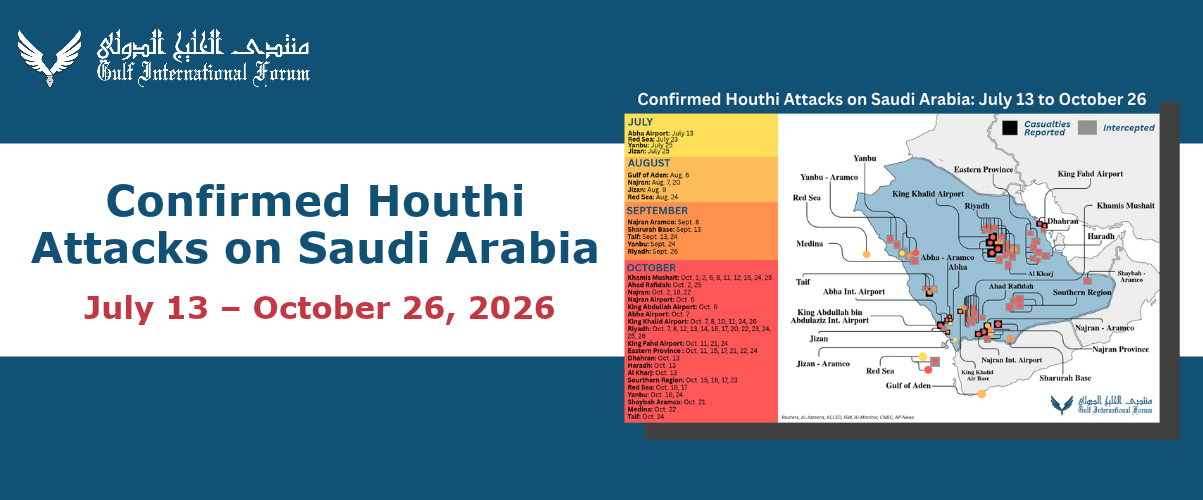
Confirmed Houthi Attacks on Saudi Arabia: July 13 to October 26
October 28, 2026
Toward a New Order in MENA Regional Geopolitics
September 2, 2026This report is a byproduct of the workshop “Toward a New Order in MENA Regional Geopolitics: What’s Next for the Region’s Geopolitical Equilibrium?,” hosted in…
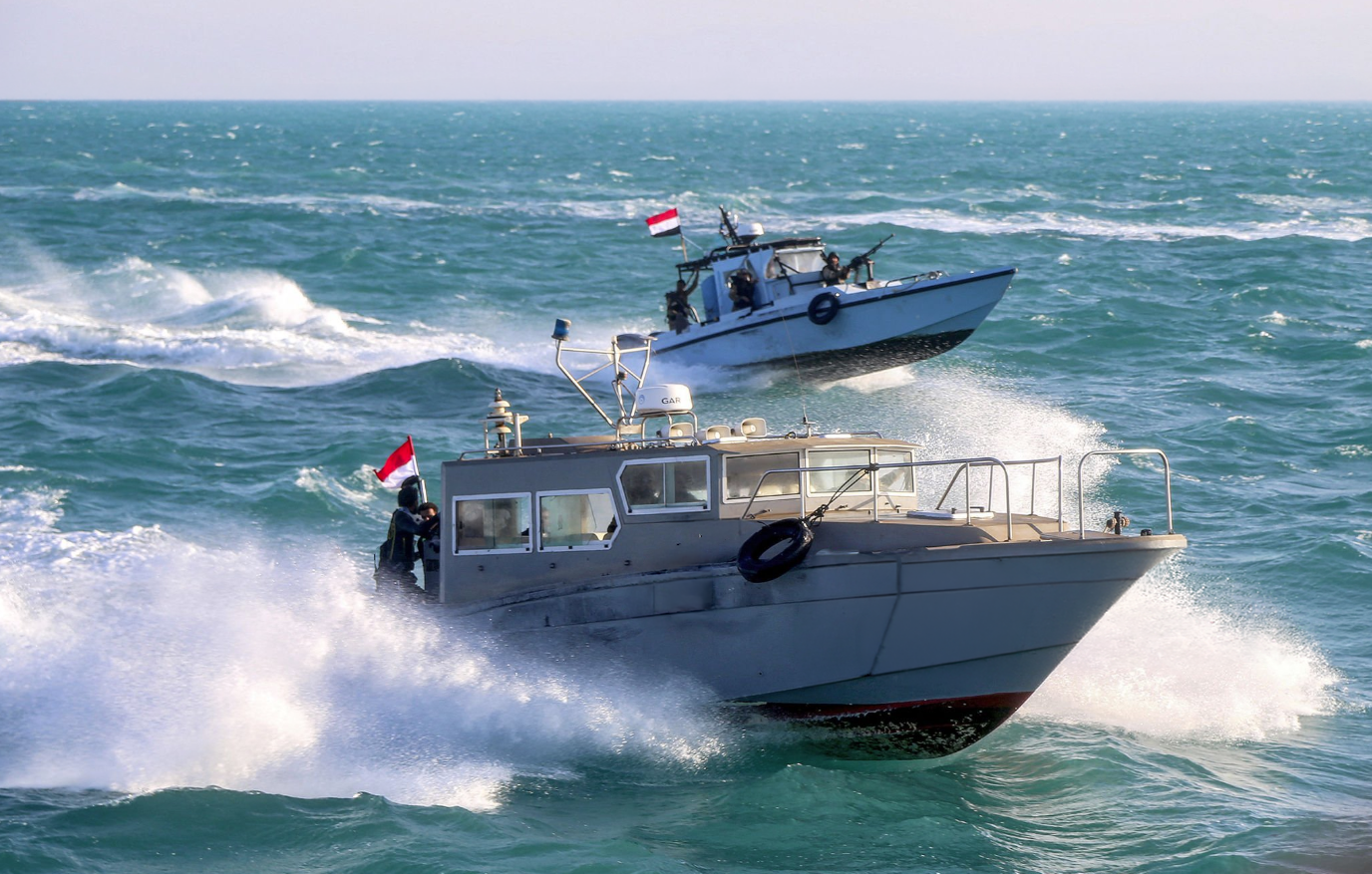
Yemen’s Emerging Role in the Red Sea
August 27, 2026On August 4, 2026, the Yemeni Coast Guard (YCG) rescued the 14-member crew of the Indian-flagged commercial vessel Faize Noore Oliya. Transiting the Red Sea…