The West’s Houthi Policy is Rudderless in the Red Sea
U.S.-UK military interventions against the Houthis in Yemen, while intended to deter attacks on maritime vessels, have failed and instead strengthened the group. This approach has proven costly and counterproductive, undermining broader regional priorities and U.S. foreign policy objectives.

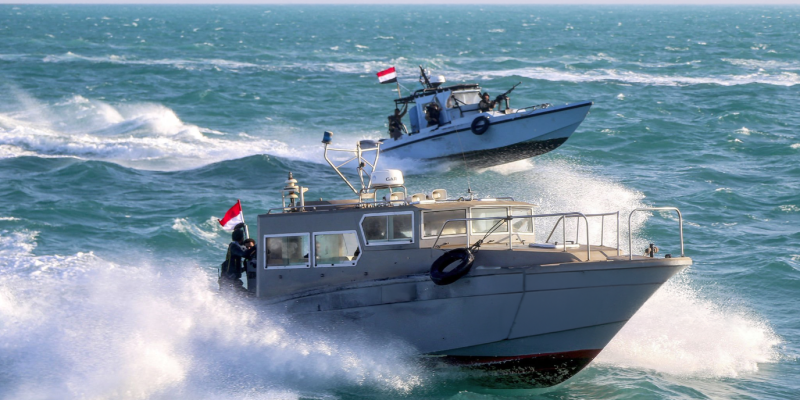
Since the onset of the Houthis’ missile launches against commercial shipping in the Red Sea, the United States and the United Kingdom have conducted dozens of attacks against the group for more than two months without achieving notable success. Instead, the Yemeni rebels continue to target international maritime vessels transiting the Red Sea while threatening to expand the conflict across the Middle East. Unfortunately, this expected result stems from the Western coalition’s seeming inability to recognize the limitations of a military approach—one that has simply empowered the Houthis in a highly visible confrontation connected to the broader Israel-Hamas war.
In this context of the situation in Yemen, many foreign policy hawks continue to advocate for ever-stronger kinetic action against both the Houthis and their Iranian allies. This thinking is mistaken. Escalating the battle against the Houthis further risks a regional conflict and would do little to seriously impede their operations or mitigate the threat they pose to international trade. Rather than wade deeper into this morass, Western officials should recognize how violence around Yemen harms their regional priorities. Recent history demonstrates that there is little room for undue risk in America’s Yemen policy.
The Houthi Hydra
Amid expanding Houthi strikes and escalating rhetoric now targeted at regional states like Saudi Arabia, the Western strategy is clearly flailing. The Houthis have launched over 90 attacks against international shipping since November 19, as well as multiple attempted strikes on the Israeli city of Eilat. The group utilizes relatively cheap technology, but exacts a high cost on its adversaries in the Red Sea: its drones are thought to cost a few hundred dollars each, while the only consistently reliable countermeasures in the U.S. Navy’s arsenal are multimillion-dollar precision weapons. As the Western intervention in the Red Sea continues, the asymmetric price tag for the United States and its coalition partners will only increase.
Meanwhile, the Houthis have gradually expanded the targets of their attacks. Originally claiming to only target Israel-owned ships and other maritime traffic headed for the country out of solidarity with the Palestinian cause, the group began targeting American and British ships in the Red Sea on January 27. These strikes have become increasingly deadly, killing three sailors on March 6 and sinking the British-owned MV Rubymar on February 18. Now, the Houthis are reportedly considering striking targets in the Indian Ocean, which would mark a drastic expansion of the conflict’s theater of operations.
The top U.S. Navy commander in charge of Operation Prosperity Guardian, Rear Admiral George Wikoff, noted this problem in a February 26 interview. Wikoff observed that the rebel group “has not been deterred” and were “continuing their terrorist activities despite our actions.” Rather than evaluate the causes of the U.S. failure, Wikoff simply proposed asking the United States Congress for additional funding—effectively suggesting that the initial failure could be resolved with money and time, and if success remained elusive, more money and more time would be required. This circular approach has a long precedent in U.S. military history, and was practiced unsuccessfully in Vietnam, Afghanistan, and Iraq; there is little reason to suspect that the outcome will be different in Yemen. The Houthis understand that the United States and the United Kingdom have little interest in waging a prolonged war in Yemen against a popular enemy. The Saudi-led coalition’s bombing campaign killed at least 24,000 people between 2015 and 2022, but it reinforced the legitimacy of the Houthis among some Yemenis in the process—and, moreover, did grave damage to Saudi Arabia’s international reputation, creating a headache for then-Defense Minister Mohammed bin Salman (MBS) even as he rose to become the country’s de facto leader. Riyadh has now embarked on peace negotiations in Yemen, attempting to secure a lasting settlement to the conflict. In an ironic twist, the Saudis have flatly refused to join the U.S.-led coalition’s ongoing bombing campaign, reasoning that further violence can do little to change the Houthis’ behavior for the better.
The Houthis learned several key lessons from Saudi Arabia’s bombing campaign. Throughout it, the Saudi-led coalition had decisive air superiority and possessed expensive precision weapons systems with which the Houthis could not hope to compete. Though the Houthis suffered greatly in the conflict’s early stages, the group began disbursing assets across Yemen—regularly moving fighters, weapons, and supplies to avoid major losses and buy time. Indeed, the Houthis understood then, as they do now, that the group can achieve victory by merely surviving and maintaining its hard and soft power superiority over other Yemeni factions. The U.S.-led effort today lacks the capability to completely eliminate the Houthis, and every bomb dropped in Yemen only strengthens the rebels’ popular appeal.
When Force Doesn’t Work
Still, the West’s knee-jerk desire to “do something” underpins the current U.S.-UK strategy and is Washington’s standard approach to global issues, however futile. In the quest to achieve “deterrence” and maintain “credibility,” any action is preferable to inaction, regardless of its effectiveness. President Joe Biden made this point clear in a highly contradictory statement to the press in January, claiming, “Are [U.S. strikes] stopping the Houthis? No. Are they going to continue? Yes.”
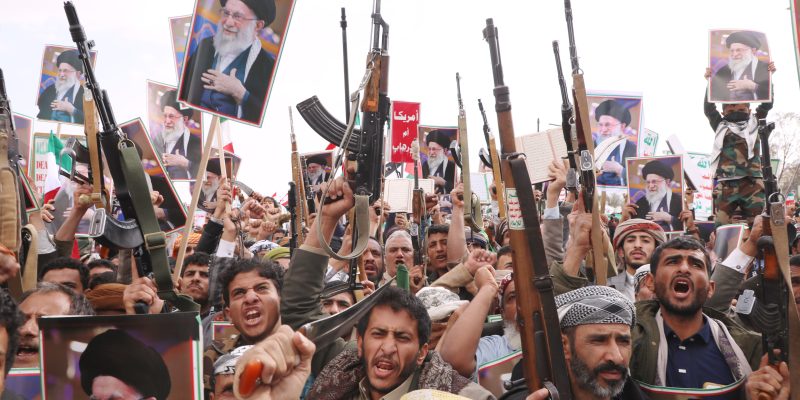
But failing to rein in the Houthis does nothing to support either deterrence or credibility. Officials in Washington sheepishly admit that they do not expect airstrikes to fully deter the Houthis, deflecting concern about the U.S. approach by claiming that the American response is “multifaceted.” Indeed, in January, the State Department added the Houthis to the Specially Designated Global Terrorist (SDGT) list, and the Treasury Department has imposed further sanctions against its financial networks. Still, the United States’ overall strategy clearly remains over-reliant on military power. Indeed, the coalition’s failures continue to empower the Houthis, who are leveraging the Israel-Hamas war to demonstrate solidarity with Palestine and bolster their image as a defender of the Arab world against “Western imperialism.” The group’s true intentions are irrelevant; their approach is clearly working, both in Yemen and abroad, as the group aims to distract from its brutal blood-and-soil despotism and economic failings that cast doubt on its viability as the sole ruler of Yemen.
Thus, Western intervention against the Houthis contradicts the U.S. government’s stated policy and is inherently self-defeating, simultaneously harming other interests in the region. Entering the presidency, one of Biden’s main foreign policy objectives for the Middle East was to end the war in Yemen, which cannot happen as long as the Houthis and the U.S.-UK coalition continue to exchange fire. The fighting also complicates long-running American efforts to de-escalate tension with Iran and prevent it from obtaining a nuclear weapon. Moreover, the Red Sea front has caused severe disruptions to international trade and humanitarian aid flows, a key component of U.S. soft power. Finally, hostilities with the Houthis will increasingly threaten the group’s peace talks with Saudi Arabia, undermining another U.S. foreign policy objective in the Gulf.
No Easy Answers
Against this gloomy backdrop, there are admittedly few attractive policy options. The reality of the situation is stark: the Houthis are a hostile armed group committed to violence to achieve their political goals, while the U.S.-UK coalition has invested far too much to simply withdraw without losing face. While disengagement seems the wiser option, Western leaders have demonstrated an extreme reluctance to make difficult policy choices in the Middle East since October 7, opting for insufficient but politically safe actions that have contributed to the current crisis.
As such, it is difficult to see any window for de-escalation. As long as the Houthis do not fear elimination at the hands of the West, they hold the upper hand in the escalation cycle. The rebels can effectively exact pain on the United States and Israel at little to no risk to their survival in Yemen, and there is no reason for them not to continue this approach if doing so increases their credibility and popularity within Yemen and the wider Arab world.
Diplomacy between the West and the Houthis is not a realistic alternative at present either. Russia and China recently engaged in secret talks with the Houthis to secure safety for their ships traversing the Red Sea and surrounding areas—an understandable effort and smart maneuvering. Even these agreements fell through, however, after the Houthis hit a Chinese ship on March 23. This incident highlights the rudimentary targeting mechanisms available to the Houthis and the risk for unintentional escalation in the future.
That reality may prove to be the most problematic as the fighting builds. Western leaders should take Houthi threats seriously, as the militants clearly have the capacity to cause serious harm on a broader scale, even and especially by accident. The group’s aim is clearly to cause chaos and prolong the crisis in the Middle East to its benefit—an option afforded to them given ongoing fighting in Gaza. This complex, fluid, and precarious situation exemplifies the pitfalls facing policymakers across the Middle East today.
The views and opinions expressed in this article are those of the authors and do not necessarily reflect the views of Gulf International Forum.
Issue: U.S. – Gulf Policy
Country: Yemen

Alexander Langlois is Senior Editor of DAWN’s Democracy in Exile journal and a foreign policy analyst focused on the Middle East and North Africa.

Toward a New Order in MENA Regional Geopolitics
September 2, 2026This report is a byproduct of the workshop “Toward a New Order in MENA Regional Geopolitics: What’s Next for the Region’s Geopolitical Equilibrium?,” hosted in…

The Geopolitics of the U.S.–Saudi Nuclear Deal
August 18, 2026In late July, the Trump administration announced a landmark civil nuclear cooperation agreement with Saudi Arabia. Signed in accordance with Section 123 of the Atomic…
Turkey’s F-35 Return and Saudi Arabia’s Fighter Ambitions
August 7, 2026Turkey’s renewed push to rejoin the F-35 Joint Strike Fighter program, from which it was expelled in 2019 over its acquisition of Russian S-400 air…