The World Misunderstands the India–UAE Relationship
The India-UAE partnership is expanding rapidly, but its foundation is geoeconomic rather than geopolitical, reflecting New Delhi’s determination to preserve flexibility in an increasingly fragmented Gulf order.

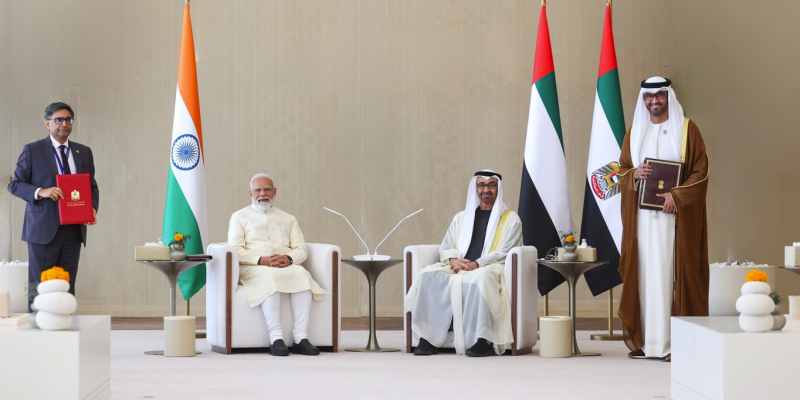
On May 15, India and the United Arab Emirates (UAE) signed several key defense, energy, and shipping agreements during Indian Prime Minister Narendra Modi’s brief visit to Abu Dhabi. The agreements included a long-awaited bilateral Strategic Defense Partnership framework agreement. Coming amid rapid growth in bilateral trade, years of deepening engagement, and the launch of the now-stagnant I2U2 format, the agreement further solidified the special Indo–Emirati relationship.
Crucially, the May agreements, particularly the defense framework, reinforced the impression that India and the UAE have established an alliance. To many, such an alliance means that New Delhi has officially taken Abu Dhabi’s side against Riyadh in their budding competition for influence in the Middle East. In this view, the alleged alliance between the two nations is spearheading the formation of a regional India–UAE–Israel block that seeks to counter the emerging Saudi–Pakistan–Turkey axis and reshape the region’s geopolitical landscape.
Compelling though it might seem at first glance, this interpretation is based on a profound misunderstanding of the India–UAE relationship and the May agreements. It mistakes the special economic partnership between them for a military-strategic alignment. In reality, the agreements signify neither an Indo–Emirati alliance nor the beginning of a broader Indian alignment with Abu Dhabi against Riyadh. There are three reasons for this conclusion.
A Defense Cooperation Agreement, Not a Military Alliance
First, the India–UAE Strategic Defense Partnership framework agreement is merely a defense cooperation arrangement and falls well short of a mutual defense treaty. In stark contrast to last year’s Saudi–Pakistan defense agreement, the Indo–Emirati framework does not state that an attack on one side constitutes an attack on both, and therefore does not commit either side to intervene militarily. Instead, the New Delhi–Abu Dhabi agreement seeks to expand “defense industrial collaboration and cooperation on innovation and advanced technology, training, exercises, maritime security, cyber defense, secure communications, and information exchange.” This is hardly the basis for a concrete NATO-like security commitment in one of the world’s most conflict-prone regions.
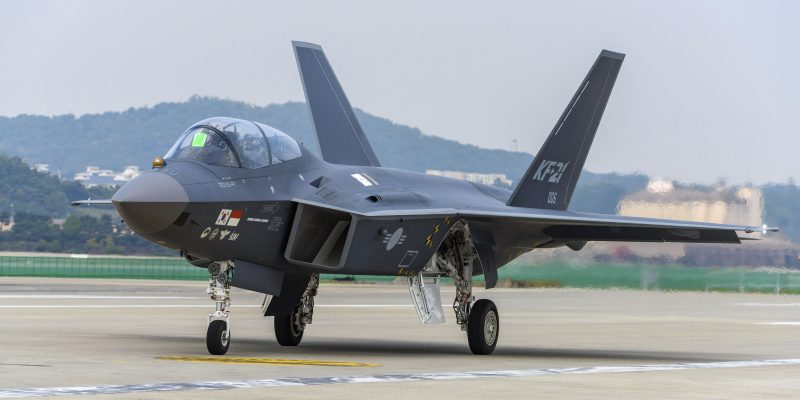
The agreement’s most important deliverables are enabling Indian defense exports to the UAE, potentially including the Akash missile system, BrahMos missiles, and LCA Tejas fighter aircraft, as well as promoting defense co-development and co-production. Significantly, unlike the Riyadh–Islamabad defense relationship, there is no provision for Indian troops to be stationed in the UAE, reducing the likelihood that India will be dragged directly into a Gulf conflict. India’s core security interests are ultimately not in the Gulf but in South Asia, where it faces the formidable dual challenge of Pakistan and China. Even amid the current energy crisis, New Delhi has incentives to avoid military entanglements in the perennially unstable Middle East.
Energy Ties Take Precedence
Second, the India–UAE relationship is focused primarily on economics and energy rather than military or political alignment. The cornerstone of this relationship is the 2022 Comprehensive Economic Partnership Agreement (CEPA), which increased bilateral non-oil trade by 65 percent and boosted overall trade to $100 billion, with a target of $200 billion by 2032. Similarly, the May agreements centered on investment, including an Emirati pledge of $5 billion to India, and on energy security, such as Emirati assistance in expanding India’s strategic oil reserve and developing a strategic gas reserve.
Modi’s May 15 visit to Abu Dhabi included an Indian condemnation of attacks on the UAE and insistence on the opening of the Strait of Hormuz and peace in the Gulf. However, the visit did not produce major diplomatic or military initiatives, nor did it articulate a shared strategic vision. Tellingly, New Delhi also refrained from endorsing the UAE’s hardline position on Iran. Instead, amid the gravest military crisis in the Gulf in a generation, the leaders of India and the UAE focused on expanding strategic oil and gas reserves and increasing investment in AI and digital infrastructure. This speaks volumes about the economic depth of the India–UAE relationship compared to its relatively limited security dimension.
India Will Not Pick Sides in the Gulf
Third, Indian policy in the Gulf has consistently sought to balance among major regional actors through New Delhi’s principle of multi-alignment. Rooted in India’s tradition of strategic autonomy, multi-alignment involves engaging with all major powers without formally aligning with any of them, while still allowing temporary tilts toward one power when circumstances require it. This approach preserves New Delhi’s strategic flexibility and maximizes its room for maneuver. In the Middle East, this approach has enabled India to maintain working relations with all major actors, including Iran, the UAE, Qatar, Saudi Arabia, and Israel, while avoiding direct involvement in their rivalries. Although the current Iran war has challenged this approach, India has so far managed to preserve it, tilting toward Israel and the UAE while still seeking to maintain a working relationship with Iran.
For this reason, a full Indian alignment with the UAE, and potentially with Israel, would carry significant costs. It would alienate both Saudi Arabia and Iran while stirring tensions in India’s relations with other Middle Eastern states. Moreover, open alignment with Abu Dhabi would only deepen Saudi Arabia’s desire to decisively back Pakistan against India, a development clearly contrary to New Delhi’s interests. If such a scenario were ever to materialize, it would represent a major setback for Indian foreign policy, which has gradually weakened the Gulf’s traditionally strong support for Islamabad and helped de-hyphenate India and Pakistan.
Antagonizing Riyadh would also affect the fortunes of the 2.7 million Indians living in Saudi Arabia and strain relations with one of India’s most important energy suppliers. At present, India does not need to make such a costly alignment with Abu Dhabi and will likely avoid choosing between Saudi Arabia and the UAE for as long as possible. National Security Advisor Ajit Doval’s consecutive visits to Riyadh and Abu Dhabi in April exemplified this balancing approach.
Taken together, the New Delhi–Abu Dhabi relationship is not an alliance, and India is not aligned with the UAE against Saudi Arabia. This carries several implications for the geopolitics of the Gulf and the wider Middle East. Most importantly, it means that viewing the region through the prism of competing UAE-led and Saudi-led blocs is an oversimplification. The reality is far more fluid and complex, as attested not only by the hedging policies of UAE-friendly India but also by those of Saudi-leaning Turkey. Moreover, it is fair to conclude that India’s role in the Gulf remains primarily geoeconomic rather than geostrategic, despite the vulnerability of New Delhi’s shipping routes exposed by the current energy crisis.
At the same time, India’s avoidance of alignments in the Gulf should not obscure the strategic consequences of its growing UAE tilt. That tilt undeniably expands Abu Dhabi’s strategic and economic space at a time when Emirati leadership faces pressure from both Riyadh and Tehran, alongside the broader instability from the Iran war. The development is therefore not meaningless. Yet it remains a far cry from a formal alliance.
The views and opinions expressed in this article are those of the authors and do not necessarily reflect the views of Gulf International Forum.
Issue: Geopolitics
Country: UAE

Dr. Ivan Lidarev is Research Fellow at the Institute of South Asian Studies (ISAS), National University of Singapore (NUS) and a Visiting Lecturer at the Centre for Eastern Languages and Studies, Sofia University “St. Kliment Ohridski.” He is an expert in Asian security and the international relations of China and India, particularly their bilateral relationship. Dr. Lidarev obtained his PhD in International Relations and Political Science from King’s College London in 2021 with a dissertation on the China-India territorial dispute. He received his MA in International Affairs with a concentration on Asia from Elliott School of International Affairs, George Washington University, and his BA in History, Asian Studies, and Global and International Studies from Bard College. He also had a brief stint at Shanghai’s Fudan University. Dr. Lidarev boasts rich think tank experience, having held visiting fellowships at the Observer Research Foundation (ORF), India; Institute of International Relations (IIR Prague), Czechia; and LSE IDEAS at the London School of Economics and Political Science, the United Kingdom (UK). He also served as advisor at Bulgaria’s National Assembly (2014-2017), Graduate Teaching Assistant at the Defence Academy of the UK (2018-2019) and Associate Features Editor of E-International Relations (2015-2016).

Beyond Hormuz: Why Balochistan Matters to Gulf Energy Security
October 21, 2026A conflict long treated as peripheral to Gulf security is becoming harder to ignore as the war with Iran puts pressure on the region’s maritime…
Should Syria and Qatar Join the Mecca Pact?
October 9, 2026Three years of cascading conflict have fundamentally transformed the Middle East’s security outlook. American weapons, military deployments, and security guarantees remain central to the region….

China’s Technology Development Push Meets Gulf Diversification
October 6, 2026China’s “new quality productive forces” (NQPF) are often understood as a domestic effort to revive growth, upgrade industry, and reduce dependence on Western technology. Yet…