The Yemeni Front of the War: The Houthi Wild Card
The Houthis have yet to enter the expanding regional war, but their ability to disrupt shipping, strike Gulf energy infrastructure, and pressure regional rivals makes them the conflict’s most unpredictable actor.

Following U.S. and Israeli strikes on the Islamic Republic of Iran, the Middle East has entered a new phase of escalation, marking the first direct military confrontation between states on opposite sides of the Strait of Hormuz. Tehran has responded with strikes on Gulf capitals, targeting civilian and energy infrastructure. At the same time, Iran’s proxy in Lebanon, Hezbollah, entered the fray with missile barrages against Israel following the killing of Ayatollah Ali Khamenei, prompting significant Israeli strikes in southern Lebanon.
Yet one key member of Iran’s so-called “Axis of Resistance” has remained noticeably absent from the conflict: the Houthis. Despite condemning U.S. and Israeli attacks and expressing solidarity with Iran, the Yemeni movement has so far refrained from direct military involvement. Whether the Houthis enter the conflict or remain on the sidelines will likely carry significant consequences for Yemen, Iran, and the Gulf’s regional security architecture.
Houthi Calculations
The central question today is how the Houthis will respond to the escalating regional conflict. Unlike their rapid military response after October 7, the group has yet to provide any direct military support to Iran. In a televised address on March 5, the movement’s leader, Abdulmalik al-Houthi, warned that “our fingers are on the trigger at any moment should developments warrant it,” leaving open the possibility of military intervention. He further framed the conflict as extending beyond any single country, describing it as “a battle for the entire Muslim nation.” However, these threats have yet to translate into any action that would change the conflict’s dynamics.
In the same speech, al-Houthi described states hosting U.S. military bases as “pro-Zionist regimes.” He argued that the governments of the Gulf states dedicate their political and military resources to protecting U.S. and Israeli military bases, which he stated play a direct role in attacks against Iran. Such rhetoric appears intended to construct an ideological framework that could justify treating Gulf states as military targets.
The Houthis’ response could therefore carry significant regional consequences. As Maysaa Shuja Al-Deen acknowledges, given the military, economic, and political investment Iran has made in the movement since the 1980s, it is reasonable for Tehran to expect some form of support during a major crisis. At the same time, the Houthis do not want to appear completely subordinate to Iran. While emphasizing a discourse of national independence, they also maintain a strategic position within what remains of Iran’s “Axis of Resistance.” With Hezbollah and Hamas facing mounting military and political pressure, the Houthis are increasingly viewed as a “wild card” within this alliance.
Paths to Houthi Intervention
If the Houthis launch limited or tactical attacks in support of Iran, it may provide Tehran with a certain degree of political and military leverage, but the Houthis would be unlikely to achieve a level of military success capable of deterring Israel or the United States. Any potential intervention by the Houthis would therefore likely be a more tactical role that would raise the cost of the intervention for the United States.
The Houthis could exert economic pressure on Washington and Tel Aviv by attacking international shipping in the Red Sea, further exacerbating the global energy crisis. With Tehran effectively closing the Strait of Hormuz, oil shipments through the Bab al-Mandab Strait have surged as Gulf exporters compensate for reduced flows. Disrupting shipping through the Bab al-Mandab Strait would further strain global trade and drive energy prices even higher, increasing political pressure on the U.S. administration to seek a resolution to the conflict.
The Houthis could also carry out attacks on Saudi oil facilities, as they have done several times before, or potentially target other Gulf states depending on their missile capabilities. In such a scenario, Gulf air defense systems could face simultaneous threats from multiple directions, a challenge these countries have limited experience countering. Energy infrastructure and civilian facilities could also become particularly vulnerable in a wider regional confrontation.
Costs of Escalation
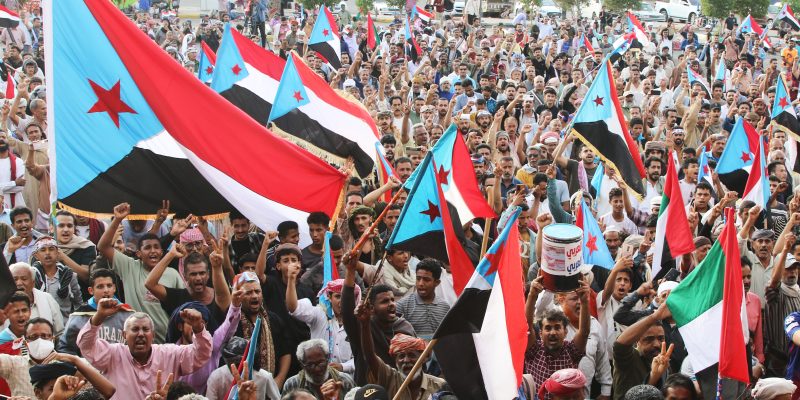
However, Houthi involvement in the conflict could carry significant political risks, both for Yemen and the broader Gulf region. Following developments in Yemen in December 2025, the United Arab Emirates (UAE) reduced its military presence in the country, shifting the balance of power in the country and allowing Saudi Arabia to emerge as the primary external actor. Direct Houthi attacks against Gulf countries could destabilize the fragile diplomatic balance in Yemeni politics and weaken the Houthis’ internal position. Over the past three years, the movement has established a limited dialogue with Saudi Arabia, and despite ongoing tensions, Riyadh has increasingly treated the group as a recognized political actor in Yemen. The recent UAE withdrawal and the corresponding weakening of Abu Dhabi’s partners, such as the Southern Transitional Council, have left the Houthis as a key interlocutor for Saudi Arabia. If the Houthis were to attack GCC states on behalf of Iran, they would risk undermining the political gains and limited recognition they have achieved in their relations with the Gulf so far.
Simultaneously, Houthi involvement in the war could once again turn its territories into direct military targets for Israel and the United States. During Israeli strikes on Sana’a in October 2025, several senior military officials were killed, including Houthi Chief of Staff Mohammed Abdulkarim al-Ghamari and Prime Minister Ahmed al-Rahavi. To prevent similar losses, the Houthis reportedly evacuated some key infrastructure in Sanaa. As Nadwa Dawsari explains, “this may indicate the group is about to join the fight in support of Iran while trying to minimize damage from potential U.S. or Israeli retaliatory strikes.”
It is also plausible that the Houthis will view any intervention on Iran’s behalf as strategically disadvantageous and instead seek to hedge their position by avoiding regional escalation. Similar to Syria’s Hay’at Tahrir al-Sham, the Houthis could attempt to prioritize domestic consolidation and pursue greater regional recognition by presenting themselves as a primarily national actor rather than a transitional resistance movement.
Overall, direct Houthi involvement in the conflict could jeopardize the diplomatic progress the group has made with Gulf states in recent months, as well as the relatively cautious approach the United States has recently adopted toward Yemen. The choices the Houthis make in the coming period will shape not only Yemen’s internal balance but also broader Gulf security dynamics and Iran’s regional strategy.
The views and opinions expressed in this article are those of the authors and do not necessarily reflect the views of Gulf International Forum.
Issue: Geopolitics
Country: Yemen

Dr. Betul Dogan Akkas is a researcher of the Arab Gulf States. She holds a PhD in government and international affairs from Durham University. In her research, she examines foreign policy, security strategies, and political culture in the GCC states. Dogan-Akkas also covers the involvement of the GCC states in the Yemen war and Turkiye-GCC relations.

China’s Technology Development Push Meets Gulf Diversification
October 6, 2026China’s “new quality productive forces” (NQPF) are often understood as a domestic effort to revive growth, upgrade industry, and reduce dependence on Western technology. Yet…

Riyadh Shifts Toward Minilateralism as Regional Threats Mount
September 9, 2026Saudi Arabia’s signing of the Mecca Joint Defense Agreement with Türkiye and Pakistan on August 7 marks a crucial development in the evolution of the…

Toward a New Order in MENA Regional Geopolitics
September 2, 2026This report is a byproduct of the workshop “Toward a New Order in MENA Regional Geopolitics: What’s Next for the Region’s Geopolitical Equilibrium?,” hosted in…