Turkey and Saudi Arabia: Steering Syria’s Future Together

In long-distance travel, having two drivers can make the journey more manageable. Similarly, Turkey and Saudi Arabia are stepping into this role for Syria, effectively sharing the responsibilities to help the new Syria navigate its path to stability. However, the road ahead is not without challenges. Yet, Turkey and Saudi Arabia, having learned lessons from the past, are better prepared to avoid the holes in the road that lie ahead.
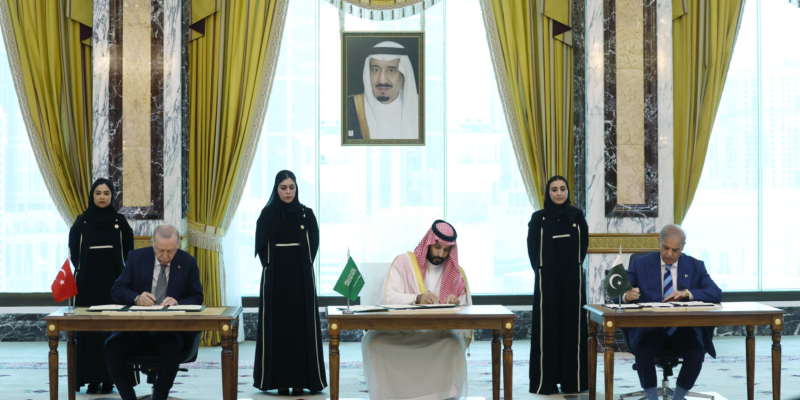
The collapse of Bashar al-Assad’s regime in Syria, a black swan event, proved to be a game-changer for both Turkey and Saudi Arabia. Syria’s interim leader Ahmad al-Sharaa made his first official visits to Saudi Arabia and Turkey, in order to highlight the importance of the role played by these two countries in Syria’s engagement with the international community. The diplomatic traffic for Syria is further reflected by the meetings of Turkish and Saudi foreign ministers. Hakan Fidan visited Saudi Arabia immediately after Faisal bin Farhan Al-Saud’s first official trip to Damascus since the fall of the regime. President Recep Tayyip Erdoğan is also reportedly set to visit Saudi Arabia in March, where he is expected to finalize a $6 billion defense deal between two countries.
Not a Repeat of Post-Saddam Iraq
Turkey and Saudi Arabia are determined to avoid a repeat of the post-Saddam Iraq scenario in Syria, where their cautious approach allowed Iran to become the dominant force in the post-2003 era. Following the fall of Saddam Hussein’s regime in Iraq, both Ankara and Riyadh kept a low profile in the country, which enabled Tehran to consolidate its power. Learning from the Iraq experience, Turkey and Saudi Arabia are now developing a joint coherent policy for post-Assad Syria. It was the lack of a coherent strategy between Ankara and the Gulf capitals during the Syrian crisis that not only led to the fragmentation of the opposition but also the rise of Iran’s influence and the clinging of Assad to power for years. While Iran may seem weakened today, it still holds the potential to regain influence in the region. With the fall of the Assad regime, Turkey and Saudi Arabia seek a unified Syria free from Iranian dominance and safe from becoming a fertile ground for terrorist groups. Their emphasis on “inclusivity“ in new Syria reflects a strategic effort to prevent Iranian or any other external interference in the country.
Second, both Turkey and Saudi Arabia share a common stance against Western sanctions on post-Assad Syria, strongly opposing such measures. Both capitals are also actively seeking to play a key role in Russia-U.S. negotiations to enhance their leverage against the West. Their involvement in the Russia-Ukraine crisis could serve as a bargaining chip to persuade Washington to ease restrictions on Syria.
Third, Turkey and Saudi Arabia—Middle East’s emerging middle powers and only G20 members—share a strategic interest in ensuring Syria’s economic recovery. Both nations seek to take a leading role in reconstruction efforts, being aware that Syria’s prosperity is closely tied to broader economic integration and connectivity in the Middle East. Turkey is working to help Syria’s new leadership strengthen its ties with the Gulf monarchies, whose support is crucial for Syria’s reconstruction and reintegration into the regional order.
Fourth, the impact of Turkish-Saudi cooperation in Syria is likely to extend to neighboring Iraq. A Sunni-led government in Syria enhances Turkey and Saudi Arabia’s influence in Sunni-majority regions of Iraq, which have been dominated by Iranian-backed Shia militias since the fall of ISIS in 2019. The Iraqi government is now trying to leverage its relationships with Turkey and the Gulf states to shift the country’s status from being a victim of foreign interference to becoming a platform for cooperation. This has not gone unnoticed by Ankara and the Gulf capitals.
Lastly, there are other bonds pushing Turkey and Saudi Arabia toward greater cooperation in Syria. Since the end of tensions in Turkish-Saudi relations in 2021, Saudi Arabia is investing in Turkey’s defense industry and, like many other regional countries, acquiring its renowned drones. These defense ties go beyond simple trade; they signal the emergence of a new security framework in the region. In international politics, strong defense and economic bonds often drive political relations, bridging policy differences. Therefore, their deepening security cooperation is a crucial bond that reinforces their alignment in Syria and beyond.
Lessons from the Past
Syria served as a battleground for Ankara and Riyadh to vie for control and became a good example of a concurrent element of both competition and cooperation in Saudi-Turkish relations, illustrating the complexity of their relationship. Sharing the same goal of ousting the Assad regime, Turkey and Saudi Arabia had heavily invested in the Syrian crisis. However, the game changer in their cooperation was when they diverged over which opposition group to support and their opposing political preferences for who should lead political opposition. Consequently, funding and supporting different groups in Syria became a matter of a broader regional rivalry between the two countries. Thus, their contradictory agendas, changing dynamics at the domestic, regional, and international levels, and lack of a coherent strategy led to a deterioration of their relations and securitization of each other.
Looking at past lessons learned, three key points emerge. The issue of political Islam was a major source of friction between Turkey and Saudi Arabia. Now, both countries seek to navigate this issue pragmatically, while Syria’s new leadership is making efforts to ease Gulf capitals’ concerns on the matter. Some Gulf states are still skeptical about the Islamist background of the new leadership and concerned over the potential rise of political Islam in the region.
Second, while both Turkey and Saudi Arabia have their own strategic interests in Syria, they appear to be avoiding pursuing policy for regional dominance, being leaders of the Sunni Muslim world, and overshadowing each other. They rather pursue a more cooperative approach to achieve a win-win, thinking that both sides’ involvement in Syria is essential for advancing their interests.
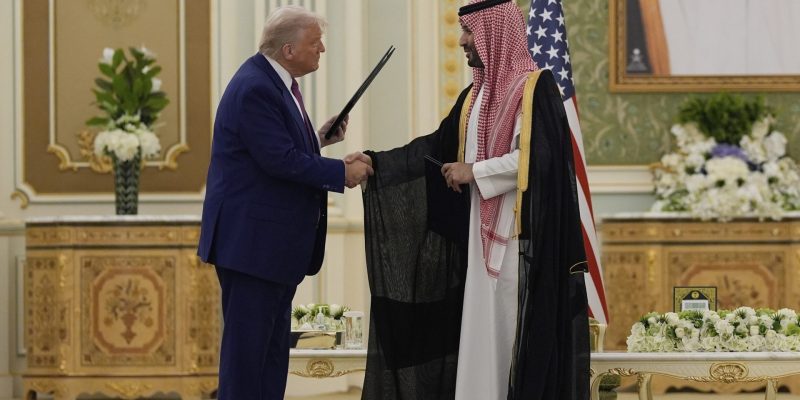
Third, although the same leadership remains in power in both Ankara and Riyadh, the regional and international environment has shifted. Unlike in past years, the regional and international environment is restrictive for them to pursue unilateral policies, and this is pushing them toward a more coordinated strategy. Therefore, the Turkish and Saudi approach to Syria should be read within a broader geopolitical context, including the situation in Gaza, where Donald Trump’s administration has plans that both U.S. allies are skeptical and not convinced about. Thus, the current cooperation in Syria appears to have not formed in a vacuum, rather the regional and international dynamics played a crucial role in its evolution.
Looking ahead
As long as the regional and international environment remains restrictive, competition over influence in shaping Syria’s political and economic structures is unlikely to emerge. Instead, Turkey and Saudi Arabia will find it necessary to support each other to maintain their status in post-Assad governance, exerting influence through coordinated efforts and by leveraging their respective strengths. Despite their otherwise assertive foreign policy approaches, neither Saudi Arabia nor Turkey have competed to take the driving seat for new Syria—highlighting their tilt towards forging regional consensus instead of intensifying rivalry.
The views and opinions expressed in this article are those of the authors and do not necessarily reflect the views of Gulf International Forum.
Issue: Geopolitics
Country: KSA

Dr. Sinem Cengiz is a researcher at Qatar University’s Gulf Studies Center and a non-resident fellow at Gulf International Forum. She is a regular columnist for Arab News newspaper and a member of the Women in Foreign Policy (DPK) Initiative. She is the author of the book Turkish-Saudi relations: Cooperation and Competition in the Middle East and co-editor of the book The Making of Contemporary Kuwait: Identity, Politics, and Its Survival Strategy. In her research, she focuses on the international relations of the Gulf and Turkey’s relations with the GCC states. Cengiz was born and raised in Kuwait and is currently based in Doha. She tweets at @SinemCngz

Riyadh Shifts Toward Minilateralism as Regional Threats Mount
September 9, 2026Saudi Arabia’s signing of the Mecca Joint Defense Agreement with Türkiye and Pakistan on August 7 marks a crucial development in the evolution of the…

Toward a New Order in MENA Regional Geopolitics
September 2, 2026This report is a byproduct of the workshop “Toward a New Order in MENA Regional Geopolitics: What’s Next for the Region’s Geopolitical Equilibrium?,” hosted in…
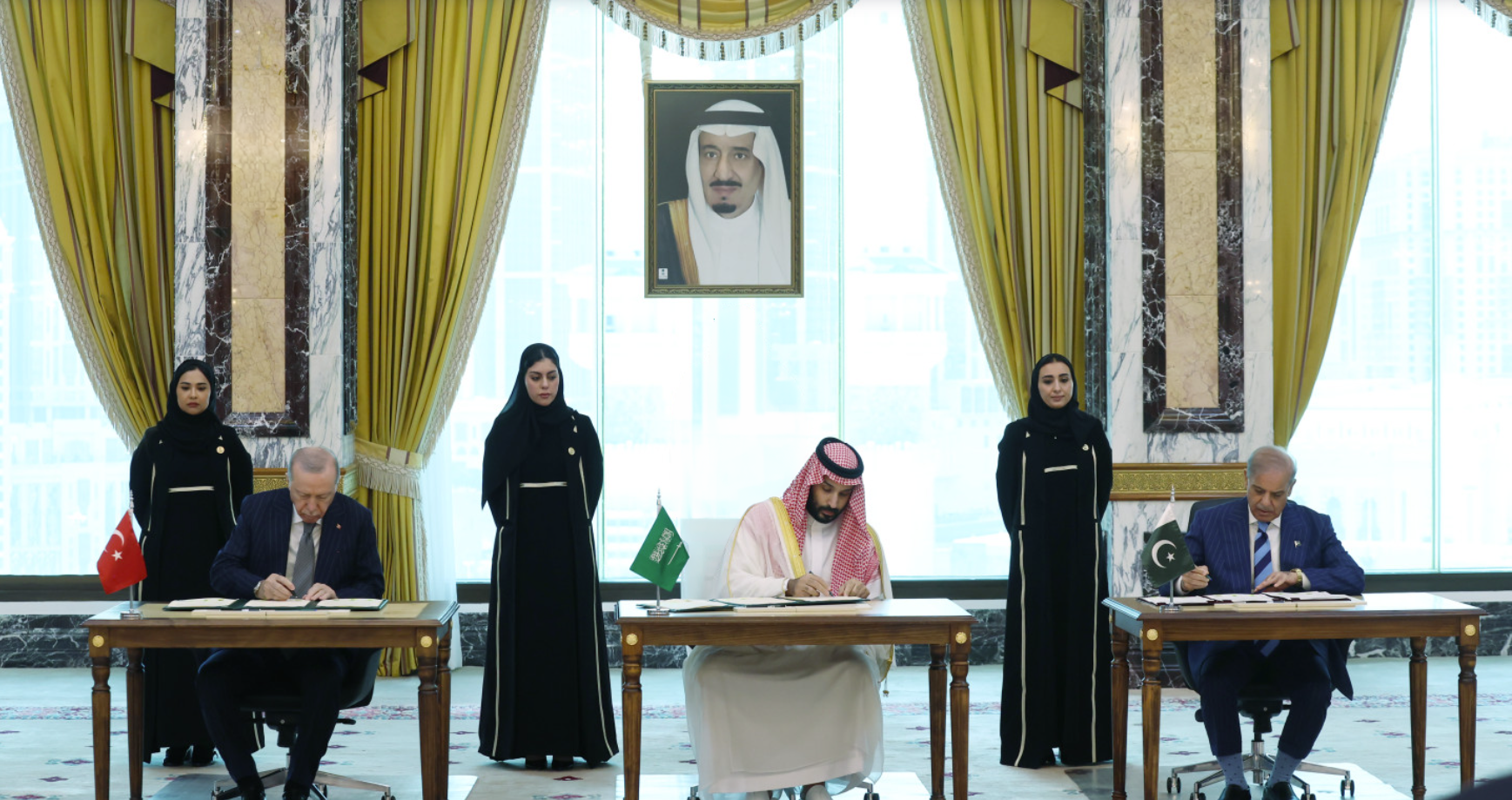
The Mecca Agreement: Seeds of a New Regional Security Architecture
August 20, 2026The Middle East is entering a new phase in the evolution of its security order, as conflict and instability continue to reshape the region. At…