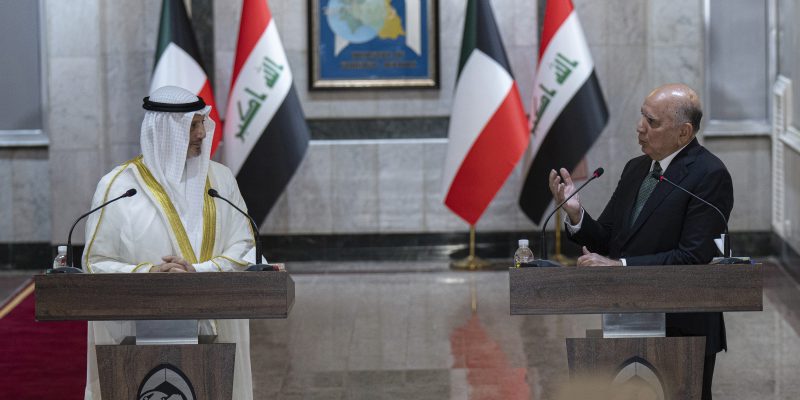
Turning Challenges into Opportunities: Revitalizing the U.S.-Kuwait Partnership
To manage rising geopolitical tensions, Kuwait must fortify its domestic stability and economy, ensuring its national security while upholding its role as a reliable U.S. ally in the Gulf.

Relations between Kuwait and the United States have been marked by decades of cooperation rooted in common security objectives, economic interests, and geopolitical considerations. Since Operation Desert Storm in 1991, Kuwait has emerged as a vital regional partner to Washington, largely due to its strategic location, financial clout, and political stability. While this partnership has remained consistent, the arrival of the Trump administration introduced new diplomatic complexities that influenced U.S. relations with Kuwait and the broader Gulf region.
A Deep Partnership
Kuwait has held the designation of a Major non-NATO Ally since 2004, a status that emphasizes its significance in supporting the United States’ regional national security objectives. This special designation reflects Kuwait’s consistent cooperation in providing access to key military bases, facilitating training operations, and enabling smooth logistics for American forces stationed on Kuwaiti territory. Kuwait is home to one of the largest US military presences in the world, including U.S. Army Central, the Army branch of U.S. Central Command (CENTCOM).
Kuwait’s geographical position enhances its strategic value, providing an ideal environment for U.S. military training. Moreover, Kuwait accommodates the region’s largest U.S. air logistics hub at its international airport, enabling efficient troop and equipment movement throughout the Middle East.
Kuwait has also played an essential role in financially supporting U.S. military operations. Unlike other American partners, Kuwait does not require the United States to pay for land use and offers access to subsidized utilities such as electricity and water. Kuwait has provided an estimated $200 million annually to assist U.S. stabilization efforts in Iraq, as well.
Following the Gulf War, Kuwait contributed approximately $16 billion to cover U.S. war expenses, demonstrating its commitment to security cooperation. When Washington needed assistance during a crisis, Kuwait stepped up, providing free evacuation flights for numerous American citizens stranded in Afghanistan after the Taliban’s takeover in 2021. These flights, arranged aboard Kuwaiti-flagged Boeing 777 aircraft, reflect Kuwait’s proactive foreign policy, its dedication to humanitarian efforts, and its alignment with Washington’s broader regional objectives.
Tensions Rise
Despite this rich history of cooperation, disputes have begun to surface. Howard Lutnick, the U.S. Secretary of Commerce, claimed that the United States had not been adequately compensated for the $100 billion it spent liberating Kuwait. Lutnick also alleged that Kuwait had imposed very high tariffs on U.S. imports. These statements sparked controversy in Kuwait and are widely challenged by U.S. official records. According to a 1992 U.S. Government Accountability Office report, the Gulf War’s total cost was approximately $61.1 billion, with U.S. allies—including Kuwait—covering about $52 billion of the expenses. Kuwait, Saudi Arabia, and other Gulf states contributed an estimated $36 billion, while Japan and Germany added a combined $16 billion.
On the issue of tariffs, Kuwait’s trade policies align with the Gulf Cooperation Council’s (GCC) unified customs framework, which imposes a 5 percent tariff on most imported goods. This figure is significantly lower than the tariffs imposed by many other countries, and, more importantly, is common among the United States’ GCC partners. Since its liberation from Iraqi forces in 1991, Kuwait has directed substantial investments into the U.S. economy, with its financial contributions estimated to exceed two to three times the Gulf War’s cost. Today, U.S.-Kuwait trade relations remain robust, with total trade reaching approximately $5 billion.
In Kuwait, Lutnick’s controversial remarks were widely interpreted as politically motivated. The former CEO of Cantor Fitzgerald, Lutnick is a vocal supporter of former President Donald Trump. His strong ties to Trump, including his staunch support for using tariffs as a coercive tool. Lutnick may have also sought to pressure Kuwait to adopt a more flexible stance on normalizing relations with Israel. Despite Washington’s pressure, Kuwait has refused to engage in normalization talks with Tel Aviv, reaffirming its strong support for Palestinian statehood.
Securing Kuwait’s Future
Though many Kuwaitis chafed at Lutnick’s remarks, Kuwait faces mounting geopolitical pressures that may force it to accede to American demands. The increasing assertiveness of global powers such as China and Russia, combined with renewed U.S. efforts to strengthen its Gulf partnerships, places Kuwait in a delicate position. To safeguard its sovereignty and strategic independence, Kuwait must focus on resolving domestic political disputes that undermine its ability to negotiate with partners and adversaries alike. Addressing these challenges will require Kuwait to adopt strategic reforms that promote economic resilience, political unity, and social cohesion.
Kuwait’s close strategic partnership with the United States remains a cornerstone of its foreign policy. To the benefit of both Washington and Kuwait, this relationship is nurtured by deep economic investments, security cooperation, and shared political interests. While recent controversies have tested this relationship, Kuwait’s long-standing contributions—both financial and political—underscore its steadfast commitment to regional stability and its partnership with Washington.
In the face of growing geopolitical tensions, Kuwait’s ability to navigate diplomatic challenges will hinge on its ability to strengthen its domestic foundations. By pursuing reforms that enhance economic resilience and political stability, Kuwait can safeguard its national interests while continuing to serve as a reliable U.S. partner in the Gulf.
The views and opinions expressed in this article are those of the authors and do not necessarily reflect the views of Gulf International Forum.
Issue: U.S. – Gulf Policy
Country: Kuwait

Dr. Abdul Hadi Nasser Al-Ajmi has held many academic and research positions since 2004. He is Assistant Dean for Academic Affairs and Graduate Studies in the College of Arts, Kuwait University, as well as the Head of History Department and the Deanship of Consulting, Training, and Development. Dr. Al-Ajmi is also the Secretary-General of the Kuwaiti Historical Society and member of the Board of Trustees of Dar Al-Athar Al-Islamiyyah, and recently assumed the presidency of the Association of History and Antiquities of the Gulf Cooperation Council countries. Dr. Al-Ajmi’s research interests are in Islamic history, the concept of political and legal systems and their relations with societies. Dr. Al-Ajmi has published more than 30 researches, books, and other publications in English and Arabic in Kuwait, the U.S., Saudi Arabia, Germany, U.K., Egypt, Greece, and other countries. Dr. Al-Ajmi holds Masters of Middle East Studies from the University of Chicago and PhD in Islamic History from Durham University.
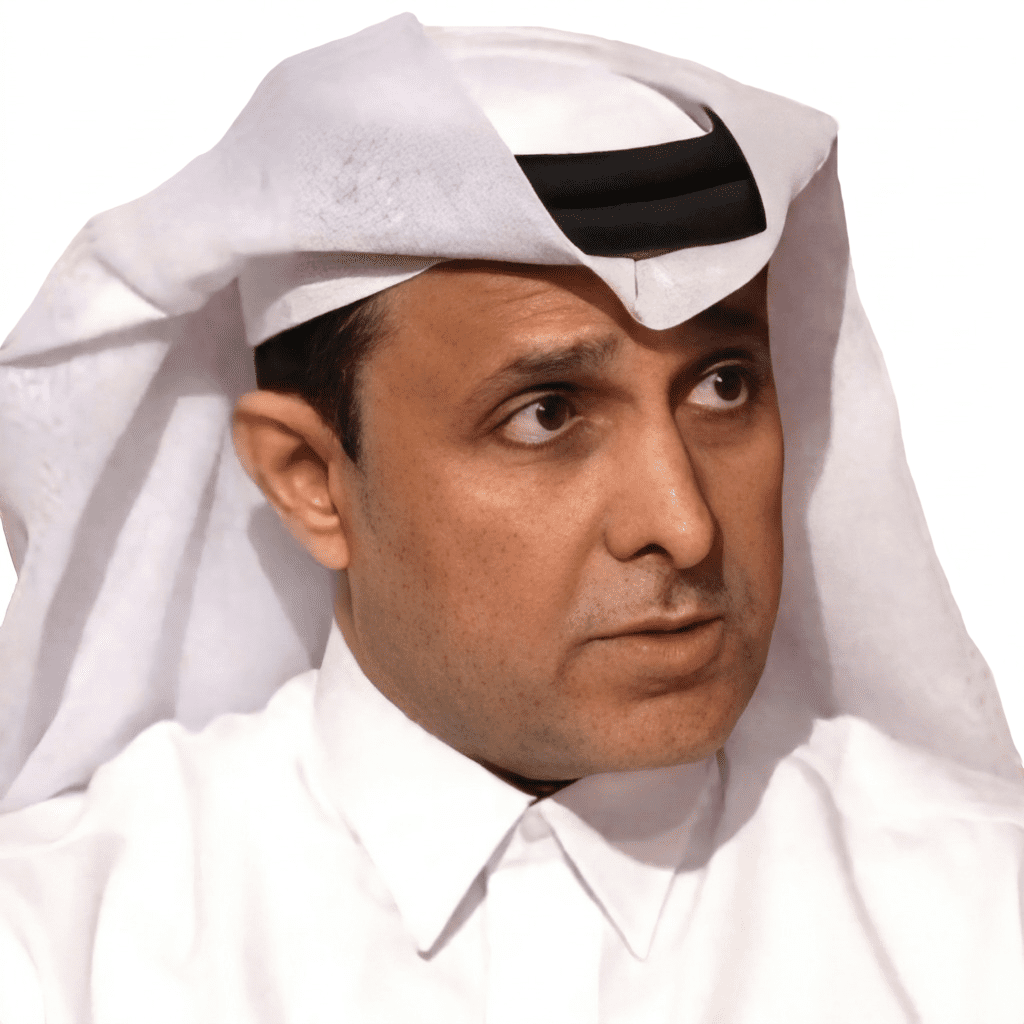
Dr. Khalid Al-Jaber is the Executive Director of the Middle East Council on Global Affairs. He is a distinguished scholar and practitioner specializing in political communication and Middle East and North Africa (MENA) affairs. Al Jaber has held prominent leadership positions, including Director of Al-Sharq Studies & Research Center and Editor-in-Chief of The Peninsula, Qatar’s leading English-language daily newspaper. He also served as an Assistant Professor of Political Communication in the Gulf Studies Program at Qatar University, where he made significant contributions to the academic and policy discourse on regional and international issues. Al-Jaber’s research focuses on the Gulf and MENA region, with expertise spanning political science, public diplomacy, international communications, and international relations. He is the author and editor of several books and numerous scholarly articles. He holds a Ph.D. from the University of Leicester, a Master’s degree from the University of West Florida, and postgraduate diplomas from Fordham University, Stanford University, and Georgetown University.

Toward a New Order in MENA Regional Geopolitics
September 2, 2026This report is a byproduct of the workshop “Toward a New Order in MENA Regional Geopolitics: What’s Next for the Region’s Geopolitical Equilibrium?,” hosted in…

The Geopolitics of the U.S.–Saudi Nuclear Deal
August 18, 2026In late July, the Trump administration announced a landmark civil nuclear cooperation agreement with Saudi Arabia. Signed in accordance with Section 123 of the Atomic…
Turkey’s F-35 Return and Saudi Arabia’s Fighter Ambitions
August 7, 2026Turkey’s renewed push to rejoin the F-35 Joint Strike Fighter program, from which it was expelled in 2019 over its acquisition of Russian S-400 air…