The Iran War Spills Into Latin America
As U.S.-Iran tensions escalate, Latin America is emerging as a contested arena where Tehran’s proxy networks expand and regional governments push back.

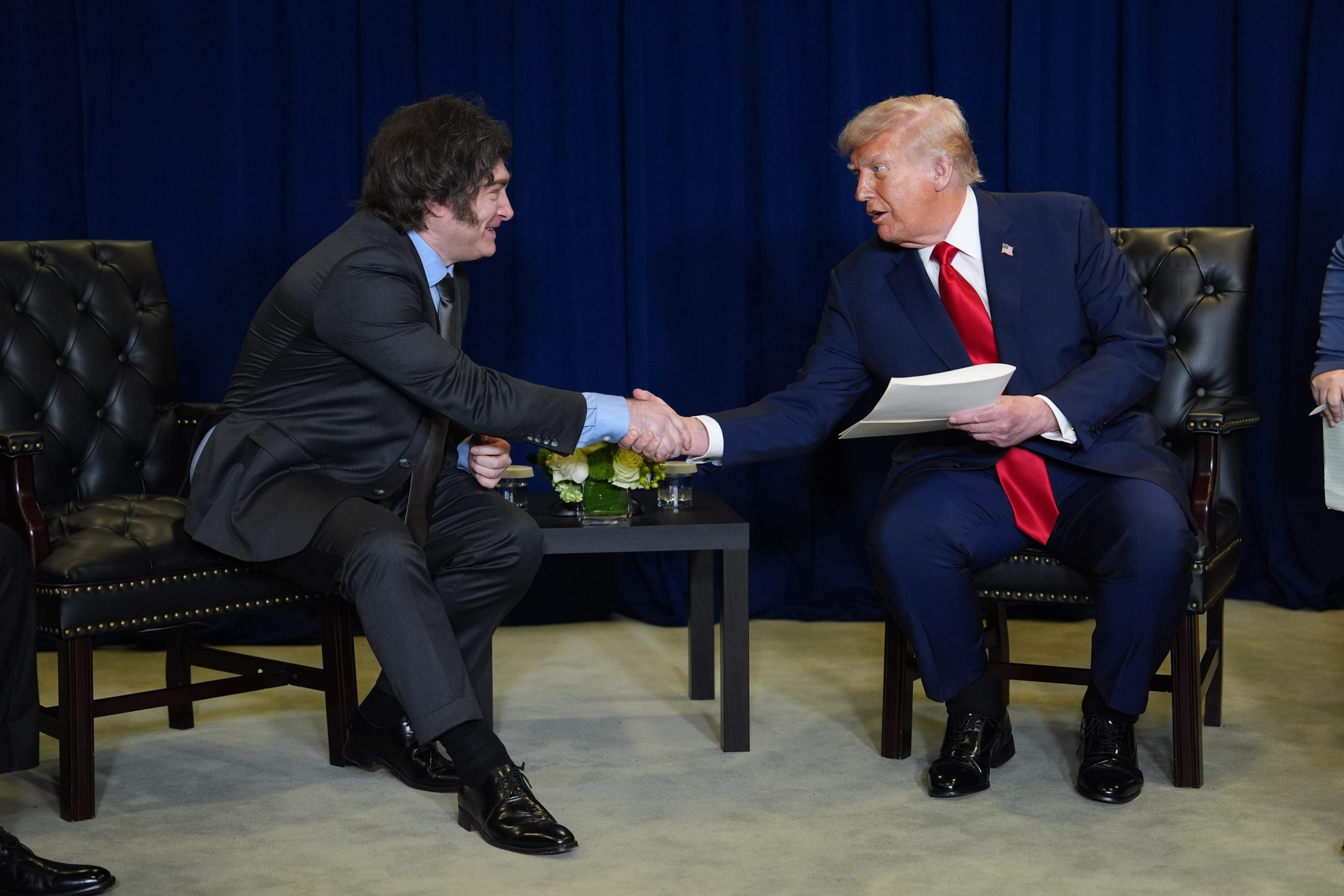
Argentina’s decision in late March to designate Iran’s Islamic Revolutionary Guard Corps (IRGC) as a terrorist organization underscores its deepening alignment with the West under the leadership of President Javier Milei. The decision comes two years after an Argentinian court held Iran responsible for the 1994 bombing of the Argentine Israelite Mutual Association (AMIA) in Buenos Aires, which killed 85 people and remains the deadliest terrorist attack in Argentine history. Together, these steps position Milei among a group of Latin American leaders willing to pursue a maximum-pressure approach toward Tehran, a campaign introduced by the first Trump administration and restored by the White House in 2025.
The Reach of Iran’s Proxy Networks
Recent regional developments further illustrate the growing hostility toward Iran in Latin America. Following a request from Panama in April, Venezuela’s government agreed to extradite Ali Zaki Hage Jalil, a Venezuelan citizen linked to Panama’s deadliest terrorist attack, to the United States. Hage Jalil is believed to have worked with the Iranian-backed Hezbollah in Lebanon and has been accused of involvement in the 1994 bombing of a passenger flight that killed 21 people, including 12 members of Panama’s Jewish community and prominent business leaders. According to the U.S. Department of Justice, Hezbollah previously conducted pre-operational surveillance of the Panama Canal, as well as U.S. and Israeli embassies in Panama City, identifying them as potential targets for attacks. The downing of the Panamanian flight took place just one day after the AMIA bombing and has never been fully solved, although evidence points to Hezbollah as the primary culprit.
In 2013, under President Cristina Fernandez de Kirchner, Argentina and Iran signed a memorandum of understanding regarding the AMIA bombing, agreeing to end their dispute and conduct a “joint investigation.” The agreement, which was fiercely opposed by Tel Aviv and proved highly controversial in Israel, was later voided by President Mauricio Macri, Kirchner’s successor. Israel has long maintained that Iran was responsible for both the Argentine and Panamanian bombings in 1994. For its part, Tehran continues to reject any involvement, though Hezbollah-linked operatives are widely suspected to have been involved. The two cases underscore both the persistence of Iranian-linked networks in Latin America and the continued efforts by the United States and Israel to contain them.
U.S. Countermeasures
Under the first Trump administration, Washington moved to restrict Iranian influence in Latin America, focusing specifically on the Paraguayan city of Ciudad del Este in the Tri Border Area (TBA) with Argentina and Brazil. The TBA has been considered a hotspot for terrorist and organized crime groups, including Hezbollah and Hamas, since the early 2000s. The administration’s efforts extended beyond this core region to other areas with limited intelligence surveillance and difficult terrain, including regions linking Chile, Bolivia, and Peru, where Iranian-linked operatives had made inroads by 2015.
By 2018, the U.S. classification of Hezbollah as a transnational criminal organization intensified pressure on Latin American leaders to comply with the designation. In 2019, Paraguay designated Hezbollah a terrorist organization. A year later, encouraged by a new asylum agreement with Washington and after Israeli sources reported that Iran planned an increased number of attacks on Jewish targets, Guatemala, Honduras, and Colombia also designated the group a terrorist organization. In 2021, Colombian President Ivan Duque reaffirmed alignment with Israel in efforts to prevent Iran from enriching uranium to build weapons, which would involve delinking Tehran from Colombian-Lebanese money laundering networks. The Iran-backed Hamas group was also designated a terrorist organization by the 35 member states of the Organization of American States. This designation came despite opposition from several left-leaning governments at the time, including Venezuela, Mexico, Chile, Argentina, and Bolivia, where pro-Palestinian sentiment had been strong.
Iran’s Enduring Influence in the Region
Iran has continued to influence Latin American leaders who oppose perceived U.S. imperialism. In 2017, amid rising tensions with Washington over immigration, former Mexican President Enrique Peña Nieto speculated that his government could expand ties with Iran. At the same time, migration flows from conflicts in Syria and Gaza offered Tehran new opportunities to broaden its networks. Iran also deepened economic and political engagement with other left-leaning “Pink Tide” leaders across the region, including Nicolas Maduro in Venezuela, Gabriel Boric in Chile, Alberto Fernandez in Argentina, Luiz Inacio Lula Da Silva in Brazil, and Evo Morales and Luis Arce in Bolivia.
Washington has sought to limit this engagement, particularly regarding the Iranian nuclear program and in multilateral settings. Argentina is a prominent example. Buenos Aires supplied 20 percent of the Tehran Research Reactor’s nuclear fuel in the 1980s and provided Iran with 19.75 percent enriched uranium in 1993. However, the United States intervened to block further cooperation in the early 1990s, including plans to export fuel-production technology and build a nuclear power plant. In 1992, Argentine leader Carlos Menem suspended those agreements, which may have encouraged Iran to carry out the AMIA bombing two years later, though this remains speculative given Tehran’s official position that it was not directly involved in the attack. Argentina also suspended cooperation with Iran’s Bushehr Nuclear Power Plant in 1995, although diplomatic exchanges to resume nuclear cooperation reportedly continued before and after the 2015 JCPOA nuclear deal that Trump withdrew the United States from in 2018.
Today, efforts by the United States and Israel to diminish Iran’s nuclear program are again bringing Latin America’s historical ties with Iran to the forefront. This has elevated the importance for Washington to secure stronger regional alignment, reflected in renewed U.S. outreach to Venezuela, Brazil, and Mexico, alongside continued pressure on Cuba. Legislative measures such as the No Hezbollah in Our Hemisphere Act (2025-2026) further underscore the strategy of containing Iranian influence in the Americas. Still, Latin America’s political landscape remains fluid, shifting rapidly between right- and left-leaning leaders. Unless broader U.S.-Israel-Iran tensions are resolved, Tehran, which dismissed President Milei’s latest position as a passing trend, is likely to assiduously work to rebuild its influence networks across the region.
The views and opinions expressed in this article are those of the authors and do not necessarily reflect the views of Gulf International Forum.
Issue: Geopolitics
Country: Iran

Banafsheh Keynoush is the co-author of the book The Abraham Accords: National Security, Regional Order and Popular Representation (Rowman and Littlefield, 2025) and a chapter therein entitled “Iran and Israel: A Distorted Connection”. She is also the author of the The World Powers and Iran: Before, During and After the Nuclear Deal (Palgrave, 2022). She can be followed @banafshkeynoush.

Beyond Hormuz: Why Balochistan Matters to Gulf Energy Security
October 21, 2026A conflict long treated as peripheral to Gulf security is becoming harder to ignore as the war with Iran puts pressure on the region’s maritime…
Should Syria and Qatar Join the Mecca Pact?
October 9, 2026Three years of cascading conflict have fundamentally transformed the Middle East’s security outlook. American weapons, military deployments, and security guarantees remain central to the region….

China’s Technology Development Push Meets Gulf Diversification
October 6, 2026China’s “new quality productive forces” (NQPF) are often understood as a domestic effort to revive growth, upgrade industry, and reduce dependence on Western technology. Yet…