Following Israel’s Attacks, Iran Shores Up Diplomacy—and Strikes Back
Following Israel’s attack on Iran, Tehran has responded with relative caution—but has left open the pathway to a sharp escalation.

On Friday, June 13, Israel launched a preventative strike on Iran to roll back its nuclear enrichment program. The Israeli military inflicted a series of crippling blows on the country, killing dozens of high-ranking Iranian officials and destroying much of Iran’s nuclear infrastructure. No matter the long-term aims of the airstrikes, in the short run, they have derailed Iran’s ongoing nuclear negotiations with the United States. Shortly after the strikes, Tehran pulled out of scheduled sixth rounds of talks in Oman.
Iran did not say that it would permanently abandon nuclear negotiations with the United States. But state media reports declared that Tehran would withdraw from this round of talks, while blaming Israel’s Prime Minister Benjamin Netanyahu for undermining negotiations by sparking a regional war. Iran’s Ministry of Foreign Affairs suggested that future negotiations with Washington were meaningless if the United States claimed it wanted to talk but simultaneously allowed Israel to attack Iran.
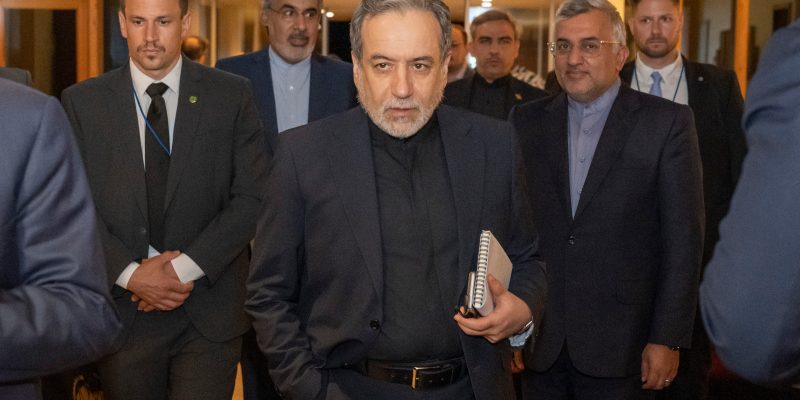
In recent days, Tehran has moved to rally support among partners and multilateral organizations, such as the United Nations Security Council (UNSC), to condemn Israel’s strikes on Iranian nuclear sites as “terrorist” attacks. Foreign minister Abbas Araghchi and President Masoud Pezeshkian spoke to leaders in the Muslim world, Asia, and Europe, urging them to reject the Trump administration’s policy of unconditional support for Israel. Iran’s flurry of diplomacy seems to have paid off; dozens of countries backed its call to condemn Israel’s attack, while others urged the UNSC to hold an emergency meeting and demanded that the International Atomic Energy Agency (IAEA) hold a meeting to review Israel’s attacks on Iranian nuclear sites. It is notable that Israel’s strikes came only one day after the IAEA Board of Governors declared that Iran was in breach of its nuclear obligations. Indeed, in a formal resolution adopted by 19 countries, the IAEA—which has so far declined to condemn Israel’s attack—could report Iran’s actions as a threat to international peace before the UNSC, suggesting that the current war may escalate further still.
Military Defiance, Diplomatic Caution
The Islamic Revolutionary Guards Corps (IRGC) issued a statement holding the United States and Israel responsible for the recent attack. But Tehran has largely refrained from criticizing Washington too harshly, possibly to avoid jeopardizing future nuclear talks. Instead, the Iranian judiciary released a statement announcing that based on Article 51 of the UN Charter, Iran has the right to legitimate self-defense against Israel. Although reputable news agencies around the world read his subsequent statement as a declaration of war, Araghchi prudently called Israel’s attacks “akin to an act of war”—a statement that notably fell short of declaring a state of war itself.
Tehran’s reaction to strikes on the Natanz nuclear compound and other nuclear enrichment facilities of Fordow and in Esfahan was similarly cautious. The Iranian government claimed that most of the facilities were too deep underground to suffer major damage from Israel’s attack. Although the Israeli government said that it partly destroyed Natanz, the head of Iran’s Atomic Energy Organization, Mohammad Eslami confirmed radioactivity levels outside the site were unchanged. Only some surface chemical and radioactive contamination inside the facility occurred, Eslami remarked, adding that Iranian authorities were moving quickly to decontaminate the facility.
Taking a defiant military stance, Iran’s army said it would respond proportionally to any military action taken by Israel. U.S. President Donald Trump’s message about further planned attacks, warning that Iran should make a deal while it still could, appears to have had the opposite effect. After the IAEA’s June 12 report that found Iran had breached its non-proliferation obligations, Tehran announced that it would expand its nuclear enrichment program. Iran’s Shahid Beheshti University, which lost several nuclear scientists to Israel’s attacks, warned that Iran would soon “display its nuclear power.” Iran’s parliament also said it would review a three-phased plan to withdraw from the Nuclear Non-Proliferation Treaty (NPT), releasing Tehran from its obligations to comply with the IAEA inspections regime. Hardline newspapers like Kayhan highlighted NPT Article X, enabling countries to leave the treaty if “extraordinary events” jeopardized their “supreme interests.” Kayhan added that if Israel continued its aggression, Iran could respond with rockets capable of delivering heavily explosive warheads.
Strategic and Symbolic Strikes
Israel’s military campaign against Iran, labeled “Operation Rising Lion”—based on a Bible quote referring to a people rising up—also evokes the imagery of the lion standing mightily under the sun on Iran’s national flag prior to the 1979 revolution. This is no coincidence. Israel and Iran enjoyed close relations during the Pahlavi era, and Israel has made no secret that it hopes for the Islamic Republic’s overthrow and a return to traditional cordiality under a new government, monarchical or otherwise. Since Friday’s attacks, both Prime Minister Netanyahu and Reza Pahlavi, the son of the last Shah and the leader of the Iran National Council, an influential foreign opposition movement, have issued statements encouraging Iranians to overthrow their leaders, and for the armed forces to join the people. The Netanyahu government has not overtly endorsed a return to the Iranian monarchy, but hosted Pahlavi in Israel in April 2023. Of course, destabilizing Iran through military force could lead to a chain of reactions causing regime change. So far, however, there are no signs yet that such a chain reaction has begun, except for small pockets of arrests of alleged Israeli sympathizersacross Iran since June 13. Even if discontent were to spill into the streets, its eventual outcome would be unclear; similar hopes of regime change during the widespread Mahsa Amini protests from 2022 to 2023 also came to naught.
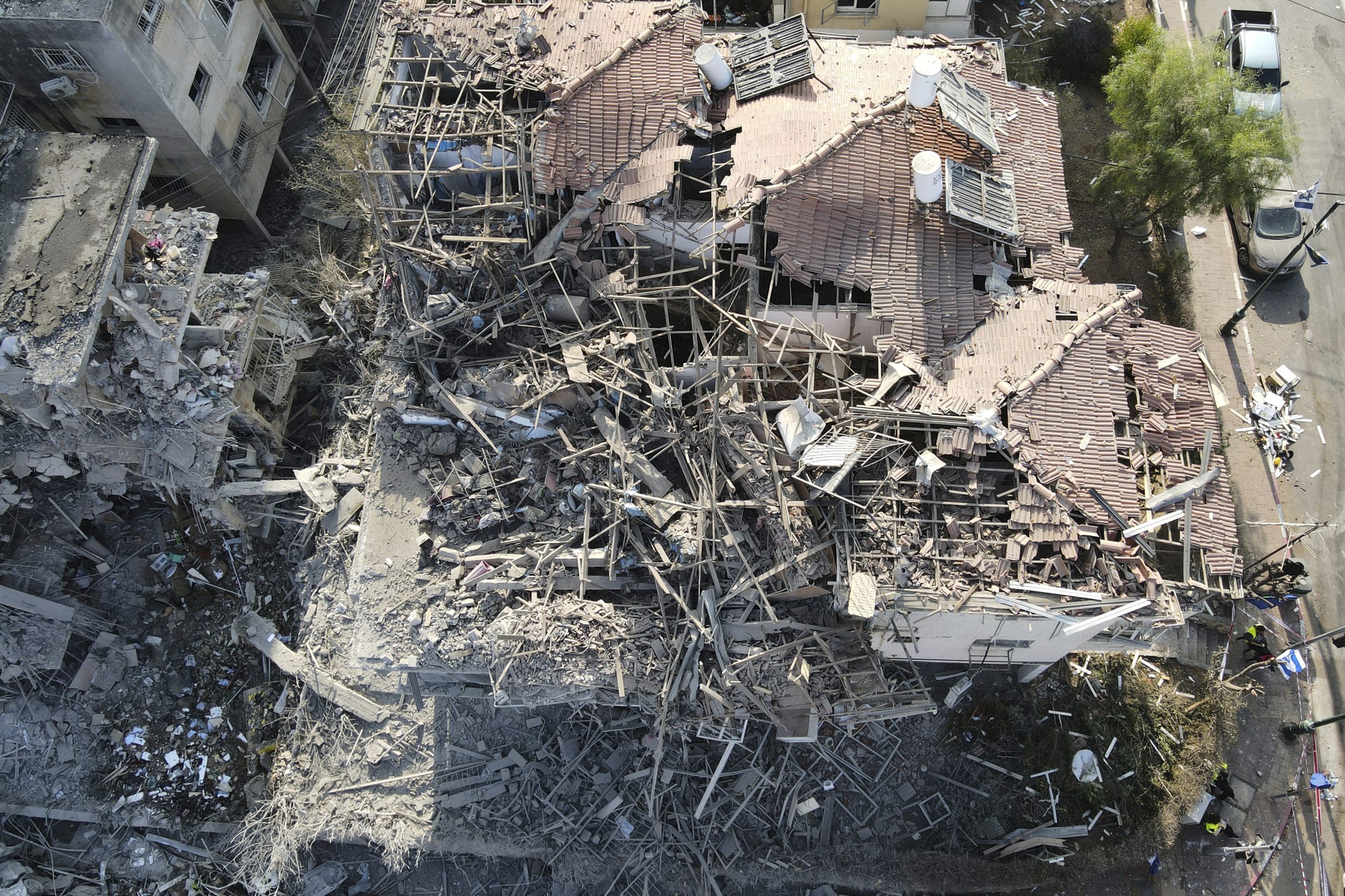
During the June 13 attacks, Israel dispatched warplanes, drones, ornithopters, and missiles for strikes on Iranian air bases, nuclear facilities, residential areas, and energy infrastructure—including a production facility in the South Pars gas field. Iran’s army issued a statement that it would join forces with the IRGC to fight back, and launched missile and drone strikes on Israeli targets in Jerusalem, Haifa, Tel Aviv, and the Nevatim and Tel Nof Airbases on June 14, forcing millions of Israelis to rush into shelters.
For its part, Iran used Shi’a religious iconography to further legitimize its counterattack. Labeled Operation Sadegh 3, with the code name “Ali Ibn Abi Taleb” in reference to the first Shia imam and son-in-law to the Prophet Mohammad, Iran’s strikes reinforced messages aiming to unite Muslims for its cause by linking its operations to narratives that repeatedly criticized Israeli settlements in Palestine, and treatment of Palestinians in the West Bank and Gaza. The operation also served as an umbrella for other operations against Israel, such as “Operation Zionists of Khaybar,” referring to the Battle of Khaybar in 638 AD between early Muslims and the Jewish community of Khaybar. The operation’s motto, “Haydar Haydar,” referred to Imam Ali Ibn Abi Taleb, who led the Muslims during the Battle of Khaybar and defeated the Jewish community there. This nomenclature suggested that Iran, as a Muslim nation, would defeat Israel and force its Jewish community to accept Muslim rule.
What Comes Next?
The massive, yet targeted scale of Israel’s attack on Iran suggests that Tel Aviv’s goal was relatively narrow in scope. But the danger of escalation remains ever-present, and has thwarted quick solutions to the crisis. In public, Supreme Leader Khamenei quickly vowed revenge, saying “the Zionist regime has made a big mistake, a grave error… the consequences of this will bring that regime to ruin.” Similarly, Araghchi said that Iran would show no restraint as Israel vowed to continue as many days as it took to roll back the Iranian nuclear program. Kayhan said Tel Aviv’s dreams of regime change were melting away, while Iran, a larger country with a larger population, would continue to compete with Israel.
In practice, Iran’s reaction to the June 13 strikes has been more measured than its rhetoric would suggest. But the attacks have highlighted a clear gap in Iran’s ability to deter its greatest adversary, which perhaps only a nuclear weapon would provide. In short, even if the Islamic Republic were to restart talks with the United States over its nuclear program, it would not abandon uranium enrichment entirely unless the Israeli threat were blunted—or Israel succeeded in engineering the regime’s overthrow.
The views and opinions expressed in this article are those of the authors and do not necessarily reflect the views of Gulf International Forum.
Issue: Geopolitics
Country: Iran

Banafsheh Keynoush is the co-author of the book The Abraham Accords: National Security, Regional Order and Popular Representation (Rowman and Littlefield, 2025) and a chapter therein entitled “Iran and Israel: A Distorted Connection”. She is also the author of the The World Powers and Iran: Before, During and After the Nuclear Deal (Palgrave, 2022). She can be followed @banafshkeynoush.

Beyond Hormuz: Why Balochistan Matters to Gulf Energy Security
October 21, 2026A conflict long treated as peripheral to Gulf security is becoming harder to ignore as the war with Iran puts pressure on the region’s maritime…
Should Syria and Qatar Join the Mecca Pact?
October 9, 2026Three years of cascading conflict have fundamentally transformed the Middle East’s security outlook. American weapons, military deployments, and security guarantees remain central to the region….

China’s Technology Development Push Meets Gulf Diversification
October 6, 2026China’s “new quality productive forces” (NQPF) are often understood as a domestic effort to revive growth, upgrade industry, and reduce dependence on Western technology. Yet…