China’s Technology Development Push Meets Gulf Diversification
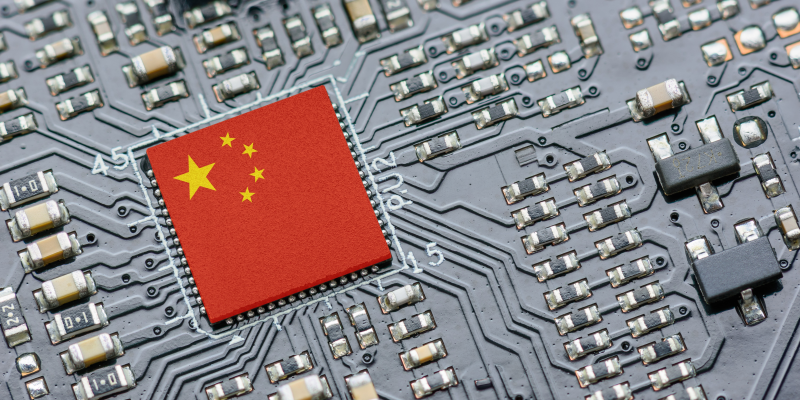
Beijing’s “New Quality Productive Forces” strategy is reshaping China’s technological ties with the Gulf states as regional competition intensifies.

China’s “new quality productive forces” (NQPF) are often understood as a domestic effort to revive growth, upgrade industry, and reduce dependence on Western technology. Yet NQPF is also becoming a tool of external economic statecraft, as Beijing seeks to export not only products and infrastructure, but the technological ecosystems that underpin modern industrial development.
The Gulf has emerged as a key test case of this strategy. China’s efforts to externalize NQPF align with Gulf ambitions to diversify beyond hydrocarbons and build advanced industries in clean energy, manufacturing, digital infrastructure, and AI. The result is a deeper Chinese role in the operational and digital architecture shaping regional economic transformation.
Growing Dependence on Chinese Technology
China has emerged as a leading provider of technologies central to the next phase of industrial development, including solar manufacturing, batteries, AI systems, and digital platforms. Gulf states are relying on these capabilities for diversification, often adopting technologies developed externally rather than expanding their own domestic capabilities.
This dynamic reflects a broader feature of China’s effort to externalize NQPF. Beijing’s overseas engagement increasingly extends beyond products and infrastructure to the technological ecosystems that sustain them. Once embedded, software updates, technical standards, training networks, and data systems can create operational dependence on particular platforms and providers without explicit political pressure.
For Gulf states, the appeal is clear. Chinese firms offer cost-effective and immediately deployable technologies that can accelerate ambitions in clean energy, smart cities, logistics, and digital industries. For China, the Gulf provides capital, energy partnerships, and markets to expand into and refine emerging technologies. The relationship is therefore mutually beneficial, even as technological influence becomes increasingly asymmetric.
The Framework and Strategic Logic
At its core, China’s NQPF is anchored in technological self-reliance. Facing intensifying competition with the United States and tighter controls on access to critical technologies, Beijing seeks to reduce external vulnerabilities while maintaining access to global markets. The strategy serves both defensive and outward-facing purposes: strengthening domestic capabilities while expanding Chinese technologies, standards, and industrial models internationally.
Since Chinese President Xi Jinping introduced the concept in 2023, NQPF has become central to Beijing’s economic agenda. Subsequent policy guidance has emphasized advanced computing, next-generation telecommunications, and energy systems, while the 15th Five-Year Plan (2026–2030) frames technological upgrading as essential to supply-chain security and competitiveness.
NQPF is also shaping Beijing’s approach to economic engagement abroad. Whereas the early Belt and Road Initiative (BRI) emphasized connectivity through ports, railways, energy projects, and physical infrastructure, NQPF adds a new technological layer through digital platforms, green industrial systems, and advanced manufacturing capabilities. The framework builds on the existing BRI by linking infrastructure projects more closely to China’s broader industrial and technological capabilities.
This approach is most apparent in digital infrastructure, where firms such as Huawei, ZTE, and Alibaba Cloud combine commercial deployment with technical training, standards alignment, and regulatory cooperation. Similar patterns are emerging in green industries, where Chinese firms are expanding into renewable energy systems, storage, grid integration, and decarbonization solutions. In frontier sectors such as AI, industrial IoT, and smart logistics, Chinese companies are participating through partnerships, research centers, and demonstration projects. The result is a shift from infrastructure-centered connectivity toward technology integration aligned with China’s industrial upgrading strategy.
The overall effectiveness of NQPF will largely depend on commercialization. China’s ability to mobilize resources quickly provides advantages in strategic industries, but centralized decision-making also risks overcapacity, inefficient allocation, and weak market discipline. These constraints could shape whether China’s technological ambitions will translate into sustained global competitiveness.
The Gulf as a Deployment Arena
The Gulf in particular has become a key arena for NQPF implementation. Across green energy, manufacturing, digital infrastructure, hydrogen, and finance, Chinese firms are moving beyond individual projects to take on broader roles in Gulf industrial development.
Chinese firms including LONGi, JinkoSolar, Trina Solar, and JA Solar have secured large-scale solar projects across the region, while partnerships with JinkoSolar, TCL Zhonghuan, and the Public Investment Fund (PIF) are supporting Saudi Arabia’s efforts to localize solar manufacturing. Chinese firms are also expanding into advanced manufacturing, with battery producer CATL expanding its presence in Saudi Arabia as the kingdom develops capabilities in energy storage and EV supply chains. In the UAE, industrial zones such as Khalifa Port have become platforms for Chinese high-tech firms engaged in manufacturing, research and development, and regional operations.
Digital infrastructure represents another layer of integration. Chinese firms, including Huawei, FiberHome, and Alibaba Cloud, have become significant to Gulf digital transformation strategies. Huawei Cloud is expanding its role in Saudi government and industrial systems, while Alibaba Cloud has strengthened its presence in Dubai. Cooperation between Huawei and e& in the UAE, alongside partnerships involving Saudi Arabia’s Zain, stc, and the UAE’s du, is supporting industrial internet applications, AI, and smart infrastructure. Integrated into sectors such as energy, these systems enable applications ranging from predictive maintenance to industrial optimization.
Chinese companies are also positioning themselves early within Gulf hydrogen value chains by supplying renewable energy inputs, electrolyzer technologies, and related infrastructure. In Oman, firms including LONGi Green Energy and PowerChina are involved in renewable energy and hydrogen-related projects, while Chinese suppliers are participating in emerging developments in Duqm and Salalah. These partnerships reflect a shift from energy trade toward emerging industrial ecosystems.
Financial integration adds yet another dimension. Gulf sovereign wealth funds, including the PIF, Mubadala, and the Qatar Investment Authority (QIA), are increasing their exposure to Chinese technology companies, electric vehicle manufacturers, and semiconductor-related sectors. These investments provide Chinese firms with capital while giving Gulf investors access to emerging technologies.
External Constraints on NQPF Externalization
The deepening integration of NQPF into Gulf development strategies does not, however, guarantee continued expansion. Its trajectory will be shaped by two external pressures: regional instability and intensifying U.S.–China competition over strategic technologies.
China’s 15th Five-Year Plan is being implemented amid a regional war that has now lasted roughly seven months. The U.S.-Israeli campaign against Iran began in February 2026, and the interim agreement the two sides signed in June has since unraveled. The Houthis have meanwhile announced a naval blockade against Saudi Arabia, claimed strikes on Saudi oil tankers, and in September, seized a stretch of Yemen’s Red Sea coast. The resulting uncertainty over critical maritime routes, now extending from Hormuz to the Red Sea, poses a more persistent challenge to China’s industrial strategy than a temporary disruption would. Because the Red Sea provides the main alternative route for Saudi exports when Hormuz is constrained, the two crises compound rather than offset each other.
For NQPF-related projects, this volatility is significant. China’s industrial strategy depends on complex supply chains, large-scale capital commitments, and predictable operating environments. Even temporary disruptions can raise costs, delay equipment delivery, and complicate financing. Geopolitical uncertainty may also shape investment decisions. Gulf sovereign wealth funds and state-backed investors are unlikely to retreat from Chinese technology partnerships given the commercial opportunities involved, but heightened risk may encourage phased investments, greater political-risk assessment, and broader diversification across markets and technology partners. That assumption will be tested the longer the war and the disruption to shipping persists.
China’s dependence on Gulf energy supplies (now exposed to disrupted shipping through the Strait of Hormuz) and investment opportunities reinforces incentives for regional stability, while Gulf states continue to balance expanding economic ties with Beijing against longstanding security relationships with Washington. This balancing act will become more consequential as Chinese technologies become embedded in strategically sensitive sectors.
A second constraint comes from intensifying U.S.–China technological competition. Whereas regional instability primarily affects the pace and cost of NQPF expansion, strategic competition increasingly shapes the sectors in which Chinese technologies can become embedded. Washington has sought to position Gulf development within U.S.-linked ecosystems in areas such as AI, semiconductors, cloud computing, and advanced digital infrastructure through investment partnerships and broader strategic initiatives.
As advanced technologies become associated with national security, U.S. policymakers have encouraged Gulf partners to exercise greater caution regarding Chinese participation in sensitive sectors, particularly those involving advanced computing, telecommunications networks, and defense-related applications. The clearest recent illustration came in July 2026, when Washington eased export controls on the UAE so that its government and approved companies no longer need licenses to buy advanced semiconductors, citing, among other factors, the UAE’s support for the war against Iran. Saudi Arabia has not received the same treatment, even as its largest telecom operator, stc, launched a Huawei-built cloud platform in June.
This dynamic is unlikely to produce a wholesale retreat from Chinese technology. Instead, Gulf states appear increasingly inclined toward technological compartmentalization: expanding cooperation with China where its firms offer competitive advantages while relying more on U.S.-aligned ecosystems in strategically sensitive sectors. This pragmatic hedging may preserve cooperation with both powers but could constrain China’s ability to extend NQPF into frontier technologies central to its competitiveness. The divergence between Abu Dhabi and Riyadh suggests that compartmentalization will not be uniform. The UAE is being drawn more tightly into the U.S. technology stack, while Saudi Arabia may retain more room, and more existing entanglements, with Chinese providers.
Testing Beijing’s Technological Reach
China’s effort to externalize NQPF reflects a broader shift from infrastructure-led globalization toward deeper industrial and technological integration. In the Gulf, this strategy aligns closely with economic diversification agendas while embedding Chinese standards, platforms, and innovation ecosystems more deeply across energy, manufacturing, and digital infrastructure.
Its expansion, however, will depend on China’s ability to navigate growing external constraints. Regional instability, now an active war that extends from Hormuz to the Red Sea, raises the costs and uncertainty of long-term industrial investment, while U.S.–China competition is encouraging Gulf states to differentiate across sectors, expanding cooperation with China where commercial advantages are strongest while limiting integration in strategically sensitive technologies. Rather than aligning with either power, Gulf states are pursuing a more selective approach to technological partnerships.
NQPF’s global significance will ultimately rest on China’s ability to convert technological leadership into durable international influence despite geopolitical tensions. The Gulf will provide one of the earliest and most consequential tests of whether China can sustain that transition.
The views and opinions expressed in this article are those of the authors and do not necessarily reflect the views of Gulf International Forum.
Issue: Geopolitics
Country: GCC

Dr. John Calabrese teaches international relations at American University in Washington, DC. He is the book review editor of The Middle East Journal and a Non-Resident Senior Fellow at the Middle East Institute (MEI). He previously served as director of MEI’s Middle East-Asia Project (MAP). Follow him on X: @Dr_J_Calabrese and at LinkedIn: https://www.linkedin.com/in/john-calabrese-755274a/.

Beyond Hormuz: Why Balochistan Matters to Gulf Energy Security
October 21, 2026A conflict long treated as peripheral to Gulf security is becoming harder to ignore as the war with Iran puts pressure on the region’s maritime…
Should Syria and Qatar Join the Mecca Pact?
October 9, 2026Three years of cascading conflict have fundamentally transformed the Middle East’s security outlook. American weapons, military deployments, and security guarantees remain central to the region….

Riyadh Shifts Toward Minilateralism as Regional Threats Mount
September 9, 2026Saudi Arabia’s signing of the Mecca Joint Defense Agreement with Türkiye and Pakistan on August 7 marks a crucial development in the evolution of the…