What Iran Stands to Lose from Iraq’s Development Road Megaproject
The Iraq-Turkey-Europe “Development Road” economic corridor promises to reshape the logistics networks that connect the Gulf with Europe—but also threatens Iran’s regional influence and economic interests.

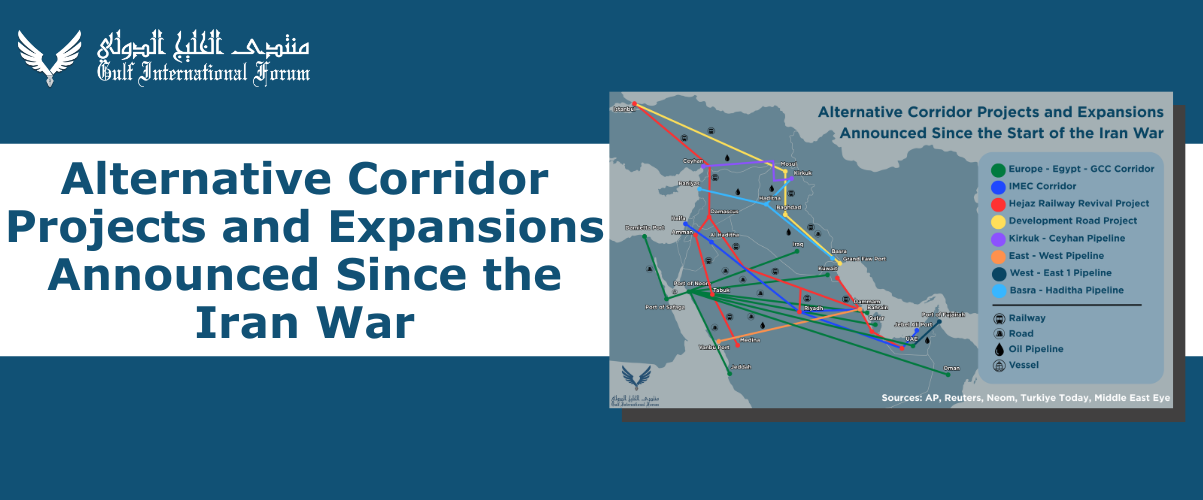
The Iraq-Turkey-Europe “Development Road Project”, a strategic economic corridor that would connect southern Iraqi ports with European markets, is viewed by Iran as a threat to its economic leverage over its western neighbor. Tehran regards the project—not incorrectly—as an attempt by Turkey to buoy its influence in Baghdad at Iran’s expense.
At an economic conference held in Baghdad in 2023, Iraqi Prime Minister Mohammed Shia al-Sudani introduced the railway and road project, which, at a total cost of $17 billion and a length of 1,200 km, connects Iraq’s “Grand Faw” port in Basra to the Turkish border in the north. The construction of the Faw port, a crucial terminus of this project, began in 2021 and is expected to be completed by the end of 2025. Baghdad aims to quickly complete the port and elevate the country as a geographically important “commercial transit” country in the Middle East, helping to diversify its economy and increase its non-oil income.
During Turkish President Recep Tayyip Erdoğan’s visit to Baghdad in April—his first to Iraq in 13 years—Iraq, Turkey, Qatar and the UAE signed a joint memorandum of understanding to execute the megaproject. However, Iran, which has held preeminent military and political influence over Iraq since the U.S. invasion in 2003, has been cut out of the initiative altogether. As such, Iran’s exclusion from the project significantly increases the risks of sabotage from Iran-aligned politicians in Iraq—as well as Iran-supported militias on the ground. Indeed, in May 2024, Iranian-backed Iraqi militant group Kataib Hezbollah stated that its leadership held many doubts about the Development Road Project and that the Iraqi government had not addressed its concerns—an implicit threat of action against the corridor’s construction.
The Biggest Loser
Ironically, Iran’s geo-strategic location between Europe and Asia has led it to seek greater regional economic integration, including into the region’s economic corridors, for at least 40 years. Despite its favorable geography and relatively modern infrastructure, Iran’s domestic political situation and its interventionist foreign policy have obstructed its efforts to truly enmesh itself in the regional economy. To strengthen its regional position, Iran joined the “North-South Transit Corridor” (NSTC) connecting India, Azerbaijan, and Russia in 2002. Though the original goal of the NSTC was ambitious, 22 years have passed since these countries put pen to paper, with little to show for it.
The Iraq-Turkey-Europe Development Road is a clear rival to the NSTC, from which Iran and Russia would benefit significantly due to its ability to circumvent U.S. sanctions obstructing trade with third countries. Indeed, the United States praised the Development Road agreement as an ideal way for Turkey, a NATO member state, and Iraq to establish closer strategic ties. Washington also lauded the corridor’s potential to reduce Iraq’s “dependence on Iran.” Amid such American fanfare, it is likely that Iran regards the Development Road Project with great suspicion. However, Iraqi officials have said that Iran’s reaction to the project has been fairly positive—or at least accepting.
For his part, Turkish Foreign Minister Hakan Fidan declared that Ankara had no intention of isolating Iran from the project and that the Turkish government stood ready to cooperate within the scope of the project. Both Baghdad and Ankara are aware that Iran retains significant leverage within Iraq, both through Tehran-allied politicians and militia groups, and leaders there could marshal their power to thwart the project’s implementation if they so chose. Some within Iran have criticized the Development Road as an imperialist venture, describing it as a Turkish attempt to advance “neo-Ottoman” influence across the Middle East under the guise of commercial links.
Of course, Iran’s opposition to the Development Road extends beyond concerns that the Islamic Republic could be cut out of regional integration projects. Ankara and Tehran are currently locked in a hybrid conflict in the autonomous Kurdistan Region of Iraq (KRI). Turkey has claimed that Iran is providing weapons systems to the militant Kurdistan Workers Party (PKK) in order to shoot down Turkish drones. In addition to that, Turkey describes the Sulaimaniyah-based Patriotic Union of Kurdistan (PUK) as a threat to its national security because of its overt sympathy with, and ties to, the PKK. At the regional level, the PUK is closely allied with Iran and tries to undermine Turkey’s influence in Iraqi Kurdistan. Therefore, it is predicted that this project, in which Turkey and the Gulf countries are the main actors, will rival Iran’s ability to shape the security environment within Iraq. In addition, shifting the transit routes, which are currently in Iran’s economic interests, to the Development Road may further enfeeble Iran’s already weak economy, leaving it increasingly cut off from the rest of the world and vulnerable to further sanctions shocks.
Ali Hosseini, President of the Iranian Logistics, Transportation, and Shipping Chamber of Commerce, has stated that the Faw port will prove a major rival for Iran and will likely negatively affect the transit traffic between Iran and Turkey. Grand Faw may also cause a decline in value of Iran’s Chabahar port, which Iran has sought to develop as a shipping hub, and may weaken Iran’s position as a transit country at the regional level. Currently, Iran provides Turkey’s only direct route to the Gulf. But when the Faw port opens, Turkey will gain access to the Gulf via Iraq, increasing Ankara’s influence in this critical area and reducing Iran’s sway.
Its national ambitions notwithstanding, Iran has been unable to transform itself into an important transit hub simply due to the bevy of international sanctions against it. Strapped for foreign investment, the Islamic Republic’s railways and ports are degrading, while other states are modernizing their infrastructure—yet another reason Iran likely sees the Development Road Project as a threat.
An Unsatisfying Alternative
In September 2023, Iran and Iraq officially broke ground on the Shalamche-Basra railway project, which aims to connect the two countries. The 32-kilometer route will connect the Iranian border town of Shalamcheh with the southeastern Iraqi city of Basra for passenger and cargo transportation. Iranian officials have said that the railway will be completed within 18 to 24 months and will cost $250 million. The emergence of the rival Development Road Project, and the investment in the Faw port, has given the Shalamche-Basra project a new urgency for Iran; officials in Tehran clearly fear that if the Faw port is implemented on schedule, the position of Iran’s two strategic ports in the Persian Gulf, Charbahar and Benderabbas, will be weakened. Although this would happen in any case, improvements in railway linkages between Iran and Iraq would nonetheless help to soften the blow.
However, both sides see something different in the Shalamche-Basra railway, and several disagreements remain outstanding. Iraq is not willing to finance this project, leading to slow progress on its portion of the construction. In fact, on the Iraqi side, there is a belief that this railway will reduce the importance of Faw port, which runs counter to the interests of the central government in Baghdad. Therefore, Iraqi officials have emphasized their view that this railway will be used mostly to transport Iranian tourists and religious pilgrims, but only limited commerce. Though the Shalamche-Basra railway could be connected to the Development Road corridor, its construction would not necessarily make Iran a signatory to the agreement, blocking its broader integration into the pact. While Iraq states that this project will not be for transporting cargo, Iran hopes that it can be first used to transport passengers and then to transport cargo over time. Unfortunately for Tehran, Baghdad, which has the final say, appears disinterested in such an expansion.
After seizing a decades-long golden opportunity to increase its military and political influence in post-Saddam Iraq, Iran considers such a mega project like Development Road a threat to its national interests, as it would pave the way for Baghdad to act independently from Iranian interests. Therefore, it is safe to say that Tehran likely eyes the Development Road as a challenge, rather than opportunity to exploit. The Iraqi government has struggled to implement many megaprojects in the post-Saddam period due to foreign intervention, corruption, political instability, and a lack of funding. Thus, Iran’s actions in the coming months and years will determine whether Iraq drifts further from Tehran’s orbit, or the Development Road joins a long list of previous shelved Iraqi projects.
The views and opinions expressed in this article are those of the authors and do not necessarily reflect the views of Gulf International Forum.
Issue: Economy & Innovation, Geopolitics
Country: Iran, Iraq

İdris Okuducu is a journalist based in Beirut and previously worked in Iraq for more than 5 years. He focuses on Turkish foreign policy, the Iraqi Kurdistan region, Lebanon, and the security dynamics of Shiite armed groups in the Middle East.
The Middle East’s Corridor Boom Meets Reality
July 22, 2026In recent years, particularly since the outbreak of the recent conflicts in Gaza and Iran, the Middle East has seen a resurgence of connectivity projects….
Iraq’s Fiscal Shock and the New Government’s Bargain
July 20, 2026The disruptions to shipping through the Strait of Hormuz have left Iraq facing more than an immediate export shock. Transport has remained constrained, insurance and…