The Gulf Cannot Afford to Be Dragged Into War
Pressure is mounting on the Gulf states to join the war, but doing so risks pulling them into a conflict that undermines both their interests and their security.

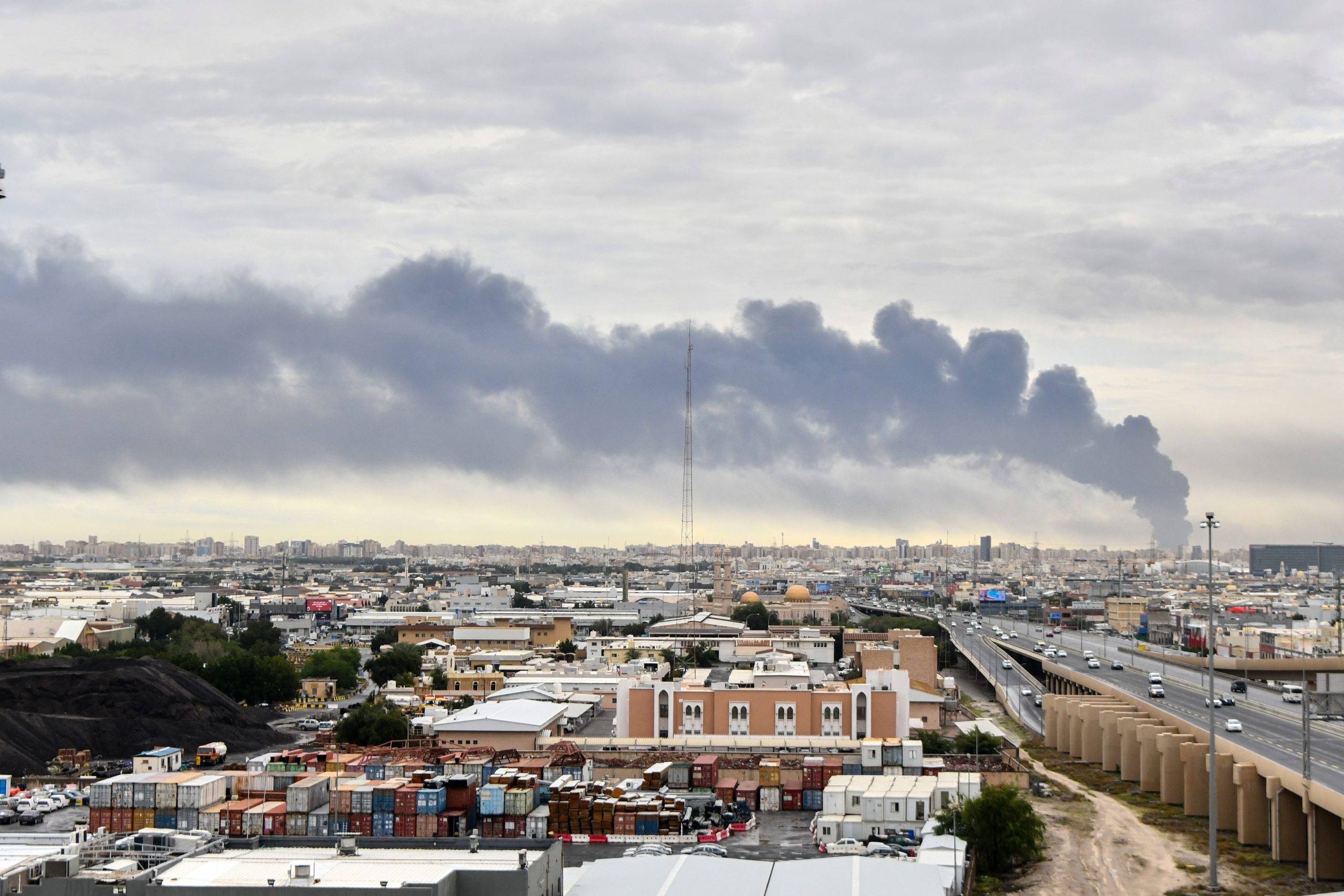
As the U.S.-Israeli war against the Islamic Republic enters its fourth week, the Gulf states are continuing to bear the brunt of a conflict they never signed up for. Despite repeated attacks by Iran and its proxies, they have resisted calls to escalate or go on the offensive. This restraint has not gone unnoticed. Senior Republican Senator Lindsey Graham has repeatedly expressed disappointment and frustration with the Gulf Cooperation Council (GCC) states for not joining the war.
As the conflict drags on, questions are growing about how long this restraint can persist. At the same time, media reports and public statements from regional officials suggest that some Gulf states are edging closer to abandoning it, particularly in response to the continued targeting of their strategic infrastructure and civilian populations.
Despite mounting pressure, the Gulf’s decision to stay on the defensive remains strategically sound. Although Iran and Israel are on opposite sides of this war, both share an interest in drawing the GCC states into the conflict. That alone should give Gulf leaders pause: they have little to gain from enabling either side’s destabilizing regional actions.
Escalation Could Backfire
Iran’s continued attacks on the Gulf states are making restraint increasingly difficult to sustain. By targeting every GCC state, including mediators such as Qatar and Oman, Iran is playing directly into Israel’s hands. These reckless strikes reinforce Tel Aviv’s long-standing argument that dialogue with Tehran is futile and that the regime responds only to force.
This dynamic has led several Israeli and U.S. analysts to speculate about a potential strategic convergence between Tel Aviv and the GCC states. But such claims overlook the fundamental differences in their war objectives and their conflicting visions for the ‘day after.’ This divergence underscores why abandoning restraint is incredibly risky for the Gulf.
Israel’s objectives are broad and transformative. Israeli Prime Minister Benjamin Netanyahu has long advocated toppling the Iranian regime, which would be a cumbersome process that would carry drastic consequences for regional stability. Currently, Israel appears intent on using its air superiority to ‘mow the lawn’ indefinitely, striking inside Iran whenever it sees fit. This approach shifts fighting away from Israel’s borders while expanding its operational freedom in the hope that sustained pressure will eventually collapse the regime.
For the Gulf states, this is creating a nightmare scenario, bringing prolonged instability to their doorstep and critical waterways. While Gulf attitudes toward Iran have hardened, there remains a clear recognition that Iran’s internal collapse could unleash wider regional instability. Such a collapse could plunge Iran into civil war, with competing ethnic militias firing missiles and drones not only at each other but potentially across borders. A total collapse could also trigger a refugee crisis that strains regional resources.
Joining Israel’s war would not necessarily reduce attacks against the Gulf states and may instead increase them over time. After the fallout from Iraq and Yemen, the last thing the GCC wants is another failed state on its borders. Additionally, there is the risk that the Trump administration could disengage from the conflict, which would leave the Gulf to contend alone with a wounded yet still dangerous Iran.
No Clear Endgame
If the Trump administration wants the GCC states to play a more active role in the conflict, it first needs to change its own rhetoric and policies rather than simply imposing demands on third parties. Washington should clarify that it does not share Israel’s regional vision or its disregard for Gulf interests. The United States must also demonstrate a sustained commitment to its Gulf partners, alleviating their concerns that U.S. attention could shift elsewhere, leaving the region to manage the consequences.
At the same time, there is still no clear explanation from the Trump administration of how ongoing tactical successes against Iran will translate into a political outcome. Without a credible off-ramp that takes Gulf interests into account, military escalation risks entrenching prolonged instability. American statements should therefore focus less on emphasizing the destruction inflicted on Iran and more on outlining a realistic path to ending the conflict.
As the war continues, both Iran and Israel will seek to pressure the Gulf states to change their current stance. Washington may also push for greater involvement as it considers deploying boots on the ground. This dynamic is increasingly visible in the Strait of Hormuz, where the U.S. has urged Britain, Japan, and even China to contribute naval forces to end Iranian attacks on the waterway.
Resisting that pressure will not be easy. Yet the GCC’s continued restraint reflects a prudent strategic calculation. The region has already paid a heavy price for wars launched without clear political endgames. The Gulf states do not need to repeat that mistake and should remain wary of being dragged further into the conflict.
The views and opinions expressed in this article are those of the authors and do not necessarily reflect the views of Gulf International Forum.
Issue: Defense & Security, Geopolitics
Country: GCC

Dr. Robert Geist Pinfold is a Lecturer in Defense Studies (International Security) King’s College London. Dr. Pinfold joined the Defense Studies Department and the School of Security Studies in 2025. Previously, he was a Lecturer in Peace and Security at Durham University and a Post-Doctoral Research Fellow at the Hebrew University of Jerusalem and the University of Haifa. Rob was awarded his PhD in War Studies from King’s College London in 2018. In addition to his role at King’s, Rob is also a Research Fellow at the Peace Research Center Prague and the Herzl Center for Israel Studies, both based at Charles University in Prague, and an Adjunct Professor at Johns Hopkins University’s School of Advanced International Studies (SAIS). Rob’s work has been published in numerous academic journals, such as the Journal of Global Security Studies, International Studies Perspectives, the Journal of Strategic Studies, Studies in Conflict and Terrorism, and Mediterranean Politics. His full-length book manuscript, Understanding Territorial Withdrawal: Israeli Occupations and Exits, was published by Oxford University Press in 2023 and won the European Association of Israel Studies Academic Achievement Award in 2024. Alongside his academic outputs, he has written policy briefings for War on the Rocks and the Royal United Services Institute (RUSI) and has provided regular commentary for France 24, RTE News, the BBC, and many others. He is also a regular analyst for Al Jazeera’s coverage of the Syrian Civil War.
Yemen’s Emerging Role in the Red Sea
August 27, 2026On August 4, 2026, the Yemeni Coast Guard (YCG) rescued the 14-member crew of the Indian-flagged commercial vessel Faize Noore Oliya. Transiting the Red Sea…
The Iran War Is Rewriting Kuwait’s Defense Architecture
July 14, 2026Since the outbreak of the Iran war in February 2026, Kuwait has announced a series of major defense acquisitions, including a $1 billion contract for…