Between Red Lines and Realpolitik: The Gulf Awaits a Nuclear Breakthrough
As the U.S. demands zero enrichment and Iran holds its ground, GCC states urge restraint—seeking peace, not war, to safeguard their post-oil futures.

For several weeks, top diplomats from the United States and Iran have been engaged in intensive negotiations to reach an agreement on a new nuclear deal. The outcome of these talks holds formidable economic and strategic consequences for the entire Middle East, and beyond. The United States and other Western powers claim that Iran seeks to acquire nuclear weapons. Predictably, Tehran categorically denies these accusations and asserts that the program is merely for civilian nuclear power.
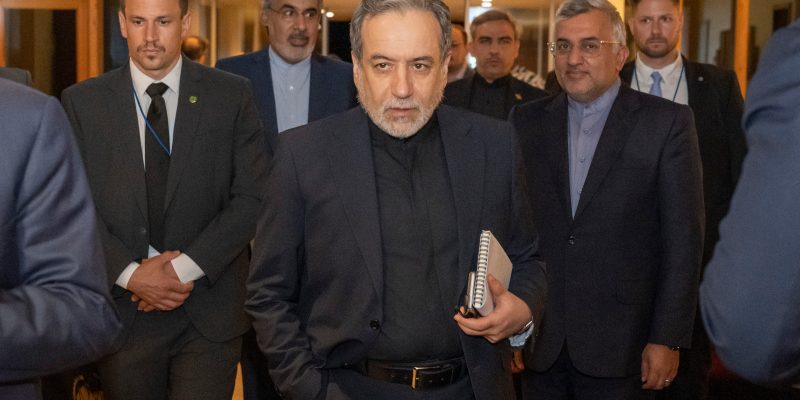
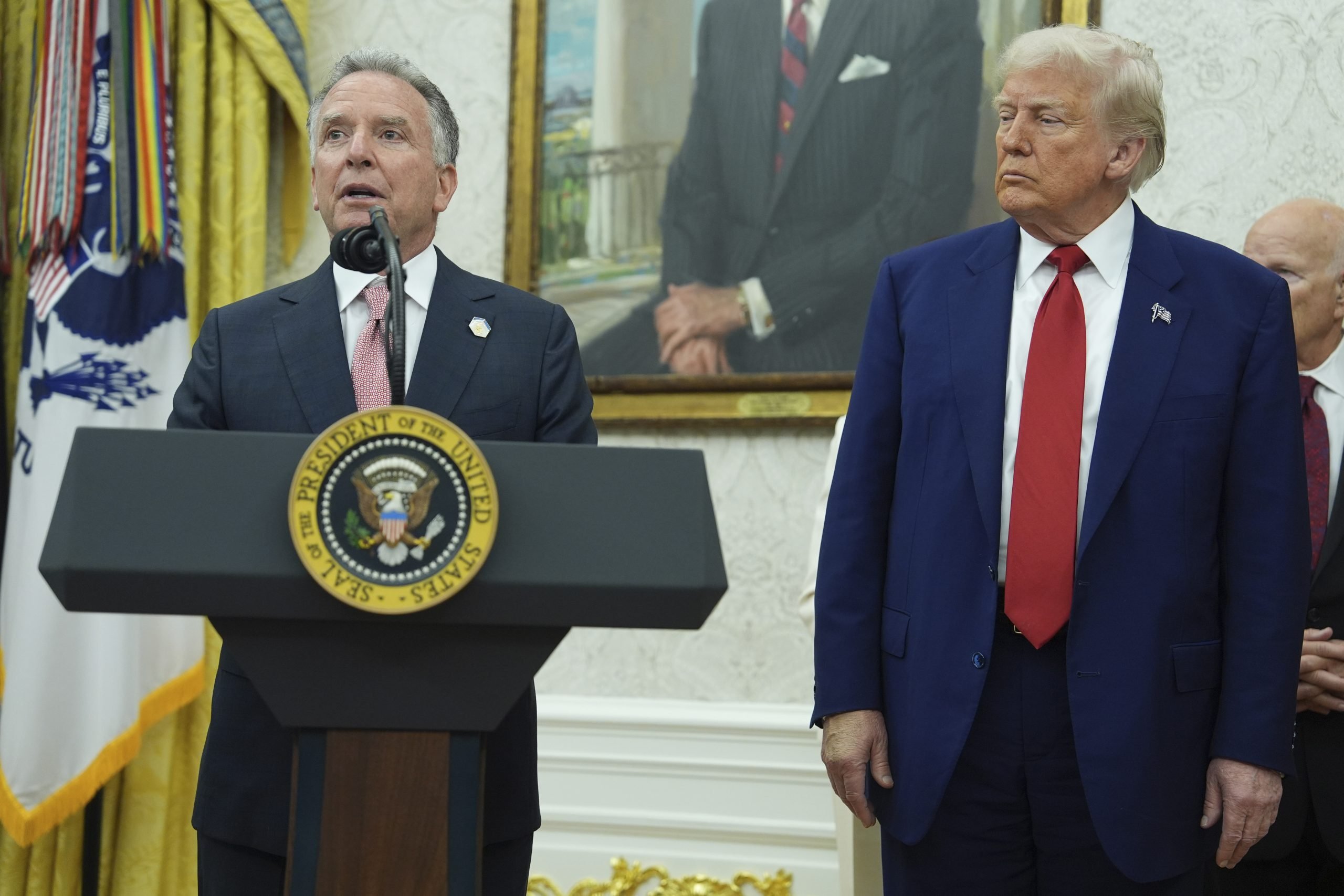
Both Steve Witkoff, U.S. Special Envoy to the Middle East, and Iranian Foreign Minister Abbas Araghchi have engaged in public diplomacy to identify their respective “red lines.” The truth, of course, is that no one will know precisely what a “red line” is until the parties come to an agreement, or negotiations fall apart. Still, understanding the positions of the key players—Iran, the United States, Israel, and the Gulf Cooperation Council (GCC) states in particular—suggest several potential outcomes of these delicate nuclear negotiations.
The United States
In its most recent Annual Threat Assessment, the Office of the Director of National Intelligence stated, “We continue to assess Iran is not building a nuclear weapon.” However, the report also noted that there had been “an erosion of a decades-long taboo on discussing nuclear weapons in public” within Iran. It further speculated that hardliners within the clerical establishment were pressuring Khamenei to develop nuclear weapons, meaning that a change in policy could occur suddenly and without notice.
Senior American officials involved in the ongoing nuclear negotiations have been inconsistent on their final goal in talks. Secretary of State Marco Rubio argues that Iran could be allowed to maintain its nuclear program if it agrees to stop enriching uranium on its soil. Former national security advisor and incoming United Nations ambassador Michael Waltz demanded that Iran dismantle its enrichment program altogether. Steve Witkoff has gone back and forth between seeking to ban enrichment entirely and allowing it at a low level—3.6 percent, similar to the limit imposed on Iran under the 2015 Joint Comprehensive Plan of Action (JCPOA).
On June 2, President Trump made clear his preferred outcome for the negotiations: he will demand that Tehran agrees to a complete halt to all uranium enrichment activities as a condition for any relief from the crippling sanctions. It is known that he harbors ambitions to win the Nobel Peace Prize, and an enduring agreement with Iran could bring him close to achieving this goal. On the other hand, many senior officials and analysts within the Trump administration believe that the time is ripe to force Iran to make significant concessions given Tehran’s perceived economic and strategic weakness. This vulnerability, in conjunction with a credible threat of Israeli or American military strikes, could push the Islamic Republic to make a deal with Washington.
Israel
Prime Minister Benjamin Netanyahu’s perspective on how to capitalize on Iran’s vulnerability differs from that of President Trump. Netanyahu has emphasized in public that Tehran’s period of vulnerability—caused in large part by bold Israeli action across the Middle East, including the wholesale destruction of Hezbollah’s high command in Lebanon and its strikes with impunity inside Iran—will not last forever, and that Iran will sooner or later regain its military strength and strategic position. Furthermore, since October 2023, the right-wing Israeli government has taken an uncompromising and assertive stance toward its regional adversaries. However, given that the Trump administration prefers a diplomatic solution, it is not clear whether Washington would support an Israeli attack on Iran’s nuclear facilities. Without such backing, it is likely that Israeli military strikes would fall short of completely destroying Iran’s nuclear facilities—and they would ignite a massive Iranian response, potentially sparking a broader regional war. In spite of these uncertainties, Netanyahu has maintained his strong opposition to negotiations with Iran; the prime minister has suggested that the only agreement Israel would accept is one similar to the one Washington signed with Libyan dictator Muammar Gaddafi, under which American inspectors would take full charge of dismantling and destroying all nuclear facilities and equipment in Iran.
Iran
Iranian diplomats enjoy a wealth of experience in negotiating with the United States. Indeed, some of Tehran’s current roster of diplomats participated in the creation of the JCPOA almost a decade ago. Throughout the course of its talks with America, Iran has articulated a sophisticated multidimensional strategy on nuclear issues and rarely deviated from it.
This is because despite its vulnerability, Iran retains two main strengths. First, strategic ambiguity grants Tehran significant leverage in negotiations. Some senior officials within the clerical regime claim that Iran is already a threshold state with full capability to make a bomb if it chose to do so. In the same breath, these same officials reaffirm that nuclear weapons have no place in the country’s defense doctrine, and Tehran will not build them. First Vice President Mohammad Reza Aref stated that Iran has never pursued non-peaceful nuclear activities and will continue to hold this stance. Foreign Minister Abbas Araghchi echoed similar sentiments. “Under no circumstances,” he said in April, “will Iran ever seek, develop or acquire nuclear weapons.” Meanwhile, Kamal Kharrazi, an adviser to the Supreme Leader, suggested last year that Iran might change its defense doctrine, further muddying Tehran’s intentions and making it more difficult for Israel and the United States to craft effective policy.
Second, Iran’s military and political leaders have been emphasizing the nation’s strength, claiming that its defense capabilities are among the most resolute they have ever been. Major General Hossein Salami, commander of the Islamic Revolutionary Guard Corps, recently vowed that if attacked, “Iran will open the gates of hell to the Zionist regime relentlessly.”
The GCC States
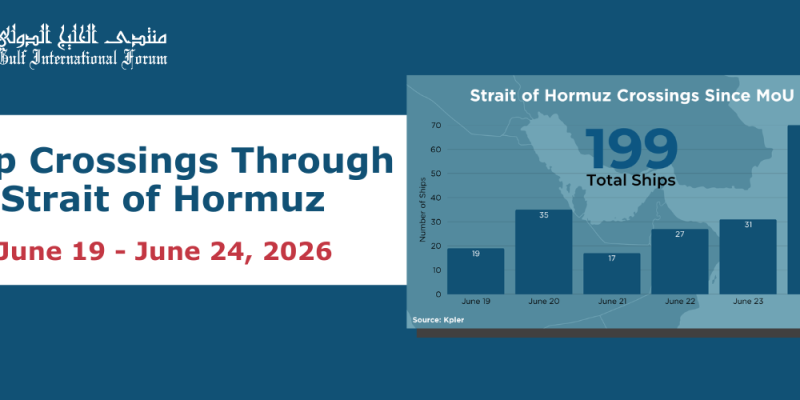
One of the most remarkable developments in the Middle East in the last few years is the dramatic change in GCC-Iran relations and how the GCC as a bloc and the individual Gulf states perceive Iran and the nuclear negotiation. For example, Qatar collects nearly all of its natural gas from a field it shares with Iran. Consequently, Doha has long enjoyed warm relations with Tehran. Acknowledging the key role Doha plays in de-escalating the conflict between Washington and Tehran, President Trump said that Iran should be grateful to the Emir of Qatar for preventing war. Qatari Prime Minister Sheikh Mohammed bin Abdulrahman Al Thani similarly warned that an attack on Iran’s nuclear sites would “leave the Gulf with no water, no fish and no life.” Similarly, Oman shares the Strait of Hormuz with Iran and has been actively involved in nuclear negotiations (both in 2013 and the current round). In April, Saudi Defense Minister Khalid bin Salman al-Saud, Mohammed bin Salman’s brother, visited Iran and met with Ayatollah Khamenei himself in a bid to lower regional tensions.
One main reason for this shift in GCC states’ stand on Iran is their newfound focus on economic development and diversification. GCC leaders, like the rest of the world, understand that the oil era is coming to an end; in the coming decades, oil’s share of global energy mix will shrink, while that of renewables will expand. This makes creating economies that can operate without massive oil revenues a must if Gulf leaders seek to maintain the high standard of living their citizens enjoy. A U.S.-Israel-Iran confrontation could dash these efforts.
Another major reason for the thaw in GCC-Iran relations is the change in the regional strategic landscape. Israel’s military gains since October 2023 have decisively weakened Iran, and instead brought Israel’s rising hegemonic ambitions to the fore. The GCC states are far less concerned today about Iran’s—and its proxies—influence in the Arab world, and are much more worried about the political fallout from the Gaza war, its settlements in the West Bank, and its military occupation of parts of southern Lebanon and Syria.
The Way Ahead
There is no way to predict the outcome of the ongoing negotiations between the United States and Iran. What is clear, however, is that both sides have much to gain by reaching an agreement. Despite America’s overwhelming military power, any military confrontation with Iran would be very costly and likely very long, and it would distract from other pressing responsibilities—such as countering China in the Indo-Pacific. On the other hand, Iran must realize its huge potential and accelerate economic and scientific development, which only rapprochement with the West and its neighbors will provide. The Middle East cannot afford another regional war. Rather, integrating Iran into the Middle East and global trade system would be good for regional and global prosperity and peace.
The views and opinions expressed in this article are those of the authors and do not necessarily reflect the views of Gulf International Forum.
Issue: U.S. – Gulf Policy
Country: Iran

Dr. Gawdat Bahgat is a Non-Resident Senior Fellow at Gulf International Forum and a Professor at the Near East South Asia Center for Strategic Studies at the National Defense University. He is the author of 11 books on the Middle East. His areas of expertise include energy security, proliferation of weapons of mass destruction, Iran and American foreign policy.

The Midterms Might Change Washington’s Gulf Debate, But Not the Relationship
October 27, 2026The ongoing U.S.–Iran war comes at a pivotal moment for U.S. foreign policy. With the increasingly unpopular and drawn-out conflict taking place amid the campaign…

Saudi Arabia’s F-35 Deal Is Taking Shape
October 16, 2026Less than a year after U.S. President Donald Trump publicly backed the sale of F-35 fighter jets to Saudi Arabia, the kingdom’s long-running effort to…

Trump’s War on Iran Runs Through Baghdad
October 8, 2026Seven months into the war with Iran, the Strait of Hormuz remains a major point of contention. Goldman Sachs estimates that Gulf oil flows have…