China’s 15th Five-Year Plan and the Gulf: Partners in a Changing World Order
As Beijing crafts its 15th Five-Year Plan, GCC states emerge as indispensable partners—linking Global South and North through energy, innovation, and diplomacy, shaping a multipolar order of resilience, prosperity, and shared advancement.

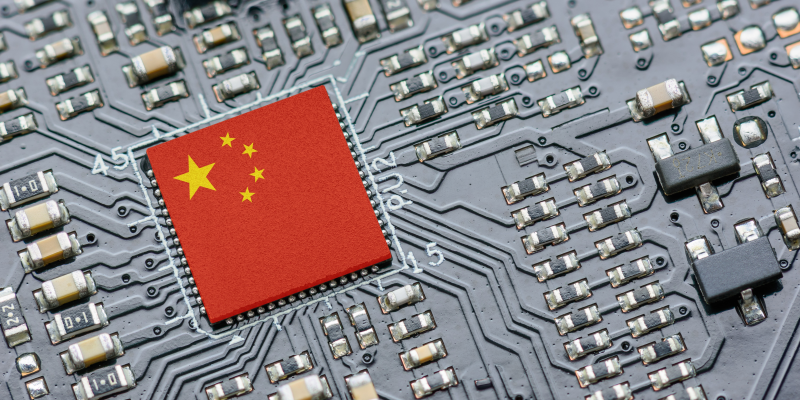
The states of the Gulf Cooperation Council (GCC) have emerged as indispensable strategic partners in China’s quest for greater economic resilience, cutting-edge innovation, and expanded global sway as Beijing develops its 15th Five-Year Plan (2026-2030). The burgeoning partnerships linking the Gulf and China transcend traditional energy dependencies—positioning the GCC states as dynamic bridges between the Global South’s aspirations and the Global North’s highly advanced economies. Benefiting from their youthful demographics, ambitious diversification agendas, and substantial geopolitical influence, the Gulf states can partner with China to usher in a multipolar world order marked by mutual prosperity and shared technological advancements.
China’s Strategic Approach to the Gulf States
Today, China sees the GCC states as crucial commercial and strategic partners—far more valuable than simply a source for oil and gas, which defined China-Gulf relations for much of the twentieth century. Fundamentally, leaders in Beijing perceive the Gulf monarchies as strategic actors in a multipolar world, who above all, occupy a distinctive central space between the Global South and Global North. This positioning stems from the reality that, despite having significant hydrocarbon-driven wealth and purchasing power that rivals that of developed nations, Gulf states continue to pursue diversification strategies more often embraced by emerging economies. China, recognizing this duality, views the GCC states as a band of ideal customers for Chinese exports—particularly renewables and high-tech products. Meanwhile, as relative latecomers on the international stage, the GCC states advocate for the democratization of international relations and prize their strategic autonomy. This shared ethos—evident in their eastward pivot toward partners like China, India, Japan and South Korea—creates fertile ground for collaboration.
Second, China views the Gulf region as an area brimming with developmental potential, ripe for the practical application of new cutting-edge technologies. This opportunity comes as Beijing grapples with a sharply declining population growth rate and concomitant challenges in stimulating domestic demand amid economic maturation. The GCC youth bulge—over 50 percent of the population in countries like Saudi Arabia and the UAE is under 30, for example—makes these states ideal partners for China’s export-driven economic model. Coupled with the ambitious economic diversification agendas espoused by the Gulf states, it is easy to imagine future demand for Chinese high-tech solutions in urban development and sustainability.
The Gulf hosts some of the world’s most expansive infrastructure endeavors, including digital networks and mega-projects that integrate advanced technologies. For instance, Saudi Arabia’s NEOM has incorporated Chinese solar innovations, with firms like JinkoSolar supplying 1 GW of modules for its green hydrogen plant. Other entities, such as Sunshine Power, have contributed to renewable energy systems, yielding invaluable real-world data to refine Chinese products for a global market. These collaborations highlight the Gulf’s potential for piloting and scaling technological advancements, directly bolstering the 15th Plan’s strategic imperatives for resilient, innovation-driven international partnerships.
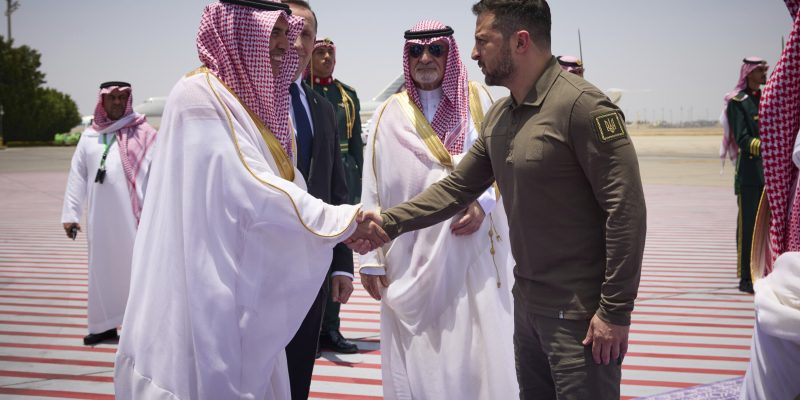
Third, China perceives the GCC nations as middle powers capable of exerting exceptional leverage, a critical facet for states in an increasingly multipolar international system. Saudi Arabia has demonstrated its diplomatic clout through mediation in the ongoing Russia-Ukraine conflict, arranging partial ceasefires and prisoner exchanges. Concurrently, other GCC states maintain significant influence in Africa, where the UAE mediation efforts produced the 2018 Ethiopia-Eritrea reconciliation and Qatar mediated the 2025 peace agreement between the Democratic Republic of Congo and Rwanda. Furthermore, the UAE, with help from other GCC states, channeled over $100 billion into infrastructure, energy, and diversification sectors in Africa, departments that often intersect with China’s Belt and Road Initiative (BRI). While these investments occasionally clash, particularly in mining and port developments, they generally synergize, enabling co-financing that mitigates risks for Beijing while enhancing GCC influence. These shared principles of international mediation and economic engagement have elevated the GCC states’ global stature and demonstrated their indispensability as a viable partner for China in navigating a fragmented global order.
Evolving Patterns of Engagement and Co-operation
It is within this context that China’s engagement with the GCC states is undergoing a profound evolution. The relationships that undergird their broader partnership have become increasingly multifaceted, incorporating emerging sectors, soft power initiatives, and multilateral frameworks.
While traditional hydrocarbon trade with the Gulf monarchies continues to underpin China’s energy security, Beijing is actively pursuing incremental collaborations in the digital economy, renewable energy, and finance sectors to foster mutual resilience amid rising global uncertainty. In the digital realm, GCC mobile network operators are positioning themselves as global frontrunners in 5G and 5.5G deployment, predominantly through partnerships with Chinese firms like Huawei and ZTE. Meanwhile, the renewable energy sector leverages synergistic strengths: China’s unparalleled manufacturing capability in solar panels and wind turbines pairs with the Arabian Peninsula’s abundant solar irradiation and sparsely populated land. This collaboration results in Chinese-supplied solar farms in Saudi Arabia and the UAE that enhance the local transition to green energy while addressing Beijing’s overcapacity in solar production. This compatibility extends to reciprocal investments by Gulf sovereign wealth funds into China’s electric vehicle (EV) and battery industries—exemplified by Abu Dhabi’s $2.2 billion stake in NIO and Saudi Aramco’s joint ventures with BYD, both of which are prominent Chinese electric car manufacturers. Furthermore, financial ties are deepening as the Chinese government encourages Gulf banks to establish branches in major cities like Beijing and Shanghai, which coincides with attempts to promote “panda bonds” to facilitate RMB-denominated financing.
In recent years, China has increasingly pivoted towards bolstering its soft power as a means to amplify influence in the Gulf region. Moving beyond traditional hard power levers, such as overt investment and military cooperation, China aims to foster deeper cultural affinities that resonate with the Gulf’s burgeoning tourism and youth-oriented economic strategies. This shift is evident in Beijing’s unprecedented emphasis on contemporary cultural exchanges. Rather than solely promoting classic symbols of Chinese culture like kung fu, the Peking Opera, and qipao, China is crafting innovative cultural narratives by positioning e-sports and video games as pivotal exports. Capitalizing on its dominant gaming industry—which generated 47 percent of global mobile game revenue in 2023—Beijing is driving digital diplomacy and mutual engagement on a global scale, which not only propels the country’s digital outreach, but also fosters cultural ties through shared gaming experiences.
Preparing for a Multipolar World
Acknowledging the international influence of the Gulf states, China envisions extending the GCC’s clout beyond the confines of the Middle East to help usher in a multipolar world. Departing from its historical emphasis on bilateral engagement, Beijing has come to embrace multilateral frameworks that amplify collective influence and foster inclusive cooperation. This strategic pivot is exemplified by the inaugural ASEAN-GCC-China Summit, where world leaders committed to deepening BRI cooperation, enhancing trade through accelerated free trade agreements, and de-escalating international tensions, particularly in the Middle East. By integrating the increasingly powerful GCC states into such forums, multilateralism not only elevates the Gulf monarchies’ diplomatic footprint, but simultaneously supports China’s vision for interconnected development and third-party cooperation.
Looking ahead, the GCC’s role in China’s 15th Five-Year Plan will transcend economics, embodying a strategic alliance for shared prosperity. As demographics continue to shift and historical relations transform, Beijing will position the Gulf states as central to its international ambitions. By redefining this traditional South-South cooperation, China will look to drive sustainable growth into 2030 and beyond.
The views and opinions expressed in this article are those of the authors and do not necessarily reflect the views of Gulf International Forum.
Issue: Geopolitics
Country: GCC

Dr. Chuchu Zhang is an Associate Professor at School of International Relations and Public Affairs, and Deputy Director of the Center for Middle Eastern Studies, at Fudan University, China. She is also Adjunct Professor at ESSCA School of Management, France. She received her PhD in Politics and International Studies, University of Cambridge, UK. Her research focuses on China-Middle Eastern relations, China’s foreign policy, and geoeconomics. She is author of Islamist Party Mobilization: Tunisia’s Ennahda and Algeria’s HMS Compared, 1989-2014 (Palgrave, 2020). She has published in a number of peer reviewed journals including International Relations, The Pacific Review, Mediterranean Politics, Eurasian Geography and Economics, Middle East Policy, Environment and Planning: Economy and Space, Globalizations, and Pacific Focus.

China’s Technology Development Push Meets Gulf Diversification
October 6, 2026China’s “new quality productive forces” (NQPF) are often understood as a domestic effort to revive growth, upgrade industry, and reduce dependence on Western technology. Yet…

Riyadh Shifts Toward Minilateralism as Regional Threats Mount
September 9, 2026Saudi Arabia’s signing of the Mecca Joint Defense Agreement with Türkiye and Pakistan on August 7 marks a crucial development in the evolution of the…

Toward a New Order in MENA Regional Geopolitics
September 2, 2026This report is a byproduct of the workshop “Toward a New Order in MENA Regional Geopolitics: What’s Next for the Region’s Geopolitical Equilibrium?,” hosted in…