Guarding the Gulf: EU-GCC Efforts to Strengthen Nuclear Preparedness
As CBRN and natural-hazard risks rise, new EU–GCC initiatives are driving the Gulf toward a more coordinated, regionwide resilience architecture.

At the 29th Joint Council and Ministerial Meeting held in Kuwait in October, the European Union (EU) and the Gulf Cooperation Council (GCC) reaffirmed their deepening strategic partnership, highlighting emergency management and nuclear disaster prevention as critical areas of cooperation.
Building on a growing record of EU-GCC collaboration on nuclear safety, both blocs welcomed the signing of an administrative agreement between the GCC Emergency Management Center (GCC-EMC) and the European Commission’s Directorate-General for European Civil Protection and Humanitarian Aid Operations (DG ECHO)—a move designed to consolidate joint disaster preparedness and response mechanisms.
While often overshadowed by more high-profile issues such as trade, energy, and security, this cooperation in disaster response proved its strategic relevance in June 2025. The 12-Day War triggered fears of nuclear contamination across the Gulf, underscoring that radiological risk management is no longer theoretical but an operational necessity for both Europe and the Gulf.
Nuclear Risk in the Gulf
As a semi-enclosed and densely populated region, the Gulf is acutely vulnerable to the transboundary effects of Chemical, Biological, Radiological, and Nuclear (CBRN) incidents. While nuclear events may stem from natural disasters or human error, the June 2025 Israeli airstrikes on Iranian nuclear sites underscored that the deliberate targeting of nuclear facilities remains among the most destabilizing threats to Gulf security.
Claims by an Israeli military spokesperson that strikes had hit the Bushehr nuclear power plant—Iran’s only operational reactor, located on the Gulf coast—sparked widespread fear of an atomic catastrophe in a region heavily reliant on desalinated water. The statement was later corrected to clarify that the attacks had only targeted Natanz, Isfahan, Arak, and Tehran—sites hosting enrichment facilities, uranium conversion plants, and unfinished or research reactors. These sites have comparatively lower radiological risk, with threats arising primarily from the dispersion of harmful chemicals.
This episode revealed the fragile balance between nuclear deterrence and nuclear disaster in the Gulf. A strike on Bushehr would carry far-reaching environmental and humanitarian consequences. It could rupture reactor containment systems or hit stockpiles of spent fuel, releasing radioactive isotopes and contaminating the atmosphere and marine ecosystem.
In this high-risk environment, the GCC-EMC was formally activated as a precautionary measure to monitor environmental and radiological indicators. No abnormal radiation levels were detected, but the activation itself demonstrated the GCC’s growing institutional maturity in crisis response. The incident also highlighted the strategic urgency of developing robust regional mechanisms to manage radiological contingencies in one of the world’s most critical maritime corridors.
Building Nuclear Safety Through EU-GCC Initiatives
Since 2017, the EU has deepened its cooperation with GCC countries on nuclear safety. This partnership responds to the critical need for integrated radiological monitoring and harmonized emergency preparedness across the region.
Strengthening the GCC-EMC’s readiness to manage nuclear or radiological crises has become a top EU priority under its Instrument for Nuclear Safety Cooperation, an initiative promoting a strong nuclear safety and radiation protection culture in non-EU countries. Within this framework, in 2019, the European Commission (EC) launched a €500,000 ($540,000) project to enhance the GCC-EMC’s operational capabilities through the installation of the Java Real-time Online Decision Support System (JRODOS).
Developed by Germany’s Karlsruhe Institute of Technology, JRODOS is a non-commercial, computer-based decision support system used across several European national crisis-response centers. The system supports emergency management during radiological and nuclear accidents by providing real-time modeling, impact forecasting, and data visualization to guide decision-making and protect populations and ecosystems.
The project unfolded in three stages: first, customizing JRODOS and linking it to Kuwait’s national radiation monitoring network; second, extending it to all GCC member states and integrating all GCC national monitoring networks; and finally, ensuring long-term sustainability through a localized training program on JRODOS operation and maintenance. Completed in 2024, the initiative effectively closed a longstanding gap in the Gulf’s regional nuclear risk monitoring and emergency preparedness architecture.
Notably, Brussels prioritized building lasting expertise in the Gulf over providing short-term technical support by tailoring JRODOS to GCC conditions and end-users. An EU official told the Forum that “training of operators and decision makers was provided and procedures developed to underpin its [JRODOS] operation. Numerous exercises from small-scale (online) exercises to desktop command and control exercises for each country were prepared.” To ensure long-term sustainability, the project “included a large-scale exercise with the assistance provided by JRODOS to the GCC during the IAEA ConvEx-3 exercise in October 2021,” while also ensuring that “a long-term training plan was established and the training material, including a train-the-trainers’ course, developed.”
Building on this achievement, the EU-GCC radiological safety cooperation reached another milestone in April 2025 with the successful completion of the EXTRA-EURDEP project along with the full operational launch of the GCC-RDEP.
The European Radiological Data Exchange Platform (EURDEP) represents the EU’s official real-time exchange mechanism for radiological data. EXTRA-EURDEP aimed at extending the EURDEP model to partner regions, including the GCC. The customized GCC-RDEP now enables real-time sharing of environmental radiological readings across Gulf countries, bolstering early-warning capabilities and regional emergency response coordination in case of radiological incidents.
Together, the twin systems—JRODOS and GCC-RDEP—have established an integrated radiological monitoring and information-sharing framework for the Gulf. “The success of the GCC-RDEP and JRODOS are powerful examples of the strong EU-GCC, further solidifying their commitment to regional security and environmental safety,” an EU official told the Forum. He also added that “the results shall be seen as especially supportive to enhanced engagement between the EU and GCC on Structured Security Dialogue in general, and inter-institutional strategic cooperation in civil protection in particular”.
Beyond their technical value, these tools represent a concrete manifestation of the deepening EU-GCC partnership, showcasing the capacity of the two blocs to implement operational cooperation in critical domains.
Enhancing Gulf Capacity for CBRN Response
Another key pillar of EU-GCC cooperation in the field of crisis preparedness and non-traditional security is the EU’s CBRN Centers of Excellence (CoE) Initiative. Launched in 2010, the CoE initiative seeks to strengthen the institutional capacity of partner countries to prevent, detect, and respond to crises. Supported by the United Nations Interregional Crime and Justice Research Institute (UNICRI), the initiative follows a bottom-up, demand-driven approach that ensures programs are tailored to local and regional needs. As of today, the CoE network encompasses 63 partner countries across eight regional secretariats. Since its establishment in Abu Dhabi in 2014, the GCC Regional Secretariat has become a particularly active node in the network.
In 2016, it coordinated The Falcon Exercise—the first inter-Arab nuclear detection and response exercise. The three-day event brought together over 200 participants and included tabletop exercises simulating nuclear terrorist scenarios through technical workshops. Two years later, the Secretariat and the GCC-EMC co-organized the first joint regional workshop, emphasizing the need for coordinated regional response mechanisms to address chemical and biological weapon incidents, widely regarded as among the Gulf’s most acute security challenges.
Among the most tangible outcomes of this cooperation is Project 82, an EU-financed initiative launched in 2019 to build medical preparedness and response capacity for CBRN incidents in the GCC region. Conducted in partnership with the UAE, Saudi Arabia, Kuwait, Bahrain, and Qatar, Project 82 aimed to establish a sustainable training framework, ensuring ongoing national and regional capacity to train new batches of first- and second-line medical response teams on CBRN casualty management. The program culminated in March 2023 with a regional training-the-trainers course at Abu Dhabi’s Civil Defense Academy, where 52 medical professionals were certified as master trainers.
Over the years, EU-GCC cooperation has matured, transitioning from conceptual frameworks to operational outcomes. These initiatives have created enduring institutional linkages, trained human capital, and shared standards for crisis preparedness across the Gulf region. They also illustrate how CBRN cooperation has evolved into a strategic trust-building mechanism—anchoring the EU’s technical expertise and the Gulf’s security needs in a pragmatic framework of mutual benefit.
Strengthening Gulf Resilience
Building on EU-supported progress, the GCC has also advanced its own initiatives to strengthen regional preparedness and response capacities. In January 2025, the GCC-EMC conducted the Isnad 1 (meaning “support” in Arabic) exercise that aims to enhance the Gulf’s emergency and crisis-response capabilities. The training event covered everything from conventional risks such as maritime accidents and oil spills to the worst-case scenarios of radiological and nuclear hazards. Convening in August 2025, the GCC technical team designed Isnad’s second iteration, underscoring the region’s growing emphasis on preparedness and intra-GCC coordination, and finalized the 2025-2026 work plan, a roadmap to strengthen joint emergency and crisis-response capabilities.
These exercises strengthened the bloc’s capabilities, advanced a unified GCC approach to CBRN and nuclear risks, and demonstrated that the GCC can now conduct training independently. Additionally, the GCC-EMC, in cooperation with the EU CBRN CoE, organized multiple regional workshops on hazardous-material-related incident management and scenario-based discussions. These trainings are essential in a region where CBRN threats cross national borders.
Moving Forward
The often overlooked EU-GCC cooperation has yielded strategically important results for both blocs. The successful activation of the GCC-EMC during the June 2025 12-Day War demonstrated the operational value of EU-supported tools such as JRODOS, which has since become a key element of regional nuclear preparedness.
Although the fragile calm following the Trump Administration’s peace plan appears to be holding, bringing with it a temporary pause in the Israeli-Iranian military confrontation, tensions remain volatile. For Gulf policymakers, maintaining a high state of readiness is a strategic necessity. Sustained investment in radiological safety and the continued strengthening of capacity-building will be crucial to ensuring that the region remains prepared for the unpredictable dynamics of its evolving security environment.
The views and opinions expressed in this article are those of the authors and do not necessarily reflect the views of Gulf International Forum.
Issue: Defense & Security
Country: GCC

Leonardo Jacopo Maria Mazzucco is a PhD candidate in Institutions and Policies at the Catholic University of Milan, Italy. His research interests revolve around the foreign policy and security affairs of the Gulf region. He tweets at @mazz_Leonardo.
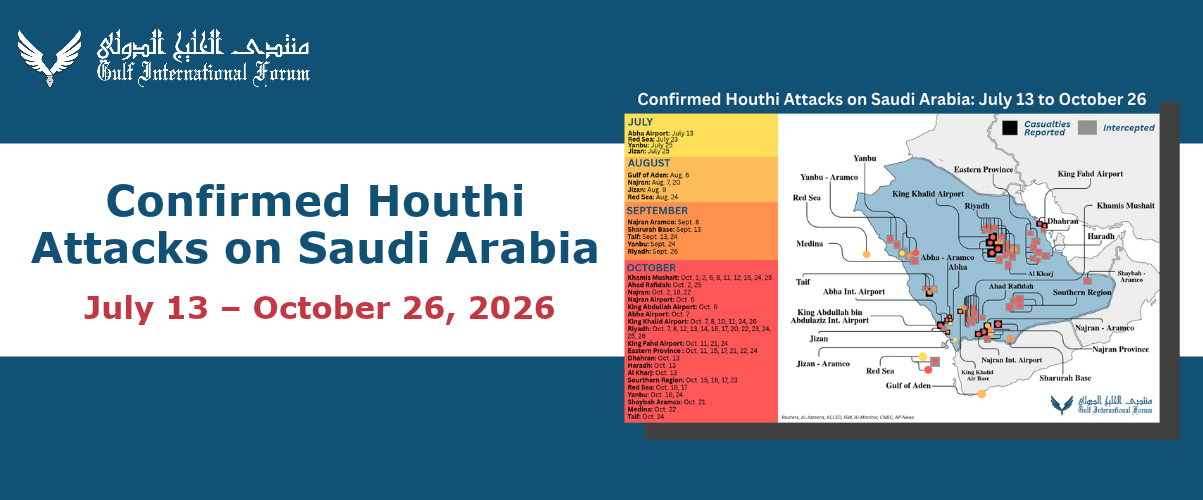
Confirmed Houthi Attacks on Saudi Arabia: July 13 to October 26
October 28, 2026
Toward a New Order in MENA Regional Geopolitics
September 2, 2026This report is a byproduct of the workshop “Toward a New Order in MENA Regional Geopolitics: What’s Next for the Region’s Geopolitical Equilibrium?,” hosted in…
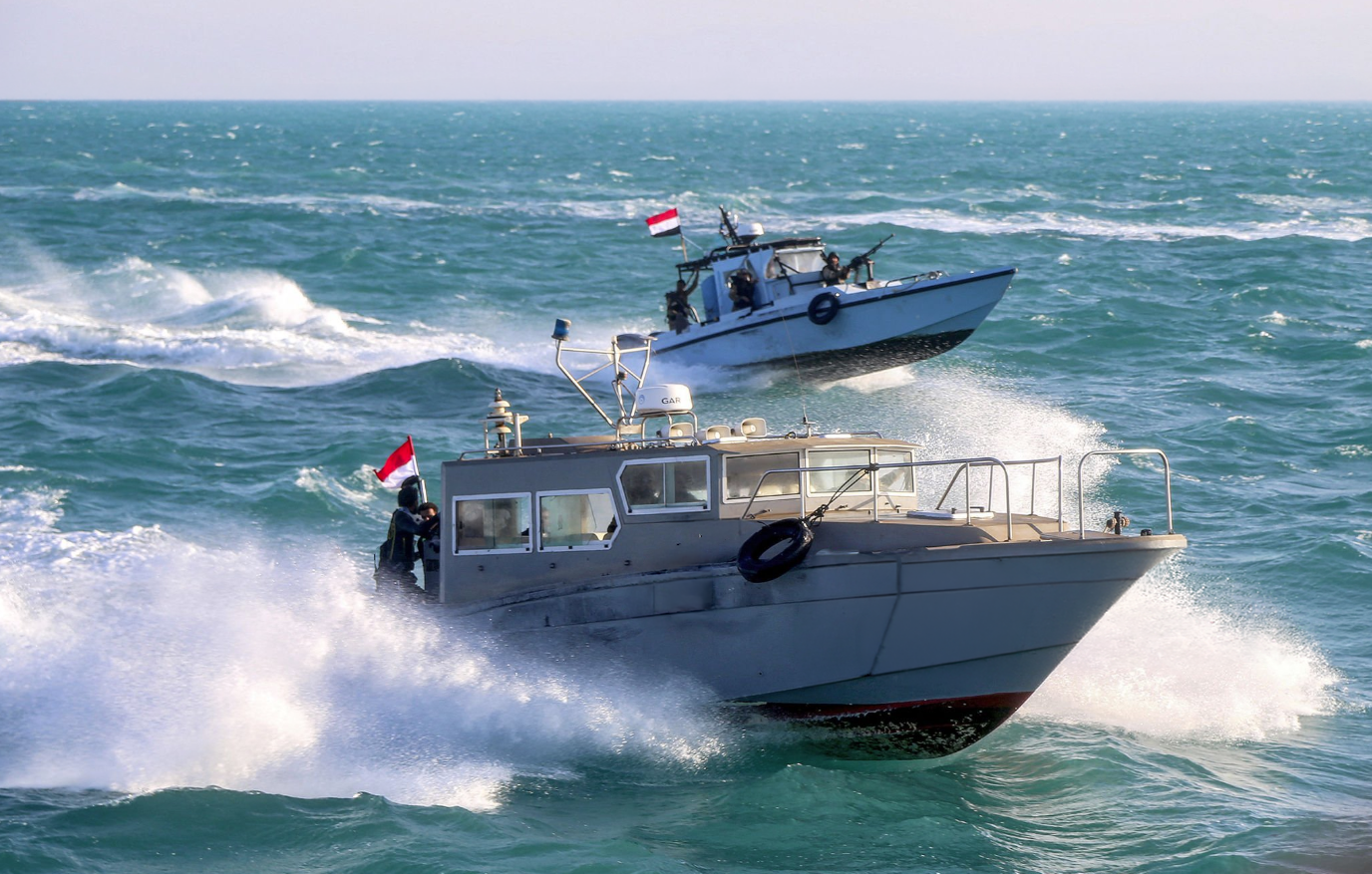
Yemen’s Emerging Role in the Red Sea
August 27, 2026On August 4, 2026, the Yemeni Coast Guard (YCG) rescued the 14-member crew of the Indian-flagged commercial vessel Faize Noore Oliya. Transiting the Red Sea…