Gulf Security, Iranian Isolation, and Regional Paramountcy After the War
What follows the war is not a new regional order, but a contest between a weakened Iran, hedging Gulf states, and an emboldened Israel pursuing regional primacy.

In the wake of the recent ceasefire, there is much talk of a “New Middle East.” The phrase implies a transition toward something new—a more stable, more integrated regional order emerging from the wreckage of conflict. The evidence tells a different story. What is taking shape is colder and more competitive than what came before. It is not a new order, but a prolonged contest between incompatible visions of regional security, none of which hold dominance. That contest will define Gulf–Iran relations, U.S. security commitments, and Israeli regional ambitions for the foreseeable future.
No Return to Détente
Tehran’s asymmetric tools, including maritime harassment, proxy activation, drone use, and missile capacity, do not depend on conventional strength. Iran has been structurally weakened through this war; economically constrained and diplomatically narrowed. But Gulf Cooperation Council (GCC) states understand a weakened Iran is not necessarily a less dangerous Iran. Most Gulf elites now consider the Iranian regime a fundamental threat; one they may be forced to tolerate, but are unlikely to reintegrate into the regional order anytime soon.
As a result, Gulf states are likely to engage Iran through a policy of deterrence, distance, and pressure. This marks a sharp departure from the détente and de-escalation approaches that were being pursued until recently and reflects the consequence of Iranian attacks on civilian infrastructure in the GCC since the outbreak of the war.
The resulting atmosphere may resemble the structured hostility that defined Arab relations with Iraq after 1991. Formal engagement at a shallow diplomatic level is combined with deep suspicion and limited cooperation. It may also resemble long-term adversarial forced coexistence, where communication exists primarily to prevent escalation rather than to pursue reconciliation. Already constrained before the war, Iran’s economy will likely face even greater pressure in its aftermath, especially in its relations with neighboring states, while political engagement becomes increasingly cautious and transactional. The freeze may not be absolute; but it is likely to be durable, and consequential.
Over time, this pressure could evolve further. Containment accepts Iranian influence where it exists and seeks to prevent expansion. Gradual degradation, by contrast, applies sustained economic, diplomatic, and financial pressure to erode Iranian capabilities over time. Whether Iran’s trajectory comes to resemble Iraq post 1991, Syria in the last few years of the Assad regime, North Korea, or some hybrid model remains uncertain. What is clear is that the effect of multiple actors pursuing overlapping strategies will reshape Iran’s regional position. Gulf states, however, are unlikely to support destabilizing efforts at forced immediate regime change, which would likely be accompanied by state collapse.
Wary of Washington, Alert to Tel Aviv
Since the start of the war, Iran has treated the Gulf states as viable targets for retaliatory attacks. This calculation rests on the assumption that all GCC states are embedded within, and therefore, as far as Iran is concerned, complicit in the regional U.S. security architecture. Yet despite being consistently targeted, the Gulf states have generally refrained from going on the offensive. This dynamic underpins Iran’s broader stance on the region. Tehran’s position, rather maximalist, has been clear: Iran demands that the GCC expel U.S. troops from the region, and until it does, the GCC is liable to be targeted.
Iranian strikes on the Gulf are likely to have the opposite effect. Security ties with Washington are more likely than not to deepen. The demonstrated effectiveness of Iranian missile and drone capabilities will reinforce the case for integrated air and missile defense, expanded intelligence sharing, and more robust operational planning. Gulf states will not relinquish these capabilities provided by the United States simply because Iran demands it; on the contrary, they are more likely to entrench Gulf-U.S. defense ties further.
Yet deeper alignment with Washington does not mean the Gulf will end its ongoing geopolitical and economic hedging. The Gulf’s resulting diversification trajectory, constructed deliberately over the past decade, will accelerate. Economic, technological, and defense relationships with Asian, European, and other global partners are also likely to deepen; not as alternatives to the U.S. relationship, but as additional hedges against American volatility. That volatility has been handily shown multiple times, and no less than the decision to go into this war. No Gulf state is going to disregard the fact that the United States launched a war of choice in the region without full consideration for their security concerns, in coordination with Israel, which is widely viewed in the Gulf as a source of instability.
Alongside concerns about Iranian designs and visions for the region, Gulf states are deeply concerned about Tel Aviv and notions of Israeli regional paramountcy. This presents a complicating variable that interacts directly with the degradation and quarantine dynamic that is currently being considered with regards to Iran. Defined by technological superiority, cross-theater operational reach, and deep intelligence penetration, Israeli paramountcy has shifted from aspiration toward operational posture. A regional hierarchy dominated by Israel is not an outcome the Gulf states will accept. Israel currently faces charges of genocide at the International Court of Justice, and the International Criminal Court has a warrant out for Israeli Prime Minister Benjamin Netanyahu for war crimes. Moreover, Israel’s escalatory actions in Lebanon and Syria are being noted in the region as evidence not of defensive necessity, but expansionism and a desire to promote exceptional Israeli freedom of action in the region.
A Colder Regional Order
What emerges from these overlapping trends is neither definitively stable, nor unstable. It may be stable enough to avoid major war in the near term, yet unstable enough to sustain chronic tension that could periodically escalate into further conflict. Iran remains a central but increasingly weakened actor, facing a growing number of adversaries pursuing gradual degradation rather than simple containment. Gulf states will deepen security ties with Washington while simultaneously hedging against U.S. volatility. Meanwhile, Israeli military operations are actively reshaping the regional strategic environment, forcing Gulf states into reactive positioning they did not choose, and leaving broader regional integration unrealistic in the near term. Economic and diplomatic interactions between Gulf states and Tehran will likely narrow without collapsing entirely.
The challenge for Gulf policymakers will be one of balance management: sustaining deterrence without provoking escalation, and diversifying partnerships without weakening the core security relationship with the United States. These tensions are not resolved but managed unevenly amid persistent competitive pressure.
The war’s end will not herald an era of reconciliation. Instead, it points to a colder regional order defined by structured hostility, strategic hedging, sustained pressure on Iran, and an emboldened Israel underpinned by U.S. support. It’s a paramountcy project viewed as illegitimate across the region writ large. The resulting equilibrium will be uncomfortable but durable; holding not because tensions are resolved, but because no actor can yet decisively overturn it.
The views and opinions expressed in this article are those of the authors and do not necessarily reflect the views of Gulf International Forum.
Issue: Geopolitics
Country: GCC
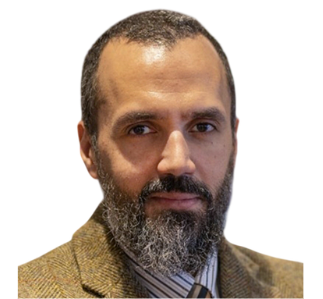
Dr. H.A. Hellyer is Senior Associate Fellow at the Royal United Services Institute for Defence & Security Studies (RUSI) and Senior Fellow in Geopolitics and Security at the Center for American Progress, bringing more than twenty years of transatlantic policy experience to the analysis of political risk, regional order, and strategic competition across the Middle East, Europe, and Southeast Asia. Following fellowship and scholarly roles at Brookings Institution and the Carnegie Endowment for International Peace, Dr. Hellyer now provides strategic analysis at the intersection of geopolitics, security, and geoeconomics, with particular expertise in Gulf security dynamics, Arab state hedging strategies, and the reconfiguration of regional alliances. He was appointed Deputy Convenor of the UK Government’s Taskforce on Tackling Radicalisation and served as the first Economic & Social Research Council Fellow in the Foreign & Commonwealth Office, bridging academic rigor with operational policy experience across governmental and corporate advisory environments. His analysis appears regularly on CNN, BBC, and Al Jazeera, and he has published in the Washington Post, New York Times, Financial Times, Foreign Policy, Politico, and the Guardian. He is the author of nine books and more than twenty peer-reviewed articles, book chapters, and policy monographs. X/Twitter: @hahellyer

Beyond Hormuz: Why Balochistan Matters to Gulf Energy Security
October 21, 2026A conflict long treated as peripheral to Gulf security is becoming harder to ignore as the war with Iran puts pressure on the region’s maritime…
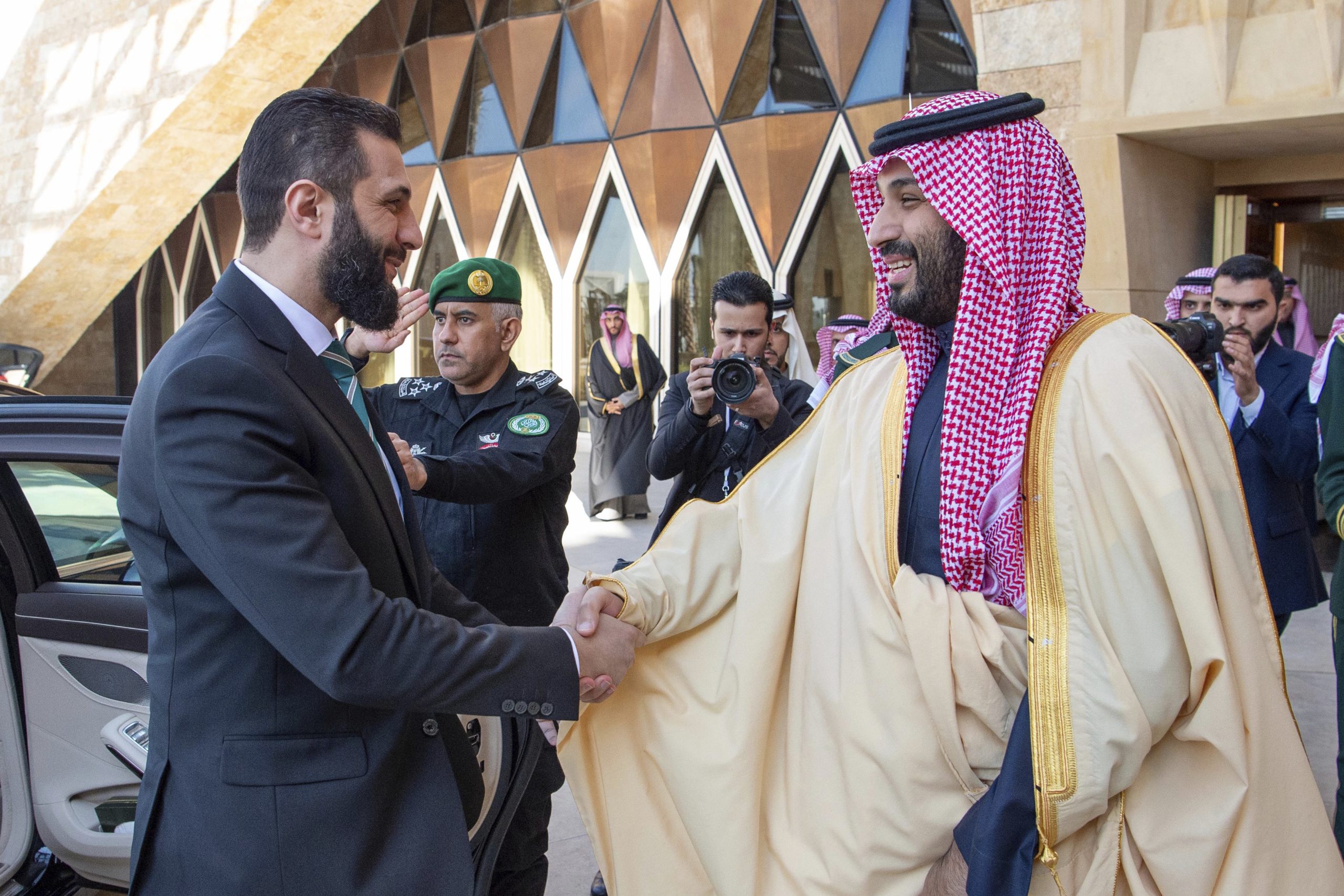
Should Syria and Qatar Join the Mecca Pact?
October 9, 2026Three years of cascading conflict have fundamentally transformed the Middle East’s security outlook. American weapons, military deployments, and security guarantees remain central to the region….

China’s Technology Development Push Meets Gulf Diversification
October 6, 2026China’s “new quality productive forces” (NQPF) are often understood as a domestic effort to revive growth, upgrade industry, and reduce dependence on Western technology. Yet…