The GCC Calls Iran’s Bluff: How the Dorra Gas Field is Testing Regional Diplomacy
A weakened Iran lacks the leverage to contest Kuwaiti control over a disputed gas field.

Over the past five months, the Gulf region has seen simmering tensions punctuated by bouts of acute instability as Israel and Iran have traded blows. The 12-day war spurred the creation of a precarious environment for GCC states like Qatar, which fell victim to Israeli attack on September 9. At this complicated juncture, an old dispute between Kuwait and Iran over the Dorra Gas Field has re-emerged as another regional flashpoint.
On September 2, Iran’s Foreign Ministry issued a statement rejecting the stance of the GCC states that backed Kuwait’s rights to the gas field, labeling it as a “one-sided claim.” Instead, Tehran asserted what it called its “historical and legal rights” to vast swaths of the disputed field. The Iranian Revolutionary Guard Corps (IRGC) Brigadier General Abdorreza Abed, who leads the group’s construction arm, claimed that Tehran controls around 40 percent of the field and that this share should be secured.
Old Wounds
The roots of the Dorra dispute date back to the 1960s, when Iran and Kuwait granted exploration rights for the field to different companies. This conflict halted gas exploration in the area, entrenching a dispute over ownership and development rights that persists today. In a pivotal move in March 2022, Kuwait and Saudi Arabia signed a deal to harness the potential of the Dorra field together. Since then, Kuwait and Iran have engaged in a war of words over the area, with the Kuwaiti-Saudi alliance largely holding the upper hand due to the increasing alignment between the two Gulf countries, the broader support they received from the GCC as a bloc, and Iran’s weakening position.
Two GCC communiqués this year—in May and September—reaffirmed the Arab claim to Dorra, asserting that the entire Dorra field lies within Kuwait’s exclusive economic zone and that the adjacent natural resources are jointly and solely owned by Kuwait and Saudi Arabia. This language leaves no room for Iran’s claims, providing Kuwait with the political cover to proceed with development despite objections from Tehran.
On the ground and at sea, Kuwait and Saudi Arabia have taken concrete steps to stake their claim. The Kuwait Gulf Oil Company has initiated early contractor engagement for an onshore gas-processing plant—essential infrastructure for receiving and treating future Dorra gas landed in Kuwait. Meanwhile, Al-Khafji Joint Operations (KJO), the Saudi-Kuwaiti joint venture overseeing offshore operations, has accelerated the bidding timetable for contract work involving offshore engineering, procurement, and construction. While production has not yet begun, these actions lay the groundwork for the $10 billion project.
Meanwhile, Iran has maintained its historical stance that approximately 40 percent of the Dorra gas field lies within Iranian waters, rendering any Kuwaiti-Saudi actions without Tehran’s consent illegitimate. This 40-percent figure is echoed by IRGC-linked and state-aligned media. Although the Iranian government has dismissed the GCC’s supportive stance towards Kuwait, it has paired its claims over the gas field with calls for bilateral dialogue—an implicit acknowledgement of the need to both appease domestic pressures and avoid further escalation.
The Interests at Play
The complexity of the Dorra dispute stems not only from the involvement of three parties with disparate motivations and interests, but also from the regional context in which the controversy has arisen. For Kuwait, the Dorra field represents a critical pillar of its energy security strategy. Historically dependent on gas imports to meet its peak electricity demand during the summer, developing a domestic resource of Dorra’s magnitude has become a national priority. This imperative compels Kuwaiti leaders to maintain momentum and avoid making concessions to Iran.
As the region’s preeminent power and Kuwait’s senior partner, Saudi Arabia’s participation through KJO lends institutional weight and credibility to the development. Riyadh’s backing provides a crucial military and diplomatic shield for Kuwait, while its recently improved relations with Iran suggest that the Kingdom will remain in a position to manage the dispute.
For Iran, the situation is more complex and potentially more perilous. Constrained by international sanctions and other pressing issues that demand the government’s attention, Tehran can ill afford a bitter conflict over a gas field that it cannot easily monetize in the first place. The outcome of this dilemma is simple: Iran has embraced hardline rhetoric while avoiding kinetic action to prevent further isolation, economic strain, or regional escalation—and to secure a face-saving compromise.
A War of Words, Not Weapons
As Kuwait and Saudi Arabia cement their control over the Dorra Gas Field, a rational approach would suggest that the most probable near-term outcome is not a military clash, but a torrent of criticism from Iran. Each milestone in developing the field makes the project’s momentum harder—and more costly— to reverse, creating a trajectory that Iran will only be able to alter through military means. While more intense verbal rejections of the GCC’s assertions of sovereignty over Dorra, the announcement of Iran’s own drilling plans, and possibly low-level maritime signaling—such as patrol craft maneuvers near disputed areas—are anticipated from Iran, these actions are unlikely to alter the current dynamics, especially in the absence of a high-stakes gamble that Iranian leaders seem unwilling to undertake.
The views and opinions expressed in this article are those of the authors and do not necessarily reflect the views of Gulf International Forum.
Issue: Geopolitics
Country: GCC
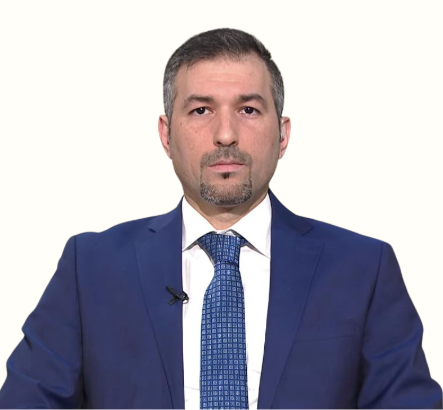
Ali Bakir is a Research Assistant Professor of International Affairs, Security, and Defense at Qatar University. He is also a Senior Non-Resident Fellow at the Atlantic Council, “Scowcroft Middle East Security Initiative” and Middle East program. His work focuses on the foreign, security, and defense policies of the Gulf countries and Türkiye, as well as Türkiye-Arab/Gulf relations, Gulf security, great power competition in the Middle East, the behavior of small states, and the geopolitics of the MENA region and the Eastern Mediterranean. He had his education, fieldwork, and work experience in several countries, including Kuwait, Jordan, Iraq, Syria, Lebanon, Turkiye, and Qatar. He is available on X @alibakeer

Beyond Hormuz: Why Balochistan Matters to Gulf Energy Security
October 21, 2026A conflict long treated as peripheral to Gulf security is becoming harder to ignore as the war with Iran puts pressure on the region’s maritime…
Should Syria and Qatar Join the Mecca Pact?
October 9, 2026Three years of cascading conflict have fundamentally transformed the Middle East’s security outlook. American weapons, military deployments, and security guarantees remain central to the region….

China’s Technology Development Push Meets Gulf Diversification
October 6, 2026China’s “new quality productive forces” (NQPF) are often understood as a domestic effort to revive growth, upgrade industry, and reduce dependence on Western technology. Yet…