The Legacy of Sheikh Hamad bin Khalifa Al Thani: Expert Perspectives

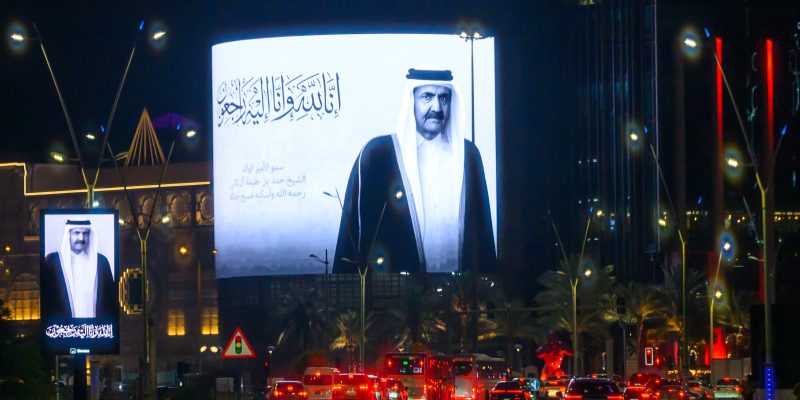
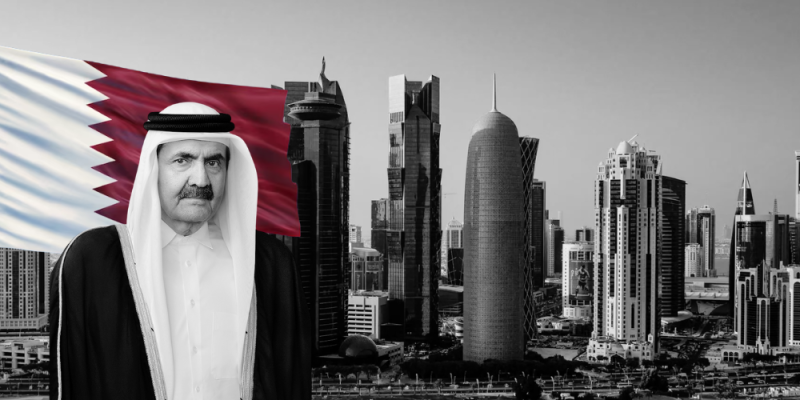
With the passing of His Highness Sheikh Hamad bin Khalifa Al Thani, the Father Emir of Qatar, Gulf International Forum experts assess the legacy of a leader whose vision reshaped Qatar and elevated its regional and global standing. Their reflections explore his contributions to state-building, education, energy, diplomacy, media, and sport, as well as his efforts to strengthen Gulf cooperation and position Qatar as an influential voice in regional and international affairs.
The Making of a U.S.–Qatar Partnership – Ambassador Patrick Theros
Building Bridges Within the Gulf – Dr. Mohammad Alrumaihi
Investing in Doha’s Human Capital – Dr. Hind Al Ansari
Redefining Influence Through Sport and Media – Dr. Kristian Coates Ulrichsen
The Architect of Qatar’s Energy Boom – Dr. Gawdat Bahgat
An Economic and Infrastructure Renaissance – Dr. Abdulla Banndar Al-Etaibi
A Global Vision Beyond the GCC – Dr. Ali Bakir

The Making of a U.S.–Qatar Partnership
Ambassador Patrick Theros, Strategic Advisor and Senior Fellow, Gulf International Forum
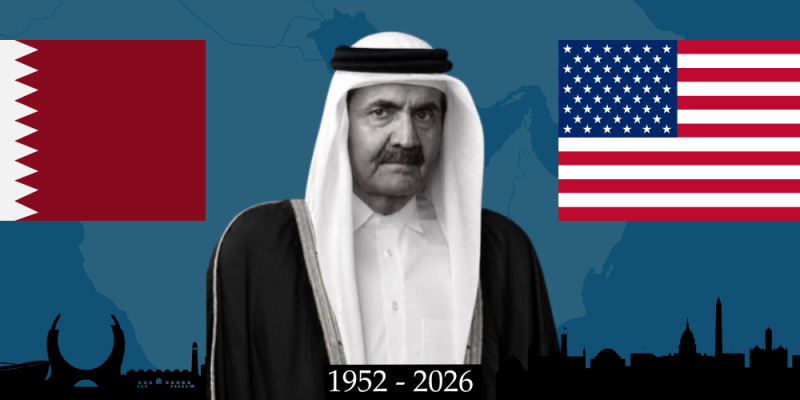
A defining element of Sheikh Hamad’s legacy was his effort to build an enduring strategic partnership between Qatar and the United States. He envisioned Qatar becoming one of Washington’s closest partners, recognizing that America’s democratic, educational, and social values, alongside its geostrategic and economic importance, made such a relationship essential.
Sheikh Hamad strengthened the economic foundations of U.S.–Qatar relations early on by partnering with Mobil Oil to develop the first large-scale LNG projects, which many at the time regarded as financially impractical. The projects succeeded beyond expectations, transforming Qatar into the world’s leading exporter of liquefied natural gas while establishing American companies as key partners in its energy sector. That decision permanently reshaped Qatar’s economic trajectory and contributed to a transformation in global energy markets.
His strategic vision was equally evident in the security relationship with the United States. While deepening defense ties with Washington, Sheikh Hamad possessed the strategic foresight to recognize that a permanent American military presence in Saudi Arabia would eventually become politically untenable. Rather than waiting for the crisis, he moved proactively to establish an alternative. His decision to commit roughly two billion dollars to construct Al Udeid Air Base years before the United States sought a replacement ensured that Qatar would become the central hub for U.S. military operations in the region. By providing the foundation for a durable economic, security, and diplomatic partnership, Sheikh Hamad helped transform Qatar into one of the United States’ most important strategic partners in the Gulf.

Building Bridges Within the Gulf
Dr. Mohammad Alrumaihi, Professor of Sociology, Kuwait University; Board of Directors Member, Gulf International Forum
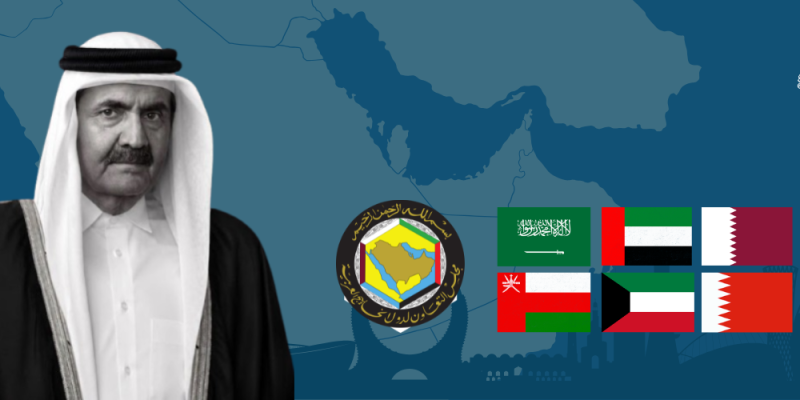
One of Sheikh Hamad bin Khalifa Al Thani’s most enduring regional legacies was his commitment to strengthening the GCC as the cornerstone of Gulf stability and collective action. Although Qatar pursued an increasingly active and independent foreign policy during his reign, Sheikh Hamad consistently viewed the GCC as the most important institutional framework for protecting the shared interests and security of its member states.
His commitment was reflected not only in rhetoric but also in concrete initiatives that helped deepen Gulf integration. At the 1996 Doha Summit, held during the early years of his rule, GCC leaders adopted a revised common agricultural policy aimed at strengthening regional food security, improving the collective management of water resources, and encouraging joint Gulf investment projects.
An even more consequential milestone came at the 2007 Doha Summit, when the GCC Supreme Council approved the establishment of the GCC Common Market, which entered into force in January 2008. The initiative sought to grant GCC citizens equal treatment across member states in areas such as employment, investment, property ownership, education, healthcare, and social services. By reducing barriers among Gulf societies and economies, the Common Market represented one of the most ambitious efforts to translate Gulf cooperation into tangible benefits for citizens.
Beyond these landmark initiatives, Sheikh Hamad strongly supported broader efforts to advance economic integration through the GCC customs union, regional connectivity projects, and cross-border infrastructure development. He believed that the long-term strength of each Gulf state was inseparable from the collective resilience and prosperity of the region as a whole.
While Qatar emerged as an increasingly influential regional and international actor under his leadership, Sheikh Hamad never lost sight of the importance of Gulf unity. He understood that the GCC served as a mechanism for fostering trust, coordinating policy, and enhancing the region’s collective capacity to navigate an uncertain and rapidly changing geopolitical environment. His legacy serves as a reminder that a strong and effective GCC remains one of the Gulf’s most important assets for preserving stability, advancing prosperity, and strengthening regional cooperation.

Investing in Doha’s Human Capital
Dr. Hind Al Ansari, Fellow, Gulf International Forum
In Qatar’s modern history, Sheikh Hamad bin Khalifa Al Thani profoundly changed the country’s social fabric and transformed its economic trajectory. His most enduring legacy may lie in the country’s investment in human capital through education.
Sheikh Hamad positioned education as the cornerstone of national development and economic resilience. The establishment of Education City and Qatar Foundation, and the invitation of leading international universities to set up campuses in Doha, reflected a strategic vision on a national and regional level. These initiatives enabled Qataris to access competitive and reputable educational institutions while remaining connected to their society. These major reforms also improved educational opportunities for women, whose participation in higher education and professional life has become a defining feature of Qatar’s social landscape.
At the same time, these investments demonstrated a commitment to developing a knowledge-based society capable of navigating a rapidly changing world. By centering educational reform in national development, Sheikh Hamad helped support a generation equipped to contribute to public life, economic diversification, and global engagement. His educational reforms continue to shape Qatar’s social and economic trajectory, demonstrating that sustainable societal transformation begins with investing in people.
Redefining Influence Through Sport and Media
Dr. Kristian Coates Ulrichsen, Baker Institute Fellow for the Middle East, Rice University; Senior Non-Resident Fellow, Gulf International Forum
While his decision to develop Qatar’s LNG infrastructure in the 1990s and 2000s transformed the country into a global gas giant and firmly put it on the map, Sheikh Hamad’s strategic investments in sport and media reflected equally longstanding priorities. After his appointment as Heir Apparent in 1977, Sheikh Hamad identified sport as a potent tool in nation-building and international diplomacy, and as early as 1979, he predicted that Qatar would develop into a specialized hub for athletics. As Heir Apparent and later Emir, Sheikh Hamad played an important role in modernizing Qatar’s sporting and governance ecosystem and embedding sport into the country’s emerging identity.
This approach accelerated in the 1990s, before and after LNG exports commenced in 1996. Major achievements included the launch of the Qatar Open in tennis in 1993, the hosting of the 2006 Asian Games, which was an important milestone on the way to bidding for the Olympic Games, and ultimately, Qatar’s successful 2010 bid to host the 2022 FIFA Men’s World Cup. Sustained investment in sport was therefore a key legacy of Sheikh Hamad, as was his decision to create Al Jazeera in 1996, barely a year after becoming Emir, and oversee its transformation into a global media network. In both cases, the strategic investments in sport and media transformed global perceptions of Qatar, for better and worse, and fundamentally reshaped the policy horizons available to a small yet ambitious state in the international system.

The Architect of Qatar’s Energy Boom
Dr. Gawdat Bahgat, Senior Non-Resident Fellow, Gulf International Forum
The late Emir is rightly regarded as the founding father of modern Qatar. The roots of this modernization go back to Sheikh Hamad’s reign from 1995 to 2013. Like the other GCC states, oil and gas revenues are a major source of government revenue. Nearly all of Qatar’s gas production comes from the North Field, discovered in 1971, which is the world’s largest non-associated natural gas field with approximately 10 percent of global proven gas reserves. Under his leadership, first as Crown Prince in 1977 and later as Emir in 1995, Sheikh Hamad played a key role in the development and transformation of Qatar’s gas sector, with far-reaching effects on the entire economy and society. By 2025, Qatar had become the world’s sixth-largest gas producer, and the world’s second-largest exporter of liquefied natural gas.
In 2005, the Qatar Investment Authority (QIA) was established to invest gas revenues, generate long-term wealth for future generations, and diversify the economy. Today, the QIA is one of the largest sovereign wealth funds in the world, with approximately $600 billion in assets. Efforts to reduce dependency on gas revenues and support a knowledge-based economy were further expanded and documented through the launch of the Qatar National Vision 2030 in 2008.
The wars in Ukraine since February 2022 and in Iran since February 2026 have underscored the growing global demand for Qatar’s natural gas. The late Emir’s vision for the nation’s gas industry is as relevant today as it was during his reign. The transformation of Qatar’s gas sector has ultimately strengthened Doha’s role as a regional power and enhanced its position as a key contributor to global energy security.
An Economic and Infrastructure Renaissance
Dr. Abdulla Banndar Al-Etaibi, Assistant Professor, Qatar University
When Sheikh Hamad bin Khalifa Al Thani assumed power in 1995, Qatar was a modest Gulf state, indebted and dependent on declining oil revenues. His decision to stake the country’s future on the North Field, then a capital-intensive and technically risky gamble, proved among the most consequential economic wagers in modern Gulf history. By 2006, Qatar had become the world’s largest exporter of liquefied natural gas, with capacity reaching 77 million tonnes per annum, and over his 18-year reign, the country’s GDP expanded more than twentyfold.
Yet Sheikh Hamad’s renaissance extended beyond hydrocarbons. He treated gas revenues as a means to build lasting institutions. The creation of the Qatar Investment Authority in 2005 institutionalized Qatar’s evolution from a rentier state to global investor, while Ras Laffan Industrial City, Hamad International Airport, Hamad Port, and the Doha Metro, each conceived or launched under his rule, laid the foundations for the country’s future development. Education City and the Qatar Foundation embodied his conviction that infrastructure meant human capital as much as physical infrastructure. The award of the 2022 FIFA World Cup in 2010, secured during the final years of his reign, catalyzed the largest construction program in the nation’s history and announced Qatar’s arrival on the global stage.
Sheikh Hamad’s approach was defined by a clear sequence: developing the gas sector, building national institutions, and integrating Doha into the global economy. When he handed power to Sheikh Tamim in 2013, he left behind not only significant wealth, but the architecture to sustain it. That is his enduring legacy.
A Global Vision Beyond the GCC
Dr. Ali Bakir, Senior Non-Resident Fellow, Middle East Council on Global Affair
The passing of the Father Emir Sheikh Hamad bin Khalifa Al Thani marks the end of an era in Qatar’s modern history. His leadership, vision, and determination built modern Qatar as the world knows it today and fundamentally reshaped the country’s foreign policy, diplomacy, and soft power, moving Doha from the margins of sub-regional politics to the center of global diplomacy.
One of Sheikh Hamad’s most enduring achievements was his determination to pursue an independent foreign policy while maintaining constructive relations with diverse regional and international actors. Rather than limiting Qatar’s strategic outlook to the Gulf, he cultivated partnerships with countries around the globe. Sheikh Hamad was also a strong believer in just causes, calling for steadfastness in upholding the truth and supporting it as much as possible.
At the regional level, he laid the foundations for Qatar’s strong relations with regional powers such as Turkiye and Pakistan, recognizing their growing geopolitical significance and their potential as long-term strategic partners. Sheikh Hamad also understood that influence for a small state depended less on military power than on diplomacy, mediation, and soft power. Under his leadership, Qatar became an active mediator and facilitator in regional conflicts, hosted international negotiations, and invested in institutions that amplified its global voice. This approach enabled Qatar to engage simultaneously with actors that often stood on opposite sides of regional disputes, reinforcing its reputation as an independent and pragmatic interlocutor.
His foreign policy vision established many of the foundations upon which Qatar continues to build today. By broadening the country’s regional partnerships beyond the GCC and embracing a multidimensional diplomatic strategy, Sheikh Hamad helped position Qatar as an influential small power whose impact extends well beyond its geographic size. His legacy remains evident in Qatar’s continued role as a trusted diplomatic actor and regional bridge-builder. He will always be remembered as the founder of modern Qatar, the mind behind its reform and development agenda, and the architect of its foreign policy and economic power.
The views and opinions expressed in this analysis are those of the authors and do not necessarily reflect the views of Gulf International Forum.
Issue: Politics & Governance, Society & Culture
Country: Qatar
Why Iran Never Knows When to Stop
July 27, 2026At first glance, Iran’s negotiating difficulties appear to stem from disagreements between pragmatists seeking sanctions relief and hardliners determined to resist compromise. Yet that explanation…
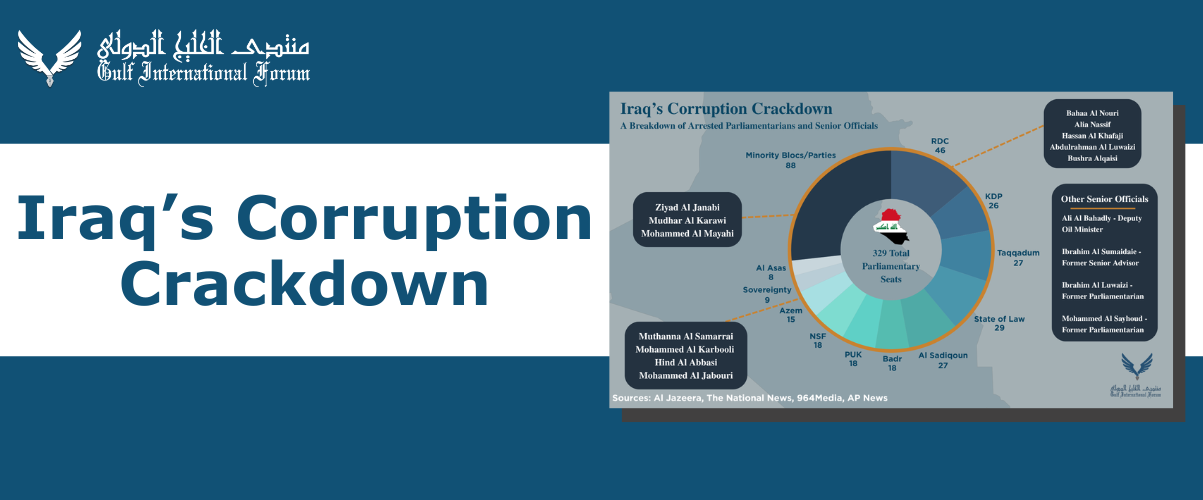
Iraq’s Corruption Crackdown
July 22, 2026*A breakdown of arrested parliamentarians and senior officials as of June 28, 2026.
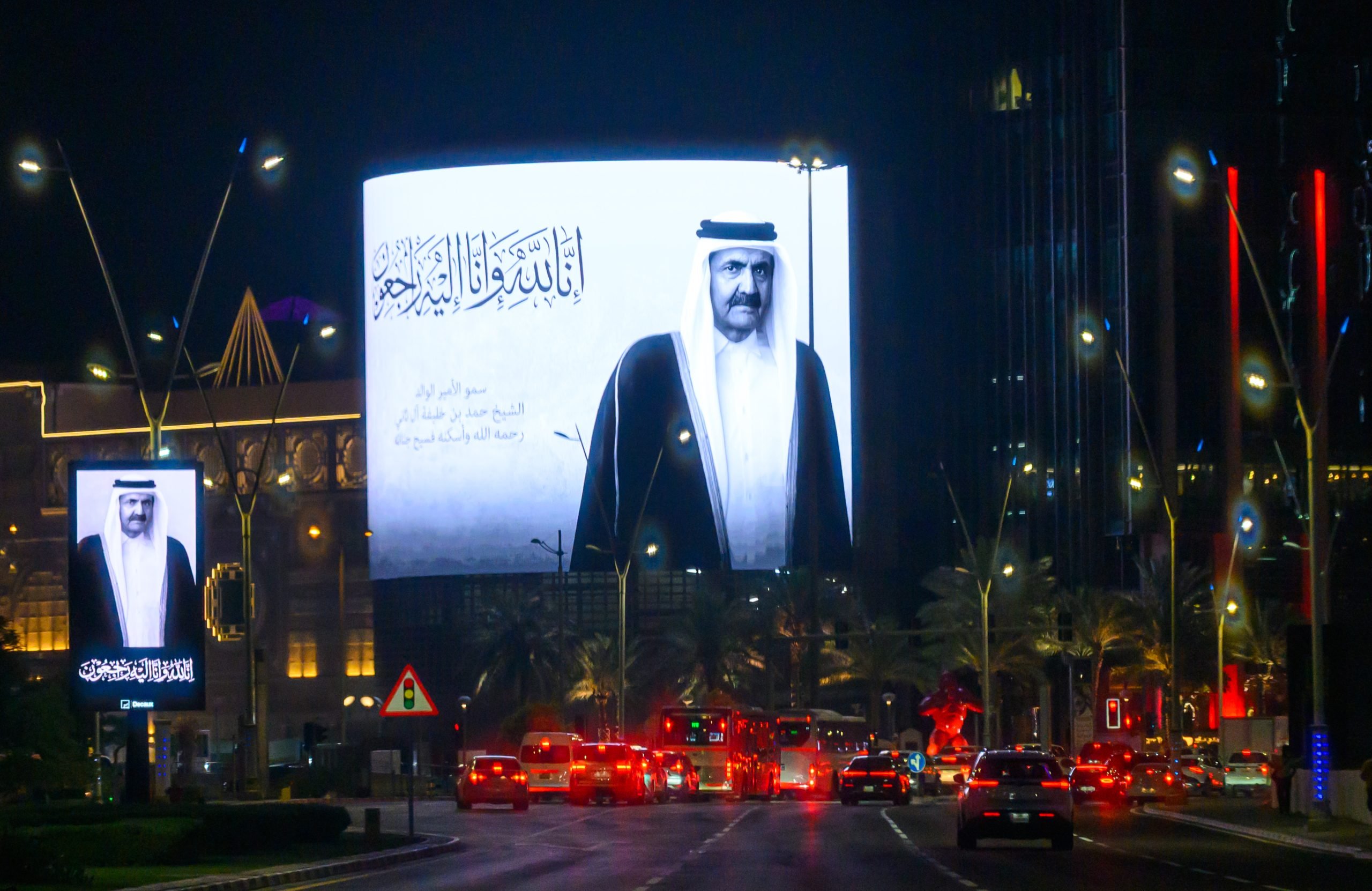
Sheikh Hamad and the Making of Modern Qatar
July 15, 2026There is a question that haunts every small state: how does a nation survive and stay relevant in a region built for giants? For most…