Mining a Multipolar Future: Riyadh’s Rise as a Critical Mineral Powerhouse
Saudi Arabia is leveraging its vast mineral wealth, global partnerships, and state-backed capital to position itself as a critical hub at a time when the rules of international trade are being rewritten.

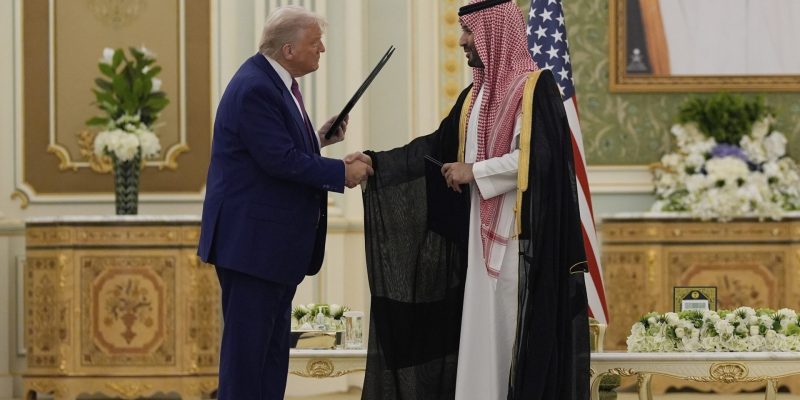
During President Donald Trump’s trip to Riyadh last month, the United States and Saudi Arabia agreed to a memorandum of cooperation (MOC) on critical minerals. The MOC facilitates wide bilateral cooperation on a host of issues, including the construction of refining and processing facilities and cooperative innovation to enhance critical mineral extraction.
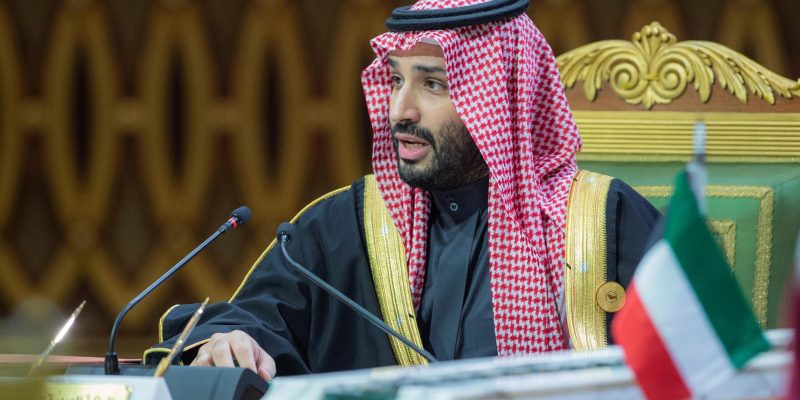
The MOC’s content, as well as its timing, reflect Saudi Arabia’s grand ambitions to become a critical mineral superpower. The Kingdom’s mineral wealth is an increasingly important component of Saudi Crown Prince Mohammed bin Salman’s Vision 2030 agenda, and it plays a vital role in Saudi Arabia’s transition towards a renewable-friendly economic model. The country possesses vast reserves of untapped critical minerals such as lithium, copper, gold, nickel and cobalt. It simply needs the technical know-how and industrial might to extract them.
Riyadh’s Minerals Program Supports Vision 2030
From the inception of Vision 2030, critical minerals have been identified as a major pillar of the economic initiative. To rectify the historical underperformance of Saudi Arabia’s mining sector, the Kingdom set a 97 billion SAR (roughly $26 billion) target in 2016, aiming to create 90,000 jobs in the sector by 2020.
In reality, Saudi Arabia’s progress towards achieving these lofty targets presents a mixed picture. While granite, limestone and copper production boomed ahead of the 2020 target, mined zinc and magnesite failed to grow, and even saw declines. Meanwhile, Saudi Arabia’s annual gold production reached 14.3 tons, well below the 15.6-ton target set by Saudi Arabia Mining Company CEO Khaled al-Mudaifer.
To improve the consistency and durability of mineral extraction, the Saudi mining sector has undergone numerous operational changes and reforms since 2020. Saudi Arabia’s initial priority was to ascertain the scope of its unexplored critical mineral potential. In October 2020, the Saudi Geological Survey (SGS) signed a series of contracts worth $530 million with the China Geological Survey and an international consortium that included the Geological Survey of Finland to map out the scale of mineral reserves in the 600,000 square kilometer “Arabian Shield.”
This investment has paid dividends. In January 2024, Saudi Mining and Industry Minister Bandar al-Khorayef upgradedestimates of the country’s mineral reserves from $1.2 trillion to $2.5 trillion. Approximately half of those minerals are concentrated in Saudi Arabia’s Northern Borders Region, and the Wa’ad Al-Shamal City has become a significant hub for phosphate production as a result. According to the Saudi state-owned Mining Company Ma’aden, this exploration campaign also uncovered previously untapped gold and copper deposits in Wadi al-Jaww in the Arabian Shield, on the eastern coast of the Red Sea.
To build on its newly discovered deposits, Saudi Arabia passed the New Mining Investment Law in June 2020 to stimulate capital inflows into its mining sector. The new legislation removed the government’s priority status on mineral purchases, signaling the Kingdom’s desire to transition away from government control and attract private sector investment. Nevertheless, the dominance of the Saudi Public Investment Fund (PIF)—and the retention of Article 14 of Saudi Arabia’s Basic Law of Governance, which mandates state control over all mineral wealth—sharply limits the agency of private investors. Complicated licensing processes and the mining sector’s opacity serve as deterrents for large-scale private and international investment. Aside from British mining company Vedanta’s $2 billion investment pledge in Saudi Arabia’s copper mining sector, key precious metal giants have chosen to stay on the sidelines for now.
While securing private sector and foreign capital remains a challenge, Saudi Arabia’s largest state mining and energy conglomerates are strengthening ties with each other. For example, Ma’aden has forged a partnership with Saudi oil giant Aramco that aims to expand the Kingdom’s lithium production. Building on research conducted by the King Abdullah University for Science and Technology, al-Mudaifer announced in December 2024 that lithium had been successfully extracted from brine samples from Aramco’s oil fields for the first time. This development resulted in a formal Ma’aden-Aramco joint venture in January 2025 that is expected to lead to commercial lithium production by 2027.
Diversifying International Partnerships
In tandem with its efforts to explore, exploit, and market its indigenous mining deposits, Saudi Arabia has bolstered its role within international critical mineral supply chains. In January 2025, the United Kingdom’s Minister for Industry Sarah Jones announced the expansion of critical mineral cooperation with Saudi Arabia. This pact strengthens nascent bilateral collaboration in artificial intelligence and renewable energy, adding strategic depth to the impending UK-Gulf Cooperation Council (GCC) Free Trade Agreement. The UK-Saudi Arabia critical mineral agreement served as a prototype for the Kingdom’s subsequent MOC with the U.S.
Despite this progress, Saudi Arabia’s economic overtures to China may limit the Kingdom’s ability to cooperate with the West. Al-Khorayef’s September 2024 meeting with Chinese lithium manufacturer General Lithium Corporation only added to the trepidation among Saudi Arabia’s Western partners.
Saudi Arabia has tried to mitigate these concerns by framing its critical minerals exploitation as part of the solution to alleviating Western reliance on Chinese supply chains. The absence of large-scale joint mining projects between Saudi Arabia and China substantiates this posturing. Moreover, Saudi Arabia’s announcement of a mineral “super-region” stretching from Central Asia to Africa at the 2024 Future Minerals Forum in Riyadh implicitly suggests that it hopes to compete with China’s Belt and Road Initiative (BRI).
While Saudi Arabia’s critical mineral strategy is largely divested from China, it is still enmeshed within Crown Prince Mohammed bin Salman’s grand vision of a multipolar global order. A diverse array of mining deals dovetails nicely with this outlook. During the World Defence Show 2024 in Riyadh, al-Khorayef discussed mining sector cooperation with Russian Minister of Industry and Trade Denis Manturov—raising hackles among some in the West. And in February 2025, Saudi Arabia struck a partnership with India that could help further New Delhi’s green energy transition aspirations.
Saudi Arabia is also making strategic investments in mineral-rich countries in the Global South. The Kingdom’s engagements with Brazil epitomize its ambition to become a major power player in critical mineral markets. Last year, the PIF and Ma’aden jointly acquired a 10 percent stake in Brazilian company Vale S.A.’s critical metals business, and Ma’aden has established an office in São Paulo. As Brazil has the world’s second largest iron ore and third largest nickel deposits, it is no surprise that Saudi Arabia seeks access to these reserves to power its electric vehicle industry and “megacity” projects.
Finally, Saudi Arabia is leveraging its rising status in Africa to secure access to the continent’s critical mineral reserves. In September 2023, Saudi Arabia and the United States discussed forming a partnership to secure access to African critical mineral supplies. These talks were paired with a Saudi pledge to purchase $15 billion in minerals from countries like Namibia, Guinea, and the Democratic Republic of the Congo. This strategy makes Saudi Arabia a potent partner in America’s efforts to contain Chinese hegemony over African critical minerals.
As critical minerals emerge as an increasingly critical feature of Mohammed bin Salman’s Vision 2030 strategy, Saudi Arabia is investing heavily in mining deposits at home and abroad. The Kingdom’s deep pockets and sky-high ambitions could compound the impact of Riyadh’s diplomatic moves—and further cement Saudi Arabia’s standing as a rising middle power.
The views and opinions expressed in this article are those of the authors and do not necessarily reflect the views of Gulf International Forum.
Issue: Energy & Environment
Country: KSA

Dr. Samuel Ramani is an Associate Fellow at the Royal United Services Institute (RUSI) in London, Non-Resident Fellow at Gulf International Forum and the CEO of Pangea Geopolitical Risk. Samuel is the author of two recent books on Russian foreign policy “Russia in Africa: Resurgent Great Power or Bellicose Pretender” and “Putin’s War on Ukraine: Russia’s Campaign for Global Counter-Revolution.” Both books were published by Oxford University Press and Hurst in 2023,. Samuel is a regular contributor to major broadcast networks, such as CNN, Al Jazeera, BBC, Sky News and France-24, and to Foreign Policy magazine. Samuel has advised the U.S. Department of State, U.S. Department of Defence, UK Foreign and Commonwealth Office, France’s Ministry of Defence and NATO Headquarters on international security issues.

Pipe Dreams and Pecking Orders: Who Gets Priority When Gulf Bypass Routes Are Tested?
September 17, 2026In June, Kuwait Petroleum Corporation CEO Sheikh Nawaf Al-Sabah told an Atlantic Council audience that Kuwait was in discussions with Saudi Arabia and the UAE…
Cartel at Dusk: OPEC’s Future After the Iran War
July 28, 2026Something more consequential than another oil market disruption is underway. The Iran war has exposed and accelerated an institutional weakness within OPEC that had been…
Saudi Arabia Needs an Overland Route to Global Energy Markets
July 2, 2026For years, Saudi Arabia has recognized the vulnerability created by its dependence on the Strait of Hormuz. To reduce risks from Iranian disruptions, the kingdom…