Can the GCC Trust Elon Musk?
The Gulf states have embraced billionaire tech mogul Elon Musk as a partner in developing their artificial intelligence sectors—even as some have questioned his long-term reliability.

Elon Musk may have parted ways with President Donald Trump in late May, but he still occupies an unofficial role as America’s tech liaison to the Gulf. In the past year alone, Starlink, Musk’s satellite-based internet service provider, went live in Yemen, Oman, Bahrain, and Qatar, and secured approval for aviation and maritime use in Saudi Arabia. And despite the landmark data center deal between OpenAI and Dubai’s Group 42 (G42), Saudi Arabia’s Public Investment Fund (PIF) has reportedly thrown its hat in the ring as a potential investor in Musk’s rival company, xAI, in its latest fundraising round.
As the GCC countries forge ahead with efforts to diversify their economies, they have increasingly turned to Western entrepreneurs to help realize their technological ambitions. Musk joins a long line of high-profile tech investors and founders who have become central players in the region’s digital future, particularly in sectors like telecommunications and artificial intelligence (AI). His fickle nature is emblematic of the risks and opportunities Gulf states face when engaging with such actors. What do GCC states stand to gain—or lose—from this strategy of engagement?
GCC-Tech Partnerships
While their approaches and timelines may vary, all GCC member states share a desire to diversify their economies away from hydrocarbons, as they recognize that a post-oil future is inevitable. This drive, along with aspirations for greater global influence, has led the Gulf monarchies to make strategic investments in a wide range of tech-based enterprises, including semiconductors, financial technology, and sovereign AI infrastructure. As a result of these investments, consulting giant McKinsey estimates that generative AI could account for anywhere between 1.7 to 2.8 percent of non-oil GDP within the GCC economies today.
Indeed, GCC alignment with Silicon Valley tech billionaires is not a new development. A $1.5 billion partnership announced between Microsoft and G42 in 2024 was followed by a PIF-Google Cloud deal announced during Trump’s trip to the region in May. However, partnering with Elon Musk presents a different set of risks. The world’s richest man is famous for his innovative business practices and penchant for showmanship, but he is also well known for erratic behavior that has caused businesses like X—formerly Twitter—to dramatically lose value. He is also known to be heavily involved in the day-to-day operations of his enterprises, tying the state of his reputation closely to their successes and failures. The reverse is also true; when Musk fell out with Trump in June, Tesla’s stock dropped 15 percent, as investors worried that the president might use the power of the federal government against the company. To extract the most from this partnership, the Gulf states must learn to manage Musk’s mercurial streak.
Starlink’s Future in the Gulf
One benefit that could stem from a GCC-Musk partnership is the widespread adoption of Starlink, a broadband internet service that could help Gulf countries meet rapidly growing domestic demand for digital connectivity. According to a recent International Monetary Fund report, GCC nations continue to lag behind global peers in both internet usage and quality of Information and Communications Technology (ICT) services. Starlink could help bridge these gaps; its satellites orbit closer to Earth and thus allow for higher data usage and lower latency rates than internet services typically offered in remote areas. A stronger satellite internet service provider like Starlink could be a gamechanger for the Gulf states, who despite their smaller geographical area, have significant rural populations. With populations estimated between 10 and 15 percent, Starlink can be critical for improving data inclusivity in these rural areas. In addition to its ability to operate in remote areas, satellite-based services are theoretically less vulnerable to disruption than submarine cables or fiber networks—another vital consideration for a region prone to conflict.
From a geopolitical perspective, GCC leaders are also eager to distance their countries from the rapidly intensifying China-U.S. tech rivalry. Rather than depending on Chinese providers like Huawei to provide 5G infrastructure, which gives the illusion of “picking sides,” third party vendors like Starlink allow Gulf leaders to reduce their reliance on either superpower for critical digital infrastructure.
Despite the improved inclusivity and neutrality it might offer, this partnership has one notable drawback: any advantages brought on by full-throated Starlink integration hinge largely on Musk’s personal whims. Promises of more secure internet access and increased digital sovereignty could be arbitrarily axed at any moment. Consider Musk’s fraught management of Starlink throughout the Russia-Ukraine conflict; after Russia’s invasion in February 2022, Musk rushed Starlink units into the country, only to unilaterally disable them months later to stymie a Ukrainian attack on Crimea that the tech mogul opposed. Gulf leaders who wish to hedge against potential uncertainty have likely taken note of this development.
xAI v Stargate UAE
Musk’s propensity for interference has already come into play when it comes to fulfilling the Gulf’s lofty AI ambitions. Perhaps the most eye-catching outcome of Trump’s May diplomatic tour de force in the region was the announcement of Stargate UAE, a partnership between Emirati technology conglomerate G42 and OpenAI to build a 1-gigawatt AI data center set to go online in 2026. The Wall Street Journal later reported that Musk—a longtime rival of OpenAI CEO Sam Altman—had lobbied G42 executives to scrap the deal, warning all parties against proceeding without the inclusion of his own AI company, xAI. Though the transformative deal ultimately moved forward, Musk’s behind-the-scenes machinations threatened what promises to be a major leap in the Gulf’s AI infrastructure.
The GCC states have backed both sides of the xAI-OpenAI rivalry, positioning themselves to benefit regardless of which company dominates the next phase of AI development. Notably, the Oman Investment Authority purchased a stake in Musk’s budding AI venture as early as December 2024. Now more than ever, xAI presents a compelling alternative to OpenAI, as progress on the Stargate UAE project faces delays amid rising U.S. national security concerns. This two-pronged strategy unfolds as Musk is reportedly in talks with data centers in both Saudi Arabia and the UAE to expand xAI’s computing capacity.
For these states, Elon Musk ultimately remains a wild card—an unpredictable figure whose vast wealth and promise of opportunity also carry the threat of volatility. In hedging their bets with Musk, Gulf states are gambling on a man who is known for both his abilities to reshape global industries and his inability to maintain personal and professional self-control.
As Gulf states pursue closer relationships with Western tech giants, it is worth asking whether betting on such unpredictable individuals is a sustainable strategy for economic diversification. GCC nations are, after all, no strangers to managing mercurial actors—as their dealings with Trump in the past and present make clear. But if the Gulf monarchies seek longevity for their investment projects, they must treat Musk—and others like him—as both a partner and a potential agent of chaos, and they must be prepared for the possibility that they may find themselves the target of his wrath in the months or years to come.
The views and opinions expressed in this article are those of the authors and do not necessarily reflect the views of Gulf International Forum.
Issue: Economy & Innovation
Country: GCC

Savannah Wallace is a Research Assistant Intern at the Gulf International Forum and an MA candidate in International Relations at Johns Hopkins University’s School of Advanced International Studies (SAIS). She holds a BA in International Studies with a minor in Arabic from American University’s School of International Service. Prior to graduate school, she worked as a Program Administrator at the Carnegie Endowment for International Peace. Her research interests include Gulf politics, security, and diplomacy, with a particular focus on the regional implications of energy and economic diversification, water scarcity, and constitutional crises in the MENA region.
Saudi Arabia’s E-Commerce Boom: Why Traditional Small Businesses Risk Falling Behind
November 5, 2026Saudi Arabia’s digital marketplace is expanding rapidly. By the third quarter of 2026, the kingdom had 52,259 active e-commerce commercial registrations, up 25 percent from…
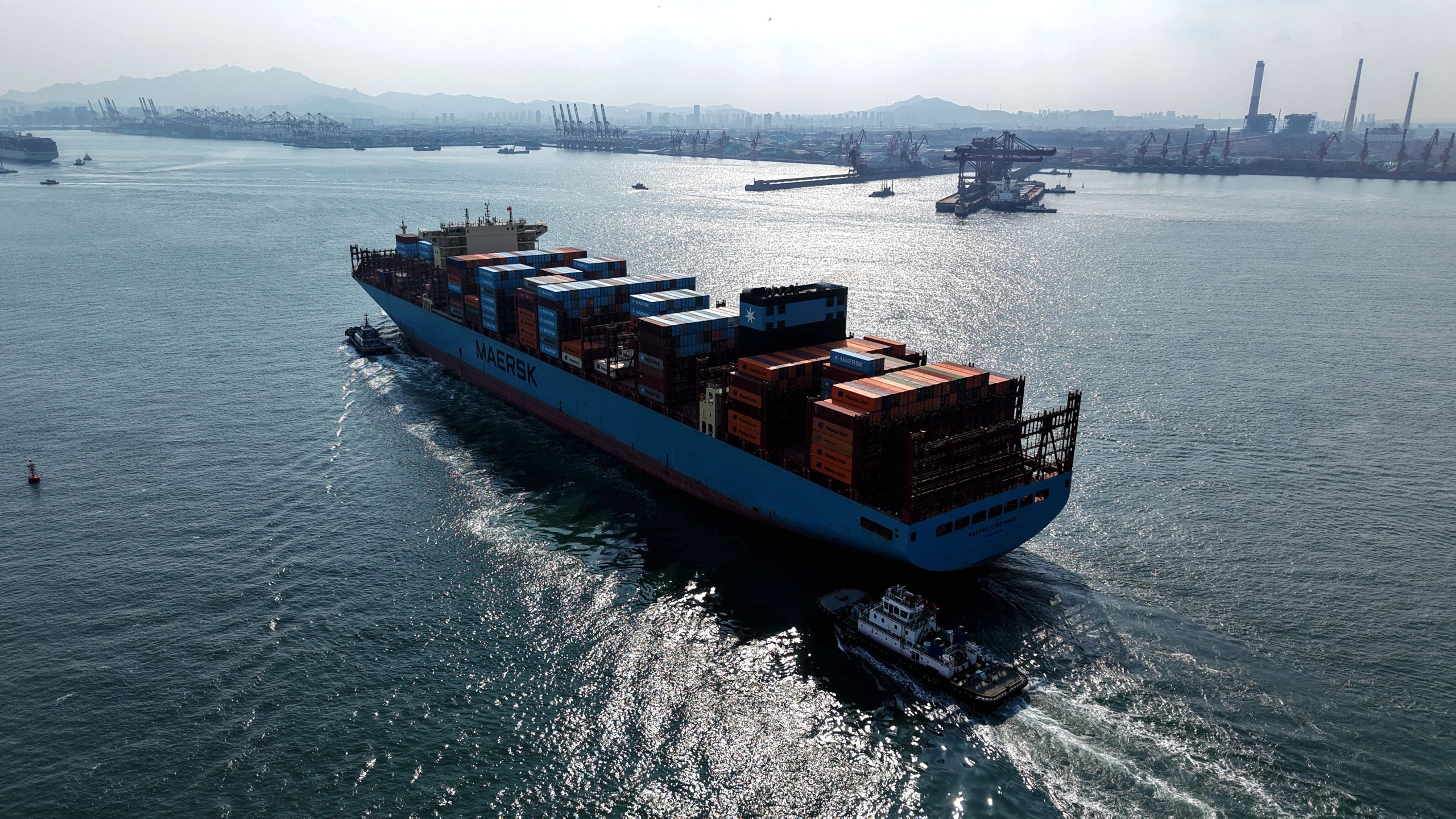
The Middle East’s Corridor Boom Meets Reality
July 22, 2026In recent years, particularly since the outbreak of the recent conflicts in Gaza and Iran, the Middle East has seen a resurgence of connectivity projects….
Iraq’s Fiscal Shock and the New Government’s Bargain
July 20, 2026The disruptions to shipping through the Strait of Hormuz have left Iraq facing more than an immediate export shock. Transport has remained constrained, insurance and…