Saudi Arabia’s Somalia Gambit
Riyadh’s deepening engagement in Somalia reflects a calculated strategy to shape the emerging Red Sea security order, counter UAE and Iranian influence, hedge against U.S. uncertainty, and safeguard alternative energy export routes following the Strait of Hormuz closure.

Saudi Arabia’s intensifying engagement with Somalia represents a notable development in the evolving geopolitics of the Horn of Africa. Riyadh’s Somalia policy suggests a calculated effort to reshape the Red Sea security order by ending Emirati influence, countering Iranian-aligned threats, and safeguarding the maritime and economic foundations of Vision 2030. Somalia is no longer a peripheral concern; it has become a key arena where Gulf rivalry, maritime insecurity, and Saudi ambitions converge.
Gulf Rivalry and the Contest for Political Order
Saudi Arabia’s Somalia policy is shaped in part by its rivalry with the United Arab Emirates (UAE). The two Gulf monarchies, once close allies, have increasingly found themselves on opposite sides of regional conflicts, notably in Yemen and Sudan. Beginning in the early 2010s, the UAE built a substantial footprint in Somalia and its federal member states, training security forces, securing DP World concessions at Berbera (2016) and Bosaso (2017), and cultivating political ties with authorities in Somaliland and Puntland.
For Riyadh, the issue is not Emirati commercial engagement, but Abu Dhabi’s eagerness to bypass Somalia’s federal government, empower sub-state actors, and normalize arrangements that risk entrenching fragmentation. In response, Saudi Arabia has positioned itself as the principal external champion of Somali sovereignty and territorial integrity, aligning closely with Mogadishu rather than regional authorities. This reflects a broader Saudi effort to assert itself as the defining Gulf actor in the Horn of Africa—one committed, at least rhetorically, to centralized state authority rather than transactional subnational partnerships.
Pushing the UAE out of Somalia and the surrounding Red Sea corridor serves not only to diminish Abu Dhabi’s influence but to signal that Riyadh intends to set the terms of Gulf engagement along Africa’s eastern flank. Tensions between the two escalated after UAE-backed separatist forces swept through parts of southern Yemen, advancing near the Saudi border. The UAE’s perceived backing of Israel’s decision to recognize Somaliland further reinforced the kingdom’s view that Abu Dhabi’s decisions are destabilizing, aimed at Riyadh, and strategically dangerous.
Security and Economic Considerations
While Gulf rivalry explains why Saudi Arabia has re-engaged Somalia, maritime security explains where its priorities lie. Somalia’s coastline along the Gulf of Aden places it astride one of the world’s most critical maritime corridors linking the Indian Ocean to the Red Sea and the Suez Canal. Roughly one-fifth to one-quarter of global containerized trade transits this route, making its security central to global commerce and Saudi economic stability.
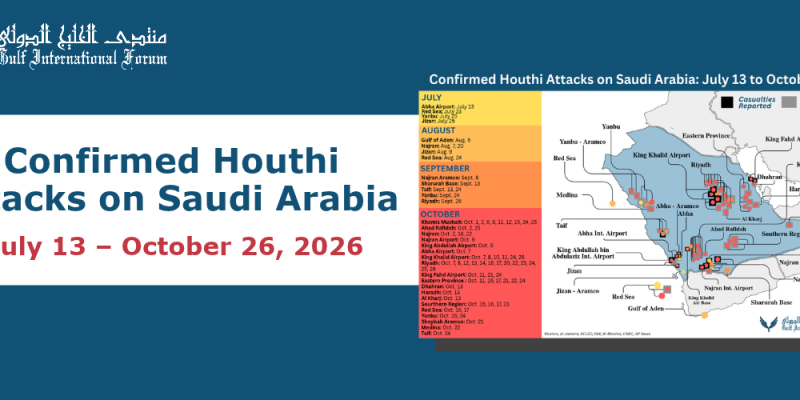
Recent developments have heightened Riyadh’s sense of vulnerability. Iran-backed Houthi forces in Yemen have demonstrated their ability to threaten shipping lanes through missile and drone attacks. Reports of cooperation between the Houthis and al-Shabaab have raised alarms in Saudi security circles. From Riyadh’s perspective, a permissive Somali littoral risks becoming the missing link between Iranian-backed forces on both sides of the Bab al-Mandab, enabling coordinated disruption of maritime traffic and energy exports.
These security risks are compounded by the effective closure of the Strait of Hormuz, which has forced Saudi Arabia to reroute a significant portion of its crude oil exports through Red Sea ports. Protecting these alternative routes has elevated Somalia’s strategic importance, making the stability of its coastline directly relevant to Riyadh’s economic survival.
Further, a Saudi presence in Somalia would allow for intelligence gathering on Houthi–al-Shabaab networks and establish forward positions to protect shipping lanes. Ports such as Laasqoray offer logistical access and improved surveillance over the Gulf of Aden, providing a buffer for maritime traffic that now carries a larger share of Saudi crude exports due to the Strait of Hormuz closure.
Beyond security imperatives, economic interests increasingly underpin Saudi Arabia’s Somalia policy. Bilateral trade has more than tripled over the past five years. Opportunities in livestock exports, agriculture, fisheries, logistics, and port infrastructure align directly with Vision 2030 objectives—diversifying revenue streams, strengthening food security, and building resilient supply chains. Somalia’s role as a supplier of livestock to Saudi Arabia is particularly significant, while its coastline and ports offer long-term potential as logistics nodes supporting Red Sea trade.
Riyadh Strikes Back
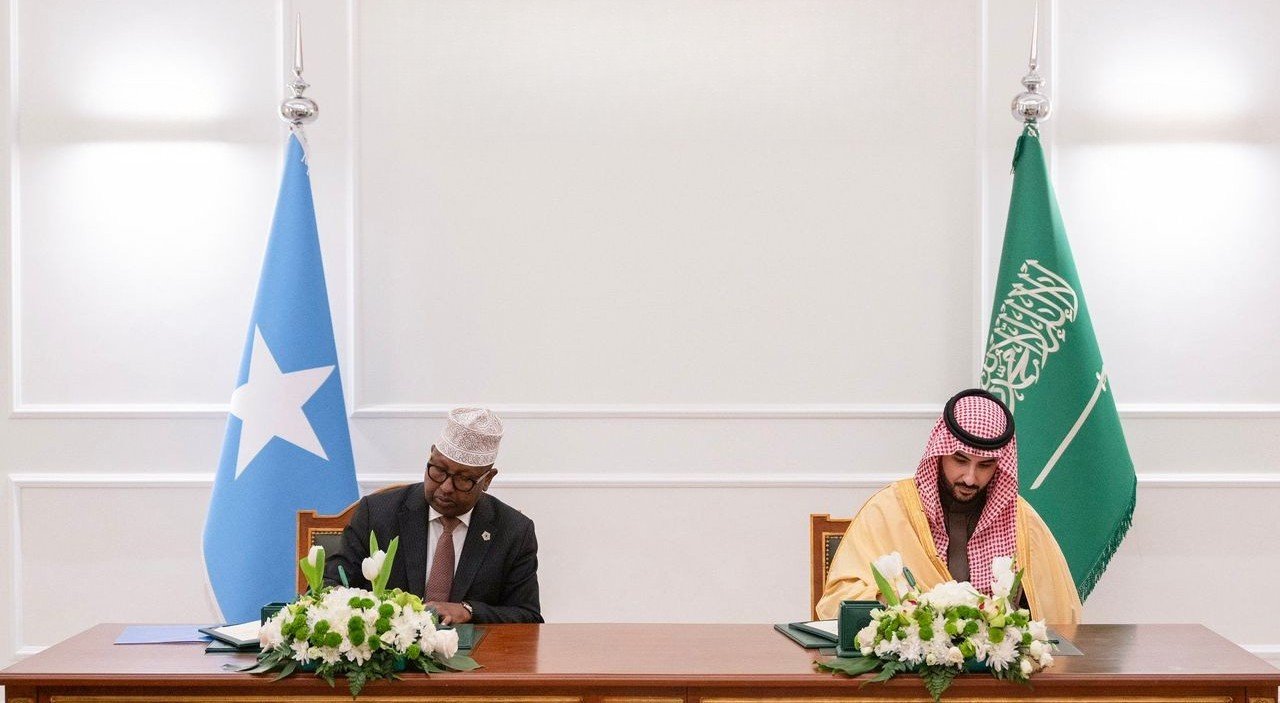
Saudi Arabia has moved rapidly from rhetorical support to tangible engagement, pursuing a strategy that combines security architecture-building, sovereignty signaling, and coalition diplomacy to counter the UAE’s policies in Somalia. On the security front, Riyadh has advanced talks to form a military coalition with Mogadishu and Cairo focused on defense cooperation. On February 9, Saudi Arabia and Somalia signed a memorandum of understanding on military cooperation.
Diplomatically, Riyadh has consistently and publicly affirmed Mogadishu’s sovereignty. Following Israel’s recognition of Somaliland in December, Saudi Arabia reiterated its staunch support for Somalia’s unity and territorial integrity. Riyadh mobilized the Organization of Islamic Cooperation to reject what it termed Israel’s “illegal measure.” The OIC communiqué described the move as “a direct threat to the peace and security of the Horn of Africa and Red Sea region,” underscoring Saudi Arabia’s intent to frame Somali unity as a regional and Islamic concern. This stance contrasts with the UAE’s long-standing, multifaceted engagement with Somaliland’s separatist agenda since the mid-2010s, encompassing economic investments, security cooperation, and tacit political and media support.
That alignment appeared to pay dividends in January of this year, when Somalia’s Council of Ministers announced the revocation of all existing agreements with the UAE. Mogadishu cited “compelling evidence concerning hostile and destabilizing actions intended to undermine the sovereignty of Somalia.” Sustained Saudi pressure reportedly played a role in precipitating this rupture.
Symbolically, the joint appearance of Saudi, Egyptian, Turkish, and Sudanese ambassadors alongside senior Somali federal officials at the January inauguration in Las Anod—capital of Somalia’s newly formed Northeast State, which encompasses territory claimed by Somaliland—signaled alignment with Mogadishu and opposition to UAE-backed subnational actors.
Hedging Against Uncertainty
Recent U.S. actions are also shaping how Saudi policymakers assess both the risks and the strategic necessity of deeper engagement in Somalia. Saudi Arabia’s expanding role in the country should therefore be understood not only in bilateral terms or as an extension of Gulf competition in the Horn of Africa, but as part of a broader effort to adapt to an increasingly uncertain and fragmented regional security environment.
Although the United States has consistently sought to degrade al-Shabaab while encouraging Somali self-reliance, intensified air strikes alongside suspended assistance to Somalia’s federal government signal strategic ambivalence. For Saudi planners, the absence of a clear exit strategy from Washington reinforces incentives to hedge against abrupt U.S. retrenchment. Against this backdrop, Gulf states have increasingly been compelled to assume greater responsibility for regional stabilization. From Riyadh’s perspective, instability in Somalia is a direct challenge to regional order, trade flows, and its own economic and security interests.
Saudi engagement in Somalia thus reflects a form of strategic hedging, driven not only by regional security concerns but also by the economic imperative to secure energy exports. The closure of the Strait of Hormuz has compelled Riyadh to reroute significant oil exports through the Red Sea corridor, dramatically elevating the strategic value of maritime chokepoints that Somalia directly flanks. In this context, Saudi diplomacy, financial assistance, and security coordination with Mogadishu serve not merely as tactical responses to a fragile neighbor, but as instruments for protecting a newly critical export corridor and shaping outcomes in an environment where external leadership is less assured.
The immediate crisis may delay any sustained high-level focus on Somalia, but the Red Sea rerouting has structurally linked Saudi Arabia’s economic survival to Somali coastal stability in ways that will outlast the current conflict, making deeper engagement not merely likely, but necessary.
Challenges and Risks
Despite these advances, Saudi Arabia faces substantial constraints. Somalia remains profoundly weak and fragmented, with Puntland and Jubaland suspending engagement with the federal government and accusing it of power centralization. Clan-based elite competition persists, and federal institutions struggle to project authority beyond Mogadishu. Riyadh’s preference for centralized state partners risks overlooking the local political realities that have historically undermined stabilization efforts. Persistent corruption, limited governance capacity, and inadequate service delivery further constrain Somalia’s absorptive capacity for security assistance and investment.
Security risks are acute. Al-Shabaab retains the capacity for mass-casualty attacks and territorial control, while its alleged cooperation with Houthi networks raises the prospect of an attack against Saudi interests. Past foreign interventions offer cautionary lessons about the limits of external security assistance.
Competition further complicates Saudi ambitions. Turkey maintains deep military influence, Egypt links Red Sea access to Nile security, and Qatar recently expanded defense ties. Riyadh must navigate this crowded field while ensuring it maintains a collaborative posture with its allies.
Opportunities and Strategic Outlook
Despite the challenges and risks, opportunities are substantial. The termination of UAE security and defense agreements in January 2026 has created a strategic opening for Saudi Arabia to emerge as Somalia’s primary Gulf partner. Riyadh can fill gaps left by Abu Dhabi’s exit through military training, intelligence cooperation, equipment provision, and targeted financial support—while expanding economic ties in line with Vision 2030.
For Riyadh, a more stable Somalia would provide strategic depth against Houthi–al-Shabaab networks, safeguard the integrity of Red Sea maritime corridors critical for its rerouted crude exports, secure Red Sea trade routes, and demonstrate leadership in Africa. For Mogadishu, Saudi backing offers capital for reconstruction, enhanced counterterrorism capacity, and diplomatic leverage on sovereignty issues, though at the cost of deeper entanglement in Gulf rivalries.
Collectively, Saudi Arabia’s coalition-building with Egypt, institutional mobilization through the OIC, sovereignty signaling, and exploratory reconciliation efforts suggest a strategy that extends beyond anti-UAE maneuvering. If successful, it could underpin a Saudi-centered Red Sea security order. If it fails, Riyadh risks adding another complex and costly front to an already crowded maritime theater where competition, insurgency, and great-power interests increasingly intersect.
The views and opinions expressed in this article are those of the authors and do not necessarily reflect the views of Gulf International Forum.
Issue: Geopolitics
Country: KSA

Dr. John Calabrese teaches international relations at American University in Washington, DC. He is the book review editor of The Middle East Journal and a Non-Resident Senior Fellow at the Middle East Institute (MEI). He previously served as director of MEI’s Middle East-Asia Project (MAP). Follow him on X: @Dr_J_Calabrese and at LinkedIn: https://www.linkedin.com/in/john-calabrese-755274a/.

Beyond Hormuz: Why Balochistan Matters to Gulf Energy Security
October 21, 2026A conflict long treated as peripheral to Gulf security is becoming harder to ignore as the war with Iran puts pressure on the region’s maritime…
Should Syria and Qatar Join the Mecca Pact?
October 9, 2026Three years of cascading conflict have fundamentally transformed the Middle East’s security outlook. American weapons, military deployments, and security guarantees remain central to the region….

China’s Technology Development Push Meets Gulf Diversification
October 6, 2026China’s “new quality productive forces” (NQPF) are often understood as a domestic effort to revive growth, upgrade industry, and reduce dependence on Western technology. Yet…