Beyond the Battlefield: The Disruption of Education in the Gulf
War has pushed Gulf classrooms online, but the real crisis lies in the long-term damage to learning, equity, and social well-being.

With U.S.-Iran negotiations collapsing, the war in the Gulf shows no signs of ending. Unlike the 12-day war of June 2025, which remained largely contained and produced minimal spillover, the current conflict has had immediate and far-reaching consequences for the Gulf. Within hours of the initial attacks, Iran launched hundreds of missiles and drones toward the Gulf Cooperation Council (GCC) states, targeting not only U.S. military bases but mostly civilian infrastructure, energy facilities, and airports across the Gulf. Although the Gulf states neither initiated nor sought involvement in the conflict, they have nonetheless borne its cost.
This war marks the first conflict to directly implicate the Gulf region as a whole, binding its security and stability more closely than ever before. In response, the GCC states have taken several precautionary measures, including closing airspace, suspending in-person education, and moving much of the workforce to remote operations. The disruption to education is a direct consequence of escalation and serves as a “stark reminder that when conflicts escalate, children are the first to pay the price,” as United Nations Secretary-General António Guterres once told the Security Council.
War Disrupts Education in the Gulf
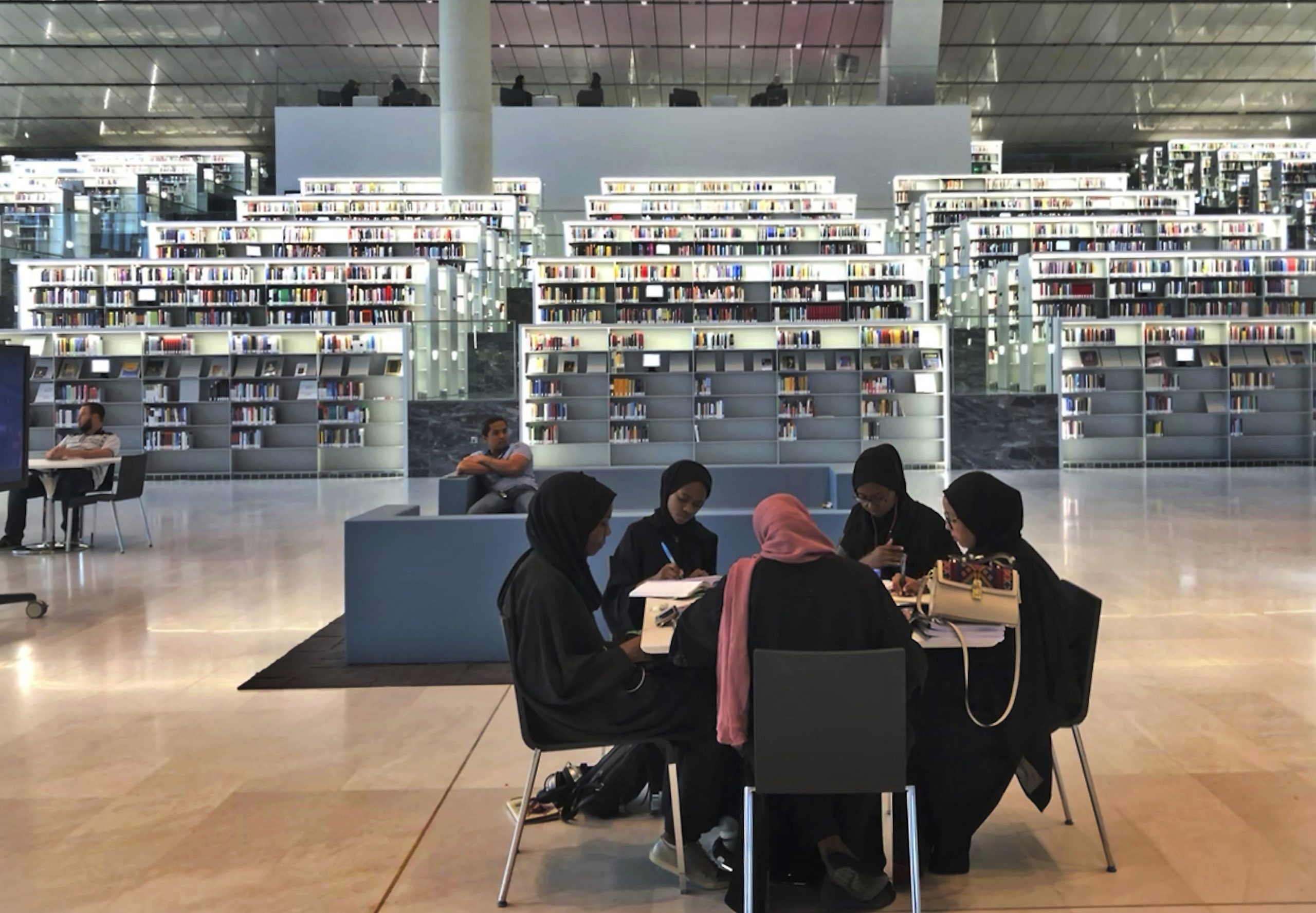
All Gulf states except Saudi Arabia and Oman have closed schools and universities, shifting rapidly to remote learning. The speed of this transition reflects both the flexibility of Gulf education systems and the severity of the perceived threat. Kuwait, for example, moved to remote classes one day after the war began, marking a notable contrast with the COVID-19 pandemic, when the Ministry of Education took roughly eight months to fully transition to online learning.
While the Gulf states have managed to reuse pandemic-era infrastructure, the current crisis has introduced new constraints, security risks, and trauma that pose an entirely new challenge for the region. Online learning remains a weaker substitute for in-person instruction, and the Gulf continues to grapple with the lingering educational setbacks caused by the pandemic disruptions. A prolonged return to remote education risks compounding these challenges, with long-term implications for student performance and system-wide educational outcomes.
The Limits of Online Learning
The disruption of education in the Gulf caused by Iranian attacks is not merely a temporary interruption of schooling; it represents a multi-layered crisis affecting students, teachers, and the broader educational system. Even when alternative arrangements such as online learning are introduced, they do not fully replace in-person education.
One of the most immediate consequences is a decline in the quality of learning. In the Gulf, teachers are often unprepared for digital pedagogy. There is a fundamental distinction between classroom-based instruction and online teaching. However, what is happening in many cases today is simply moving the classroom into a virtual space, using the same teaching methods without adapting them to suit online learning. This dramatically affects student engagement, as online learning limits direct interaction with students and makes it difficult to assess learning outcomes.
The psychological impact on both students and teachers is equally significant. War conditions create anxiety, fear, and disruption of routine. Many students in the region have witnessed the loud sound of sirens during online learning, making it difficult to concentrate or feel safe even in their own homes. Over time, this can lead to increased stress, difficulty focusing, and a sense of instability that affects both learning and well-being.
Teachers are facing similar pressures. They are expected to maintain continuity in instruction while managing their own concerns about safety and uncertainty. This dual burden often leads to emotional exhaustion and reduced effectiveness in teaching, further straining the learning environment. As a result, both students and teachers are placed in a position of coping rather than fully engaging in the educational process.
Personal accounts underscore these challenges. A faculty member at Kuwait University described feeling “deeply overwhelmed” while teaching online and simultaneously supporting her three children’s remote learning. Others described continuing to teach amid constant sirens and uncertainty, acknowledging fear while emphasizing a sense of duty and resilience in the face of disruption.
Finally, the shift to online learning has exposed and deepened structural inequities, which are often overlooked. Even in high-income Gulf states, not all students are equally prepared for online learning; some families may lack reliable or high-speed internet, sufficient devices for their children, or a quiet learning space to focus on their lessons. These concerns are especially pertinent for migrant families and lower-income households. This digital inequity exacerbates socioeconomic disparities, widening the gap between wealthier and poorer families and undermining both learning outcomes and future career trajectories.
From Temporary Closure to Lasting Consequences
The disruption of education in the Gulf is not merely a temporary interruption. It reveals how deeply education systems are embedded in geopolitical stability. When conflict crosses borders, classrooms close not because learning has failed, but because security has deteriorated. Even when remote instruction continues, the conditions necessary for effective learning are fundamentally weakened.
The shift to online learning carries broader structural consequences. For students, it means interrupted learning, psychological strain, and growing uncertainty about their educational futures. For teachers, it brings increased pressure, reduced instructional effectiveness, and expanded responsibilities. While teachers and parents have shown resilience in adapting to these challenges, their efforts cannot fully offset the limitations imposed by a prolonged disruption. As the conflict continues, the risk is not only immediate learning loss, but deeper, longer-term damage to educational outcomes across the region, underscoring the need for more systematic approaches to managing education during crises.
This war may serve as an important opportunity for Ministries of Education in the GCC to seriously rethink how education systems are managed and led during times of crisis. It is unlikely that this will be the last disruption the region faces, making it essential to strengthen preparedness for future challenges. In this context, Ministries of Education should consider establishing a dedicated Risk Management Department. This department would be responsible for assessing emerging situations and developing policies and strategies to ensure the continuity and quality of education, while also safeguarding the well-being of both students and teachers. Staff within these departments must be carefully selected and provided with specialized training to effectively manage education during crises. Leading education in times of disruption requires a distinct set of skills and approaches, different from those used under normal conditions, and should be treated as a specialized field in its own right.
The views and opinions expressed in this article are those of the authors and do not necessarily reflect the views of Gulf International Forum.
Issue: Society & Culture
Country: GCC

Dr. Ibrahim Alhouti is an Assistant Professor of the comparative politics of education at Kuwait University, a non-resident fellow at Gulf International Forum in Washington, DC. He obtained his PhD from University College London’s Institute of Education, where his thesis explored the politics of reforming the education system in the Arab Gulf region, and holds two master’s degrees on Leadership and Comparative Education, both from University College London’s Institute of Education. He also serves as a consultant for a number of educational institutions in the Gulf. Alhouti has published several research studies about education and education reforms in the region. His research interest encompasses the politics of education, education reforms, comparative education, and education policies.

Iran’s Embassies Enter the Narrative War
August 24, 2026At key moments in history, embassies have stepped beyond their conventional diplomatic functions to serve the wider interests of their states. They have gathered intelligence,…
Who Leads Gulf Schools Through Crisis?
August 1, 2026Recent discussion has rightly drawn attention to how regional conflict can disrupt education in the Gulf, forcing schools and universities online and exposing risks related…

The Legacy of Sheikh Hamad bin Khalifa Al Thani: Expert Perspectives
July 13, 2026With the passing of His Highness Sheikh Hamad bin Khalifa Al Thani, the Father Emir of Qatar, Gulf International Forum experts assess the legacy of…