The Gulf’s Role in Closing the U.S. Mineral Gap
An infrastructure corridor connecting Saudi processing facilities and Emirati trading hubs could reduce dependence on China and strengthen U.S. access to critical minerals.

The United States has spent the past two decades learning that economic interdependence with its adversaries ultimately creates vulnerability. But Washington is gradually awakening to the corollary: that durable supply chain security requires building interdependence with trading partners. Establishing a Gulf minerals corridor would connect Riyadh and Abu Dhabi to American industry and lead to long-term mutual gains. It would also push Gulf countries currently hedging between Washington and Beijing closer to the American economy—offering deeper integration across the U.S. technology ecosystem, from rare earth minerals to advanced chips.
The Industrial Gap
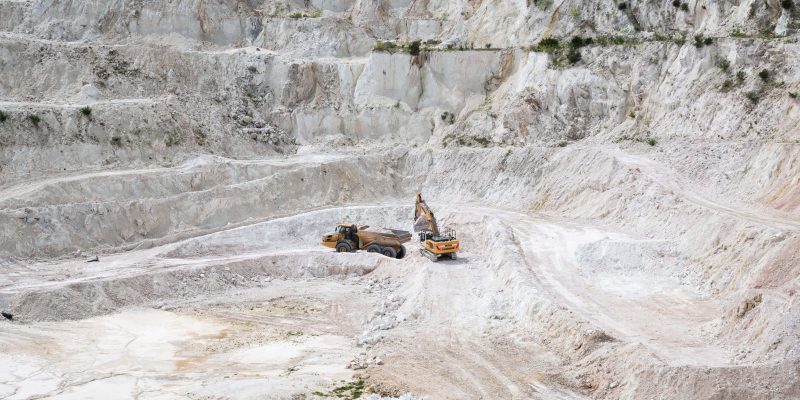
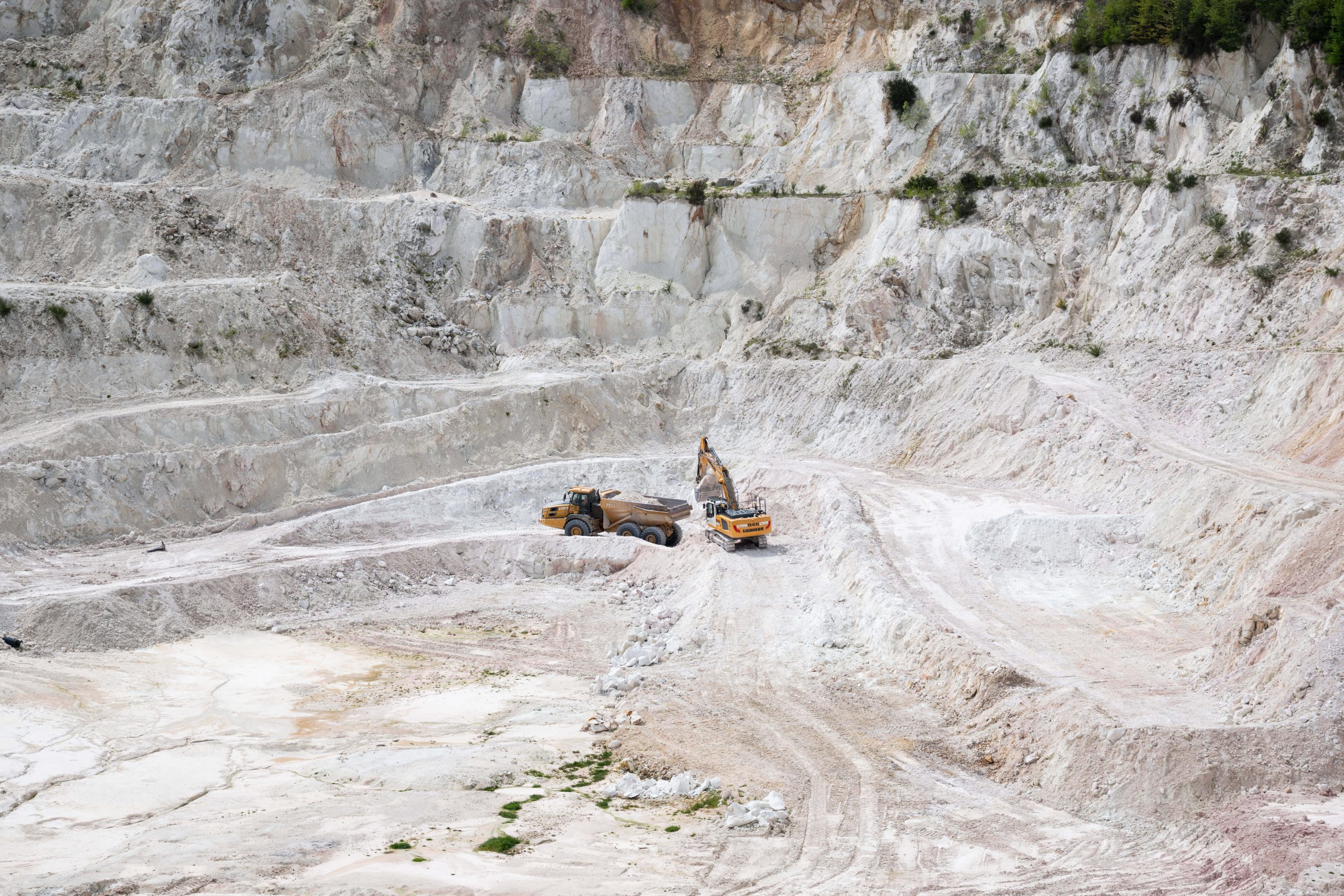
China currently controls roughly 90 percent of global rare earth refining capacity. Beijing built its dominance by absorbing the environmental and social costs of mineral refining that democratic societies refused to bear, capturing a near-monopoly over both the industry and its intellectual property. Rare earth separation generates toxic wastewater, radioactive tailings, and chemical waste streams that American communities will not accept. Mountain Pass, California’s only active rare earth mine, shuttered repeatedly over environmental violations before MP Materials revived it, and even now, the United States lacks domestic refining capacity at scale.
The political economy of rare earth production is relatively straightforward. Scaling U.S. processing facilities will face significant time and political constraints. Permitting timelines for new projects can stretch beyond a decade, and community opposition often halts or delays projects before they even begin. Other Western democracies face similar setbacks. Australia holds substantial rare earth reserves but lacks serious processing capacity. Europe’s Critical Raw Materials Act targets just 10 percent domestic processing by 2030. Japan and South Korea remain overwhelmingly dependent on Chinese refining. The industrial base needed to close the processing gap may eventually be built in aggregate across allied democracies, but likely not quickly enough to effectively reduce reliance on China in the near future. Diversification is a tall order.
Enter the Gulf
Saudi Arabia and the United Arab Emirates (UAE) offer the United States and its allies the ability to build processing and trading infrastructure quickly and at scale. The Gulf states possess the world’s cheapest energy, large sovereign capital reserves, heavy industrial infrastructure, and vast unpopulated regions suitable for large-scale rare earth processing facilities.
For their part, the Gulf states have expressed an interest in playing a larger role in global mineral supply chains, with Saudi Arabia leading the region’s ambitions. Under Vision 2030, mining has become a pillar of the Kingdom’s economic diversification strategy, with a particular focus on improving its refining and processing industries. This creates a natural point of alignment for President Donald Trump’s aggressive push to secure critical minerals and rare earth elements. In November 2025, Ma’aden, Saudi Arabia’s national mining champion, signed a binding agreement with MP Materials and the U.S. Department of Defense (DOD) to build a rare earth refining and separation facility in the Kingdom. Ma’aden will hold at least a 51 percent stake, MP Materials will provide technical expertise, and the Pentagon will finance the American 49 percent share on a non-recourse basis. The facility will process Saudi and global feedstock into separated light and heavy rare earth oxides, creating a limited alternative refining node outside Chinese control.
This collaboration is not limited to processing. The Arabian Shield—a 650,000-square-kilometer geological formation in western Saudi Arabia—remains one of the world’s last major underexplored mineral frontiers, with an estimated $2.5 trillion in untapped resources. American companies are already active in this area. Ivanhoe Electric operates a 50/50 joint venture with Ma’aden that covers nearly 48,500 square kilometers, deploying its proprietary geophysical surveying technology to identify deposits at depths conventional methods cannot reach. In 2025 alone, the venture surveyed over 500 square kilometers and began drilling at depths over one kilometer.
The UAE could play a complementary role in a Gulf-centered rare earth strategy. While Saudi Arabia is aiming to scale its processing and exploration capacity, Abu Dhabi has positioned itself as a critical minerals trading hub. International Resources Holding, an Abu Dhabi-based firm pursuing a mine-to-market strategy, acquired a 51 percent stake in Zambia’s Mopani Copper Mines for $1.1 billion and a controlling stake in DRC tin producer Alphamin, while building capacity to trade one million tons of copper annually by 2030. Separately, ADQ—Abu Dhabi’s strategic sovereign investor—established Orion Abu Dhabi, a $1.2 billion joint venture with Orion Resource Partners targeting mining investments across Africa, Asia, and Latin America.
Dubai and Abu Dhabi already operate as major commodity trading centers with extensive maritime and transportation infrastructure for oil and gold. Expanding this infrastructure to facilitate critical mineral trade and transportation is simply a means of leveraging existing capabilities, rather than having to build it from scratch.
Aligning Gulf Capacity with U.S. Demand
The United States and the Gulf are well positioned for long-term industrial alignment. The Trump administration’s decision to approve AI chip exports to the UAE and Saudi Arabia reflects a growing degree of trust and a commitment to broader economic coordination. Washington’s need for mineral alternatives and the Gulf’s desire for industrial investment in the mineral sector creates mutual synergies.
In February, Trump rolled out Project Vault, committing $10 billion in Export-Import Bank of the United States (EXIM) financing, more than double the Bank’s largest-ever transaction, alongside $2 billion in private capital, to establish a strategic minerals reserve. In the near term, the administration is prioritizing procurement of critical minerals and offtake agreements over the more arduous process of constructing new facilities. For a stockpile strategy built on transactions rather than buildouts, the UAE’s trading architecture offers speed that new refineries cannot match.
Combining Saudi processing capacity, Emirati trading, and American demand could create a viable regional corridor for rare earth supply chains. American exploration technology could play an important role in discovering and exploiting deposits in the Arabian Shield. Saudi capital and industrial capacity can develop processing facilities accessible to materials destined for the U.S. market. Further, coordinated arrangements with the UAE could streamline the movement of refined materials and structure offtake agreements. The result would be an integrated system linking exploration, refining, trading, and stockpiling within a single strategic framework.
American Leverage
Washington’s most powerful lever to bring about a critical mineral corridor in the Gulf is the guaranteed demand of the U.S. military and American companies. Processing facilities live or die on offtake certainty. Committing Project Vault and National Defense Stockpile purchases to Gulf-sourced materials requires no new legislation, just procurement decisions made under existing DOD and EXIM authorities.
The United States could also take direct stakes in major mining and processing companies. Critical minerals and rare earth projects are generally considered unattractive private investments because of long permitting and construction timelines, heavy upfront capital expenditures, volatile and policy-sensitive pricing, and concentrated geopolitical supply-chain risk. The DOD’s 49 percent equity position in the MP–Ma’aden joint venture signaled the Trump Administration’s commitment to changing that perception. While government stakes in private mining remain debated in Washington, public ownership can de-risk capital, strengthen demand certainty, and deepen coordination across financing, processing, and security priorities. Beyond EXIM, the Development Finance Corporation and Department of Energy Loan Programs Office offer additional project financing instruments already being deployed for allied minerals investments.
Washington’s third form of leverage is its evolving multilateral minerals cooperation framework. At February’s Critical Minerals Ministerial in Washington, U.S. Secretary of State Marco Rubio announced FORGE, the Forum on Resource Geostrategic Engagement, as the successor to the Minerals Security Partnership. FORGE will coordinate policy and project-level collaboration to diversify supply chains, with South Korea chairing the group through June 2026. Critically, Washington unveiled a price floor mechanism designed to guarantee commodities never fall below economically viable investment levels, enforceable through adjustable tariffs that would create a preferential trade zone insulated from Chinese market manipulation.
Both Gulf states are increasingly aligned with Washington on rare earth minerals. The question is whether the United States will use its power and influence to anchor a regional processing and trading corridor that would secure these critical supply chains long into the future.
The views and opinions expressed in this article are those of the authors and do not necessarily reflect the views of Gulf International Forum.
Issue: U.S. – Gulf Policy
Country: KSA, UAE

Jesse Marks is the CEO of Rihla Research & Advisory, an international consulting firm specializing in the Middle East and Asia. A foreign affairs and strategic policy expert, he advises governments, international organizations, and private sector clients on geopolitical, geoeconomic, security, and development issues, with a focus on China–Middle East relations and regional development. His work draws on his previous role as a Middle East policy adivosr for the U.S. government and over a decade of field experience across the Middle East and eight years analyzing China’s regional engagement. A Schwarzman Scholar, Fulbright Fellow, Boren Scholar, and Scoville Fellow, he holds graduate degrees from the University of Cambridge and Tsinghua University, and his writing has appeared in Foreign Affairs, Foreign Policy, and The Washington Post.

The Geopolitics of the U.S.–Saudi Nuclear Deal
August 18, 2026In late July, the Trump administration announced a landmark civil nuclear cooperation agreement with Saudi Arabia. Signed in accordance with Section 123 of the Atomic…
Turkey’s F-35 Return and Saudi Arabia’s Fighter Ambitions
August 7, 2026Turkey’s renewed push to rejoin the F-35 Joint Strike Fighter program, from which it was expelled in 2019 over its acquisition of Russian S-400 air…
Washington Wants a Partner, But Iraq Still Needs a State
July 16, 2026Iraqi Prime Minister Ali Al-Zaidi’s visit to Washington represents the latest attempt to strengthen U.S.–Iraq relations at a time when Baghdad is seeking greater economic…