Yemen’s Emerging Role in the Red Sea
International support is helping Yemen rebuild its maritime forces, potentially giving them a larger role in policing the Red Sea and countering Houthi smuggling.

On August 4, 2026, the Yemeni Coast Guard (YCG) rescued the 14-member crew of the Indian-flagged commercial vessel Faize Noore Oliya. Transiting the Red Sea southbound, the ship was struck off the port city of Hodeidah by a Houthi explosive-laden unmanned surface vessel and subsequently sank. The incident marked the most severe assault on commercial shipping since the Houthis resumed their anti-shipping campaign in and around Bab el-Mandeb Strait and the first sinking of a ship since the Liberia-flagged bulk carrier Eternity C in July 2025.
The YCG’s rescue of the Faize Noore Oliya, however, highlights a parallel development: as the Houthis intensify their attacks on commercial shipping, Yemen’s maritime forces are slowly rebuilding their capacity to police the country’s waters after years of institutional degradation, political fragmentation, and underfunding.
This contrast captures a broader paradox in Yemen’s maritime security landscape, where the Houthis are increasingly disrupting shipping while the Internationally Recognized Government of Yemen (IRG) works to gradually restore basic surveillance and policing capabilities over its littorals. The question now is whether Yemen’s maritime forces can become a credible partner in securing the Red Sea and containing the Houthi threat.
Renewed Momentum
In September 2025, Saudi Arabia and the United Kingdom convened a high-level conference in Riyadh to revitalize international efforts to strengthen the operational capabilities of the YCG. The event brought together representatives from more than 35 countries for the launch of the Yemen Maritime Security Partnership (YMSP), a multinational coalition of like-minded actors committed to providing financial, technical, and institutional backing to improve security conditions across the Red Sea.
The partnership’s initial funding package totaled $10 million, with Riyadh and London pledging $4 million each and the European Union contributing an additional $2 million. The funds were allocated to rebuilding the operational and institutional capacities of the YCG, with priority for personnel training, maintenance and refurbishment of patrol vessels, and essential maritime security equipment.
In November 2025, then-British Minister for the Middle East Hamish Falconer visited a YCG facility in Aden and inspected one of two patrol boats refurbished with U.K. support. Later that month, the YMSP Steering Committee held its inaugural meeting in Riyadh to review initial implementation efforts and identify priority areas for future support.
Operationalization of these initiatives has also been accompanied by gradual efforts to expand Yemen’s maritime assets. Plagued by a scarcity of vessels and an aging fleet, the YCG has faced persistent limitations in its ability to maintain a sustained presence at sea.
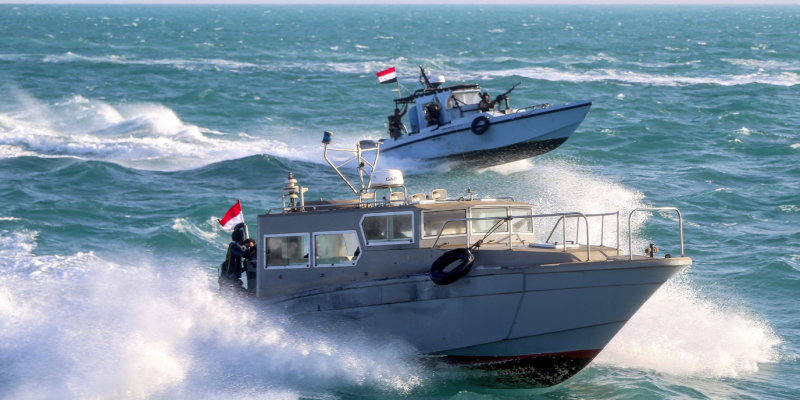
In May 2026, the patrol boat Mayun was delivered to the YCG. Capable of reaching a top speed of 45 knots, the vessel is designed to perform a broad range of coastal security duties, including counter-smuggling, search-and-rescue, and shipping protection. The Mayun was built under the United Nations Development Programme in Yemen with the support of the local Hadramout Fiberglass Factory, highlighting the potential for indigenous industries to contribute to the regeneration of the country’s naval assets. Local industrial capacity could prove crucial for the maintenance, repair, and overhaul of existing and newly acquired vessels, reducing reliance on external technical support. Although the YCG remains significantly under-equipped, the addition of the Mayun and the refurbishment of other patrol boats are nevertheless helping expand its operational reach and, more importantly, its ability to maintain a more persistent presence off Yemen’s littorals.
Doubling Down on Capability-Building
Since its establishment in 2002, the YCG has regularly participated in international training programs aimed at developing and professionalizing its personnel. However, Yemen’s prolonged civil conflict has severely degraded the force’s institutional and operational capacity, reducing its roughly 1,200 personnel to a few hundred and its naval assets to around 20 percent of its original fleet. Intermittent funding has further hampered efforts to conduct basic activities, such as paying salaries, procuring fuel, and conducting essential repairs.
Throughout the past several years, a significant share of the capacity-building activities benefiting Yemen’s maritime forces has been conducted under the Red Sea Project. Launched in 2021, the initiative aims to strengthen the operational and strategic capabilities of countries in the Red Sea basin—Djibouti, Ethiopia, Somalia, Sudan, and Yemen—through workshops on port security, navigational safety, and maritime law enforcement.
Funded by the European Union and led by the International Maritime Organization (IMO), the project is implemented in coordination with a range of specialized international and regional organizations, including INTERPOL, the United Nations Office on Drugs and Crime (UNODC), and the Intergovernmental Authority on Development (IGAD).
Since 2021, the Red Sea Project has supported a broad range of Yemeni maritime and government institutions beyond the YCG, including the Aden Port Authority, the Ministry of Justice, and the Customs Authority. In 2025 alone, the initiative delivered three workshops on maritime and port facility security, focusing on incident management, standard operating procedures, and strengthening the technical capabilities of local authorities.
Among the project’s latest capacity-building activities, UNODC delivered a week-long training course on maritime investigative techniques in the Gulf of Aden in July 2026. Designed for both field and investigative officers, the program covered a broad range of subjects, from smuggling networks to operating patterns of criminal groups and intelligence collection. Participants also received practical instruction on core investigative procedures, including evidence collection, crime scene management, and interview techniques. Along with improving operational and technical preparedness, activities have also sought to bolster inter-agency coordination and information-sharing among the maritime and law-enforcement bodies comprising the broader Yemeni maritime security landscape.
Toward a Unified Front
Deep-seated political rivalries, personal loyalty networks, and competing strategic agendas have long fueled competition and institutional fragmentation, constraining the country’s ability to play a meaningful role in maritime security. While many of the divisions within the anti-Houthi camp remain unresolved, recent efforts have sought to improve coordination among state institutions responsible for maritime security.
In June 2026, a four-day national workshop brought together all state bodies responsible for maritime security to advance efforts toward a more coordinated national architecture. The event laid out a roadmap for establishing a National Maritime Information Sharing Center (NMISC) to strengthen Yemen’s contribution to maritime domain awareness and regional information-sharing mechanisms. Hosted at the YCG headquarters in Aden, the NMISC would operate as a multi-agency body, bringing together seven maritime and security institutions to improve national coordination and establish a shared maritime picture. The initiative’s first major challenge, therefore, is interoperability, requiring the participating bodies to harmonize operational concepts, address staffing and infrastructure needs, and pursue systems integration. A two-year implementation roadmap was agreed upon to guide NMISC’s establishment and gradual operationalization.
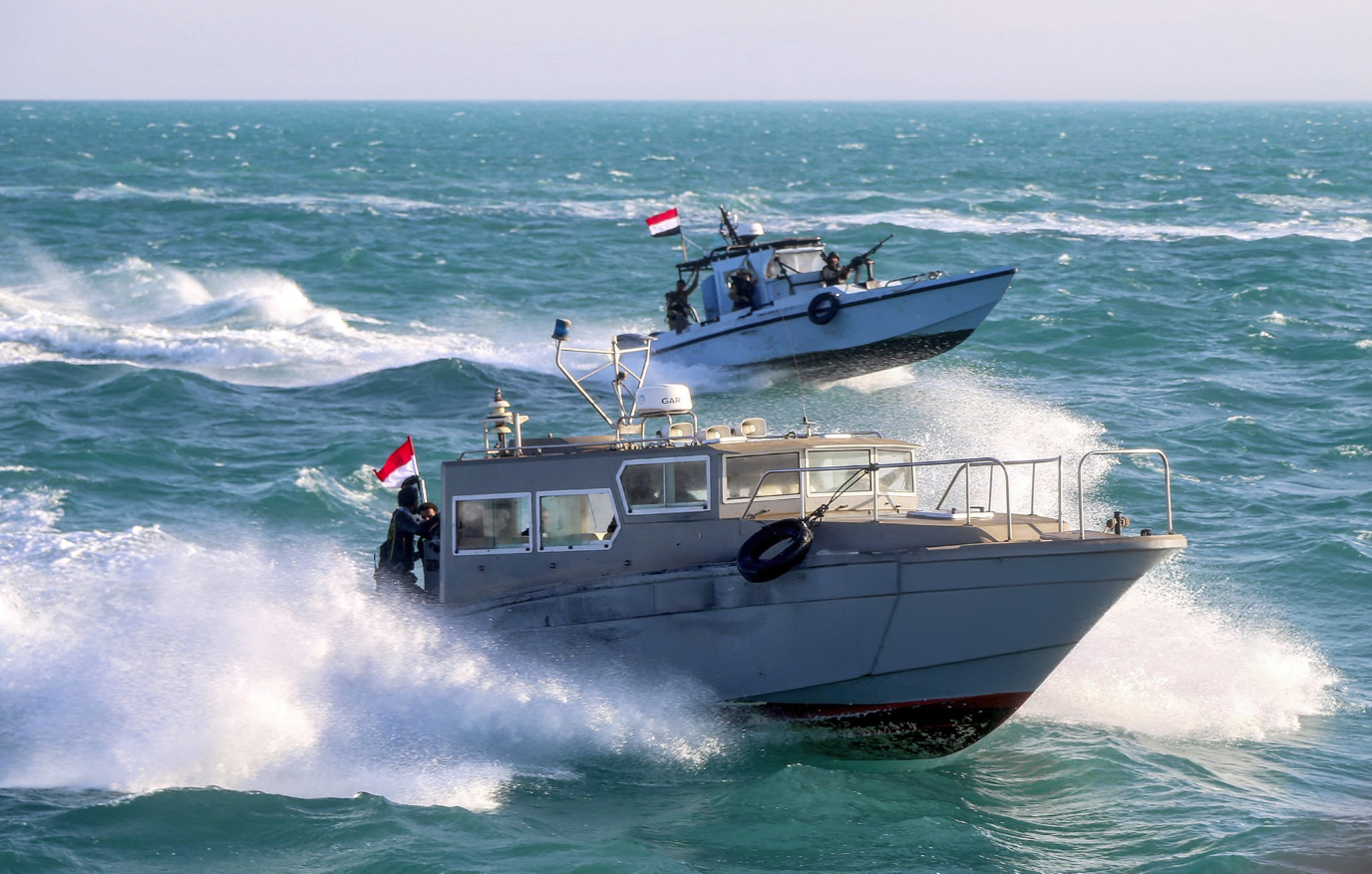
This institutional alignment has also been accompanied by growing operational coordination among Yemen’s maritime forces. During celebrations marking the 36th anniversary of the establishment of the Yemeni Republic in May, naval assets from the YCG and the National Resistance Forces (NRF), led by Brigadier General Tariq Saleh, conducted a major display of maritime capabilities. The exercise centered on joint maneuvers between four catamarans and eight patrol boats equipped with deck-mounted heavy machine guns, alongside several high-speed craft.
Beyond its symbolic value, the drill signaled the emergence of a new Red Sea sector stretching from Zuqar Island to the Bab el-Mandeb Strait under the control of Saleh’s forces. Controlling much of Yemen’s southwestern coastline on the Red Sea, the NRF has demonstrated its ability to disrupt Houthi smuggling networks through interdiction operations, including a record-breaking seizure of more than 750 tons of munitions and military hardware in mid-2025.
Counter-smuggling efforts targeting Houthi-bound weapons shipments have continued throughout 2026, with the Giant Brigades most recently conducting major interceptions that resulted in the seizure of components for missiles, drones, and kamikaze-type boats. On August 27, the Yemeni Navy seized a smuggling vessel carrying drone parts, followed by an at-sea confrontation between NRF forces and five Houthi boats approaching Zuqar Island. Two weeks earlier, Yemeni naval forces clashed with three Houthi boats in the Red Sea, sinking one, and destroyed a vessel carrying an explosive-laden boat with a Russian-made Kornet man-portable guided missile. The incidents occurred amid intensifying Houthi missile and drone attacks against the port city of Mokha.
While Yemen’s maritime forces remain fragmented, and a unified national force capable of operating across the country’s entire coastline is unlikely to emerge in the short term, recent signs of greater coordination within the anti-Houthi camp are promising. Bringing the Saleh-led NRF, along with the other armed groups active on the country’s western coast, more closely into Yemen’s emerging maritime security architecture would provide an important operational complement to the YCG and the Navy.
A Maritime Role for Yemen
The objective, however, should not be to equip Yemen to confront the Houthis at sea. With predominantly coastal capabilities, Yemen’s maritime forces lack the expertise and means required to counter Houthi missiles, drones, and suicide boats targeting sea lanes. Those tasks will continue to require the support of better-equipped foreign navies. Instead, Yemen can contribute where its forces are better suited, which is policing coastal waters, monitoring maritime traffic, and disrupting the smuggling networks that sustain the Houthi war effort.
The bulk of Houthi-bound military support enters through land routes or cargo shipping around Hodeidah, but weapons, ammunition, and components are also moved through small vessels and dhows. These routes form part of a broader triangular smuggling network linking Iran with the Horn of Africa and Yemen. Improving Yemen’s ability to identify, track, and interdict such movements could impose high costs on the Houthi resupply chain.
While the Houthis use the sea primarily for denial, Yemen’s maritime forces can provide a layer of coastal policing. Properly funded, trained, and supported with actionable intelligence and foreign naval assistance, they could become an indispensable partner in countering the inter-regional logistics underpinning the Houthi war machine. The ability of the anti-Houthi camp to overcome political rivalries, however, will be key in achieving the institutional cooperation and mutual trust required to make this possible.
The views and opinions expressed in this article are those of the authors and do not necessarily reflect the views of Gulf International Forum.
Issue: Defense & Security
Country: Yemen

Leonardo Jacopo Maria Mazzucco is a PhD candidate in Institutions and Policies at the Catholic University of Milan, Italy. His research interests revolve around the foreign policy and security affairs of the Gulf region. He tweets at @mazz_Leonardo.
The Iran War Is Rewriting Kuwait’s Defense Architecture
July 14, 2026Since the outbreak of the Iran war in February 2026, Kuwait has announced a series of major defense acquisitions, including a $1 billion contract for…

The Iran War Is Driving the Gulf Toward Turkish Air Defense
June 24, 2026The Iran war triggered one of the most significant reassessments of Gulf air-defense strategy in decades, exposing the structural limitations of systems primarily designed around…